A testing gap behind the 2030 target
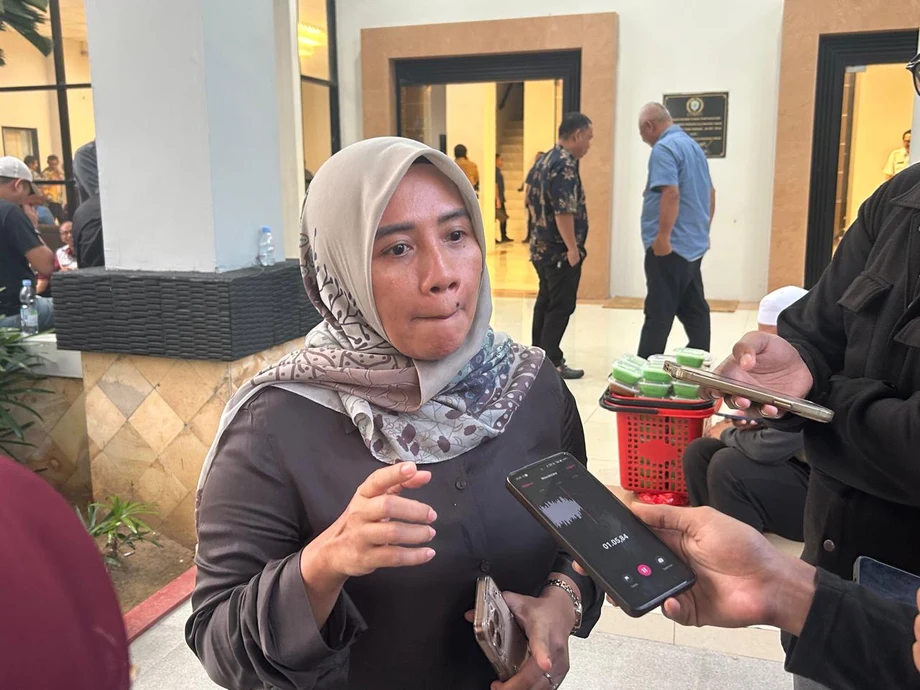
An estimated 2,064 people in East Kalimantan may be living with HIV without knowing it, according to figures presented by Damayanti, a member of the provincial legislature's Commission IV and its special committee on HIV/AIDS and sexually transmitted infections. They form part of an estimated cumulative total of 10,000 HIV/AIDS cases in the province by 2026. The remaining 7,936 people were reported to know their status.
Contents
- A testing gap behind the 2030 target
- How far treatment still has to go
- Why confidentiality is part of prevention
- The draft rules reach beyond clinics
- Who pays for treatment as grants wind down
- New cases and a population on the move
- One plan for clinics, budgets and public education
- Key dates in the provincial response
- Key Points
Damayanti delivered the detailed figures in Samarinda on 24 November 2026. She said East Kalimantan ranked 11th among Indonesian provinces for its contribution to national HIV cases. The provincial government wants to end the HIV/AIDS epidemic by 2030, but the special committee said that target depends on finding undiagnosed cases, keeping patients in treatment and protecting their rights.
Damayanti also read the committee's final report during a plenary session in Main Building B of the East Kalimantan Regional House of Representatives, known as the DPRD. That presentation used a rounded figure of about 7,000 identified people. Her detailed presentation on 24 November gave the figures of 7,936 and 2,064. She described the first figure as about 73 percent, although 7,936 out of 10,000 is 79.36 percent.
People who have not been diagnosed cannot start treatment early and may pass the virus to others without realising they are infected. HIV can remain without obvious symptoms for years. For the provincial government, the testing gap therefore concerns both individual health and the opportunities to prevent further transmission.
How far treatment still has to go
Testing is only the first step. Damayanti said about 70 percent of the people who knew their HIV status were undergoing treatment. Applied to the detailed count of 7,936 people, that proportion is equivalent to roughly 5,555 people receiving treatment and about 2,381 who know their status but are not recorded as receiving it. The treatment group would represent about 56 percent of the estimated 10,000 cases.
The special committee wants provincial policy to pursue the global 95-95-95 targets. The first goal is for 95 percent of people living with HIV to know their status. The second is for 95 percent of those diagnosed to receive antiretroviral therapy. The third is for 95 percent of people receiving that therapy to achieve viral suppression, meaning treatment has reduced the virus to a very low level.
Reaching the first target among an estimated 10,000 cases would require 9,500 people to know their status, or 1,564 more than the detailed count supplied by Damayanti. Treatment coverage among diagnosed people would also need to rise from about 70 percent to 95 percent. The committee's presentations gave no corresponding figure for the third target, so the number of patients with suppressed viruses remains unclear.
Damayanti said people living with HIV need to know their health status, obtain services and continue treatment without interruption. Her committee's message is that a testing campaign alone would leave much of the problem untouched if newly diagnosed patients cannot obtain medicines, laboratory services and continuing medical support.
Why confidentiality is part of prevention
East Kalimantan Health Office head Andi Muhammad Ishak warned on 19 November that HIV transmission is not confined to groups commonly labelled as high risk. He said housewives were also facing infection, often potentially from partners who did not know their own status. He did not provide a detailed provincial infection rate or a count of infections among housewives.
Andi encouraged people who have engaged in activities carrying a risk of exposure to seek an early test at a community health centre, known as a puskesmas, or at a hospital. He said confidentiality is essential because fear of having one's identity exposed can discourage testing. He compared the visible part of the epidemic with an iceberg.
HIV is like an iceberg. What is detected is only the surface, while what is not detected may be much larger.
Antiretroviral medicines, commonly called ARVs, do not remove HIV from the body. Taken consistently, they can reduce the amount of virus until laboratory tests cannot detect it. Andi said this allows patients to remain productive and reduces the danger of transmission. HIV is the virus that damages the immune system, while AIDS refers to the advanced stage of that damage.
The special committee said every HIV examination must be based on informed consent. This means the person receives adequate information before agreeing to the test, and the result must remain confidential. Damayanti said the same principle applies to health examinations for couples preparing to marry, directly rejecting the use of testing as a barrier to wedlock.
That includes examinations for prospective brides and grooms. HIV test results must not be used as a reason to cancel or prohibit a marriage.
For couples, the committee's position separates health counselling from discrimination. A test can provide information and access to care, but the committee says its result cannot serve as grounds for cancelling or forbidding a marriage.
The draft rules reach beyond clinics
The proposed regional regulation, or Ranperda, covers the control of HIV, AIDS and sexually transmitted infections, known locally as IMS. Its employment provisions would prohibit companies from making an HIV examination a condition of recruitment or a reason for terminating employment, a step known in Indonesia as PHK.
Darlis Pattalongi, secretary of Commission IV and chairman of the special committee, said job applicants and employees can face rejection or lose their livelihoods when their HIV status becomes known. The committee consulted the Ministry of Manpower to strengthen the legal basis for the protections. The ministry said companies cannot require HIV testing during recruitment or as a condition for keeping a job.
Testing in a workplace would instead have to follow voluntary counselling and testing, or VCT. Under that approach, a worker gives full consent, receives counselling and has the confidentiality of medical data protected. The committee also wants businesses to provide health education, prevention information and voluntary testing facilities without coercion.
Darlis connected those safeguards with the basic right to earn a living.
They have the same right to work and must be treated without discrimination.
The health office is separately seeking to update the existing regional regulation, which Andi said was nearly 20 years old and needed evaluation against present conditions and current legal rules. Public consultation on the update has already taken place. No date was given for the DPRD to enact the new regulation, so the proposed employment protections remain part of a draft rather than a completed regional law.
Who pays for treatment as grants wind down
International grants finance about 80 percent of East Kalimantan's HIV/AIDS programme, according to both Darlis and Andi Satya Adi Saputra, the special committee's deputy chairman. Darlis said on 23 November that Global Fund support would end in 2027. Speaking on 24 November, Andi Satya described the current Global Fund financing cycle as ending at the close of 2026. The two officials used different dates, but agreed that provincial dependence on the funding was substantial and that replacement arrangements had to be prepared.
Darlis asked the provincial, district and city governments to allocate money through their 2027 regional budgets, known as APBD. He said HIV/AIDS programmes should not depend entirely on grants or the national budget. His concern was practical: patients already receiving therapy need a continuous supply of medicine, and a break can allow the virus to increase again and damage the health gains made during treatment.
Andi Satya, a Golkar legislator, proposed bringing private companies into the financing effort, particularly mining businesses and companies in the oil and gas sector. He said other provincial organisations should be invited to cooperate on programmes still heavily subsidised by the Global Fund. He also said the Ministry of Health had prepared transition measures to reduce dependence on the fund, whose reduced subsidies were expected to affect malaria and tuberculosis programmes as well.
No replacement funding amount or confirmed company contribution was announced. The immediate request is for governments to budget before the grant support disappears, rather than wait for a gap to interrupt medicine supplies or services.
New cases and a population on the move
Figures from East Kalimantan's statistics agency, BPS, presented during the funding discussion recorded 297 new HIV/AIDS cases during 2026. Samarinda had the largest number with 111 cases, followed by Balikpapan with 57, East Kutai with 33 and Kutai Kartanegara with 23. Those four places together account for 224 cases, or about 75 percent of the provincial total of 297. The breakdown did not list the remaining cases by district or city.
The annual figure of 297 new cases serves a different purpose from the estimated cumulative total of 10,000. One describes newly recorded cases during 2026, while the other is the broader estimate used by the committee to measure how many people know their status and receive treatment.
Darlis said construction of Nusantara, Indonesia's new capital known as IKN, was increasing population movement within East Kalimantan. He wants that mobility considered when services are planned. A patient may be recorded in one administrative area but receive treatment in another, so appointments, records and medicine access need to continue across district and city boundaries.
He gave the example of a patient who begins care at a puskesmas and is later referred to a hospital when the condition requires more advanced services. Such referrals can place the location where a patient is recorded apart from the facility providing treatment. Darlis said referral arrangements must allow patients to obtain the appropriate level of care without administrative boundaries becoming an obstacle.
One plan for clinics, budgets and public education
The special committee organised its recommendations around three connected pillars: regulation, financing and health services. Its proposed regulation would coordinate epidemiological studies, social support, public education and rights protection. The budget decisions would determine whether clinics can keep testing and treating patients, while confidentiality and employment safeguards are intended to make people feel safe enough to use those services.
Commission IV's remit includes health, education, labour and social welfare, along with family planning, women's empowerment and child protection. Damayanti said an effective response must involve every relevant sector. The committee has asked regional governments to work with educational institutions, businesses, community organisations and groups that accompany and support patients.
Medical supplies remain central to that plan. ARVs must be available continuously, while laboratories need reagents, the substances used to carry out diagnostic and monitoring tests. The committee wants both medicines and testing supplies to reach districts and cities that are difficult to access, rather than remain concentrated in larger urban centres.
For residents, the combined proposals would mean a confidential test at a local health facility, a marriage decision that cannot be blocked by an HIV result, stronger workplace safeguards and a referral system that follows the patient. Their practical success will depend on the enactment of the regulation, the money included in regional budgets and the reliability of supplies after international financing changes.
Key dates in the provincial response
Several statements and proposals during November 2026 show how the testing, legal and funding debates came together.
- 19 November 2026: Health Office head Andi Muhammad Ishak called for early testing, confidentiality and an update to the nearly 20 year old regional regulation.
- 21 November 2026: Details of the committee's final report and its proposed workplace protections were made public.
- 23 November 2026: Darlis Pattalongi urged provincial, district and city governments to prepare HIV/AIDS allocations in their 2027 budgets.
- 24 November 2026: Damayanti presented the detailed estimate of 10,000 cases, while Andi Satya Adi Saputra proposed involving private companies in programme financing.
- 2027: Darlis wants regional budget support ready and described this as the year Global Fund assistance would end.
- 2030: The government's target date for ending the HIV/AIDS epidemic.
Key Points
- East Kalimantan's detailed estimate covers 10,000 cumulative HIV/AIDS cases by 2026, including 2,064 people who may not know their status.
- The figures identify 7,936 people as knowing their status, with about 70 percent of that group undergoing treatment.
- The special committee supports the 95-95-95 targets for diagnosis, treatment and viral suppression.
- HIV testing must involve informed consent and confidential results, and the committee says a result cannot be used to cancel or prohibit a marriage.
- A draft regional regulation would ban mandatory HIV testing for recruitment and HIV status as a reason for dismissal, while allowing voluntary workplace testing.
- International grants support about 80 percent of the programme, prompting proposals for regional budget allocations and contributions from private companies.
- BPS figures presented to lawmakers recorded 297 new cases during 2026, including 111 in Samarinda.
- No enactment date has been given for the updated regulation, and no replacement funding amount has been announced.