A larger meals program faces a test of safety and reliability
Indonesia's Free Nutritious Meals program reached 58.2 million people through 27,485 nutrition service kitchens by October 31, 2026, with government spending totaling Rp173.21 trillion. The expansion comes as authorities tighten kitchen inspections, check beneficiary records and address food poisoning and interruptions to meal deliveries.
Contents
- A larger meals program faces a test of safety and reliability
- How quickly has MBG expanded?
- What the spending figures show
- Nutrition needs go beyond whether children feel hungry
- Who should receive priority?
- Food poisoning drives demands for stronger safeguards
- Java kitchen checks will examine equipment and actual capacity
- Sumedang compares meals leaving kitchens with meals reaching schools
- Papua seeks to turn meal purchases into local farm income
- Island communities show how paperwork can interrupt meals
- Key Points
Finance Minister Suahasil Nazara presented the spending figures at the Finance Ministry's APBN KiTA budget briefing in Jakarta on November 13. Cumulative expenditure rose from Rp153.19 trillion at the end of September, an increase of Rp20.02 trillion during October.
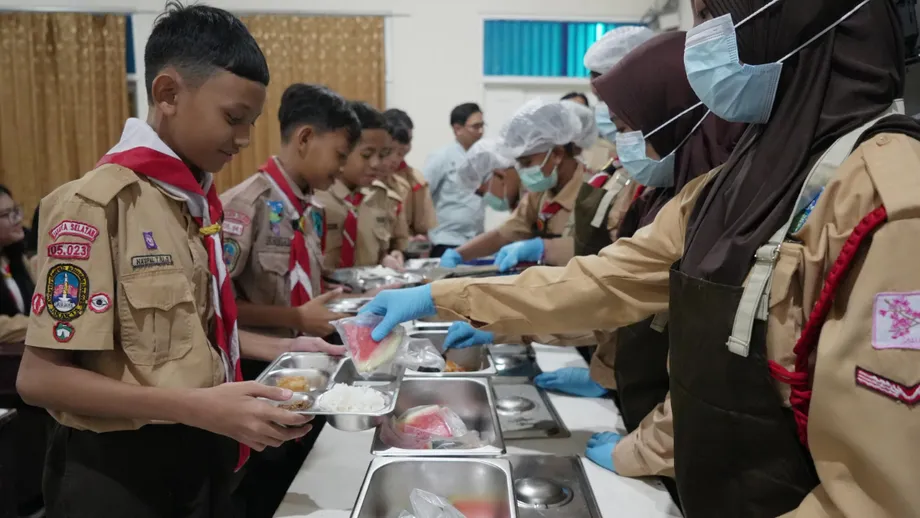
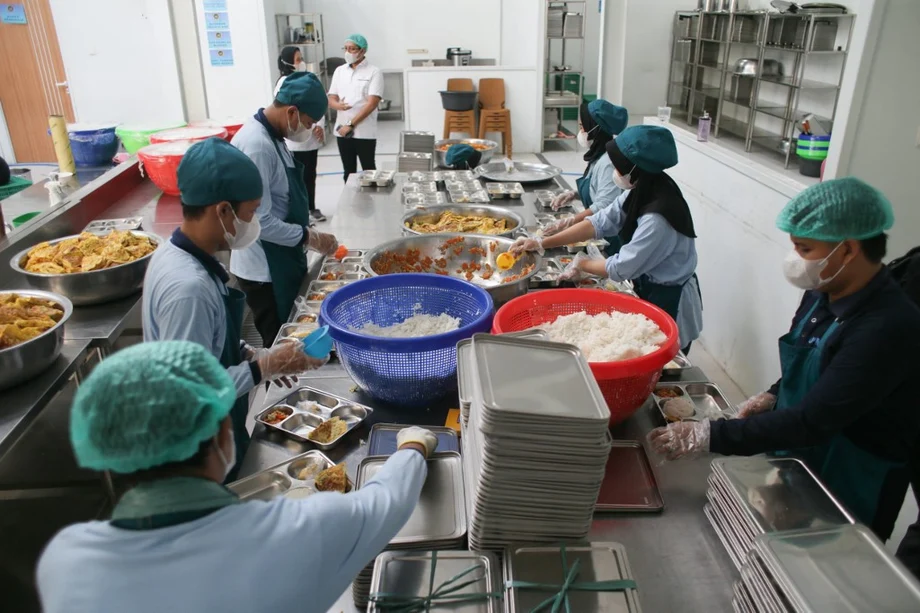
The program, known by its Indonesian initials MBG, provides meals to students and vulnerable groups, including young children and pregnant and breastfeeding women. Its service units, called Satuan Pelayanan Pemenuhan Gizi, or SPPG, prepare and distribute the food.
National Nutrition Agency officials are now assessing whether individual kitchens have enough equipment and storage to serve their assigned recipients safely. The first phase focuses on kitchens in Java serving at least 2,500 people, while the government also expands access to remote communities and places with high rates of stunting.
Food safety remains an urgent concern. Health Ministry surveillance dated September 2, 2026, recorded 50,059 people affected by poisoning associated with the program since its January 2025 launch, across about 560 mass poisoning incidents in 36 provinces and at least 245 regencies and cities.
For families, the immediate stakes are practical: a nutritious meal must arrive regularly, contain the promised ingredients and be safe to eat. Experiences in Sumedang, Papua, the Riau Islands and Simeulue show how those requirements depend on local oversight, purchasing arrangements and timely funding.
How quickly has MBG expanded?
President Prabowo Subianto's flagship nutrition program began on January 6, 2025. The Global Child Nutrition Foundation's program overview describes a launch across 26 provinces, with about 600 students receiving meals on the first day.
By September 2025, MBG served 22.7 million beneficiaries through 7,644 SPPG units. By early November that year, its reach had passed 41.2 million people, against a stated target of 82.9 million.
The main milestones show both the expansion and the later shift toward stronger controls:
- January 6, 2025: MBG launched, initially operating in 26 provinces.
- September 2025: Coverage reached 22.7 million beneficiaries through 7,644 kitchens.
- Early November 2025: More than 41.2 million people were receiving meals.
- July 2026: New National Nutrition Agency management began reforms to operations, supervision and beneficiary checks.
- October 31, 2026: Coverage reached 58.2 million people through 27,485 kitchens.
- November 11, 2026: The agency announced details of phased kitchen assessments beginning in Java.
- November 13, 2026: The finance minister disclosed cumulative spending of Rp173.21 trillion.
Compared with September 2025, the October 2026 beneficiary total was about 2.6 times as large, while the kitchen network was about 3.6 times as large. Kitchen numbers therefore grew faster than the number of people served, making location and operating capacity central to the agency's review.
What the spending figures show
Government expenditure accumulated steadily during 2026, reaching Rp55.34 trillion in March, Rp101.10 trillion in June and Rp153.19 trillion in September before rising to Rp173.21 trillion in October. October's Rp20.02 trillion increase was about 13.1% of the cumulative September total.
The finance minister said the money supported meal provision and service operations across the country. He also welcomed management changes at the National Nutrition Agency, known as BGN, including closer supervision of kitchens and direct checks on whether assistance reaches the intended recipients.
Early implementation had moved much more slowly. A Faculty of Economics and Business, Universitas Gadjah Mada, policy assessment, published on October 16, 2025, put disbursement at Rp13 trillion by September 8 that year, or 18.3% of a Rp71 trillion budget. Economists Elan Satriawan and Wisnu Setiadi Nugroho linked delays to procurement, coordination and administrative problems.
The practical connection is straightforward: kitchens need funds to buy ingredients and pay workers and suppliers. When transfers stall, meal delivery and the local income generated by the program can stall with them.
Nutrition needs go beyond whether children feel hungry
Indonesia's nutrition challenge includes missed meals, limited dietary variety and frequent consumption of foods high in sugar or low in essential nutrients. A child can eat enough to feel full while still receiving too little iron, protein or other nutrients needed for growth.
The Global Child Nutrition Foundation cites findings from the earlier GENIUS school feeding program that 47.1% of school children did not eat or rarely ate breakfast. It also cites the 2022 Indonesian student health survey: 76.78% consumed fewer than five daily portions of fruit and vegetables, 54.41% ate fast food at least once during the preceding week, and 62.34% regularly consumed sugary carbonated drinks.
MBG meal standards aim to provide 20% to 35% of dietary needs, with portions adjusted for different age groups. The meals follow Indonesia's Isi Piringku, or My Plate, guidance on balanced food proportions.
A July 27, 2026, nutrition and safety review by Eunjeong Park and Ki Han Kwon synthesized 57 studies and documents. It described early evidence of improved dietary diversity and protein and iron intake, alongside possible benefits for growth, school attendance and concentration. The authors also identified refrigeration, transport, food handling and monitoring weaknesses that could disrupt those benefits.
Who should receive priority?
Satriawan and Nugroho argue that assistance should first reach children facing the greatest need. Their assessment cites the 2024 Susenas household survey, in which fewer than 3% of children reported severe food insecurity, rising to approximately 6% to 7% among children in poorer households.
Severe food insecurity includes experiences such as running out of food, going hungry without eating or missing meals throughout the day. Breakfast habits and dietary quality measure different parts of children's nutrition needs, helping explain why the survey figures sit alongside much higher rates of missed breakfasts and low fruit and vegetable consumption.
The economists recommend prioritizing students enrolled in Sekolah Rakyat or identified through the National Socioeconomic Integrated Database, known as DTSEN. Their proposal would use school enrollment and household information to direct support toward children more likely to face nutritional risks.
BGN's field checks on beneficiary records address a related operational issue: matching the people listed for meals with actual needs in each service area. The government has also activated about 1,500 kitchens in disadvantaged, frontier and outermost areas, collectively known as 3T, and in places with high stunting rates. Stunting means a child is too short for their age because of prolonged problems with nutrition, health or care.
Food poisoning drives demands for stronger safeguards
The September 2 surveillance figures put the scale of reported poisoning at 50,059 affected people since launch. Around 74% received outpatient care, about 6% were hospitalized and the remainder were recorded as having mild symptoms.
Earlier safety concerns were already substantial. The October 2025 UGM assessment described more than 6,400 affected children, including over 1,000 in West Java in recent weeks at that time. It cited investigations identifying spoiled food, inconsistent cooking times, inadequate kitchen certification and contamination involving E. coli, Salmonella and Bacillus cereus.
Satriawan and Nugroho, economists in UGM's Department of Economics, framed the program's responsibility in direct terms:
A program designed to nourish should never endanger.
Kitchen certification is one response. Each service unit is required to hold a Hygiene and Sanitation Eligibility Certificate, known as SLHS. As of September 30, 2026, 1,276 kitchens had been temporarily closed because they lacked that certificate. Food containers are also required to carry labels showing the deadline for consumption.
The food safety framework described by the Global Child Nutrition Foundation covers clean water, safe ingredients and thorough cooking, separation of raw and cooked food, safe temperatures and handwashing. Keeping food at safe temperatures includes refrigeration during storage and transport, often called the cold chain.
Java kitchen checks will examine equipment and actual capacity
BGN spokesperson Tysa Novenny said on November 11 that assessments would begin with Java kitchens serving 2,500 or more beneficiaries. Inspectors will examine facilities as well as meal production, including the number of stoves and the capacity of chillers.
Central BGN staff will visit kitchens directly to determine service capacity from conditions on the ground. A facility with limited cooking equipment or refrigeration may need to serve fewer people so that preparation, storage and distribution remain manageable.
Prima Yosephine Berliana Tumiur Hutapea, BGN's deputy for systems and governance, has also linked the assessments to uneven kitchen distribution. Some locations have dense concentrations of kitchens while other communities still need access. The review considers production capacity, delivery reach and beneficiary numbers together.
Adidaya Institute Executive Director Rahman Toha said the assessments could help BGN identify operational problems more precisely and give kitchen managers more focused guidance. BGN is also testing buffet service in schools as part of its changes to food handling and meal provision. No completion date for the grading process or results from the buffet trials were announced.
Sumedang compares meals leaving kitchens with meals reaching schools
Sumedang regency in West Java offers a local example of more detailed supervision. Its MBG operation serves about 312,000 people through 109 active kitchens, and the local government uses a digital platform to collect daily meal records.
Regent Dony Ahmad Munir said kitchens must submit menus, food photographs, ingredient details and nutrition or calorie information. Schools also upload photographs before students eat, allowing officials to compare the meal documented at production with the food delivered.
The system connects two points in the same journey. Kitchen records show what operators say they prepared; school records show what recipients received. Comparing them can help officials identify discrepancies in ingredients, portions or delivery.
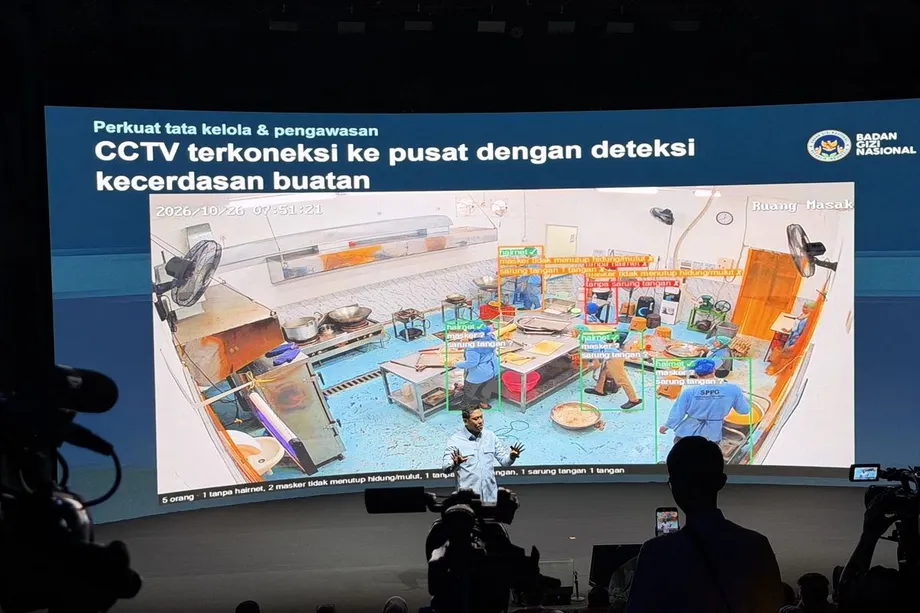
Sumedang also plans to use artificial intelligence to help assess meals against nutrition and calorie standards. For now, its described monitoring process rests on daily reporting and comparisons between kitchen and school documentation. The review by Park and Kwon similarly recommends standardized menus, kitchen certification and monitoring that allows problems to be detected quickly.
Papua seeks to turn meal purchases into local farm income
Papua's provincial government has offered to connect kitchen operators with local farmers and livestock breeders. Provincial Agriculture Department head Lunanka V.M.L. Daimboa said local production was available, but purchasing decisions needed to be matched with information about commodities and quantities.
Daimboa urged operators to consult the department's production data before choosing suppliers. Direct purchases could shorten distribution chains and give producers more reliable markets and better prices.
The Home Affairs Ministry has also asked Papua's kitchens to prioritize local farmers. Ministry inspectorate official Arie Satria described a November 5 monitoring meeting concerning a task force to accelerate MBG implementation, and called for stronger coordination between provincial, regency and city authorities.
Local procurement connects the nutrition program with its economic goals. The Global Child Nutrition Foundation says MBG has supported approximately 600,000 jobs across kitchens and supply businesses. UGM's economists point to Brazil's PNAE school feeding program, which requires a minimum share of ingredients, cited as 30%, to come from smallholder farms, as an example of a concrete purchasing rule.
For Papua, the immediate task is matching menus and volumes with what nearby farms can supply. Local workers, digital supply records and the Patriot Gizi initiative to support personnel are also among the government's stated management changes.
Island communities show how paperwork can interrupt meals
Thirty four kitchens in the Riau Islands temporarily stopped operating after BGN changed its procedures for replenishing operational funds. Provincial MBG task force secretary Rika Azmi said kitchens must first submit daily fund use reports, known as LPDH, before receiving additional money.
Rika attributed the stoppages to the administration process and said operational allocations had not been reduced. The provincial task force was coordinating with BGN to restore service, while also pressing for more kitchens in remote communities.
By October 2026, the Riau Islands program had reached 594,278 people, or 87.47% of its target of 679,402. Among 235 kitchens, 226 held hygiene and sanitation certificates, leaving nine still to complete certification.
Simeulue, an island region of Aceh about 180 nautical miles from Sumatra's western coast, experienced similar interruptions. BGN regional coordinator Elysa Wulandari said five kitchens had temporarily stopped serving meals: Lugu, Suka Jaya, Simeulue Teupah Selatan, Busung and Awe Kecil.
Three were waiting for operating funds, while two were suspended over daily fund use reports. The first group could resume after money reached their virtual accounts; the suspended kitchens required BGN approval of their reports. For a region of around 96,000 residents spread across 138 villages, these administrative steps directly affect whether an established kitchen can continue serving meals.
The examples bring the national reforms into focus. Beneficiary checks, kitchen inspections and financial reporting each address a specific weakness. Their success will be visible in ordinary outcomes: kitchens receiving funds on time, farmers supplying agreed quantities and children receiving safe, nutritious meals without interruptions.
Key Points
- MBG reached 58.2 million beneficiaries through 27,485 kitchens by October 31, 2026.
- Cumulative spending reached Rp173.21 trillion, rising by Rp20.02 trillion during October.
- Health Ministry surveillance dated September 2 recorded 50,059 people affected by poisoning associated with MBG since launch.
- Kitchen assessments begin in Java with facilities serving at least 2,500 beneficiaries.
- About 1,500 kitchens have been activated in remote priority areas and places with high stunting rates.
- Sumedang is comparing kitchen and school meal records, while Papua is seeking stronger purchasing links with local farmers.
- Funding and reporting problems temporarily interrupted services at 34 kitchens in the Riau Islands and five in Simeulue.