More time for childbirth and the early school years
Taiwan's Legislative Yuan passed amendments on November 13, 2026, extending maternity leave from eight to 14 weeks and allowing parents to take child-rearing leave until their child's ninth birthday, rather than the third. The maximum duration of that leave remains two years.
Contents
- More time for childbirth and the early school years
- Maternity leave grows by six weeks
- Shorter pregnancies receive more recovery time
- What changes for the other parent?
- Child-rearing leave extends beyond toddlerhood
- Sixty days for care that cannot wait
- How the longer allowance will work
- Workers will not all receive the same support
- A local proposal would add more financial support
- What happens before the rules begin?
- Key Points
The changes to the Act of Gender Equality in Employment and the Employment Insurance Act also create an entitlement to take childcare leave in individual days, up to 60 days per employee for each child. Parents could use it for illness, suspended classes, vaccinations and other situations requiring their personal care.
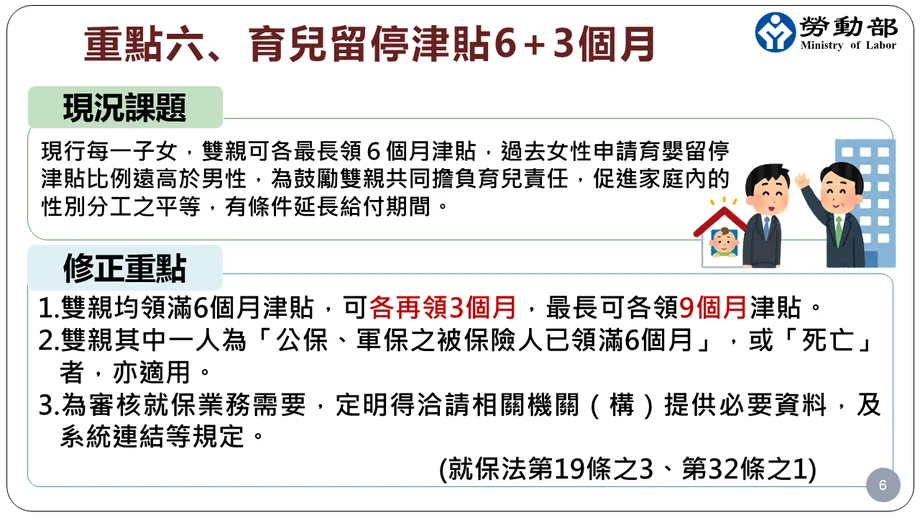
Financial support will also last longer for qualifying families. If both parents each receive the existing six months of parental leave allowance, each can receive another three months. Their combined maximum would rise from 12 months to 18 months, an increase of 50 percent.
Labor Minister Hung Sun-han said the government expects the policies to begin on January 1, 2027. The amendments still require promulgation by President Lai Ching-te, and the Executive Yuan, Taiwan's Cabinet, will determine the effective date. January 1 is therefore the announced target while the formal implementation process continues.
The package reaches beyond the months immediately after birth. It extends protection into the transition from preschool to primary school, when parents may still need to stay home with a sick child or respond to a sudden classroom closure. It also leaves differences in financial support between workers, particularly caregivers who live in their employers' homes.
Maternity leave grows by six weeks
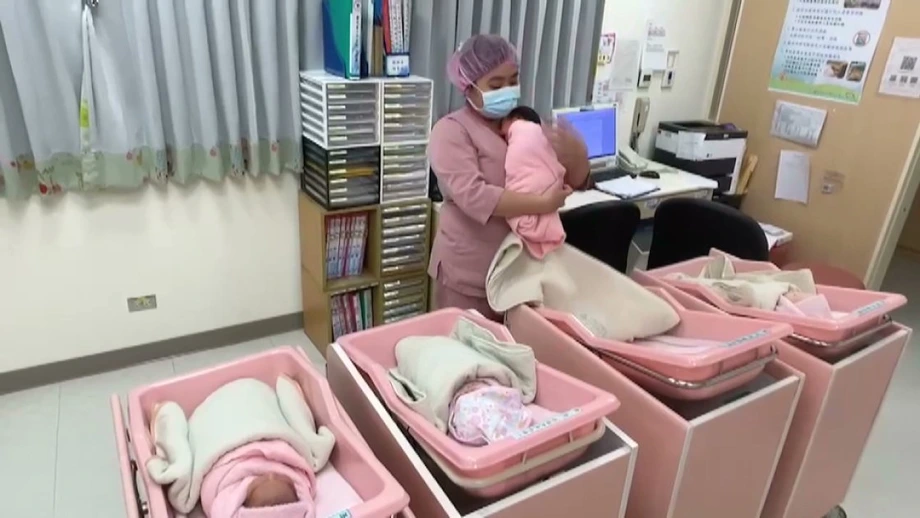
The maternity leave entitlement will increase by six weeks, or 75 percent, from its current eight weeks. That gives employees more time away from work around childbirth and recovery.
Huang Chi-ya, director of the Ministry of Labor's Department of Labor Standards and Equal Employment, said employees could choose to end maternity leave early and return to work. She described that option as respecting an employee's own wishes about returning to employment.
The pregnant employee's entitlement to prenatal examination leave remains seven days. Another change allows unused prenatal examination leave to be taken on working days immediately after maternity leave, giving employees time for examinations and recovery after birth.
Kuomintang legislator Chen Ching-hui said the 14 weeks brings Taiwan into line with the International Labour Organization's minimum maternity leave standard. She also said more than 60 percent of countries provide at least 14 weeks.
Democratic Progressive Party legislator Lin Yueh-chin said the longer period should help mothers recover physically and mentally. She argued that childbirth should not force women out of employment or become a disadvantage when seeking a job or promotion.
Shorter pregnancies receive more recovery time
The amendments also increase leave after a miscarriage during the earlier stages of pregnancy. The entitlement depends on how far the pregnancy had progressed.
- At three months of pregnancy or later, leave remains four weeks.
- From two months to less than three months, leave increases from one week to two weeks.
- Before two months, leave increases from five days to 10 days.
Both of the shorter entitlements therefore double. The four weeks available after a miscarriage at three months or later stays unchanged.
Taiwan People's Party legislator Chiu Hui-ju said her party had sought stronger protection for women experiencing miscarriage. Including these changes in the package extends recovery time to employees whose pregnancies end before childbirth.
What changes for the other parent?
The Ministry of Labor described the spouse's entitlement for accompanying prenatal examinations and childbirth as increasing from seven to 14 days. The childbirth provisions also specify that paternity leave must be taken within 15 days of the birth.
Descriptions of how those days are divided are inconsistent: the ministry described a combined entitlement of 14 days, while another published account described 14 days of paternity leave and a separate, unchanged seven days for accompanying prenatal examinations. Families will need the final implementing guidance to understand that allocation.
The Childcare and Employment Policy Alliance welcomed the wider reforms but said the increase for spouses was too small compared with the six additional weeks of maternity leave. Its concern is practical: the parent recovering from childbirth may still have to learn newborn care and carry much of that work without enough support at home.
The alliance called for prenatal accompaniment leave and childbirth leave to be separated. It wants paid paternity leave to increase by at least six weeks, matching the additional maternity leave, so both parents have more time to learn and share care.
Child-rearing leave extends beyond toddlerhood
The amendments rename the existing infant care leave system as child-rearing leave and extend the eligible period from before a child's third birthday to before the ninth. Children aged eight remain within that window; eligibility ends when they turn nine.
The two years available for leave remain the same. Parents gain a longer period in their child's life in which to use that entitlement, rather than a larger total amount of leave.
The Childcare and Employment Policy Alliance said the new age limit covers an important transition from kindergarten into the early years of primary school. Children still need supervision after age three, and parents continue to face responsibilities when childcare services or classes close.
For a parent who has leave remaining, the change could make it possible to use some of it during the early school years rather than having to use it all during infancy and toddlerhood. The practical value is the ability to match time away from work to when care is needed.
The ministry also plans an incentive program encouraging reduced working hours for parents of children aged nine to 12. That proposal would address the next age group through employer incentives, while the amendments extend the statutory leave window to the ninth birthday.
Sixty days for care that cannot wait
The new childcare leave entitlement allows employees to take individual days when they need to care personally for a child. Huang said it expands an existing arrangement allowing 30 days of parental leave taken by the day to 60 days.
Qualifying circumstances include a child's illness, suspended daycare services or school classes, vaccinations, and parenting activities organized by childcare providers, early childhood education institutions or schools. Other circumstances requiring parental care are also covered.
Each employee may take up to 60 days for each child. Those days count toward the child-rearing leave period and its related allowance. They use part of the existing entitlement rather than adding another 60 days beyond the two years.
The alliance said employment seniority would continue to accumulate during childcare leave. Seniority is the length of service that can affect an employee's workplace entitlements.
The group also said treating these absences as leave should reduce repeated administrative work associated with suspending employment and returning to work. For employers, a simpler attendance process could make an occasional day of childcare easier to manage. For parents, it better matches the reality of a child who needs care for a day rather than several months.
How the longer allowance will work
The Employment Insurance Act currently provides parental leave allowance for up to six months. Under the amendments, both parents must each receive that full six months before the additional three months becomes available to each of them.
The condition ties the extra support to both parents using the allowance. A qualifying couple could receive nine months each, giving them a combined maximum of 18 months.
The allowance period and the leave period are different. Leave is permission to be away from work while retaining the employment relationship. The allowance is financial support during an eligible part of that absence. The two years of leave therefore extend beyond the maximum period of allowance payments.
The statutory allowance remains 60 percent of average insured monthly salary. A further government supplement of 20 percentage points brings the combined payment to 80 percent, as under the existing arrangement.
Legislators adopted an accompanying resolution asking the Ministry of Labor to continue budgeting for that supplement under the Parental Leave Salary Subsidy Guidelines. They retained the distinction between the 60 percent written into the insurance law and the additional 20 percent financed through the public budget.
Insured salary is the salary amount used to calculate an insurance benefit. A worker's allowance is calculated from that amount, which may differ from their full earnings.
Chen Mei-nu, director of the ministry's Department of Labor Insurance, said a separate employment insurance salary schedule would raise the top insured salary bracket to at least NT$50,000. Raising that ceiling would allow benefits for some higher earners to be calculated on a larger salary base.
Workers will not all receive the same support
Migrant workers are entitled to maternity leave under Taiwanese law, but caregivers who live in their employers' homes are not entitled to paid maternity leave. Those caregivers may take unpaid parental leave but are also ineligible for the related parental leave allowance.
For these workers, permission to take time away and the money needed to afford that time remain separate issues. The expanded age window can provide more flexibility, while the absence of an allowance leaves a financial constraint.
The alliance urged employers to support employees using the new system, especially men, and to plan staffing and temporary cover in advance. Its argument is that a legal entitlement becomes useful in daily life when employees can take leave and workplaces can continue operating.
Lawmakers from the Democratic Progressive Party, Kuomintang and Taiwan People's Party supported the package against the backdrop of Taiwan's persistently low birth rate. Their stated goals included protecting recovery after childbirth, reducing pressure to leave employment and making care more equally shared between parents.
A local proposal would add more financial support
In New Taipei, mayoral candidate Lee Sichuan's campaign welcomed the national changes and pointed to a proposal he announced in October to bring parental leave income support to 100 percent. The campaign said a future city administration under Lee would fund the remaining 20 percent above the central government's allowance and supplement.
The proposal is a campaign commitment, with implementation dependent on Lee becoming mayor and the city putting the necessary measures in place. Its focus is the income reduction that families weigh when deciding whether a parent can afford to take leave.
Lee's wider platform includes increasing the subsidy for thawing frozen eggs from NT$30,000 to NT$60,000, free amniocentesis, and up to NT$3,000 for other genetic disease screening. It also proposes three free psychological counseling sessions and additional care for people facing higher risks during pregnancy.
Other proposals include using unused school classrooms for public childcare facilities, free temporary childcare at sports centers, a New Taipei BABY BOSS family venue, and extending subsidized pregnancy transport until a child turns one. Families with at least two children under 18 would be offered social housing tenancies lasting up to 20 years.
What happens before the rules begin?
The Ministry of Labor plans to revise and announce the detailed regulations before the target launch. Hung said the preparation period would also give employers time to adjust their personnel systems.
The main sequence of events is:
- October 2026: Lee Sichuan announces his New Taipei proposal to supplement parental leave support to 100 percent.
- November 13, 2026: The Legislative Yuan passes amendments to the employment equality and employment insurance laws.
- After passage: The amendments go to President Lai Ching-te for promulgation, while the Executive Yuan determines their effective date.
- January 1, 2027: The Ministry of Labor's target date for the related policies and regulations to begin.
The package changes three parts of working family life together: recovery around pregnancy and birth, the ages at which parents can use child-rearing leave, and the duration of financial support when both parents participate. The remaining preparation will turn those entitlements into the procedures employees and employers use.
Key Points
- Maternity leave rises from eight to 14 weeks under amendments passed on November 13, 2026.
- Child-rearing leave becomes available until a child's ninth birthday, with the maximum duration unchanged at two years.
- Each employee may use up to 60 individual days of childcare leave per child, counted within the child-rearing leave entitlement.
- Both parents can qualify for nine months of allowance each after each has received six months, for a combined maximum of 18 months.
- The statutory allowance remains 60 percent of insured salary, with a budget supplement bringing support to 80 percent.
- Caregivers who live in employers' homes remain ineligible for paid maternity leave and parental leave allowances.
- The government is targeting January 1, 2027, for implementation, with formal commencement to be determined by the Executive Yuan.