A New Digital Era for Vaccine Safety
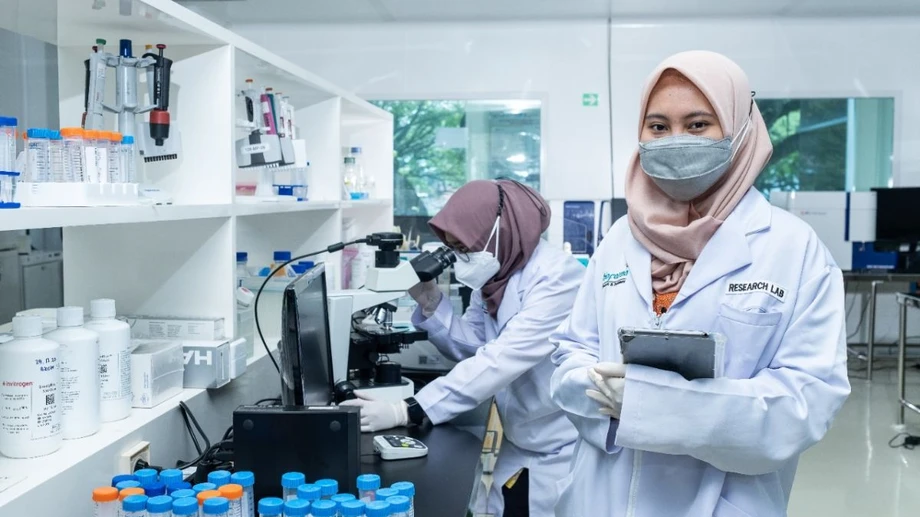
Health authorities in Indonesia are taking a major step toward modernizing how vaccines are tested and approved for public use. Officials, industry leaders, and academic researchers gathered in Bandung to evaluate the integration of artificial intelligence into the quality control process for polio vaccines. The collaboration brings together the Indonesian Food and Drug Authority, known as Badan Pengawas Obat dan Makanan, alongside the state-owned vaccine manufacturer PT Bio Farma. The initiative focuses on applying advanced digital tools to assist laboratory analysts in examining tissue samples, a critical step in ensuring that vaccines are completely safe before they reach children and families.
Contents
The push toward digital transformation aims to address long-standing challenges in pharmaceutical laboratories. While traditional testing methods have protected public health for decades, they rely heavily on manual labor and careful human observation. By introducing modern technology, health agencies hope to reduce testing times and improve the consistency of results across hundreds or thousands of medical samples. The collaboration highlights a broader effort to strengthen the national pharmaceutical industry and maintain high standards of safety that align with international benchmarks.
Understanding the Neurovirulence Test
To understand why this technological upgrade matters, it helps to look at how vaccines are evaluated. Before any batch of polio vaccine is distributed, it must undergo a rigorous procedure known as neurovirulence testing. This test is designed to verify that the live virus used in the vaccine has been sufficiently weakened and no longer possesses the ability to attack the central nervous system of humans. Laboratory specialists administer the vaccine candidate to test animals and subsequently examine their neural tissues to check for any signs of inflammation or damage.
The examination of these neural tissues relies on a method called histopathology, which involves preparing thin slices of tissue and viewing them under a microscope. Analysts must carefully search for microscopic lesions and abnormalities that indicate whether the virus remains dangerous. Because a single testing cycle can generate vast quantities of detailed images, human analysts often spend hours poring over complex visual data. The sheer volume of work can lead to eye strain and fatigue, which in turn introduces the risk of human subjectivity or inconsistency into the evaluation process.
How Artificial Intelligence Assists Analysts
Artificial intelligence enters this process not to replace human experts, but to serve as a tireless digital assistant. Computer algorithms can be trained to scan large sets of digital images and quickly identify patterns that match known tissue damage or normal healthy cells. When applied to histopathology, machine learning tools can highlight areas of concern on a digital slide within seconds, allowing human pathologists to focus their attention where it is needed most. This teamwork between human expertise and machine speed promises to make evaluations far more objective and reproducible.
PT Bio Farma Director of Operations Iin Susanti emphasized the practical benefits of this technological shift for laboratory staff. In remarks delivered during the workshop, she explained how digital automation helps overcome the physical limitations of manual microscopic reading over long periods. She noted that eliminating human fatigue leads to more reliable outcomes and faster processing times. According to project estimates, the integration of artificial intelligence could reduce the total time required for these specific quality control procedures by up to fifty percent, allowing life-saving vaccines to move through the pipeline much faster.
Building a Foundation of Scientific Rigor
Regulatory authorities stress that adopting new technologies in healthcare requires strict adherence to scientific evidence and safety protocols. Head of BPOM Prof. dr. Taruna Ikrar pointed out that the incorporation of artificial intelligence does not mean skipping essential preclinical trials or abandoning animal testing altogether. Every step must meet rigorous standards to guarantee that public safety is never compromised. He stressed that innovation must be built on verifiable data to maintain public trust in medical products.
Speaking at the workshop, Taruna Ikrar underscored the importance of maintaining rigorous oversight while embracing modernization. He explained that regulatory frameworks must evolve alongside technological capabilities to ensure proper governance. Officials are currently reviewing international benchmarks established by agencies such as the US Food and Drug Administration and the European Medicines Agency to guide their approach. The goal is to establish clear validation protocols that ensure any AI-assisted tool can reliably detect even the slightest trace of residual viral virulence before it is ever used in routine manufacturing.
Timeline for Implementation and Regulatory Steps
Moving from a workshop concept to daily laboratory use requires careful preparation and data standardization. PT Bio Farma and regulatory authorities have outlined a deliberate schedule to bring the technology from development to full integration. The process involves gathering thousands of digital tissue images, standardizing the data formats, and training the artificial intelligence models to recognize microscopic structures accurately across different testing batches.
- Wednesday, November 18, 2026: Experts and officials convene in Bandung for the Workshop on Artificial Intelligence Transformation for Neurovirulence Testing.
- Late 2026 to Late 2027: Estimated one-year period for data collection, model training, validation, and the potential rollout of AI-assisted histopathology in routine quality control.
- End of 2027: Target deadline for implementing High-Throughput Sequencing as a complementary method for vaccine batch certification under BPOM regulations.
To accommodate these rapid technological advancements without administrative bottlenecks, regulatory bodies are prepared to move swiftly. Taruna Ikrar noted that if formal rule-making processes take too long, the agency can issue specific decrees or circular letters to fast-track the legal framework required for digital pathology and high-throughput sequencing methods.
Global Context and the Future of Vaccine Production
The modernization of vaccine testing in Indonesia occurs within a fast-changing global pharmaceutical landscape. Data from the World Health Organization indicates that the worldwide vaccine market reached substantial heights recently, with billions of doses distributed annually to combat infectious diseases. A small number of major manufacturers control the vast majority of global vaccine volume and market value, putting heavy pressure on national producers to maintain high efficiency and competitive standards.
Indonesia already plays a vital role in global public health through the production of oral polio and other essential vaccines that supply both domestic immunization programs and international distribution networks. By integrating advanced tools like artificial intelligence and green laboratory concepts, the country aims to strengthen its position within the global health supply chain. Officials hope that these innovations will eventually expand beyond infectious diseases to support research into non-communicable health challenges, including treatments and vaccines for cancer and other complex conditions.
Key Points
- PT Bio Farma and BPOM are collaborating to introduce artificial intelligence into the quality control process for polio vaccines.
- The technology is designed to assist analysts in reading digital histopathology images during neurovirulence testing.
- Officials estimate that the digital upgrade could cut testing time by up to fifty percent and reduce human fatigue.
- Implementation requires gathering and standardizing large datasets over an estimated period of about one year.
- Regulatory oversight follows international standards set by global health authorities to ensure safety and scientific validity.