Free vaccines reach boys, but coverage remains uneven
Indonesia has extended free human papillomavirus vaccination to boys in Jakarta, Yogyakarta and Bali in 2026, with the Ministry of Health reporting coverage of 88% among boys targeted in the three provinces. Girls in fifth grade, covered by a nationwide programme since 2023, recorded coverage of 83.5% in the ministry's 2026 update.
Contents
- Free vaccines reach boys, but coverage remains uneven
- Who receives the vaccine?
- How the programme reached this stage
- Why vaccinating boys matters
- Why the ministry prioritises childhood vaccination
- Bali's high average hides a district gap
- Answering fears with people families trust
- Safety and screening remain part of the programme
- The wider vaccination system is making progress
- Key Points
Bali's figures show how much local conditions can vary. The provincial health agency reported that 97.32% of targeted boys and 99.51% of girls had received the vaccine by November 2. In Karangasem district, coverage stood at 76.03% for boys and 81.07% for girls, with parental refusals identified as a barrier.
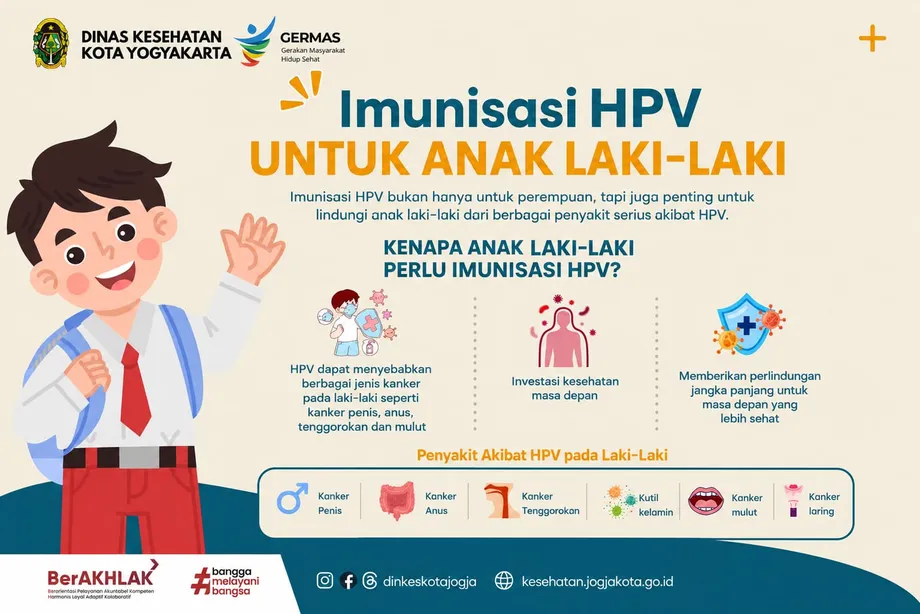
The expansion brings boys into a programme previously centred on preventing cervical cancer in women. HPV can also cause cancers in men. Vaccination offers protection during childhood, before infections that can eventually lead to disease.
The Ministry of Health puts Indonesia's annual deaths from cervical cancer linked to HPV at about 22,000 women; UNICEF's January 2025 account cited more than 18,000 annually. Both figures describe a heavy burden on families and health services, giving urgency to vaccination and screening.
Who receives the vaccine?
The current free programme targets children aged 10 to 11, or in fifth grade. Girls are eligible nationwide, while the expansion for boys currently covers Jakarta, Yogyakarta and Bali.
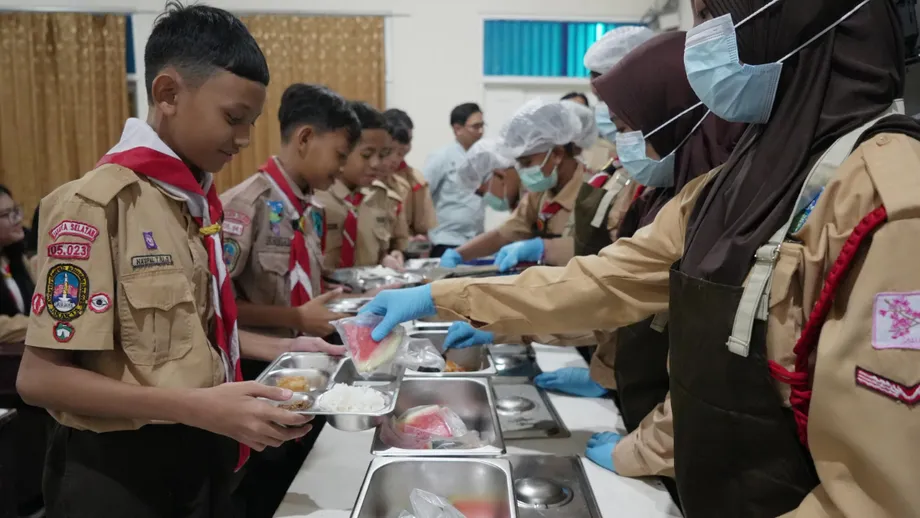
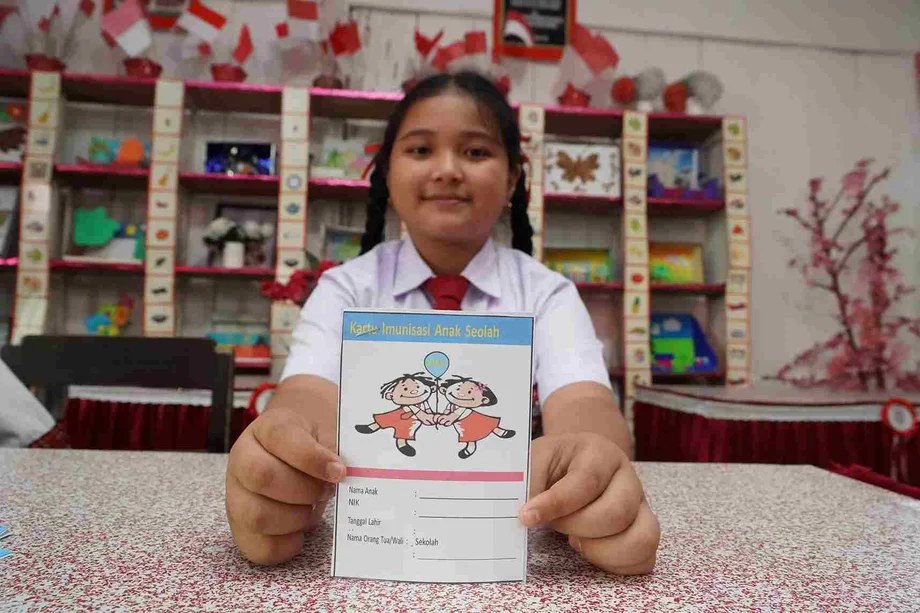
School delivery gives health workers a practical way to reach children of similar ages together. Indonesia uses Bulan Imunisasi Anak Sekolah, known as BIAS, or Schoolchildren Immunization Month, to organise vaccination through schools.
UNICEF's HPV programme account, published on January 21, 2025, described the earlier offer as free vaccination for girls in grades five and six and girls aged 11 and 12 who were outside formal education. Reaching children who do not attend school requires additional work by health centres and community volunteers.
The ministry's current update focuses on fifth grade and a single dose for girls. Its reported 2026 coverage of 83.5% is 7.3 percentage points below the 90.8% recorded for fifth grade girls in 2025. The ministry did not specify the reporting cutoff for its 2026 figures or announce a date for extending free vaccination to boys nationwide, so the immediate task remains reaching eligible children within the existing programme.
How the programme reached this stage
Indonesia's expansion has progressed from district pilots to nationwide vaccination for girls, followed by the first three provinces offering vaccination to boys. UNICEF's January 2025 account had described a plan to vaccinate boys in 2028; implementation in the three provinces began in 2026.
The main milestones show how the scope has changed:
- 2021: The programme began with pilots in 20 districts.
- 2022: Vaccination expanded to 112 districts.
- August 2023: Indonesia launched nationwide HPV vaccination for girls.
- 2025: The government planned additional vaccination for girls aged 15 who had missed earlier protection.
- 2026: Jakarta, Yogyakarta and Bali began expanding free HPV vaccination to boys.
- 2027: Bali plans to expand vaccination for boys further and connect the programme with cervical cancer screening.
More than 89% of girls targeted for a first dose received it in 2023, according to UNICEF. That early reach established a broad programme, while the current figures show that maintaining participation requires continued attention.
The launch in three provinces included vaccination for boys in Karangasem from early September 2026 under Minister of Health Decree No. 839 of 2026. Yogyakarta had announced an August start through BIAS. Bali's next expansion is planned for 2027, bringing a further delivery milestone after the initial rollout.
Why vaccinating boys matters
HPV is a group of viruses that can infect skin and the tissue lining parts of the body. Some types cause genital warts. Others can lead to cancer when an infection persists and causes cells to change over time.
The cervix, the lower part of the womb, is particularly vulnerable. UNICEF says HPV causes about 95% of cervical cancer cases. Vaccination prepares the body's immune system to recognise targeted virus types before they cause infection.
Boys face their own risks. The ministry cited global figures showing that about 95,000 men developed cancers related to HPV in 2022 and about 44,000 died from those cancers. These are worldwide figures, rather than estimates for Indonesian boys or men.
Bali Health Agency head I Nyoman Gede Anom identified anal, penile and oropharyngeal cancers among the diseases the programme seeks to prevent. Oropharyngeal cancer affects the middle part of the throat, including the area around the tonsils and the back of the tongue.
Including boys therefore gives the programme a direct purpose beyond cervical cancer prevention: protecting males against diseases caused by HPV. It also broadens prevention within the population rather than leaving vaccination entirely to girls.
Why the ministry prioritises childhood vaccination
Dr Indri Yogyaswari, the Ministry of Health's director of immunization, says protection is stronger when HPV vaccination is given during childhood. In an explanation reported on November 12, 2026, she compared vaccination at ages nine to 14 with vaccination after age 20.
Indri said one dose for children aged nine to 14 can provide about 88% protection, while two doses given after age 20 are estimated to provide about 60%. Her message to families was to use the opportunity for early protection rather than postpone vaccination until adulthood.
Those protection estimates describe the benefit of vaccination. Programme coverage measures a different thing: the proportion of eligible children who actually receive a vaccine. Health authorities need both an effective vaccine and enough families accepting it to reach their prevention goals.
For parents, the school programme creates an opportunity to obtain that protection free of charge at the age targeted by the ministry. For health workers, explaining why a cancer prevention vaccine is given to children is a central part of securing consent.
Bali's high average hides a district gap
Bali reported total HPV vaccination coverage of 98.40% as of November 2, 2026, with the provincial result described as higher than those in the Jakarta and Yogyakarta pilot areas. Karangasem, however, had the lowest coverage within Bali.
The difference is substantial. Boys in Karangasem had coverage of 76.03%, compared with 97.32% across Bali, a gap of 21.29 percentage points. For girls, Karangasem's 81.07% compared with the provincial figure of 99.51%, a gap of 18.44 percentage points.
Anom said parental refusals were preventing health workers from reaching every targeted pupil. The province is responding through social media, schools and puskesmas, Indonesia's community health centres, including the distribution of educational videos to parents.
UNICEF has identified a wider set of delivery problems across Indonesia: cultural barriers, misinformation and difficulties keeping vaccines supplied, especially in rural communities and places with limited access to health services. District action therefore needs to address both willingness to vaccinate and the practical ability to reach children.
In Makassar, health workers have used local volunteers to find girls outside school. Irmawati, health coordinator at Puskesmas Kaluku Bodoa, described that approach in UNICEF's account:
We work with local volunteers to find out-of-school girls and ensure they receive the HPV vaccination.
Answering fears with people families trust
Aji Muhawarman, head of the Ministry of Health's Public Communication and Information Bureau, has urged journalists and content creators to share information supported by scientific evidence and correct false claims about HPV vaccination.
UNICEF's work with the ministry shows why those explanations need to reach beyond a national announcement. Some parents feared infertility or believed that vaccinating girls before puberty would encourage early sexual activity. Teachers, health workers and religious leaders received communication training to help answer such concerns in familiar settings.
Sarwina, a teacher at SD Negeri Sudirman IV in Makassar, described how the training changed conversations with parents:
At first, parents were scared. They thought the vaccine might cause infertility. But after our educational sessions, they began to see how vital it is to protect their daughters from cervical cancer. Now, they're asking for the vaccine.
Professor Mustari Mustafa, chair of international relations at the Indonesian Ulema Council in South Sulawesi, also supported vaccination as a way to protect children's health. His involvement brought a religious community voice into discussions that families might otherwise encounter mainly through schools or clinics.
The Risk Communication and Community Engagement working group, chaired by Rizky Ika Syafitri, has developed the website imunisasi-hpv.rcce.id. It provides questions and answers, educational videos, social media materials, research and policies covering HPV, cervical cancer, oropharyngeal cancer and vaccination.
Safety and screening remain part of the programme
Professor Hinky Hindra Irawan Satari, chair of the National Commission on Post-Immunization Adverse Events, said the HPV vaccine underwent clinical trials before use in the national programme and that its safety and effectiveness had been evaluated.
Possible reactions include swelling, redness or pain where the injection is given. Some recipients may experience dizziness, weakness, fever, nausea or vomiting. Hinky said these reactions are generally mild and resolve.
Adult women have a separate route to prevention. The Ministry of Health offers cervical cancer screening from age 30 through Cek Kesehatan Gratis, or CKG, the Free Health Check programme. Vaccination aims to prevent infections that can cause future cancer, while screening helps find existing risks or abnormal changes so women can receive further assessment and treatment.
The HPV DNA screening expansion announced in 2025 aimed to make testing for genetic material from the virus available more widely for women aged 30 to 69, alongside visual examination. Earlier estimates indicated that about 70% of cervical cancer cases were detected at advanced stages, making earlier detection a major part of the national strategy.
Yuli Yanti, a mother living near Makassar, described the burden of treatment after her cervical cancer diagnosis in 2021. In UNICEF's account, she explained why she wanted protection for the next generation:
I had to undergo 35 rounds of radiation and chemotherapy. It was exhausting. But I keep fighting, not for myself, but for my daughters.
Yuli subsequently brought her daughter and nieces for vaccination. Her experience connects the two parts of the programme: care for women facing disease now and prevention for children before they face the same risk.
The wider vaccination system is making progress
Indonesia's HPV expansion comes alongside gains in routine childhood immunization. A WHO immunization update published on July 21, 2026, presented the 2025 WHO/UNICEF Estimates of National Immunization Coverage, known as WUENIC.
Coverage for the third doses of vaccines against diphtheria, tetanus and pertussis, and against hepatitis B, rose from 78% in 2024 to 82% in 2025. More than 3.6 million children completed those vaccine courses in 2025.
The estimated number of children described as having received no vaccine dose fell from 748,000 to 657,000, a reduction of 91,000, or about 12%. WHO also said more girls received HPV vaccination in 2025, while coverage for several other vaccines stayed unchanged or declined.
Dr N. Paranietharan, WHO representative to Indonesia, called for stronger routine services and focused efforts to reach underserved populations. UNICEF Indonesia representative Maniza Zaman credited leadership, innovation and community engagement for progress in reaching children.
For HPV vaccination, the practical priorities are visible in Karangasem and in efforts to reach girls outside school: identify missed children, answer parental concerns and deliver vaccines where families can obtain them. Bali's planned expansion in 2027 and the continued screening programme give health authorities concrete next steps toward Indonesia's stated goal of eliminating cervical cancer as a public health threat by 2030.
Key Points
- Free HPV vaccination for boys began expanding in Jakarta, Yogyakarta and Bali in 2026; girls have been covered nationwide since 2023.
- The ministry reported 88% coverage among targeted boys in the three provinces and 83.5% among fifth grade girls nationally in its 2026 update.
- Bali's high provincial coverage masks lower participation in Karangasem, where officials cited parental refusals.
- The programme combines childhood vaccination with cervical cancer screening for women aged 30 and older through CKG.
- Bali plans further expansion for boys in 2027, alongside screening and public education.