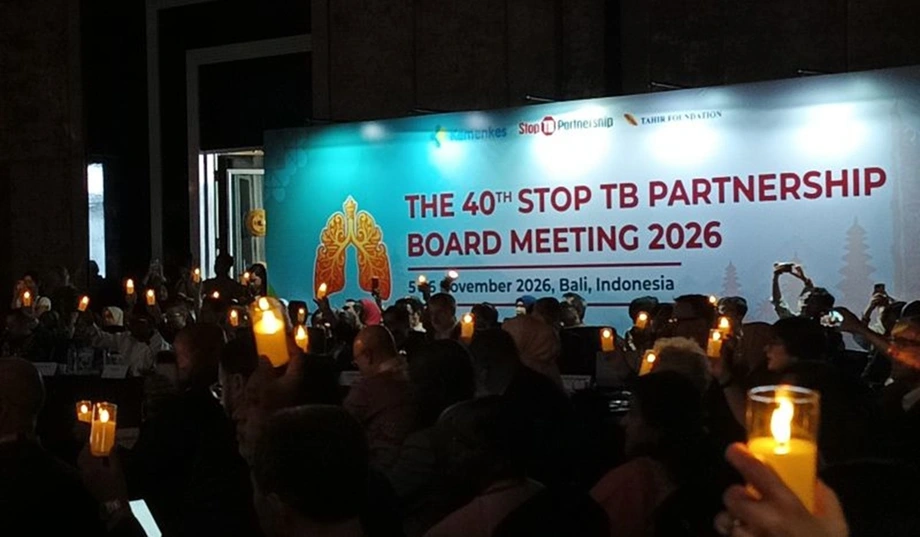
Three regional variants put TB research in focus
Indonesia's Health Ministry has identified three geographically distinct tuberculosis genomic variants in research involving 7,000 patients, Health Minister Budi Gunadi Sadikin said on November 5, 2026. The findings are prompting the government to investigate whether differences in the bacteria found across western, central and eastern Indonesia affect the performance of new vaccines and medicines.
Contents
- Three regional variants put TB research in focus
- What the genomic study found
- Why regional differences matter for patients
- Where the M72 vaccine trial stands
- BPOM prepares a faster review route
- How to understand the early efficacy figures
- A shorter treatment is another priority
- From trial participation to the 2028 possibility
- Budi presses for action beyond meetings
- Key Points
Budi announced the findings at the 40th Stop TB Partnership Board Meeting in Badung, Bali. The Global Fund financed the research, which used genome sequencing technology from Illumina and Oxford Nanopore to examine the genetic makeup of the bacteria responsible for TB.
The announcement comes as Indonesia participates in a phase 3 trial of the M72 vaccine candidate and prepares a clinical trial of a new TB medicine intended to shorten treatment. Together, those projects give the government a practical reason to understand how the bacteria vary across the country.
Budi said the next research task was to examine whether the regional genetic differences influence sensitivity to treatment or the effectiveness of vaccines. The ministry has not yet announced results answering that question.
The stakes are substantial. Budi cited 136,000 TB deaths annually and said Indonesia has the world's second highest number of new TB cases, after India. That ranking concerns disease incidence, meaning new cases, while the death figure describes the human cost of the illness.
What the genomic study found
The study grouped the findings into three variants associated with western, central and eastern Indonesia. Budi described clear genetic differences between those regional groups and thanked the Global Fund for supporting the examination of samples from 7,000 patients.
Genome sequencing reads an organism's genetic instructions. For TB, researchers examine the DNA of the bacteria that cause the disease. Comparing those instructions helps them identify similarities and differences among bacteria collected from different patients and places.
Illumina and Oxford Nanopore supplied the sequencing technologies used in the research. Both enable scientists to read DNA, giving the ministry a way to map bacterial differences across Indonesia rather than relying only on where patients live or how their illness appears.
The geographical pattern gives researchers a starting point for further investigation. They can examine whether the genetic groups respond differently to medicines and whether vaccine protection varies among people exposed to them. Those are the questions Budi wants the completed sequencing work to help answer.
Why regional differences matter for patients
Budi wants the development of new vaccines and treatments to take account of the bacteria circulating in Indonesia. A medicine works by acting on particular features of a bacterium, while a vaccine trains the body's immune system to recognise a threat. Genetic differences can therefore be relevant to the questions researchers investigate.
For a patient, the practical concern is straightforward: whether the treatment prescribed will work and whether a future vaccine will provide protection. Connecting the genetic findings with clinical research would help scientists examine those outcomes across the regions identified in the study.
Drug sensitivity describes how susceptible bacteria are to a medicine. If bacteria can continue to survive despite a drug, treatment becomes more difficult. Researchers need to connect genetic information with laboratory and patient results to understand how a particular bacterial variant responds.
Indonesia's involvement in vaccine and drug development creates an opportunity to make that connection. The sequencing project describes the bacteria present in the country; clinical trials examine how a candidate product performs in people. Budi's proposal is to bring those lines of research together so future decisions reflect Indonesia's disease patterns.
Where the M72 vaccine trial stands
Indonesia is participating in the international phase 3 trial of M72 alongside South Africa, Kenya, Zambia and Malawi. Indonesian research partners include Universitas Indonesia and Universitas Padjadjaran.
On May 9, 2025, Budi said Indonesia had enrolled 2,095 adolescent and adult participants and that more than 2,000 had already received an injection. Those figures describe participation at that earlier stage of the study.
Clinical trials move through stages that investigate safety, immune responses and effectiveness. Phase 3 generally involves larger groups and compares outcomes to determine whether a candidate provides the intended protection, while safety monitoring continues. For a preventive TB vaccine, the central question is whether vaccination reduces the risk of developing disease.
Budi said in May 2025 that successful development by 2028 could open the way for M72 to enter Indonesia's national immunisation programme. That possibility depends on the trial results and the decisions that follow. Participation also gives Indonesian institutions experience with the candidate and provides evidence from people living in a country with a large TB burden.
BPOM prepares a faster review route
Indonesia's Food and Drug Authority, known as BPOM, is considering how to accelerate its evaluation of M72. Tri Asti Isnariani, BPOM's director of drug registration, said the agency had coordinated with the European Medicines Agency on a joint assessment.
Speaking at the Bali meeting, Tri Asti described the planned collaboration:
For the M72 vaccine, we have coordinated with the European Medicines Agency. We will conduct a joint assessment to speed up the process.
A joint assessment allows regulators to work together when examining evidence about a medical product. The aim is to reduce duplicated work and make evaluation more efficient. BPOM is also processing internal rules for conditional approval, a route that could allow earlier access under specified conditions while further evidence is gathered.
Tri Asti said she would report to BPOM's leadership after the meeting on whether that route could be used for M72. A decision and approval date had not been announced. BPOM said it would continue to consider safety and product quality while pursuing a faster review.
The agency's international work also includes its status as a WHO Listed Authority and the placement of two experts at the World Health Organization, working in medicine marketing authorisation and laboratories. Those arrangements support its communication and technical cooperation with other health authorities.
How to understand the early efficacy figures
Tri Asti's discussion of M72 included early efficacy figures of about 54 to 57 percent after phase 2 research. Efficacy measures the reduction in disease risk among vaccinated participants compared with a comparison group under trial conditions.
A vaccine with efficacy of about 55 percent would mean that the vaccinated group had roughly 55 percent less risk of the measured disease outcome than the comparison group during the study. The percentage concerns a difference in risk between groups; individual protection can vary.
The regulatory discussion also cited a WHO efficacy benchmark of 55 percent. The stated range of 54 to 57 percent spans that figure, making the precise trial estimate, its uncertainty and the outcome being measured important parts of the assessment.
The phase 3 study is intended to provide a fuller picture of effectiveness. For Indonesia, Budi's genomic findings add another research question: whether the candidate's performance is consistent across the bacterial groups identified in different regions. Answering it would require clinical evidence linked to the genetic findings.
A shorter treatment is another priority
Indonesia is also preparing a clinical trial of a new TB drug that officials hope will shorten treatment. Budi placed that effort alongside vaccine development as part of the country's response to the disease.
TB treatment can require patients to take medicines over an extended period. A shorter effective course could reduce the time people spend managing doses, attending appointments and fitting treatment around work or school. The proposed trial will need to establish how the new medicine performs.
The sequencing research may help frame questions about the drug's activity against bacteria from different Indonesian regions. Budi wants the country to consider those differences as it develops treatments, rather than examining genetics and clinical performance as unrelated subjects.
The vaccine and medicine projects address different needs. Vaccination aims to prevent disease, while drug treatment helps people who are already ill. Screening connects patients with care by identifying those who need further testing and treatment.
From trial participation to the 2028 possibility
Indonesia's vaccine work and the new genomic announcement span several stages. The dates show how research participation, regulatory planning and possible public use fit together:
- May 9, 2025: Budi said Indonesia had enrolled 2,095 participants in the international M72 trial, with more than 2,000 already receiving an injection.
- November 5, 2026: At the Bali meeting, Budi announced the three regional genomic variants identified through research involving 7,000 TB patients.
- November 5, 2026: Tri Asti outlined plans for a joint M72 assessment with the European Medicines Agency and consideration of conditional approval.
- 2028: Budi's earlier remarks identified this as a possible point for successful vaccine development that could support inclusion in national immunisation.
The immediate work involves evaluating the vaccine, preparing the drug trial and investigating how the regional bacterial differences relate to medical outcomes. A public vaccination programme would also require arrangements to obtain and deliver doses to eligible people.
Budi presses for action beyond meetings
Budi used the annual toll of 136,000 deaths to argue that Indonesia must move more quickly. He illustrated the urgency by saying that about two Indonesians die of TB during every five minutes spent speaking at the forum.
The minister warned that a regulatory delay lasting a year could carry a serious cost for public safety. He asked his team to spend less time in discussion and administrative processes and more time implementing programmes, including obtaining the approvals needed to move promising products towards patients.
Budi, speaking about the work required to turn medical development into care, said:
Nothing reaches patients by chance. We need to screen patients, provide treatment, and deliver vaccines to them.
His message connects the genomic project with the practical demands of TB control. Researchers need to understand the bacteria, regulators need to assess products, and health services need to find and treat patients. Indonesia's next task is to carry those activities forward together while the vaccine and medicine studies produce the evidence needed for decisions.
Key Points
- Research involving 7,000 TB patients identified three genomic variants associated with western, central and eastern Indonesia.
- The Global Fund financed the work, which used Illumina and Oxford Nanopore sequencing technology.
- Researchers will investigate whether the regional differences affect vaccine performance or responses to treatment.
- Indonesia is participating in the international phase 3 M72 vaccine trial and preparing a trial of a new TB medicine.
- BPOM plans a joint M72 assessment with the European Medicines Agency and is considering conditional approval.
- Budi cited 136,000 annual TB deaths and urged faster regulatory decisions and programme delivery.