Two languages stay two, and three stay three for now
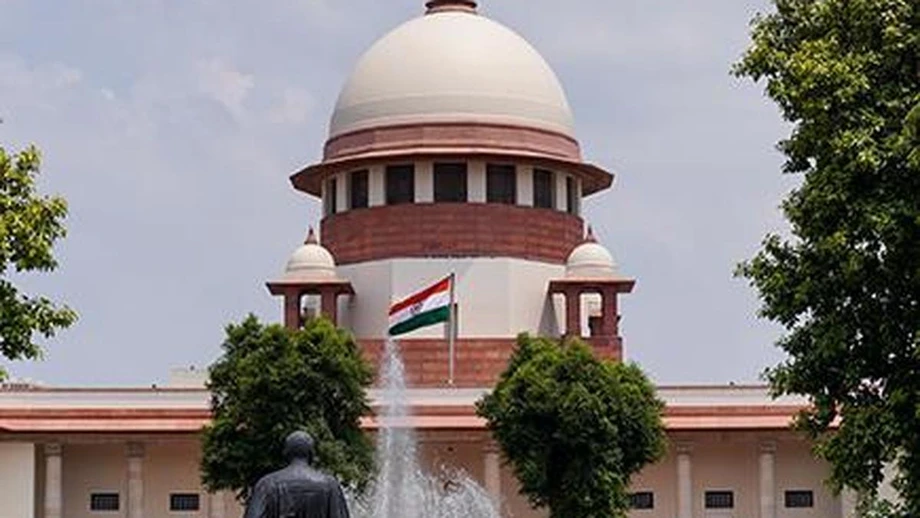
New Delhi, November 25, 2026: The Supreme Court has assured CBSE pupils that a transitional exemption will not force them to abandon language choices they have already made. Class 6 students studying three languages can continue with all three. Classmates currently studying two languages can retain that arrangement for the present academic year, although Chief Justice of India Surya Kant said they would be expected to take a third language the following year.
Contents
- Two languages stay two, and three stay three for now
- How the November 25 hearing reached that answer
- What the policy requires, and where the exemptions fit
- Why CBSE wanted the Class 6 exemption recalled
- Books and teachers present two very different pictures
- The dates that led to the clarification
- What families and schools should take from the ruling
- What to Know
Chief Justice Kant, Justice Joymalya Bagchi and Justice V. Mohana were hearing petitions challenging the Central Board of Secondary Education's formula requiring three languages. The case is Yashica Bhandari Jain and Others v Union of India and Others, Writ Petition (Civil) No. 694 of 2026, together with connected cases. Senior Advocate Gopal Sankaranarayanan represented the petitioners, while Solicitor General Tushar Mehta appeared for CBSE.
The immediate problem arose from CBSE's request to modify the court's September 28 order. That order had asked the board to consider giving Class 6 pupils the same transitional relaxation available to Class 7. CBSE argued that the resulting relief for Classes 6 to 9 needed reconsideration because some children had already selected combinations containing three languages. A general exemption could therefore create a fresh problem: schools might move those children back to two languages even though they had already begun studying three.
Chief Justice Kant explained the limited purpose of the clarification when the discussion returned to the protection of existing choices.
Those who have opted for 3 languages, let them continue with 3 languages, that's all
The Chief Justice also directed that institutions should not interpret the earlier orders in a way that requires pupils who selected three languages to return to two. The clarification protects continuity in the classroom while the wider legal challenge to the policy remains undecided.
How the November 25 hearing reached that answer
Justice Bagchi addressed the position of Class 6 directly. His concern covered both groups: children already studying three languages and children who had not chosen a third.
our direction was that students of class 6, if they have opted for 3 languages, they will continue for 3 languages. If they have not opted, don't force them...let them continue in the way they are continuing
Chief Justice Kant called the situation a "human problem" and indicated that the bench wanted to bring the immediate issues to a close. When a lawyer referred to a difficulty with the earlier order, he responded, "I think now let's close these issues." His approach was to preserve the arrangements pupils were already following rather than add another change during the academic year.
Solicitor General Mehta raised two administrative concerns for CBSE. He submitted that pupils who had selected three languages should not ask to return to the earlier arrangement, and he questioned whether the relaxation should run until Class 10. Justice Bagchi answered that the exemption already available to Class 7 pupils ran until Class 10. Additional Solicitor General Aishwarya Bhati had earlier explained that Classes 7, 8 and 9 would have no CBSE Board examination in the third language when they reached Class 10. Schools would assess that language internally, without a pass or fail consequence attached to the board results.
Mehta eventually said the court could pass the proposed order and CBSE could return if difficulties remained. Chief Justice Kant agreed. The bench was preparing to move to another case when Sankaranarayanan objected to a modification without the petitioners being heard. He also argued that the choice belonged to each child rather than to an institution issuing a general direction.
That's an individual child's discretion...institutionally, there should be no direction
The Chief Justice's reply narrowed the dispute again. The bench was protecting existing selections, he said, not ordering schools to place every child in the same arrangement.
What the policy requires, and where the exemptions fit
CBSE has connected the rollout to the National Education Policy 2020. Under its formula, a pupil studies three languages identified as R1, R2 and R3, meaning the three language positions in the curriculum. At least two must be Indian languages. A foreign language can occupy R3 when R1 and R2 are Indian languages, or it can be studied as an additional fourth language.
The implementation has involved several stages rather than a single set of instructions for every class. CBSE's application described the introduction of the policy for Class 6 in April 2026. Justice Bagchi also noted during the proceedings that the policy had been notified in March. Parents and some states challenged the Class 6 implementation after the academic session had begun, citing confusion among pupils and concerns about books and teachers.
A separate circular issued on May 15, 2026 made the study of R1, R2 and R3 compulsory for Class 9. It directed Class 9 pupils to use Class 6 R3 textbooks until books designed for the secondary stage became available. Schools were told to enter their R3 language options on OASIS, the board's school information portal, by June 30, 2026. The circular provided for assessment within schools, with no board examination in R3 at Class 10 at that stage, although performance in the language would appear on the CBSE certificate.
Transitional guidelines issued on June 29 gave relief to pupils in Classes 7, 8 and 9 who were already studying two languages described as not native to India. They could retain that combination and add an Indian language as their third language. Schools would assess the additional language themselves, and those pupils would not face a CBSE Board examination in it upon reaching Class 10. This is why the present relaxation can allow two foreign languages alongside one Indian language even though the underlying formula requires at least two Indian languages.
The Supreme Court had earlier declined to suspend the policy. It nevertheless questioned the description of English as a language that was not native and asked CBSE and other authorities whether schools had the infrastructure, learning materials and qualified teachers needed for implementation.
Why CBSE wanted the Class 6 exemption recalled
CBSE's recall request, made by November 20, rested heavily on the small number of pupils it said would benefit and the disruption it said the exemption was causing elsewhere. Additional Solicitor General Bhati asked for an early hearing on behalf of the Centre, and Chief Justice Kant's bench agreed to consider the application the following week.
The board's figures presented a system in which studying two Indian languages was already the overwhelming pattern in Class 6. One lakh equals 100,000, making 23.44 lakh equivalent to 2.344 million.
- More than 23.44 lakh pupils were enrolled in Class 6 across affiliated schools, according to CBSE's detailed calculation.
- More than 23.40 lakh of them, or 99.82 per cent, were studying two Indian languages.
- A total of 4,186 pupils in 99 affiliated schools were studying two foreign languages. CBSE described them as about 0.18 per cent of Class 6 enrolment.
- Another 19,892 pupils within those 99 schools were studying two Indian languages.
- Approximately 45,000 pupils had moved from two foreign languages in the previous academic year to two Indian languages.
The enrolment total was also stated as more than 23.24 lakh, while the detailed calculation used more than 23.44 lakh alongside the 99.82 per cent share. Both totals leave 4,186 pupils at roughly 0.18 per cent.
CBSE argued that protecting 4,186 pupils through a broader exemption would be unfair to the approximately 45,000 children who had already changed their language combinations. That latter group is roughly eleven times the number still studying two foreign languages. The board also said the relaxation had created uncertainty in academic planning across affiliated schools.
The November 25 clarification addressed a related difficulty that the numerical argument did not resolve: some pupils had already chosen three languages. Sending them back to two would produce another change for children whose timetables had already been settled.
Books and teachers present two very different pictures
CBSE rejected claims that schools lacked the basic materials needed to teach a third language. It told the court that Class 6 textbooks for the third language were available on the NCERT website in all 22 scheduled Indian languages. NCERT is the national body responsible for developing school textbooks and other educational material. CBSE said these books covered the requirements of more than 98 per cent of schools.
Schools needing other languages could use textbooks and resources from the relevant State Councils of Educational Research and Training, known as SCERTs. On staffing, CBSE cited a survey of 20,777 schools. About 93 per cent had teachers capable of teaching at least two distinct Indian languages, while 3,523 schools had teachers for three or more Indian languages.
The petition challenging the May 15 circular presented a different concern, focused on the quality of instruction rather than simply the existence of a book or a person assigned to a classroom. It pointed to the instruction for Class 9 pupils to use Class 6 R3 textbooks. It also cited the circular's interim arrangement allowing teachers of other subjects with "functional proficiency" to teach R3 when qualified teachers proficient in the relevant regional languages were unavailable.
The petition contended that a compulsory subject without suitable textbooks, trained teachers and a settled assessment framework could not provide quality education under Article 21A, which guarantees free and compulsory education. It invoked the Supreme Court's decision in Devesh Sharma to argue that using younger pupils' textbooks and relying on teachers with limited proficiency were qualitative compromises that the Constitution does not permit.
The wider challenge alleges that the circular is unconstitutional, arbitrary and beyond the authority conferred by law. It relies on Articles 14, 19, 21 and 21A. Article 14 concerns equality before the law, Article 19 protects specified fundamental freedoms, and Article 21 protects life and personal liberty. The phrase beyond legal authority, often expressed as ultra vires, means that an institution is alleged to have exercised power it was never given.
The Supreme Court issued notice on the challenge on May 27, formally beginning the process of seeking responses. Its questions about English, teacher availability and school preparedness show the issues that have shaped the hearings, but the constitutional validity of the formula has not yet been finally decided.
The dates that led to the clarification
The dispute moved through policy announcements, transitional relief and successive court requests during 2026.
- March 2026: The policy was notified, as Justice Bagchi later noted during the proceedings.
- April 2026: CBSE introduced the arrangement for Class 6 under the National Education Policy 2020. Challenges followed over its introduction during the academic session and the availability of books and teachers.
- May 15: CBSE issued the circular making R1, R2 and R3 compulsory for Class 9 and setting out arrangements for textbooks, assessment, teachers and school reporting.
- May 27: The Supreme Court issued notice on the petition seeking to have that circular quashed.
- June 29: Transitional guidelines allowed eligible pupils in Classes 7, 8 and 9 to retain two foreign languages, add an Indian language and have that third language assessed within school.
- September 28: The court asked CBSE to consider extending the Class 7 relaxation to Class 6. Earlier discussion had included a possible reprieve for the current Class 6 cohort and a request to reconsider introducing the third language requirement from January 1, 2027. Justice Bagchi described that as a delay of only four months and suggested a gradual introduction because of logistical difficulties.
- November 20: CBSE had moved to recall the Class 6 exemption, citing the 4,186 pupils it said would benefit, unfairness to approximately 45,000 others and disruption to school planning.
- November 25: The bench clarified that pupils already studying three languages could continue, pupils studying two could retain that arrangement for the academic year, and schools must not force the first group back to two.
What families and schools should take from the ruling
A Class 6 pupil whose timetable already contains three languages keeps all three. A classmate studying two languages keeps that timetable for the current academic year, with a third language expected the following year under the Chief Justice's courtroom statement. A school cannot use the transitional exemption as a reason to remove a language that a child has already chosen.
Eligible pupils in Classes 7, 8 and 9 retain their separate transitional protection. Their combination can include two foreign languages and one Indian language, with the third language assessed by the school rather than through a CBSE Board examination when they reach Class 10.
CBSE retains the option of returning to court if the clarification creates administrative difficulties. The January 1, 2027 date was a suggestion for the board to reconsider, not the clarification issued on November 25. No date was given during these proceedings for a final hearing on the constitutional petitions.
The practical result is therefore narrower than a judgment approving or striking down the policy. Pupils receive protection against another abrupt change this year, while the arguments over language choice, textbooks, teacher qualifications and constitutional rights remain before the court.
What to Know
- On November 25, 2026, the Supreme Court said Class 6 pupils already studying three languages could continue with them.
- Pupils studying two languages may continue for this academic year, with a third language expected next year.
- Schools must not interpret the transitional relief as requiring pupils to switch from three languages back to two.
- Classes 7, 8 and 9 have separate relief allowing two foreign languages and one Indian language, with the third language assessed internally.
- CBSE said the Class 6 exemption principally benefited 4,186 pupils, about 0.18 per cent of enrolment, and could disrupt arrangements for other schools and pupils.
- The board cited textbooks in 22 scheduled Indian languages and teacher survey data, while petitioners challenged the suitability of Class 6 books for Class 9 and the use of teachers with only functional proficiency.
- The policy has not been stayed, the constitutional challenge remains undecided, and CBSE may approach the court again if difficulties arise.