Mindoro Mayors Call for Urgent National Support
Mayors from Oriental Mindoro and Occidental Mindoro recently met with national government officials in Manila to organize emergency interventions ahead of the anticipated severe dry period driven by the El Niño climate pattern. Magsaysay Mayor Cesar Tria Jr., who leads the Occidental Mindoro Mayors League and organized the gathering, explained that local officials want to evaluate their municipalities and secure assistance before conditions worsen. The collaborative push involves representatives from the Office of Civil Defense, the Department of Agriculture, the Department of Social Welfare and Development, the Department of Science and Technology, PAGASA, the Department of Trade and Industry, the Bureau of Fisheries and Aquatic Resources, and the Philippine Crop Insurance Corporation, alongside financial and energy institutions. The ongoing drought poses immediate threats to farming communities, particularly in provinces that supply rice, corn, and onions to markets across the country.
Contents
- Mindoro Mayors Call for Urgent National Support
- National Agriculture Damage Surges Past Ten Billion Pesos
- Understanding the Science Behind the Weather Phenomenon
- Infrastructure and Irrigation Initiatives in Vulnerable Provinces
- Balancing Food Security, Imports, and Farmer Livelihoods
- Health Risks and Advisory Warnings Amid Extreme Heat
- The Essentials
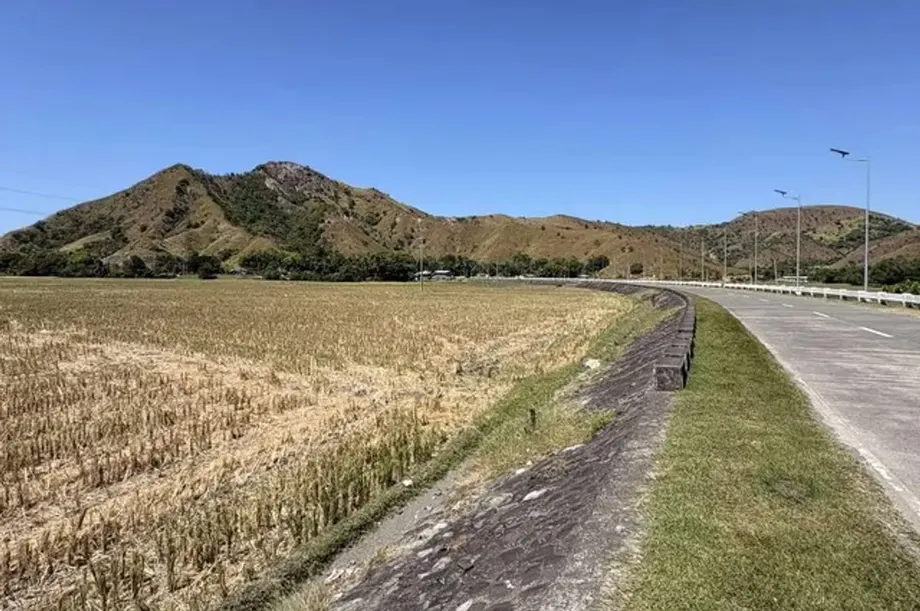
Local leaders emphasized that early planning prevents municipalities from scrambling for scarce resources once soil conditions deteriorate. Tria pointed out that waiting until the earth splits open makes it far more difficult to protect harvests. During the meeting, officials noted that parts of Occidental Mindoro are already experiencing receding water levels and drying farmlands. To formalize their requests, the two provinces agreed to submit a joint resolution detailing the specific equipment, financial aid, and infrastructure needed from the national government. Similar concerns echo across the nation as local governments race to safeguard water and food supplies against prolonged heat.
Mahirap kasi pag maghahabol kami... Kumbaga ngayon pa lang, bakit natin hihintayin na mabitak pa ang lupa?
That was how Magsaysay Mayor Cesar Tria Jr. explained the urgency of early preparation, translating to the need to avoid playing catch-up when soils are already cracked and dry. Participants at the Manila meeting also reviewed the readiness of power distributors such as the Oriental Mindoro Electric Cooperative and the Occidental Mindoro Electric Cooperative, focusing on whether sufficient reserve capacity exists to handle soaring electricity demand during extreme heat waves.
National Agriculture Damage Surges Past Ten Billion Pesos
The Department of Agriculture reported that cumulative agricultural damage and losses from the prolonged dry spell have reached 10.44 billion pesos across 16 regions. The ongoing phenomenon has impacted 338,066 farmers and fisherfolk while damaging 332,726 hectares of agricultural land. Total production losses have climbed to 311,289 metric tons, spanning staple crops such as rice and corn, alongside cassava, high-value vegetables, livestock, and poultry. Officials warn that cumulative rice and corn production could drop by a combined 1.5 million metric tons this year as shrinking harvests exert upward pressure on food prices.
National responses are scaling up to match the mounting losses. The Department of Agriculture has deployed 18.64 billion pesos in initial interventions, which include 10.82 billion pesos for seeds and fertilizers, alongside 6.26 billion pesos in direct financial assistance reaching more than 2.69 million agricultural workers. Furthermore, crop insurance payouts have totaled 703.06 million pesos for 77,522 affected producers. Agriculture Secretary Francisco P. Tiu Laurel Jr., acting under the broader directive of President Ferdinand Marcos Jr. to safeguard food security amidst geopolitical risks and changing weather patterns, outlined national preparation strategies in the agency's official report. The agency is emphasizing the adoption of short-duration, drought-tolerant crops, water-saving technologies, and solar-powered irrigation facilities to insulate producers from climate shocks.
Understanding the Science Behind the Weather Phenomenon
El Niño is a recurring climate pattern originating in the tropical Pacific Ocean where surface waters become significantly warmer than usual. This warming alters atmospheric pressure systems and wind directions, which in turn redirects rain-bearing clouds away from regular paths and triggers severe rainfall deficits in Southeast Asia. PhilRice executive director John de Leon noted that a presentation by the Philippine Atmospheric, Geophysical and Astronomical Services Administration indicated a 92 percent probability of a moderate to strong El Niño based on the El Niño-Southern Oscillation outlook. Global climate models have even pointed to a potential super El Niño with projected temperature anomalies reaching up to 2.2 degrees Celsius above normal. These extreme shifts severely restrict freshwater availability for agriculture and hydropower generation.
The current climate stresses recall challenges faced during earlier drought conditions when agricultural losses forced the government to rely heavily on imported grain and emergency buffers. Similar dry spells severely strain farming families who depend entirely on seasonal rainfall. In Bulacan, tenant farmers Lisa Gapac and Maribeth Espiritu voiced deep anxiety over shrinking water supplies in their rice fields as they prepare for the upcoming planting season. Gapac explained that adequate water is essential for a productive harvest, noting that previous crops had already suffered damage from recent typhoons. Local farmers have yet to receive promised government seed aid, highlighting the critical gap between announced national budgets and the resources reaching individual tenants on the ground.
Wala po paming nakukuha o natatanggap na galing sa gobyerno natin para magkaroon ng ayuda kahit po binhi ng palay. Kulang na po ang tubig.
That was how tenant farmer Lisa Gapac described the absence of local government assistance as her fields face acute water shortages. The Department of Agriculture acknowledged that rain-dependent areas face the earliest yield declines, though agency spokesperson Assistant Secretary Arnel de Mesa assured the public that overall food shortages remain unlikely due to active importation and local buffer stocks.
Infrastructure and Irrigation Initiatives in Vulnerable Provinces
Local government units across the archipelago are deploying localized task forces to mitigate impending water and energy deficits. In Cebu, provincial disaster managers have identified 183 high-risk barangays, prompting the administration to establish water rationing systems and deploy mobile water tanks to mountain communities. Cebu Provincial Inter-LGU Water Systems Office Head Aldrin Barede explained that aging pipeline infrastructure and high volumes of non-revenue water compound the provincial supply crisis, making the construction of new water treatment plants an absolute priority.
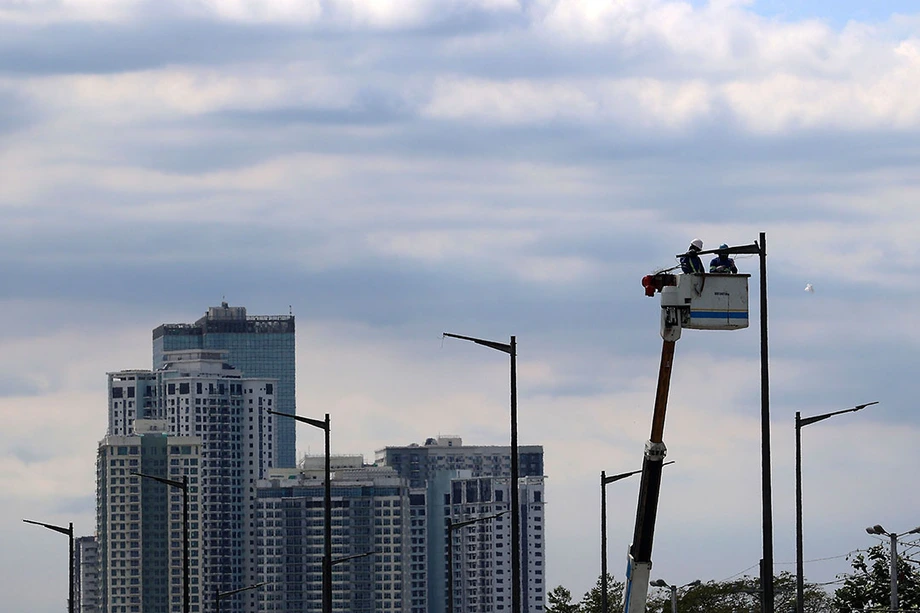
Meanwhile, energy operators are reinforcing island grids to prevent widespread blackouts. State-run National Transmission Corporation president and CEO Joseph Omar A. Castillo reported that coordinated infrastructure improvements and accelerated power plant connections have reduced power outages by 21 percent in Mindoro and 17 percent in Palawan. Castillo noted that island provinces remain uniquely vulnerable to technical malfunctions when extreme heat strains hydropower generation facilities. To further support provincial farming communities, the government is expanding the distribution of shallow tube wells and solar-powered irrigation systems, matching measures deployed during earlier provincial disaster declarations to keep crops alive through prolonged dry months.
Balancing Food Security, Imports, and Farmer Livelihoods
National food security strategies also rely on managing external trade partnerships to stabilize domestic supplies. Agriculture Secretary Francisco P. Tiu Laurel Jr. highlighted that the Philippines and Vietnam have reaffirmed an agreement allowing Manila to purchase up to 1.5 million metric tons of rice from its primary supplier at competitive rates if domestic yields fall short. However, actual import volumes will depend closely on market prices and local production levels. This cautious approach follows agricultural policies implemented during previous budgetary allocations where the executive branch balanced grain imports against the protection of local farmgate prices.
In an effort to protect consumers while keeping producers solvent, the Department of Agriculture continues to distribute financial aid through the Agricultural Credit Policy Council, which offers loans of 25,000 pesos under the Survival and Recovery Loan program. Furthermore, the Bureau of Fisheries and Aquatic Resources has allocated 500 million pesos in fuel subsidies for fishermen whose catches are affected by warm coastal waters. Officials maintain that early preparation, interagency coordination, and targeted financial relief remain vital as the country navigates the unfolding climate crisis. Secretary Tiu Laurel emphasized these priorities in a second official Department of Agriculture statement outlining consumer and farmer safeguards.
Health Risks and Advisory Warnings Amid Extreme Heat
Beyond agricultural and energy challenges, prolonged dry weather and soaring temperatures present direct hazards to public health. The Department of Health has issued urgent warnings regarding heat cramps, heat exhaustion, and potentially fatal heat stroke as ambient temperatures rise across the country. Health officials advise the public to limit outdoor physical activities between 10 a.m. and 4 p.m., maintain adequate hydration by drinking plenty of water, and ensure sufficient nightly rest.
Farmers and construction laborers who must work outdoors are urged to wear protective gear, take frequent shaded breaks, and use cool compresses on the neck to lower core body temperatures. These precautions mirror public safety campaigns implemented during regional drought responses across Southeast Asia, where authorities similarly prioritize household water security and health protection. Public health agencies continue monitoring heat index levels nationwide to issue timely advisories as the weather phenomenon intensifies.
The Essentials
- Mayors from Oriental Mindoro and Occidental Mindoro met in Manila to coordinate early drought preparations and request national assistance.
- Total agricultural damage from El Niño reached 10.44 billion pesos, affecting 338,066 farmers across 16 regions.
- The Department of Agriculture deployed 18.64 billion pesos in initial interventions, including production support and cash aid.
- PAGASA reports a 92 percent probability of a moderate to strong El Niño continuing through the first half of 2027.
- National Transmission Corporation interventions have reduced power outages by 21 percent in Mindoro and 17 percent in Palawan.
- The Department of Health issued safety advisories to protect outdoor workers and residents from extreme heat risks.