Differing Accounts Emerge From Washington and Manila
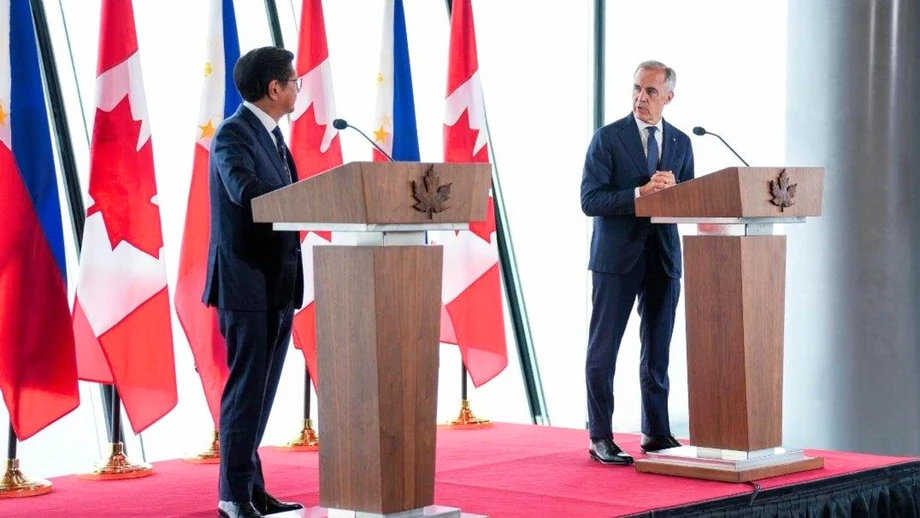
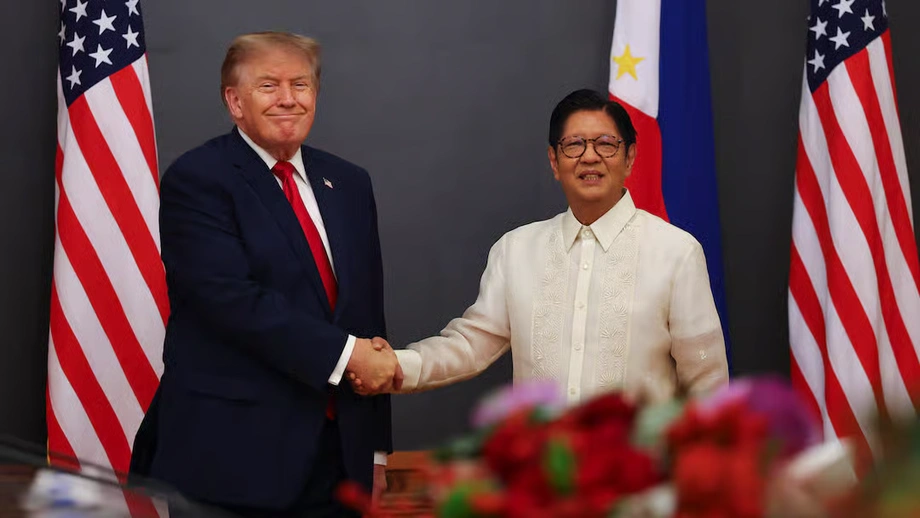
President Ferdinand R. Marcos Jr. stated that the Philippines would not rely exclusively on United States food and energy imports under a proposed trade arrangement, pushing back against claims made by United States President Donald J. Trump. Speaking to reporters on Saturday, November 21, 2026, after attending the 33rd Asia-Pacific Economic Cooperation Economic Leaders' Meeting in Shenzhen, China, Marcos clarified that discussions aimed to expand supplier options rather than create a single-source dependency. Trump had earlier asserted during a White House press briefing on Friday, November 20, 2026, that the Philippines agreed to purchase all its agricultural products and energy requirements from American providers starting January 1, 2027. A tariff is a tax collected by a government on goods coming in from other countries, and a trade deficit occurs when a nation buys more from abroad than it sells. According to the Office of the United States Trade Representative, the United States recorded an $8.5 billion goods trade deficit and a $3.6 billion services trade deficit with the Philippines in 2025 out of $40.9 billion in total bilateral trade. The two leaders met previously during a state visit in Manila where discussions covered trade adjustments and economic cooperation.
Contents
Marcos explained to reporters that relying on multiple partners protects the nation from sudden supply shocks. He noted that the arrangement opens American markets for specific commodities that the Philippines had not previously bought from the United States, including soybeans and wheat. Energy Secretary Sharon Garin separately confirmed that negotiations concerning Philippine energy imports remain ongoing, with final arrangements subject to government review. Meanwhile, Trump Claims Philippines Will Buy 100% of US Farm and Energy Goods outlined the initial White House announcements regarding agricultural and energy commitments. Defense and security analyst Chester Cabalza, founder and president of the International Development and Security Cooperation, noted that the vocal approach reflects broader American economic strategy amid intensifying global competition for resources.
The way I put it is that if you are standing on one foot, relying on only one source, you can easily run into trouble. If you have several sources to rely on, even if one runs into a problem, you can turn to the others. And that's why the trade deal is important.
President Ferdinand R. Marcos Jr., describing the rationale behind diversifying the country import suppliers following discussions with Washington.
Tariff Pressures and Global Supply Chains
The Philippines remains subject to an additional 12.5 percent United States tariff, which took effect on July 24, 2026, following a determination by Washington regarding Philippine enforcement of restrictions on imports produced using forced labor. The current duty replaced a 10 percent baseline global tariff that was instituted after the United States Supreme Court ruled that previous reciprocal measures exceeded executive authority under the International Emergency Economic Powers Act. Trade Secretary Ma. Cristina Roque previously confirmed that Manila sought relief from the 12.5 percent rate affecting approximately $6.25 billion of its exports during Philippines Seeks Lower US Tariffs as Marcos and Trump Prepare for Manila Talks. No confirmed reports of changes to or removal of the tariffs have been verified despite discussions during Trump's visit. The discussions regarding agricultural imports also intersect with traditional supply chains involving other nations. The Department of Agriculture identified Brazil as a key supplier of meat products, including pork, beef, and chicken used in processed items like corned beef. Brazil's agriculture ministry reported that Manila imported $1.84 billion worth of goods from Brazil last year, with meat products making up 86 percent of that total. Philippine President Ferdinand Marcos Jr. and Brazilian President Luiz Inácio Lula da Silva held a bilateral meeting on the sidelines of the ASEAN Summit to sign a memorandum of understanding on agricultural cooperation. United States Department of Agriculture data showed that the United States exported $3.41 billion in farm products to the Philippines in 2025, down slightly from $3.47 billion in 2024, with soybean meal representing the largest category at $1.01 billion.
Defense Ties and Arms Approvals
The commercial discussions coincided with major defense commitments between the two treaty allies. United States Secretary of State Marco Rubio reinforced the connection between Washington military support and commercial policy during recent briefings. United States President Donald Trump announced that Washington approved more than $5 billion in arms sales to the Philippines as part of expanded defense cooperation. A United States Department of Defense arms sales notification delivered to Congress detailed a proposed $5.58 billion F-16 package, which includes 16 F-16 C and four F-16 D Block 70/72 aircraft, 24 engines, 22 AN/APG-83 radars, and various guided missiles and bombs, specifically noting: "The proposed sale will improve the Philippines' capability to meet current and future threats by providing a credible deterrent against regional threats, enhancing its air defense capabilities, and strengthening interoperability with the U.S. and other allied forces." The announcement follows earlier security engagements detailed in Trump Says U.S. Approved Over $5 Billion in Arms Sales to Philippines, where officials reviewed long term alliance frameworks. The Mutual Defense Treaty, signed 75 years ago, commits both nations to come to each other aid in the event of an armed attack. United States Ambassador to the Philippines Lee Lipton reaffirmed this alliance on November 2, stating that American security commitments remain ironclad in protecting sovereignty and territorial integrity.
Investment Pledges From the Shenzhen Trip
President Ferdinand R. Marcos Jr. secured P41.1 billion in investment pledges during his three-day trip to Shenzhen, China, for the 33rd Asia-Pacific Economic Cooperation Economic Leaders' Meeting, an influx government estimates could generate more than 7,000 jobs. The largest single industrial commitment came from Chinese bearing manufacturer C&U Group, which pledged an initial $87 million to build a 20-hectare fully integrated manufacturing facility in Alitagtag, Batangas. The plant is planned to serve as the company largest production base outside China and its sole operational center in Southeast Asia. An executive roundtable involving TCL Group, Huaxin Building Materials Group, Shenzhen Grandsun Electronic, and PCON International generated the remainder of the headline investment figure. Marcos also met with Ming Yang Smart Energy Group Limited executives to discuss offshore wind infrastructure development to support clean energy goals. In the electric vehicle sector, the president held discussions with BYD Company Limited founder and chairman Wang Chuanfu, alongside representatives from Ayala Corporation and ACMobility, to explore local industry development.
SpaceX Launch Site Consultations
Discussions during the Shenzhen trip also extended to emerging technology sectors, including a potential partnership with aerospace manufacturer SpaceX. President Ferdinand R. Marcos Jr. told reporters that exploratory talks had begun regarding the development of commercial rocket launch sites in the Philippines. Philippine Ambassador to the United States Jose Manuel Romualdez confirmed that SpaceX founder and chief executive Elon Musk visited Manila discreetly during Trump's state visit and was eyeing one or two islands for potential development. Marcos declined to provide specific project details, noting that the initiative remains in its earliest stages with no finalized investment agreements or confirmed locations announced. The geographic location of the Philippines along the western edge of the Pacific Ocean makes it a logical candidate for eastward rocket launches, which allow vehicle debris to fall harmlessly over open ocean waters rather than populated landmasses. Government officials have not established a timeline for subsequent consultations.
Bilateral Regional Agreements
The presidential trip concluded with the formal signing of a Comprehensive Economic Partnership Agreement with Chile, marking the first free trade pact between the Philippines and a Latin American country, with the official text reading: "The Governments of the Republic of the Philippines and the Republic of Chile, hereinafter referred to as 'the Parties', reaffirming their strong commitment to strengthen their bilateral economic partnership, foster trade and investment, and promote sustainable and inclusive economic growth, have agreed to establish the Philippines-Chile Comprehensive Economic Partnership Agreement." The agreement is designed to expand bilateral flows of goods, services, and investment while serving as a broader gateway for commercial engagement with South America. Officials from both nations anticipate that the pact will create new export opportunities for domestic producers once domestic ratification procedures are completed. The trade milestone occurred alongside ongoing diplomatic transitions, including the handover of the Association of Southeast Asian Nations chairmanship to Singapore following a series of high level summits in Manila. The summit period involved coordinated traffic management and nonworking days across Metro Manila under Malacañang declarations to facilitate security operations for visiting foreign leaders.
The Essentials
- President Ferdinand R. Marcos Jr. clarified that the Philippines will not source 100 percent of its food and energy imports exclusively from the United States.
- United States President Donald Trump asserted during a White House press briefing that the Philippines agreed to buy all agricultural and energy products from America starting January 1, 2027.
- The Philippines secured P41.1 billion in investment pledges during the Shenzhen APEC meetings, including an $87 million manufacturing facility in Batangas by C&U Group.
- Exploratory discussions are underway with SpaceX regarding the potential development of commercial rocket launch sites on Philippine islands.
- Trade officials signed a Comprehensive Economic Partnership Agreement with Chile to expand bilateral commerce and establish a foothold in Latin American markets.