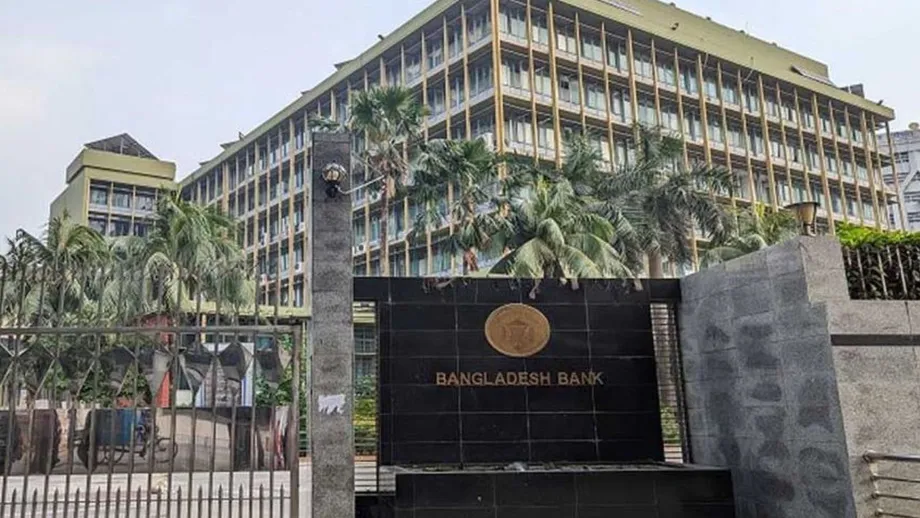
Sweeping Changes to Bank Company Act Target Political Interference and Family Dominance
The government in Bangladesh is preparing to implement massive changes to the banking sector to restore discipline and protect everyday depositors. The Financial Institutions Division, operating under the Ministry of Finance, has finalized a comprehensive draft to amend the Bank Company Act of 1991. These proposed legal updates arrive against the backdrop of widespread financial irregularities and severe strain within several domestic lenders, as seen in wider economic pressures such as the financial vulnerabilities that pushed the nonperforming loan ratio to 33.2 percent in June 2026. To understand nonperforming loans, readers can think of them as money borrowed from banks that businesses or individuals have stopped repaying, which weakens the entire financial system and reduces credit availability for new business ventures. The newly drafted legislation directly addresses the governance failures that contributed to this crisis by removing political figures from bank leadership and diluting the grip of powerful family syndicates.
Contents
- Sweeping Changes to Bank Company Act Target Political Interference and Family Dominance
- Halving Board Tenures and Restricting Family Control
- Strengthening Independent Oversight and Strategic Investments
- Enforcing Loan Recovery and Board Accountability
- Timeline of Regulatory Overhaul and Future Steps
- The Bottom Line
Under the finalized legislative package, cabinet members, officials of equivalent rank, members of parliament, and local government representatives will face a strict bar from holding positions as directors, managing directors, or chief executive officers within any bank. This political exclusion is designed to decouple commercial lending decisions from partisan influence. Existing rules previously lacked explicit statutory prohibitions for members of parliament, though constitutional restrictions under Article 147 already barred cabinet ministers from holding profit-seeking corporate management roles. The fresh amendments introduce a dedicated provision, designated as Section 15(6), to close all legal loopholes and ensure that political officeholders cannot dictate the operational or credit direction of financial institutions.
Industry leadership has voiced support for the sweeping removal of political actors from corporate boards. Abdul Hai Sarkar, chairman of the Bangladesh Association of Banks, welcomed the upcoming statutory adjustments during discussions with the press. He noted that keeping political figures entirely away from bank governance serves the long-term health of the financial system. Economists and policy experts have echoed this perspective. Dr Zaidi Sattar, chairman of the Policy Research Institute of Bangladesh, expressed strong support for the proposed curbs, explaining that prolonged control by insiders invites risky lending practices and excessive influence that requires robust legal intervention to secure economic recovery.
Halving Board Tenures and Restricting Family Control
Family syndicates have historically dominated many private banks in Bangladesh, utilizing overlapping directorships to siphon funds through connected lending. The new legislative draft directly confronts this dynastic control by amending Section 15(10) to slash the maximum number of directors permitted from a single family from three down to two. Furthermore, amendments to Section 23(1)(ka) reduce the number of representative directors allowed from entities owned or controlled by that same family from a maximum of two down to just one. These restrictive measures are tailored to dismantle the corporate structures utilized by prominent industrial groups, such as those previously accused by regulators of controlling multiple financial institutions through intricate family webs.
Alongside family caps, the government is drastically shortening the duration that any single individual can remain on a bank board. The proposed amendments to Section 15(ka) halve a director's maximum continuous tenure from 12 years down to just six years. This change restores the six-year limit that existed prior to legislative revisions in 2018, which had initially extended the cap to nine years before a subsequent 2023 amendment stretched it to 12 years. Under the new rules, any director who completes six consecutive years of service must observe a mandatory three-year cooling-off period before becoming eligible for reappointment. The draft also specifies that any partial tenure lasting less than three years will still count toward the six-year aggregate ceiling.
Strengthening Independent Oversight and Strategic Investments
To ensure objective oversight, the legislative amendments significantly expand the presence and independence of non-executive board members. Section 15(9) mandates that any bank board consisting of 20 members must include at least four independent directors, an increase from the previous requirement of three. For boards with fewer than 20 members, the mandatory minimum number of independent directors rises from two to three. The legal definition of an independent director is also undergoing a rigorous tightening process. Under the revised framework, any candidate nominated for an independent seat must demonstrate that they have had no actual or apparent interest, affiliation, or business ties with the bank or any related party for a minimum of the preceding three years, while also being barred from holding any present or future interest.
While governance standards tighten for traditional directors, the government is opening doors for specialized capital through modified ownership caps. Section 14(ka) of the existing framework prohibits any individual, company, or family from acquiring more than 10 percent of a bank is shares. The new draft introduces a vital proviso that empowers Bangladesh Bank to relax this 10 percent cap specifically for domestic or foreign strategic investors when such exemptions serve the broader interests of the banking sector. The central bank will bear the responsibility of determining the eligibility, suitability, and governing terms for these strategic stakeholders on a case-by-case basis, balancing the need for fresh capital injection against the risks of foreign or corporate overconcentration.
Enforcing Loan Recovery and Board Accountability
Holding bank directors accountable for outstanding financial obligations forms a cornerstone of the legislative package. Amended Section 17(5) targets former directors whose seats become vacant due to disqualification or the expiration of terms, establishing aggressive mechanisms for recovering unpaid company loans. The updated law allows banks to recover outstanding dues through the immediate surrender of the defaulting director is shares. Any remaining balance will then be treated as a public demand under the Public Demands Recovery Act of 1913, bypassing standard civil litigation delays. Crucially, the draft explicitly bars banks from regularizing or restructuring these specific loans through rescheduling or other leniency mechanisms.
Board attendance rules are also tightening to prevent ghost directors from ignoring governance duties. Newly proposed Section 17(ka) prohibits any director from remaining absent from scheduled board meetings for more than three consecutive months without formal board approval. Even with formal authorization, such extended leave of absence is strictly restricted to a maximum of once per calendar year. Additional supervisory teeth are granted to the regulator under changes to Section 47, which allows Bangladesh Bank to dissolve any board acting contrary to the interests of depositors. Appointed administrators or management panels running a dissolved board can serve for terms defined in their appointment letters, up to an absolute maximum of three years including extensions, before general shareholders are permitted to elect a fresh board.
Timeline of Regulatory Overhaul and Future Steps
The legislative process moving these structural reforms forward follows a deliberate sequence of administrative approvals and stakeholder consultations. The Financial Institutions Division finalized the text following extensive policy recommendations from the central bank, aligning with ongoing financial sector stabilization efforts.
- Initial draft proposals circulated during the interim government administration, which previously considered capping total board sizes at 15 members with half reserved for independent directors.
- Finalization of the revised Bank Company Amendment Act draft by the Financial Institutions Division, incorporating stricter limits on political appointments and family tenures.
- Pending submission of the final draft to the finance minister for formal endorsement ahead of cabinet transmission.
- Upcoming presentation of the legislative bill before the cabinet for official approval, followed by introduction in the national parliament for enactment.
The transition from drafting policy to enforcing statutory compliance represents a vital phase in rehabilitating the national economy. Former central bank governor আহসান এইচ মনসুর praised the overarching reform initiative while arguing that independent directors should eventually comprise a full 50 percent of every board to match international best practices. While the draft currently awaits cabinet approval and formal enactment through parliament, the proposed statutes signal an irreversible shift away from the political patronage and family dominance that historically weakened the financial foundations of the nation.
The Bottom Line
- Bank directors face a reduced maximum continuous tenure of six years, down from 12 years, followed by a mandatory three-year cooling-off period.
- Cabinet members, members of parliament, and local government representatives are strictly barred from serving as bank directors, managing directors, or chief executive officers.
- Family representation on any single bank board is capped at a maximum of two members, down from the previous limit of three.
- The minimum requirement for independent directors increases to at least four members on 20-person boards and at least three members on smaller boards.
- Bangladesh Bank gains statutory authority to relax the 10 percent shareholding ceiling specifically for qualified strategic investors.