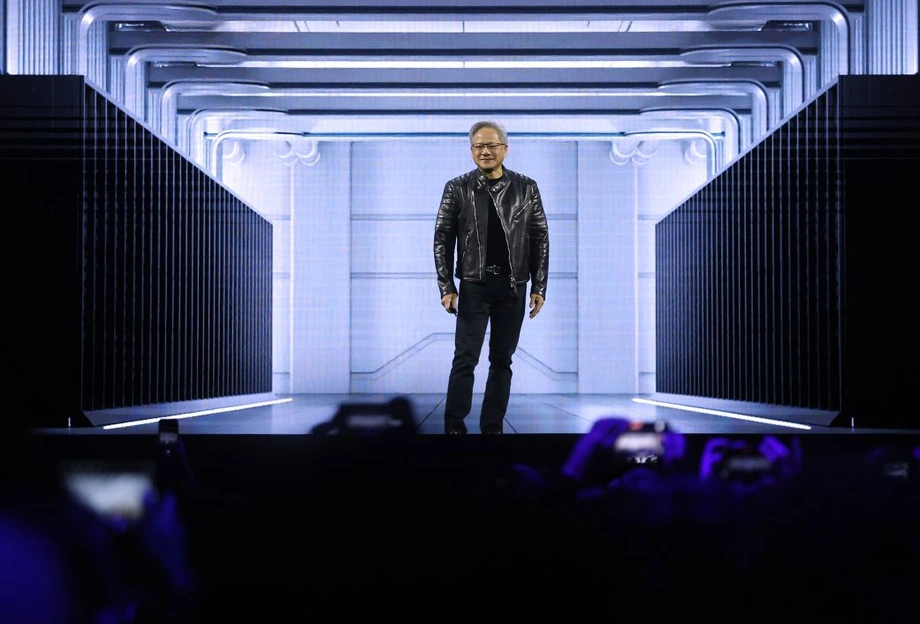
A Private Interview, Then a Public Hearing
Jensen Huang sits for a transcribed interview on Dec 1 with three Republican-led House committees: Foreign Affairs, Intelligence and the select committee on China. Nvidia's general counsel, Tim Teter, faces the same panels the next day. On Dec 3 Huang answers questions in public before the Senate Banking Committee, at a hearing its chairman, Tim Scott of South Carolina, has titled "Protecting America's AI Advantage: Oversight of U.S. Export Controls."
Contents
- A Private Interview, Then a Public Hearing
- What the Committees Want to Know
- Eleven Days That Ended in a Board Reversal
- What the Intelligence Shows About Alice Huang
- Trump Says He Made the Deal
- The Money Questions
- Republicans Are Not Letting Him Off Either
- Megaspeed at the Center of the Pipeline
- The Export Control Fight Behind the Hearings
- What Changes Now
- Key Points
The invitations went out while Huang was out of a job. Nvidia's board voted unanimously on Nov 23 to restore him as chief executive, president and director, 11 days after he resigned over affairs that included one with Alice Huang, a Singapore businesswoman whom US intelligence has examined as a possible Chinese asset. The two Huangs are not related. The three House chairmen, Representatives Mark Mast, John Moolenaar and Rick Crawford, said in a joint statement that the board's "brief internal investigation and reinstatement of Jensen Huang do not erase the national security threats and questions that must be addressed."
Nvidia ranks 16th on the 2026 Fortune 500 and makes the processors that train and run the largest artificial intelligence models. Washington has restricted exports of its fastest chips to China since October 2022.
What the Committees Want to Know
The chairmen named three subjects in their statement: the "mass smuggling" of Nvidia hardware, its "diversion for Chinese military purposes," and the company's part in advancing "our foremost adversary's AI capabilities." All three point at the same pipeline. An export control is a licence requirement: a controlled chip cannot leave the United States, or be re-exported from another country, without government permission. A server that arrives legally in Singapore, Malaysia or Thailand can still be rented out, resold or quietly moved to a Chinese buyer.
Mick Mulvaney, who was acting White House chief of staff in Donald Trump's first term, said the politics of the inquiry are unusually simple.
Antipathy toward China is one of the very few things that is really bipartisan in Washington DC. I expect the Democrats to push back hard. I'd be curious to see how hard the Republicans push back.
Eleven Days That Ended in a Board Reversal
The scandal arrived in stages over two years and became a management crisis in a fortnight.
- March 2024: Huang meets Alice Huang, then an executive at the Singapore data center company Megaspeed, at an event in California.
- February 2025: Ling Mi, a business associate of Alice Huang and her husband Kang Wei, is charged over a scheme to send Nvidia chips to China through Malaysia.
- June 2025: Nvidia puts Megaspeed on an internal "no-sell list"; Singapore police seize Alice Huang's passport.
- Aug 30, 2025: Alice Huang leaves Megaspeed.
- March 30, 2026: Secretary of State Marco Rubio sends cabinet colleagues a classified memo warning about Huang's relationship with her.
- Oct 29, 2026: the affair and the intelligence concerns become public.
- Nov 11 to 12: the board meets after a second relationship, with a subordinate, is disclosed. Huang resigns and Colette Kress becomes interim chief executive.
- Nov 17: board chair Harvey Jones tells investors the board does "not intend to reinstate Huang."
- Nov 20: Nvidia's market value has fallen about $2.7 trillion from its Oct 6 peak.
- Nov 23: the board reinstates Huang unanimously before markets open. The Commerce Department blacklists Megaspeed the same day.
- Dec 1, 2 and 3: Huang and Teter face Congress.
Investors rewarded the reversal immediately. Nvidia closed at $165.05 on the first trading session after the announcement, against $125.53 the session before, a gain of more than 30 percent, the stock's best day since May 2003 and close to $1 trillion in added market value. Shares fell about 8 percent the following day. An open letter urging reinstatement had drawn more than 178,000 signatures in four days.
What the Intelligence Shows About Alice Huang
Alice Huang built her career at Megaspeed, which became one of Nvidia's biggest buyers in Southeast Asia. Rubio's classified memo, written on March 30, 2026, indicated that China's Ministry of State Security had recruited her, potentially as an asset. Trump was briefed on the intelligence in 2025 and again in May 2026 and took no action, and Huang was never given a defensive briefing by US officials. Nvidia's board opened the board's independent review on Nov 8 with outside lawyers, then reinstated Huang before the work was finished.
Enforcement agencies have not settled the central question. Attorney General Todd Blanche said on Nov 12 that the Justice Department had reached no conclusion about whether Alice Huang was a spy. On Nov 24, intelligence officials told congressional staff there was no evidence the ministry had directed her to begin the affair or to spy on Huang. The FBI has assessed that the intelligence does not show she was an officer or asset of Chinese intelligence. The CIA's reading is narrower: the reporting does not clearly show she held sensitive national security information or passed it to China, while leaving open the possibility that new evidence appears.
Contact is not in dispute. Alice Huang stayed in touch with an officer of the Ministry of State Security from spring 2025 through autumn 2026, a period that overlapped with the affair. People who reviewed the intelligence have described her as an asset rather than a trained officer. Beth Sanner, a former senior US intelligence official, said in a television interview that the idea she was not assisting the ministry was "absolutely silly."
Of course they were tasking her. Of course she was being coerced, encouraged, incentivized to exploit this relationship that went to the highest level of our government and touched the most important technology that we have.
Singapore's Ministry of Home Affairs said there was not enough evidence that Alice Huang committed offenses linked to possible false declarations in server purchases and that it did not investigate her for espionage. Police assessed that she knowingly gave inaccurate information about her role at Megaspeed, issued her a stern warning and barred her from re-entering. Inquiries into Megaspeed continue. China denied involvement and dismissed the claims as groundless speculation, and Megaspeed said she left in August 2025.
Trump Says He Made the Deal
Trump has described the reinstatement as his own work. "I made the deal," he said in a broadcast interview. "I convinced them." He said he had been speaking to the board "directly and indirectly" and that "the board decided to do what we wanted to do." Asked whether he had acted to stop a slide in technology stocks, he conceded the critics were "probably" right. The board said in its statement that it acted after "input from senior levels of the United States government" that Huang's return "poses no national security risk."
Vice President JD Vance took part in the discussions, and Blanche told him Huang was not a threat. Rubio, who wrote the memo, was not involved and was caught off guard by the announcement, according to people familiar with the conversations. The board never identified the officials who reassured it, or said what they supplied. Utah Senator John Curtis posed the question directly: "Who in our government weighed in? What did they tell the board? And on what basis did the board conclude there was no risk?"
Trump told reporters that clearing Huang was "always an option" but probably unnecessary, and he has said Huang should not invoke the Fifth Amendment when he testifies, a right that lets a witness refuse to answer questions that could expose him to prosecution. At a Mar-a-Lago Halloween party the president had said he wanted Huang to remain on the President's Council of Advisors on Science and Technology, describing him as "very above board."
The Money Questions
Financial disclosures put the president inside the story. Trump bought between $1 million and $5 million of Nvidia stock on Jan 29, 2025, two days before he met Huang at the White House, and between $5 million and $25 million in the days after Nvidia and chipmaker AMD agreed in August 2025 to hand the government 15 percent of revenue from advanced AI hardware sales to China. His Nvidia holdings were worth up to $62 million on the eve of the scandal. The family Revocable Trust has traded the stock more than 100 times since January 2025, in transactions worth up to $97.5 million. The White House says his holdings are managed by independent advisers.
Nvidia gave $25 million to the White House ballroom project and $1 million to the inauguration fund. The Democracy Defenders Fund, an ethics watchdog, calculated that the intervention raised Nvidia's market value by 33 percent and Trump's personal wealth by $15 million. Senator Andy Kim, a Democrat on the Banking Committee, put the president's gain at as much as $15 million.
Critics have seized on the overlap. Representative Maxine Waters, the top Democrat on the House Financial Services Committee, called the reinstatement "reckless and demands immediate accountability" and pointed to the ballroom money, the shareholding and the trading record. Senate Democratic leader Chuck Schumer said his members will "investigate any wrongdoing by the Trump administration, Jensen Huang, other Nvidia executives, and anyone selling out our national security for financial gain." Several House Democratic committee leaders wrote to the president about his shareholding and gave him until Dec 8 to answer.
Elizabeth Warren, the Banking Committee's ranking Democrat, framed the question in blunter terms.
Donald Trump wants to hand a get-out-of-jail-free card to his buddy who runs Nvidia, and the attorney general of the United States is saying, 'Hand it out.'
Brendan Fischer of the Campaign Legal Center said the episode showed how conflicts of interest warp policy. Richard Painter, a White House ethics lawyer under George W. Bush, said the call to the board broke with American practice.
The president shouldn't be calling the board of directors of a company and telling them who the CEO should be.
Republicans Are Not Letting Him Off Either
Criticism from the president's own party is what makes the December sessions unpredictable. Outgoing congressman Don Bacon wrote on X that Nvidia "should have moved on without Huang and ignored the administration's inexplicable desire to save Huang," adding that Congress needs to find out "who approved high end computer chips sales to China."
Newt Gingrich, the former House speaker and a longtime Trump ally, called the sequence "profoundly wrong" and said Congress should dig into it as a national security issue of enormous proportions. Mitt Romney, the former Republican senator, wrote that Washington rushed AI forward to stay ahead of China while selling Beijing the very chips it would need to get ahead of the United States. John Cornyn of Texas asked, "No national security risk? Based on what?" and told an interviewer, "You gotta be kidding me." Pete Ricketts of Nebraska said Huang's conduct "does not support reinstatement."
Democrats who take the gavels in January are promising more. Jim Himes, the top Democrat on the House Intelligence Committee, said the Gang of Eight, the lawmakers briefed on the most sensitive intelligence, had learned less than the press. "We're being kept completely in the dark," he said. Representative Greg Casar said Huang "must testify under oath." Tim Scott has said the hearings will deliver answers because "our markets demand transparency."
Megaspeed at the Center of the Pipeline
Megaspeed's corporate history explains why investigators keep returning to it. The company was incorporated in 2015 as 7Road International, owned by a Chinese investment holding company with interests in video games, and it grew fast after Washington restricted AI hardware sales to China in October 2022. It took the Megaspeed name in March 2023, was split off and sold to a Singaporean owner, Tan Yong Pong, and became an Nvidia Cloud Partner four days after that sale. Its customers included Alibaba and Tencent, and it bought more than $4 billion of Nvidia chips.
Nvidia's own sales team introduced Alibaba to Alice Huang in 2022, months before the rules tightened, and later suggested that Megaspeed could rent Alibaba chips hosted in Southeast Asia, which the rules then allowed. Nvidia said the company "works across the industry to comply with the evolving rules regarding cloud services." By 2025 Megaspeed was under investigation by the Commerce Department, which asked Nvidia in May for records on direct and indirect sales to the firm. Agents inspected its Singapore site in June. Trade records later showed that a compliance report Nvidia filed with the government undercounted sales to Megaspeed by more than 50,000 units, and that chips kept arriving through Malaysia while the firm sat on the no-sell list.
Congress has its own figures. Lawmakers released data showing Nvidia had shipped more than 800,000 advanced chips to Chinese companies as of May 11, including to firms with ties to the Chinese military, and House records showed a 40,000 chip H200 sales application for the Hong Kong unit of Century Litong. Megaspeed says it conducts lawful business and follows US export controls, and that assertions about its operations are "not supported by verifiable evidence."
The Export Control Fight Behind the Hearings
The hearings land in the middle of a policy argument inside the administration. On Nov 16 the Commerce Department's Bureau of Industry and Security published a rule requiring licences for overseas data centers that rent large amounts of advanced computing to firms based in China. Written at the direction of the Treasury Department and the National Security Council, it took effect on Nov 19 with a transition period of 90 days and added licence requirements for five countries, among them Malaysia, Singapore and Thailand. The measure closed the remote access loophole that had let Chinese firms use American chips without importing them.
Huang's argument, made in public and in private, is that Chinese developers should stay dependent on American technology rather than be pushed to build their own. Commerce Secretary Howard Lutnick has leaned that way, and Treasury Secretary Scott Bessent has said the Treasury, the Defense Department and other agencies wanted Megaspeed blacklisted but "Commerce has the pen." Trump approved enforcement action against suspected diverters three times this year and Lutnick stalled each time, according to people familiar with the decisions. Lutnick testifies on Dec 10.
Lawmakers have bills ready. The AI OVERWATCH Act, from Warren and Republican Jim Banks, would keep the tightest restrictions and give Congress more say over licences for weaker chips. Tom Cotton's Chip Security Act would require checks on where restricted processors end up. The MATCH Act, from Republicans Jim Risch and Pete Ricketts and Democrat Andy Kim, would press allies to restrict the equipment China needs to make advanced chips. The first three sit in the Senate's proposed defense authorization bill.
What Changes Now
The market has already voted twice. Nvidia lost about $2.7 trillion in value between its Oct 6 peak and Nov 20, gained nearly $1 trillion in one session after the reinstatement and gave back about 8 percent the next day. Dan Ives, a technology analyst, expects more swings.
Next week Jensen carries the weight of the entire tech sector and AI Revolution thesis when he marches into DC, as the politicians are eagerly awaiting these sessions with all the world watching.
Regulators beyond Washington are moving. California's attorney general, Rob Bonta, served Nvidia with an investigative subpoena over whether the company or Huang enabled China to obtain advanced chips or confidential information. The prediction market Polymarket is reviewing a small number of bets placed on Huang's return, and analysts at Bubblemaps identified two clusters of accounts that wagered about $20,000 and booked about $350,000 in profit. Nvidia has promised structure: a board committee made up only of independent directors to watch national security and export control risk, and a new chief compliance officer reporting to a board committee. The company is still searching for that officer.
Huang spent his first day back apologising. At a company meeting in California he said he had made "some terrible mistakes" and promised to "be a better CEO the second time," trading his black leather jacket for a navy cotton coat. He also faces complaints about his management style that surfaced after his resignation in November. Nothing in the board's statement, the White House's assurances or the intelligence briefings has explained which officials vouched for Huang or on what evidence, and that gap is what the three House panels and the Senate Banking Committee will try to close.
Key Points
- Jensen Huang gives a transcribed interview to three House committees on Dec 1, Nvidia lawyer Tim Teter follows on Dec 2 and Huang testifies in public before the Senate Banking Committee on Dec 3.
- The board reinstated Huang unanimously on Nov 23, 11 days after he resigned over affairs including one with Alice Huang, a former Megaspeed executive suspected of Chinese intelligence ties.
- Nvidia shares jumped more than 30 percent on the news, adding close to $1 trillion in value, then slipped about 8 percent.
- The FBI has assessed that US intelligence does not show Alice Huang was an officer or asset of Chinese intelligence, while the CIA's reading is narrower and a Rubio memo said the Ministry of State Security had recruited her.
- Commerce blacklisted Megaspeed, which bought more than $4 billion of Nvidia chips, on the same day the board reinstated Huang.
- Trump says he "made the deal"; his Nvidia holdings were worth up to $62 million before the scandal and his family trust has traded the stock more than 100 times.
- Lawmakers from both parties, including Bacon, Gingrich, Romney, Cornyn, Warren and Schumer, have demanded answers on chips, spycraft and the president's finances.
- Commerce Secretary Howard Lutnick testifies on Dec 10, and Democrats take control of both chambers in January.