Shaking Sensation in Los Angeles
A magnitude 5.0 earthquake rattled Southern California on Saturday morning, sending tremors through the Los Angeles basin and prompting emergency responses across a densely populated region. The main shock hit at 09:30:29 local time, with its epicenter located just 5 kilometers southwest of Manhattan Beach at a depth of 12.82 kilometers, according to the California Seismological Data Center.
Contents
The event marked the largest seismic activity in the Los Angeles and Orange County metro area in over a decade. Residents from the coastal communities of Manhattan Beach and Hermosa Beach to the inland city of Pasadena felt the strong shaking. The USGS recorded over 90 aftershocks within the first day, with the strongest secondary event measuring magnitude 4.5 at 11:41 a.m. local time.
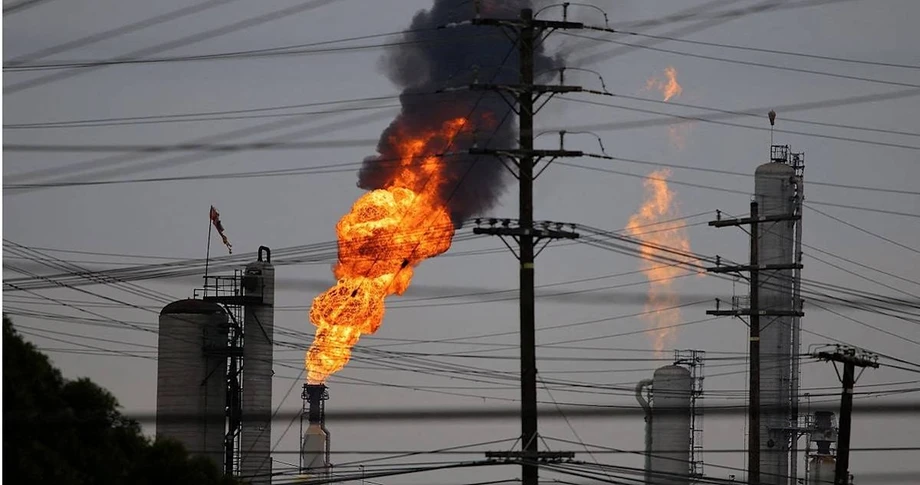
The shaking caused visible disruptions in major infrastructure. At Los Angeles International Airport, glass windows shattered in several terminals, and ceiling tiles dropped onto travelers. Air traffic control staff at the airport urgently instructed a Delta Airlines flight to abort its landing to prevent potential damage to the runways. The Chevron refinery in El Segundo activated its automated safety systems, releasing plumes of black smoke into the sky as part of a controlled safety flare procedure.
Impact on Air Travel and Infrastructure
Los Angeles International Airport experienced significant operational disruptions during the early hours of the earthquake. Video footage captured a Delta Airlines flight, identified as Flight 1972, executing a go-around maneuver just moments before touchdown. Air traffic controllers issued the command to climb and re-enter the approach pattern as the ground shook violently beneath the tarmac.
Travelers inside the terminal reported panic and confusion as alarms sounded and debris fell from the ceilings. One passenger, Kenna Cramer, a 27-year-old lawyer from Maryland preparing to return to Washington, recounted that passengers were initially scared but quickly calmed down as staff provided updates. Another traveler, Uduak Akpanakpauyo from Houston, described the terrifying experience of watching glass windows shatter and fall near her head while standing at a United Airlines kiosk.
Despite the dramatic scenes, officials confirmed that no major structural damage or injuries were reported at the airport. Airport inspections confirmed that runway integrity remained intact, and flight operations resumed normal schedules shortly after the initial aftershocks subsided. The Manhattan Beach Pier was temporarily closed as a precautionary measure against potential structural fatigue.
Other industrial facilities also responded to the tremors. The Torrance Refinery experienced unplanned flaring, a standard safety response where excess natural gas is burned off to maintain pressure in the pipeline system. Officials from both the Chevron and Torrance refineries stated that the emissions posed no health or safety risks to nearby residents.
Seismological Analysis and Aftershock Sequence
Seismologists at the California Institute of Technology and the USGS provided detailed data on the seismic sequence. The main shock was initially reported with a magnitude of 4.7 but was later revised to 5.0. The event occurred approximately 3.7 miles west-southwest of Manhattan Beach, a location close to the Palos Verdes Fault system.
Lucy Jones, a faculty associate in geophysics at Caltech, noted that the earthquake was one of the most significant in the Los Angeles area in recent years. She explained that the deeper focus of the quake, at nearly 13 kilometers, allowed seismic waves to travel further with less intense surface shaking compared to shallower earthquakes. This depth likely prevented major structural collapses despite the strong shaking felt across the region.
The aftershock sequence proved robust. Within minutes of the main shock, several smaller quakes occurred, including a magnitude 3.0 event near Hermosa Beach and a 2.5 magnitude quake near Manhattan Beach. By late afternoon, the count of aftershocks exceeded 90, with over 21 measuring magnitude 2.5 or higher.
James Dolan, a professor of earth sciences at the University of Southern California, suggested the quake may be linked to the Palos Verdes Fault or its secondary thrust faults. This fault line, which runs along the coast of Los Angeles and Orange counties, has the potential to generate larger quakes in the future.
Public Reaction and Emergency Response
The rapid response from local emergency services helped mitigate potential risks. The Los Angeles Fire Department shifted into earthquake mode, deploying personnel from 106 neighborhood stations to inspect critical infrastructure. Interim Fire Chief Gomes emphasized that residents should check their homes for damage, particularly chimneys, and secure heavy objects that might fall during subsequent tremors.
ShakeAlert, the regional earthquake early warning system, successfully issued alerts to mobile devices roughly 4.7 seconds after the initial rupture. This early warning allowed many residents to take cover by dropping, covering, and holding on before the stronger seismic waves arrived.
Reports of shaking extended well beyond the immediate epicenter. Residents in Redondo Beach noticed car alarms triggering in parking lots, and wine bottles in local shops were knocked off shelves. In Pasadena, nearly 27 miles northeast of the epicenter, buildings swayed noticeably, though the Rose Bowl stadium continued to host a college football game without interruption.
USGS seismologist Elizabeth Cochran explained at a news briefing that while the shaking was strong, the deeper origin of the earthquake meant that ground motion levels were somewhat lower than they might have been for a shallower quake. This factor, combined with the high seismic resistance of local buildings, contributed to the low casualty count.
Future Risk and Regional Context
Experts caution that the current activity is not yet over. Yoon Clara, a USGS seismologist, highlighted that the region remains at risk for larger events in the coming days and weeks. She noted that the probability of a major earthquake, defined as magnitude 7.0 or greater, remains around 5 percent over the next week. A magnitude 7.0 quake would release approximately 1,000 times more energy than the magnitude 5.0 event.
Wei-gang Li, a seismology expert at USC, provided a quantified outlook for the next seven days. His data indicated an 82 percent chance of magnitude 3.0 or larger aftershocks and a 31 percent chance of magnitude 4.0 or larger events. The likelihood of a magnitude 5.0 or greater quake, which would exceed the main shock, stands at 5 percent.
Li also pointed out a shift in the type of seismic activity. While the current sequence is a typical main shock followed by aftershocks, there is a possibility it could evolve into a foreshock-main shock sequence. This transition would mean that subsequent larger quakes could occur, rather than just smaller aftershocks.
The Palos Verdes Fault system and the nearby coastal faults are now under heightened scrutiny. Historically, the Los Angeles area experienced a cluster of moderate earthquakes in the 1980s, including events near Pasadena and Whittier Narrows, before settling into a quieter period. Geologists suspect the region may be re-entering an active phase.
The Bottom Line
- A magnitude 5.0 earthquake struck near Manhattan Beach on November 28 at 09:30 local time, marking the largest quake in the region in 12 years.
- The main shock, located at a depth of 12.82 kilometers, triggered over 90 aftershocks, with the strongest measuring magnitude 4.5.
- Los Angeles International Airport experienced glass breaks and ceiling collapses, forcing a Delta flight to abort its landing safely.
- Emergency services reported no major injuries or critical infrastructure damage despite strong shaking across the Los Angeles basin.
- Seismologists warn that the region could see larger earthquakes in the coming week, with a 5 percent probability of a magnitude 5.0 or greater event.