Shahdag Forests Gain a Missing Giant
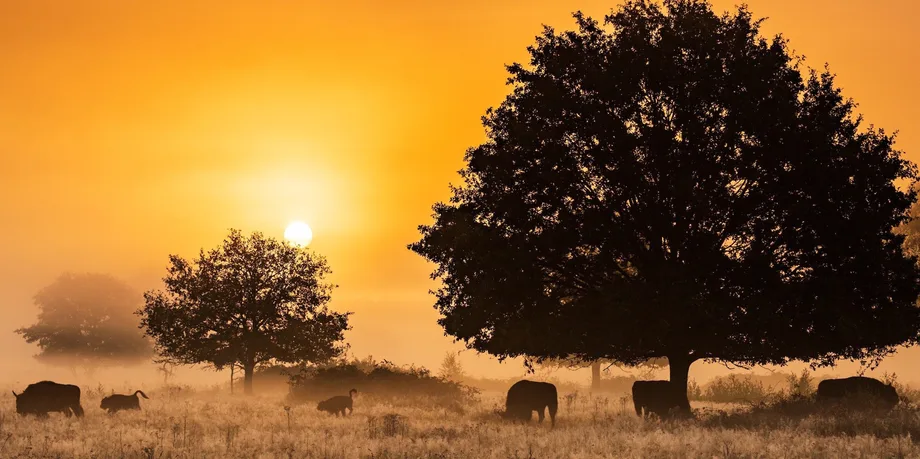
Nearly a century after the last wild European bison in the Caucasus was shot in 1927, Azerbaijan's Shahdag National Park now holds around 90 of the animals. The UNEP story, published 2 June 2026 by the United Nations Environment Programme, counts roughly 90 bison there, including several pregnant females. That makes the park the first place in the South Caucasus where the species roams freely again.
Contents
- Shahdag Forests Gain a Missing Giant
- From a 2012 Choice to a Herd of 90
- Why Counts and Deadlines Vary
- How Bison Remake the Ground They Walk On
- Why Climate Officials Watch the Herd
- A Species Saved by a Very Small Start
- The Long Trip From Austria to Baku
- Settling In Before Release
- Who Is Behind the Comeback
- Gazelles Bring Back the Predators
- What Could Slow the Recovery
- A Model for Other Caucasus Countries
- Key Points
The return is more than the comeback of a large animal. European bison, also called wisent, are the biggest land mammals in Europe and can eat up to 130 pounds of vegetation a day. A typical adult is about 3.5 meters long, 2 meters tall and can weigh up to 1,000 kilograms. Conservationists describe them as ecosystem engineers, animals whose feeding, movement and waste change the habitat for many other species. Officials and conservation groups hope a viable herd will restore forest and mountain meadow processes that stopped when the last wild animals disappeared.
The park covers 40,000 hectares of mountain forest and subalpine meadow. Azerbaijan lies in the southeastern Caucasus, where the mountains meet the Caspian Sea and nine of 11 climate zones intermingle. Local communities use nearby grasslands for food, fresh water and tourism income. The project is designed to help those landscapes cope with warming temperatures, shifting rainfall, wildfire and landslides. Rewilding, the return of native species to places where they once lived, is one part of that effort.
From a 2012 Choice to a Herd of 90
The Rewilding Europe page says European bison was chosen as Azerbaijan's iconic conservation species in 2012. In the same period, WWF Azerbaijan and the Ministry of Ecology and Natural Resources examined 13 possible sites, 11 in mountain areas and two in lowlands, according to a Baku Research Institute review. Shahdag, in the Ismayilli section, became the centre of the plan.
The IUCN story, published 25 November 2024, says reintroduction work began in 2017 with construction of a bison centre in Shahdag National Park. The IDEA project page calls the centre an adaptation facility and says 12 bison arrived from European parks in 2019. Rewilding Europe dates the centre's full operation to 2019, with financial support from the German Government, and says six transports between 2019 and 2023 carried 47 bison from EAZA breeding programmes in Germany and other European countries.
A first herd of 41 animals was reintroduced, the Rewilding Europe page says. IDEA says the first 20 animals were released after an adaptation period lasting two years, a sequence that places that release in 2021. The IUCN story gives 2020 for the release of the first group of 20. IDEA says more bison arrived in late 2022 and 2026.
- 1927: the last wild Caucasian bison was shot.
- 2012: bison was chosen as Azerbaijan's iconic conservation species, and 13 sites were examined.
- 2017: the adaptation centre was built; in 2019, the first 12 bison arrived and the centre began full operations.
- 2019 to 2023: six transports brought 47 bison, and a first herd of 41 was reintroduced.
- 2020 or 2021: the first group of 20 was released, with the year depending on the official date used.
- 2024: the Baku Research Institute review counted 58 in Shahdag; IUCN counted 66 in November 2024.
- 2026: UNEP counted around 90, and an 18 animal shipment included Ina from Innsbruck.
Why Counts and Deadlines Vary
Numbers rise as animals arrive and calves are born, so counts depend on the year. The UNEP story puts the herd near 90 in June 2026. The IUCN story counted 66 in November 2024, the Baku Research Institute review recorded 58 for 2023 to 2024, and the 2026 shipment brought the total relocated to 64.
Nine calves were born in 2024. By June 2026, UNEP said more than 25 calves had been born in Shahdag and several females were pregnant. Rewilding Europe recorded 10 calves when its page was compiled. Those figures track different moments in the herd's growth, with later arrivals and births lifting the total.
The date for a milestone of 100 animals also appears in two forms. The Rewilding Europe page targets about 100 bison born and raised in captivity from the Lowland Caucasian breeding line by the end of 2028, with an agreement to bring up to 60 more by that deadline. IUCN says the founder population should reach at least 100 adults by 2028. A 2026 article about the park's recovery gives 2029 for 100 released animals. A broader goal is a herd of 500 animals over 25 years.
How Bison Remake the Ground They Walk On
Bison matter because of scale. One animal can consume up to 130 pounds of vegetation in a day. It also tramples plants, rolls in soil, drops waste and opens paths through dense undergrowth. That behavior creates patches of short grass, taller plants and bare soil, a pattern that gives different species room to live.
Karim Ben Romdhane of WWF Austria, who accompanied one shipment, said the return is meant to fill a role left empty when bison disappeared. He explained why large herbivores matter to biodiversity:
Now we are reintroducing them to this place because it's an important animal for the ecosystem. We don't have a lot of large herbivore animals that can create open spaces and thus also creating new habitats. So introducing this animal back to this ecosystem where it used to live in the past will have also positive effects for a lot of other species and at the end for biodiversity.
Seeds pass through bison waste, and their hooves press some seeds into soil. Their grazing can reduce dominant plants, allowing other plants to grow. In forest habitats, studies cited by the Baku Research Institute review found bison increased the variety of vascular plants in oak forests with dense ground cover, while closed beech forests changed little. That detail matters in Shahdag, where forest edges and mountain meadows sit close together.
Why Climate Officials Watch the Herd
Grasslands that stay healthy hold soil, slow water runoff and support grazing animals. In Shahdag, those services matter to mountain communities that rely on grasslands for food, fresh water and tourism income. Climate change has been raising temperatures, changing precipitation and increasing risks of wildfire and landslides across Azerbaijan.
Mirey Atallah, head of the Adaptation and Resilience branch at the United Nations Environment Programme, said healthy ecosystems deliver benefits for people as well as nature. She described how restoration helps communities face climate shocks:
Whenever we help nature to be healthy, nature delivers on more than one front. In the long term, we're delivering benefits for people in terms of climate mitigation and adaptation and societal resilience.
Other places offer a sense of scale. The Baku Research Institute review cites Romanian figures in which more than 100 families and more than 700 tourists a year benefit from ecotourism built around bison. It also cites a Yale University estimate that a herd grazing nearly 50 square kilometers of Romanian grassland could capture an additional 54,000 tons of carbon a year, equal to emissions from more than 40,000 cars. Those are comparison figures from Romania, useful for judging the scale of possible benefits.
A Species Saved by a Very Small Start
The European bison is one of two surviving bison species, alongside the American bison. Its return began with a narrow genetic base. After habitat loss and hunting, only two wild populations remained by the late 1800s: one in Bialowieza Forest, shared by Poland and Belarus, and one in the western Greater Caucasus. The Bialowieza animals were killed by 1921, and the last wild Caucasian bison was shot in 1927. Fewer than 60 animals survived in zoos and private parks.
Elshad Askerov, head of WWF Azerbaijan, said the loss was part of wider pressure on the country's landscapes. He described the damage left from the Soviet period:
Soils and forests were severely overused, and many animals lost their habitats.
Askerov said the recovery gives Azerbaijan a chance to repair that loss:
We now have a historic opportunity to restore our species.
Modern European bison descend from 12 founders. The Baku Research Institute review identifies two genetic lines: a Lowland line from seven founders and a Lowland Caucasian line from five founders. It names the 1907 calf Kaukasus, number 100 in the European Bison Pedigree Book, as the last known Caucasian bison and a founder of the hybrid line. Azerbaijan's animals come from that Lowland Caucasian line.
Breeding work began in the 1920s. IUCN gives 1952 as the year of the first releases back into Bialowieza Forest; the Baku Research Institute review gives 1954 for the first wild releases in Poland. Numbers of bison living freely have grown sharply since then. A 2026 history of the recovery gives around 2,500 European bison living freely two decades ago and more than 9,500 now. IUCN describes almost 10,000, while the Baku Research Institute review gives 6,200 to 7,000. The figures come from different years and from groups with different roles in the recovery.
The Long Trip From Austria to Baku
Ina, a bison at Innsbruck zoo in Austria, was among 18 animals sent in the latest relocation, the largest single transfer since the project began. The animals came from zoos across Western Europe. They travelled by truck to Frankfurt Hahn airport, by plane to Baku and then by truck in transport boxes to Shahdag. Veterinarians monitored them through a journey lasting more than two days.
Karim Ben Romdhane, who travelled with the shipment, said the operation was complicated because people had first removed bison from the wild. He described the effort as a necessary response to that loss:
It's a logistic organizational challenge and therefore I would also like to say if those species wouldn't be extinct we wouldn't need to do that. So it's the last resort that we do. It's not that we just release animals for the fun but because they had been extinct. So it's a long procedure but at the end they arrived in a really good shape here.
By the time of that shipment, 64 bison had been relocated to Azerbaijan, and nine calves had been born in 2024. Adding 18 animals in the latest transfer helped lift the park population to around 90, an increase from 58 recorded in the 2023 to 2024 review and 66 counted by IUCN in 2024.
Settling In Before Release
New arrivals do not walk straight into the forest. They spend months in a fenced area where staff provide some feed and watch their health. IDEA says the original animals had an adaptation period lasting two years before release. The 2026 shipment followed the same approach: several months in a fenced area, then movement into the core zone once the team was satisfied the animals were adapting.
Tracking relies on GPS collars, small devices that use satellites to record location. The IUCN story says some Shahdag bison carry collars. The Baku Research Institute review counts five collared animals there. A 2026 account says select animals, usually leading cows, wear collars that fall off after about two years. Rangers locate herds on horseback and on foot, and they check winter feeding sites where bison are likely to appear.
Glen Shirra shows why monitoring births matters. The IDEA project page says she was born in Berlin in 2013, arrived in Azerbaijan in 2019 and was released after adaptation. Nine months later she gave birth to Shahzubar. IDEA says Glen Shirra and her offspring now live alongside 66 other bison in Shahdag.
Who Is Behind the Comeback
The project joins government bodies, conservation groups and zoos. Partners include Azerbaijan's Ministry of Ecology and Natural Resources, WWF Azerbaijan, WWF Germany, the European Association of Zoos and Aquaria and its breeding programme, Tierpark Berlin, International Dialogue for Environmental Action, the European Bison Friends Society and several zoos. Rewilding Europe helped finance the work, and the German Government supported the centre. The 2026 effort also drew support from the European Wildlife Comeback Fund.
IDEA was founded in 2011 by Leyla Aliyeva. The IUCN story calls the organisation the driving force behind the bison project and lists wider work that includes marine conservation, youth education, tree planting, recycling and coastal pollution. Leyla Aliyeva, who also heads IDEA, helped spearhead Azerbaijan's rewilding plans for bison, goitered gazelles and red deer, according to UNEP.
IDEA used COP29 in Baku to present the project to an international audience. The IUCN story says the group had a pavilion in the Blue Zone, G18, during the climate conference from 11 to 22 November 2024. The COP29 setting underlined the link between species recovery and climate policy that officials now describe in Shahdag.
Gazelles Bring Back the Predators
Azerbaijan's rewilding effort is not limited to bison. Goitered gazelles once grazed the lowlands and foothills of the Caucasus in the tens of thousands. Poaching and habitat loss cut the national population to fewer than 200 in 1960. Wildlife reserves and the reintroduction of more than 1,000 animals lifted the number to around 7,000 in Shirvan National Park, a rise of more than 35 times from the 1960 count.
The gazelles feed European lynx, striped hyenas and gray wolves. Those carnivores had begun to recover as prey became more plentiful. Elshad Askerov, head of WWF Azerbaijan, said the return of the gazelle herd has helped the wider food chain. He explained the connection:
Because this prey species is now numerous, the population of endangered carnivore species has started to recover. In a food chain, every link is important.
The bison and gazelle projects share a method. Both bring back animals that shape habitat or feed other species, then rely on protected areas and monitoring to keep the population viable. For local people, the results can include more wildlife viewing, stronger grasslands and new tourism interest.
What Could Slow the Recovery
The comeback starts from limited genetic diversity. European bison descend from just 12 animals, and IUCN lists the species as near threatened. The Baku Research Institute review notes that low variability can reduce resistance to disease. The same review points to risks from hybridization with cattle and from bison carrying cattle genes. Cattle genes were found in some bison brought to Azerbaijan, but those animals were not used in the reintroduction.
Conflict with farmers is another practical issue. In northeastern Poland, compensation for crop damage caused by bison rose 20 times in 10 years and cost about 200,000 euros between 2000 and 2010. Road collisions killed 3.3 percent of bison in one Polish study cited by the same review. The review recommends GPS monitoring and information signs, and it advises people to stay at least 100 meters from bison.
Azerbaijan's bison are listed in the third edition of the Red Book of the Republic of Azerbaijan, where poaching and diseases carried by cattle are named as limiting factors. The park's GPS collars and fenced adaptation areas are meant to reduce some of those risks. The herd's small founding group still means managers must watch health and breeding carefully as the population grows.
A Model for Other Caucasus Countries
Environmental groups in the region are watching Shahdag closely. One of Azerbaijan's neighbours has expressed interest in copying the project. The neighbour was not named, and no date was given for a new herd there. IDEA and its partners hope that future herds in different countries can eventually connect through protected areas across the Greater Caucasus.
Elshad Askerov, head of WWF Azerbaijan, called the country's rewilding projects a model for other Caucasian countries. He described the hope that separate herds will one day form a single population:
We hope that eventually, these different herds will meet each other and become one big Caucasian population.
The plan running for 25 years sets a goal of 500 bison in the Greater Caucasus, the number the programme describes as the minimum for a sustainable population. Early plans call for breeding groups and herds living in large fenced areas, then more than 500 animals across the Greater Caucasus, and later links between populations. The nearest deadline is the end of 2028 for about 100 animals in Shahdag. The date for reaching 500 is not fixed beyond that period. For now, the measure of success is visible in calves, pregnant females, GPS signals and a herd walking through forests empty of bison for almost a century.
Key Points
- The last wild European bison in the Caucasus was shot in 1927, and Shahdag National Park now has around 90 animals.
- The project began with a centre built in 2017, 12 arrivals in 2019 and six transports carrying 47 bison between 2019 and 2023.
- Official targets put the first milestone at about 100 animals by 2028, with a goal of 500 across the Greater Caucasus over 25 years.
- Bison restore habitat by eating, trampling, spreading seeds and opening dense vegetation, which can help plants, insects, birds and grasslands.
- GPS collars, fenced adaptation areas and ranger patrols help track the herd and manage risks.
- Goitered gazelles have recovered from fewer than 200 in 1960 to around 7,000, helping lynx, hyenas and wolves return.