Ottawa Put Peace and Trade on the Same Table
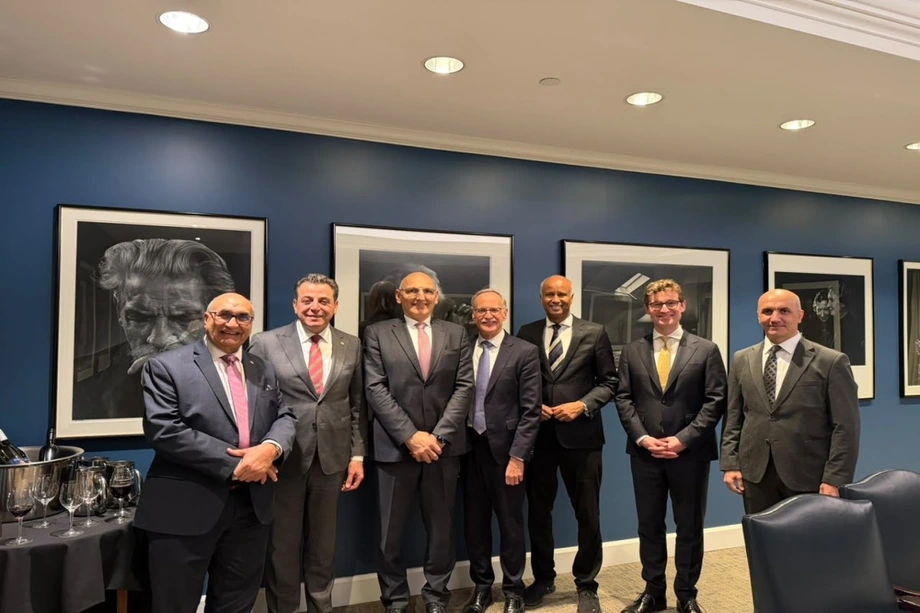
Elchin Amirbayov, the Representative of the President of the Republic of Azerbaijan for Special Assignments, used a working visit to Canada to link two questions: stronger Azerbaijan and Canada relations, and the effort to turn the Azerbaijan and Armenia peace process into working transport routes. The visit disclosed on November 27, 2026 included meetings with senior Canadian officials, investment talks and a briefing on the August 8, 2025 Washington summit.
Contents
- Ottawa Put Peace and Trade on the Same Table
- Who Met Amirbayov in Canada
- What the Diplomatic Track Could Deliver
- Where Canadian Companies Fit
- How the Armenia Peace Agenda Reached Ottawa
- A Short Timeline of Recent Peace Diplomacy
- What the Zangezur Corridor Actually Is
- Why the Route Has Deep Historical Roots
- TRIPP Brings a New Name and New Control Rules
- Civil Society Builds a Peace Bridge
- What Changes for People and Businesses
- What Is Still Unclear
- Key Points
His talks touched bilateral relations, political dialogue, economic cooperation, interparliamentary ties and regional and international issues. Canada is not a party to the peace negotiations. Ottawa was given a detailed account of what Baku says has been achieved and what still needs resolution. The Zangezur Corridor was presented as both a strategic route and a possible field for Canadian business.
Who Met Amirbayov in Canada
The guest list crossed Canada's political institutions. Raymonde Gagné, Speaker of the Canadian Senate, leads the upper chamber that reviews laws and represents provinces. David Morrison is Chief Adviser to the Prime Minister on Diplomatic and International Affairs. Arun Thangaraj, Deputy Minister of Foreign Affairs, helps run diplomacy on a daily basis. Yasir Naqvi is Parliamentary Secretary to the Minister of International Trade, a role that helps steer trade policy through Parliament. Amirbayov also met representatives of the Canadian Parliament.
The contacts matter because interparliamentary ties, meaning direct contacts between legislators, keep relationships active beyond ministerial visits. No joint statement, contract or new diplomatic mission was announced after the meetings. Outside government meetings, Amirbayov joined a roundtable at the Macdonald-Laurier Institute in Ottawa and an event hosted by Allies for a Strong Canada. He spoke about Azerbaijan's regional peace and cooperation agenda, its place in international relations, and traditions of multiculturalism and religious tolerance.
What the Diplomatic Track Could Deliver
Both sides emphasized the first political consultations held in 2025 between the two foreign ministries and agreed to prepare the next round soon. Political consultations are structured meetings where officials compare positions and prepare steps for ministers. They turn a broad relationship into a working agenda.
The most concrete diplomatic idea was a roadmap with specific timelines and measures for closer political dialogue and visits by senior officials. No date was announced for the next consultations, and the roadmap was not published. Its content will show whether the relationship moves on a fixed schedule or proceeds meeting by meeting.
Where Canadian Companies Fit
The economic agenda named energy, including renewable energy, transport and logistics, security, high technologies and agriculture, along with mutual investment. High technologies means software, digital services and advanced production. Transport and logistics cover the roads, rail links, warehouses, customs systems and information tools that let goods cross borders.
Canadian firms were given sectors rather than projects. Energy can include oil and gas services and renewable power. Agriculture can include machinery, storage and food processing. Security was mentioned without detail, so the scope for Canadian work in that field is still undefined.
The business case depends on connectivity. If South Caucasus routes reopen reliably, companies can examine freight, energy and supply links connecting Azerbaijan, Armenia, Turkey, Iran, Russia and wider markets. For investors, the key questions are whether contracts are clear, laws are stable and cargo can be insured and moved without long delays.
How the Armenia Peace Agenda Reached Ottawa
Azerbaijan and Armenia normalization was one of the main subjects in Canada. Amirbayov provided a detailed briefing on the Washington summit of August 8, 2025, the steps taken to advance the peace agenda and the outstanding issues that must be resolved for a lasting peace.
The summit brought President Ilham Aliyev and Prime Minister Nikol Pashinyan together with United States President Donald Trump. They signed a peace process declaration, a political document that sets direction for negotiations. The unresolved issues were not listed one by one.
Ottawa also heard Baku's view of peace as an economic program. Armenia has offered the Crossroads of Peace initiative, under which several routes would open at once under Armenian authority. That difference over control explains why roads and rail lines are among the hardest parts of the peace process.
A Short Timeline of Recent Peace Diplomacy
The dates behind the Canada visit stretch back to the end of the 2020 war and forward to projects now under construction.
- November 9, 2020: The Nagorno-Karabakh ceasefire included Article 9 on reopening economic and transport connections.
- August 8, 2025: Aliyev, Pashinyan and Trump signed the peace process declaration in Washington.
- Late 2025: Azerbaijan and Canada held their first foreign ministry political consultations, and the Peace Bridge dialogue began.
- October 21 to 22, 2025: Peace Bridge met in Yerevan. A second meeting followed in Baku on November 21 to 22.
- February 2026: At the third meeting in Yerevan, 19 Azerbaijani experts crossed the delimited and demarcated land border from Ashagi Askipara to Voskepar.
- April 10 to 12, 2026: The fourth meeting gathered representatives in Gabala, with attention on groups outside government and media contacts.
- Days before the fifth forum in Dilijan: Armenia and the United States began preparatory construction on TRIPP in Syunik province.
- November 27, 2026: The Canada visit was disclosed.
The sequence matters because each step narrowed the distance between words and infrastructure. A declaration led to expert meetings; expert meetings led to crossing a border on foot; construction work then made the legal details of a corridor more urgent.
What the Zangezur Corridor Actually Is
The Zangezur Corridor is a proposed transport link between mainland Azerbaijan and Nakhchivan, an Azerbaijani exclave cut off from the rest of the country by Armenia. The route would pass through Armenia's southern province of Syunik, which Azerbaijan calls Zangezur.
Azerbaijan and Turkey have promoted a direct land link. Some versions imagine no Armenian checkpoints, meaning Armenian officers would not stop trucks, trains or travellers. Armenia rejects that corridor logic as a threat to sovereignty, the authority of a state over its territory. Yerevan wants several routes under Armenian rules.
The corridor concept was absent from the 2020 ceasefire wording. Article 9 of the November 9 agreement said economic and transport connections should be unblocked, with Armenia guaranteeing security of links between western Azerbaijan and Nakhchivan for people, vehicles and cargo in both directions. The Border Guard Service of the Russian Federal Security Service was given oversight.
One reading treats the plan as an expansionist project linked to Turkic peoples. Another sees it as a way to ease the blockade of Armenia that Azerbaijan began in 1989 and Turkey joined in 1993. Those opposing views explain why the same railway can be called a peace route or a threat.
Why the Route Has Deep Historical Roots
Syunik and Zangezur carry old memories. The Russian Empire created a Zangezur district in 1868 covering much of southern Armenia. After the empire collapsed, the first republics of Armenia and Azerbaijan disputed the area between 1918 and 1920. Britain approved Azerbaijani jurisdiction in January 1919, but Armenian resistance continued until both republics entered the Soviet Union.
Soviet rail links once connected Nakhchivan to Azerbaijan. The shorter line through Syunik was built in 1941, while another route through Yerevan, Ijevan and Qazax was built in the 1980s. Both were abandoned after 1992 as the Nagorno-Karabakh conflict severed links.
Territorial bargains failed twice. A 1992 proposal linked Azerbaijani concessions over Nagorno-Karabakh to an Armenian concession through Meghri. Similar talks in 2001 and 2002 collapsed under domestic opposition. A siege and offensive lasting 10 months later brought Nagorno-Karabakh under Azerbaijani control and drove its population to Armenia. In 2021, President Ilham Aliyev said Armenia had agreed to the corridor and threatened to establish it by force. Armenia says Azerbaijan has occupied parts of internationally recognized Armenian territory, especially in Syunik, since then.
TRIPP Brings a New Name and New Control Rules
The 2025 Trump Route for International Peace and Prosperity, known as TRIPP, turned the corridor debate into a named project. The agreement grants the United States exclusive development rights to operate a corridor on commercial terms. The route is 43 kilometres long, with a stated 74% U.S. stake and rights lasting 49 years.
The legal formula matters. The route would link mainland Azerbaijan to Nakhchivan through Armenia, but operate under Armenian law and maintain Armenian sovereignty. In plain language, Armenia would still have authority on its territory while a development operator would manage the commercial project. That answer is designed to address Armenian objections, but the political argument is still alive.
TRIPP is also tied to a wider contest over influence. It is presented as a way to reduce Russian, Iranian and Chinese influence in the South Caucasus. Russia and Iran have condemned the American role as an encroachment. For Canadian firms, a route with clear commercial rules could create work in logistics, energy, digital services and trade finance. No Canadian contract, financing package or company was announced in Ottawa.
Civil Society Builds a Peace Bridge
Official talks are not the only track. The fifth Peace Bridge dialogue gathered 60 Azerbaijani and Armenian civil society representatives in Dilijan, the largest turnout since the platform began in 2025 under the auspices of both governments. They discussed roads, infrastructure, economic and social affairs, humanitarian work, education, and political and geopolitical issues.
Alen Simonyan, Secretary of Armenia's Security Council, told the forum that roads are central to cooperation. He described transport links as the key connection between the two countries:
the main link for cooperation between Armenia and Azerbaijan
Armenian Deputy Foreign Minister Vahan Kostanyan discussed the requirements for bilateral normalization. Farhad Mammadov, deputy chairman of the board of the Centre for Analysis of International Relations and Multiculturalism, said the talks were candid despite disagreement. He described how participants handled hard subjects:
there are certainly issues on which we disagree, but we hold an honest and sincere dialogue on all of them.
Areg Kochinyan, president of the Armenian Council and a coordinator, said the dialogue seeks to reshape public attitudes after decades of conflict. He described its purpose:
we are trying to create a new normal, new realities and a new history alongside the past
The forum came days after Armenia and the United States began preparatory construction on TRIPP in Syunik. Organizers set up six specialized committees covering trade across the border, environmental monitoring, youth exchanges and media cooperation. Their recommendations are meant to support official peace efforts.
What Changes for People and Businesses
The Canada visit brought no immediate new law, visa rule or trade agreement. Its practical effect was to keep the diplomatic machinery moving through another round of consultations, a possible roadmap with dates and a stronger commercial pitch to investors.
For people in Syunik and Nakhchivan, the decisive questions are who checks trucks and trains at the border, who collects customs charges, and whether cargo can move in both directions without long delays. Article 9 called for unobstructed movement. TRIPP adds commercial operators and rights lasting 49 years. How those rules work on the ground will shape daily life and business costs.
For Canada, the meetings linked peace policy to trade policy. For Azerbaijan, they offered a chance to present the country as more than an energy supplier. For Armenia, how Canada understands the corridor issue matters because border control is a public concern.
What Is Still Unclear
Several details remain open. No date was set for the next Azerbaijan and Canada consultations. The roadmap was discussed but not released. The unresolved issues in the Armenia peace process were described in general terms, without a public list. No Canadian company, financing amount or timetable was announced for opportunities linked to the corridor.
The route also sits between competing political readings. Armenia wants several crossings under its own authority. Azerbaijan and Turkey want a direct land link. Russia, Iran and the United States disagree over American involvement, while the positions of Armenia, Azerbaijan, Russia, Turkey, Iran, the European Union and the United States remain distinct. The next markers are preparation for the consultations, any published roadmap and construction progress in Syunik.
Key Points
- Amirbayov met senior Canadian officials in a visit disclosed on November 27, 2026.
- Azerbaijan and Canada agreed to prepare another round of foreign ministry political consultations and discussed a roadmap with timelines.
- Canadian companies were invited to consider energy, renewable energy, transport and logistics, security, high technologies, agriculture and mutual investment.
- Amirbayov briefed Canada on the August 8, 2025 Washington summit and unresolved issues in the peace process with Armenia.
- The Zangezur Corridor would link mainland Azerbaijan to Nakhchivan through Armenia, while Armenia insists on sovereignty and several routes.
- TRIPP gives the United States development rights lasting 49 years, with a stated 74% stake and a route of 43 kilometres.
- The fifth Peace Bridge forum gathered 60 Azerbaijani and Armenian representatives in Dilijan and set up six specialized committees.