A record catch gives way to decline
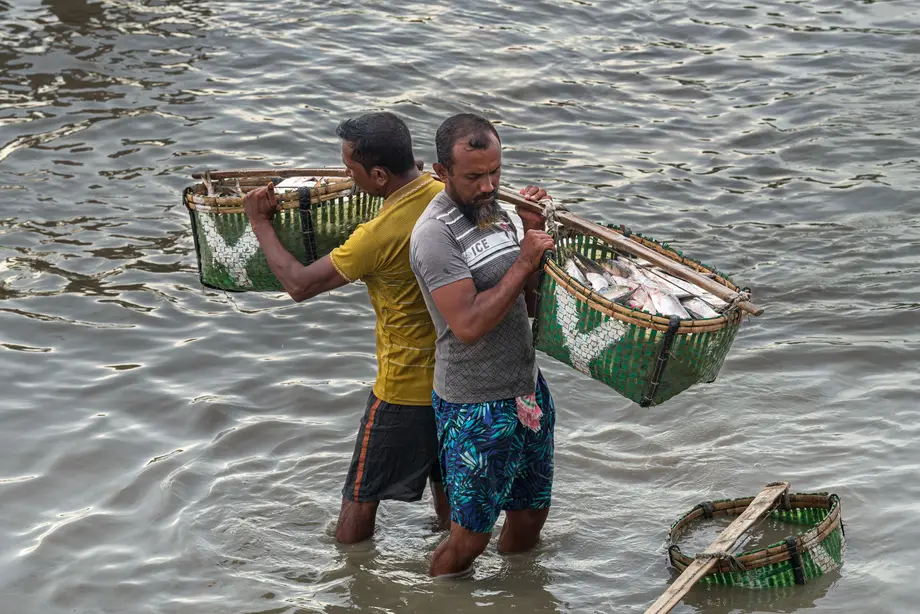
Bangladesh's hilsa production climbed from 351,000 tonnes in the 2012 to 2013 fiscal year to a record 571,000 tonnes in 2022 to 2023, an increase of about 63%. It then fell by around 10% over the following three fiscal years, according to a presentation by hilsa researcher Mohammad Anisur Rahman. He gave those figures in Dhaka on 27 November 2026 at the opening of a regional workshop lasting three days, titled Sustainable Management of Hilsa Fisheries in the Bay of Bengal Region.
Contents
- A record catch gives way to decline
- What 65 years of ocean records reveal
- How heat, salt and rising water reach fish
- A smaller marine share sustains a large coastal economy
- Cyclones turn coastal risk into measurable losses
- The hilsa decline has several causes
- Why one migratory fish needs three countries
- Climate finance promises meet demands for local accounts
- Which decisions still need money and deadlines
- The Bottom Line
The stakes extend far beyond one fish. Bangladesh accounts for more than 80% of global hilsa production, while harvesting and trade across Bangladesh, India and Myanmar generate more than $3 billion a year. Fishers, transport workers, processors, traders and retailers all draw income from that chain. Hilsa also accounted for 11.63% of Bangladesh's total fish production in 2022 to 2023, making its recent reversal important for food supplies as well as coastal earnings.
The Dhaka warning came one week after COP31 ended in Antalya, Turkey, and on the same day that environmental and civic groups rallied outside Bangladesh's National Press Club. Their demand was straightforward: turn international climate finance promises into published spending plans for coastal districts, with money for embankments, shelters, drinking water and secure livelihoods.
These concerns meet in the Bay of Bengal. A scientific reconstruction covering 1958 to 2022 shows a warming sea, rising water levels and changing salinity. At the same time, Rahman identified overfishing, illegal fishing, banned nets, pollution and sediment building up in hilsa habitats. The management problem is therefore to protect fish stocks under pressure from people while helping coastal communities adjust to changes in the ocean itself.
What 65 years of ocean records reveal
The Ocean Dynamics study, published on 29 August 2025, was written by Mahiuddin Alamgir, Mazlan Hashim, Amin Beiranvand Pour and Shamsuddin Shahid. They analysed monthly data from the European Centre for Medium-Range Weather Forecasts' Ocean Reanalysis System 5, known as ORAS5, at a resolution of 0.25 degrees. Reanalysis combines observations from satellites, buoys and ships with a numerical ocean model, creating a consistent record of past conditions.
The researchers used Sen's slope to measure trends and the modified Mann-Kendall test to check their statistical strength while reducing the influence of natural variability. This matters in a bay where monsoons, El Niño and La Niña can produce sharp differences between individual years. Their aim was to identify changes that persisted beneath those shorter fluctuations.
Mean annual sea level rise across the study area ranged from 1.2 to 2.4 millimetres a year. Trends during winter and the monsoon were consistently between 1.8 and 3.0 millimetres a year. For comparison, the Intergovernmental Panel on Climate Change (IPCC) gives global mean rates of 1.3 millimetres a year from 1901 to 1971, 1.9 millimetres from 1971 to 2006 and 3.7 millimetres from 2006 to 2018. The global figures show acceleration, while the Bay figures describe regional conditions that directly shape Bangladesh's coast.
Most of the Bay showed average annual and seasonal warming of its surface water at 0.005 to 0.012 degrees Celsius a year. Maximum increases near the Bay reached 0.012 to 0.026 degrees a year. Salinity moved in different directions: the maximum trend in the northeast was a decrease of 0.01 to 0.03 practical salinity units, or PSU, a year, while Bangladesh's southern coastal waters recorded increases of 0.02 to 0.04 PSU a year. PSU is a standard way of expressing how salty water is.
Wind speed changed little in many areas, although the southeastern Bay recorded decreases of 0.003 to 0.009 metres per second each year before and during the monsoon. Winds affect surface mixing and conditions for boats, so regional changes matter even when the wider trend appears muted.
Earlier work cited by the authors produced some higher local sea level estimates. Alam's 2003 study gave 4.0 to 7.8 millimetres a year along different parts of Bangladesh's coast, while the Center for Environmental and Geographic Information Services and the Department of Environment estimated 5.5 to 7.5 millimetres in 2011. The new paper explains that short records can be strongly influenced by natural variability, which is why its longer dataset and trend method give planners a different basis for assessing risk.
How heat, salt and rising water reach fish
The IPCC says the ocean has absorbed more than 90% of the excess heat accumulated in the climate system. Some of that heat is now reflected in the Bay's measured surface warming. Warmer water can change where fish travel, when they breed and how many young survive. It can also hold less dissolved oxygen, which fish and other aquatic animals need to breathe.
The ocean absorbs carbon dioxide as well as heat. That absorption contributes to ocean acidification, a gradual chemical change that can make it harder for some organisms to build shells. Effects on shell forming animals and other small organisms can travel through the marine food chain. Capture fisheries are especially exposed because they depend on natural habitats and food webs rather than controlled farm conditions.
A fisheries adaptation review brings these physical changes together with research on Bangladesh's inland fisheries, marine catch and fish farms. Its authors examined 75 articles in academic journals and 15 reports published from 2006 to 2025, alongside datasets from the Department of Fisheries, the Bangladesh Fisheries Research Institute, the Food and Agriculture Organization, the Bangladesh Bureau of Statistics and the World Bank.
The review includes projections from CMIP6, an international comparison of climate models. For 2060 to 2099, it describes nearly 3 degrees Celsius of additional surface warming in the North Indian Ocean under the SSP5 emissions pathway when compared with SSP2. These pathways represent different choices about future greenhouse gas emissions. Within that warmer ocean, the Bay of Bengal is projected to be about 0.5 degrees cooler than the Arabian Sea, showing why regional forecasts are more useful than a single ocean average.
Projected sea level rise at Cox's Bazar ranges from 228 to 608 millimetres by 2050 and from 435 to 1,162 millimetres by 2100, with some deltaic locations exceeding 40 millimetres a year. Rising water can increase coastal inundation and push salt into land and water used by farms and households. Changes in river flow and rainfall can send salinity in the other direction elsewhere. Fishing communities consequently need local information about temperature, salt and water movement, rather than one national prescription.
A smaller marine share sustains a large coastal economy
The Department of Fisheries published Volume 41 of its official fisheries yearbook in December 2024, covering July 2023 to June 2024. It records approximately 5.02 million tonnes of fish production, including around 640,000 tonnes from marine fisheries. That marine contribution equals roughly 12.7% of the total, with inland fisheries and aquaculture supplying most of the rest.
The previous year's figures show the structure in greater detail. Total production in 2022 to 2023 was 4.91 million tonnes, of which marine capture supplied 13.82%, inland capture 28.15% and aquaculture 58.03%. Artisanal marine fisheries accounted for 10.85% of total national production and industrial trawling for 2.97%. Bangladesh has 118,813 square kilometres of marine waters in the Bay of Bengal, but ponds, rivers, floodplains and other inland waters remain central to the national fish supply.
A smaller production share does not mean a small human impact. Marine fishing supports employment at sea, boat work, transport, landing sites and coastal markets. Women who process, dry and trade fish are part of the same economy. When catches fall, weather prevents trips or operating costs rise, the financial effects can reach people who never board a boat.
In the 2022 to 2023 fiscal year, fisheries contributed 2.43% of national gross domestic product (GDP) and 22.14% of agricultural GDP, while supporting the livelihoods of about 12% of the population directly or indirectly. In 2024, Bangladesh declared that it could meet its own fish needs, with availability of 67.80 grams per person a day and fish supplying about 60% of daily animal protein intake. The review also cites the Food and Agriculture Organization's 2024 assessment placing Bangladesh second in total capture fisheries production and fifth in aquaculture production.
Those figures explain why adaptation has to protect both farmed fish and wild catches. Aquaculture dominates national volume, but marine fisheries sustain distinctive coastal jobs and species, including hilsa, Bombay duck and jewfish. Policies that increase pond output alone would leave many of the people exposed to changes in the Bay without an answer.
Cyclones turn coastal risk into measurable losses
Cyclone Remal caused $73.33 million in fisheries losses across 88 upazilas, or subdistricts, in 16 coastal districts, according to figures assembled in the adaptation review. The damage affected 20,523 tonnes of finfish and 7,943 tonnes of shrimp. Cyclone Yaas damaged 9,592 hectares of fishing enclosures, covering 24,672 ponds and shrimp farms, with losses put at $7.09 million.
These loss accounts show how a storm at sea becomes a crisis on land. A farmer can lose stocked ponds, a trader can lose supplies and a worker can lose processing or transport income during the same event. Coastal aquaculture also faces saline water intrusion, tidal surges, deteriorating water quality, disease outbreaks and interruptions to supplies of young fish from hatcheries. Carp, tilapia, pangasius and shrimp are among the farmed species exposed to those conditions.
Bangladesh experienced 185 extreme weather events between 2000 and 2019 and ranked seventh in the Global Climate Risk Index covering that period, the review notes. Cyclones Remal and Yaas add financial detail to that broader history. They also show why safe shelters and embankments belong in a fisheries discussion: boats, ponds, homes and roads are all needed to move fish from water to market.
The hilsa decline has several causes
Rahman's presentation placed climate warming beside pressures that fisheries agencies can address directly. His list included excessive and illegal catching, prohibited nets, water pollution, sedimentation and the emergence of chars, which are islands or shoals formed by deposited sediment, in places used by hilsa. Each pressure requires a different response, from enforcing gear rules to controlling pollution and maintaining suitable habitat.
Long periods of scientific monitoring are needed to separate those influences. Catch records alone cannot show how much of a change comes from warmer water, fishing effort, damaged habitat or alterations in rivers and estuaries. Coordinating measurements of catch, temperature, salinity and habitat conditions would give managers a firmer basis for deciding when to restrict fishing and where to restore habitat.
Mohammad Amin Ur Rashid, the agriculture, fisheries and livestock minister, inaugurated the Dhaka workshop and acknowledged that the decline was a matter of concern. He also connected conservation to national culture.
"Hilsa is part of the identity of the people of Bangladesh," he said.
The minister said the government would not tolerate overfishing or prohibited nets, while recognising that sedimentation and climate change were also affecting production. He called for management grounded in science, stronger regional cooperation and the use of advanced tools such as artificial intelligence. In fisheries, such tools could help organise large sets of catch and environmental information, although the workshop did not announce a particular system or deployment date.
Why one migratory fish needs three countries
Hilsa move among rivers, estuaries and the sea during different stages of their lives. Their route crosses waters managed by Bangladesh, India and Myanmar, so conservation in one jurisdiction can be weakened by damaging practices elsewhere. Bangladesh accounts for the dominant share of production, India has a substantial stake in the regional fishery and Myanmar is also experiencing declining output.
P Krishna, director of the Bay of Bengal Programme Inter-Governmental Organisation, described Bangladesh as a role model in hilsa conservation and said it could lead the regional response. Indian researcher Amiya Sahu proposed a comprehensive shared database, a dedicated hilsa management task force and stronger cooperation between governments. Kin Maung Soe, formerly head of WorldFish in Myanmar, identified uncontrolled fishing in several areas as one cause of Myanmar's decline.
The workshop was convened by hilsa researcher Abdul Wahab and jointly organised by the Bay of Bengal Programme Inter-Governmental Organisation, Bangladesh Maritime University, Noakhali Science and Technology University, Bangladesh Agricultural University and WorldFish. Wahab argued that the recent trend could still be reversed.
"Disappointment is not the final word. If science-based management and regional cooperation can be ensured, hilsa can return to its previous position," he said.
Income protection is part of that task. The minister said many fishers working at small scale depend on loans at high interest rates from informal lenders known as dadondars. He called for affordable institutional credit and microcredit so that conservation costs and periods without adequate income do not push families deeper into debt. A closed fishing season or gear restriction has a very different effect on a household with accessible credit and other income than on one already tied to an informal lender.
Climate finance promises meet demands for local accounts
Outside the National Press Club on 27 November, the Climate Action Forum, the Dream Research and Development Foundation, the Sundarbans and Coastal Protection Movement and partner organisations presented 11 recommendations. They wanted international climate money reserved for coastal protection, with a published investment plan for each district, clear deadlines and a special allocation in the national budget. They also renewed a call for a coastal development board.
Teacher and researcher Mir Mohammad Ali told the rally that promises of special support had emerged from COP31, but said nearly 67% of the climate finance received so far had come as loans. A grant pays for an activity without requiring repayment, while a loan adds future repayments. Ali also said coastal residents did not have clear accounts showing where money had arrived, which projects received it and what was spent.
Ruhin Hossain Prince, a former general secretary of the Communist Party of Bangladesh, connected salinity, cyclones, floods, river erosion and land loss to shortages of safe water, insecure work and movement towards cities. Climate Action Forum president Aminur Rasul called for local people's views and practical needs to shape projects, alongside transparent implementation. Nikhil Chandra Bhadra, coordinator of the Sundarbans and Coastal Protection Movement, urged Bangladesh's political parties to adopt a common national position instead of relying solely on international negotiations.
The proposed works are concrete. They include repairing and maintaining vulnerable embankments, providing enough shelters that can accommodate women, children, older people and people with disabilities, storing rainwater, digging out ponds again and installing water treatment facilities. The groups also requested livelihood support and incentives for fishers, farmers, people dependent on forests and women entrepreneurs.
Bangladesh had already taken COP31 climate finance demands to Antalya before the conference opened on 9 November. An official nationwide assessment based on International Organization for Migration fieldwork counted 4,955,527 people displaced by floods, cyclones, river erosion and other natural hazards. Some 63% had left their homes before April 2020 and 85% were living in rural union areas, showing that displacement often becomes a prolonged rural housing and livelihood problem. Environment Minister Abdul Awal Mintoo has estimated Bangladesh's annual economic damage from climate impacts at $15.2 billion.
Which decisions still need money and deadlines
Bangladesh already has the National Adaptation Plan, the Mujib Climate Prosperity Plan and the Bangladesh Climate Change Strategy and Action Plan. The fisheries review identifies continuing gaps in institutional capacity, finance and support for vulnerable communities. Its recommended responses include better monitoring, protection of whole ecosystems, adaptation designed with local communities, research and development, and technologies suited to changing coastal conditions.
For fishing and farming families, the measures now under discussion have practical meanings. Reliable salinity and temperature records can guide local management. Embankments and shelters can reduce exposure during storms. Safe water projects can ease a daily household burden. Hatchery support and better water quality can help fish farms recover, while regional hilsa data and affordable credit can connect conservation with the needs of people who catch and sell wild fish.
The chronology shows how quickly these issues have converged:
- December 2024: The Department of Fisheries published its statistical yearbook for July 2023 to June 2024.
- 29 August 2025: The ORAS5 analysis of Bay of Bengal surface conditions was published in Ocean Dynamics.
- 9 to 20 November 2026: COP31 took place in Antalya, with Bangladesh seeking adaptation finance and grants.
- 27 November 2026: The regional hilsa workshop opened in Dhaka, and coastal groups presented their finance and protection demands at the National Press Club.
No amount for the promised special COP31 allocation was announced at the rally. The proposed regional hilsa task force, coastal development board and district investment calendars also had no published start dates by the close of the events on 27 November. The immediate test is whether those proposals become funded programmes with named locations, public expenditure records and deadlines that coastal residents can examine.
The Bottom Line
- Bangladesh's hilsa output reached a record 571,000 tonnes in 2022 to 2023, then fell by about 10% over three fiscal years.
- ORAS5 data for 1958 to 2022 show Bay surface warming of 0.005 to 0.012 degrees Celsius a year in most areas and mean annual sea level rise of 1.2 to 2.4 millimetres.
- Bangladesh produced about 5.02 million tonnes of fish in 2023 to 2024, including roughly 640,000 tonnes from marine fisheries.
- Cyclone Remal caused $73.33 million in fisheries losses, while Cyclone Yaas caused $7.09 million in losses and damaged 24,672 ponds and shrimp farms.
- Bangladesh, India and Myanmar are considering shared hilsa data, a dedicated task force and management grounded in science.
- Coastal campaigners say nearly 67% of climate finance has arrived as loans and want published district spending plans, embankment repairs, shelters, safe water and livelihood support.