A Pocket Craze That Spread and Vanished Within Days
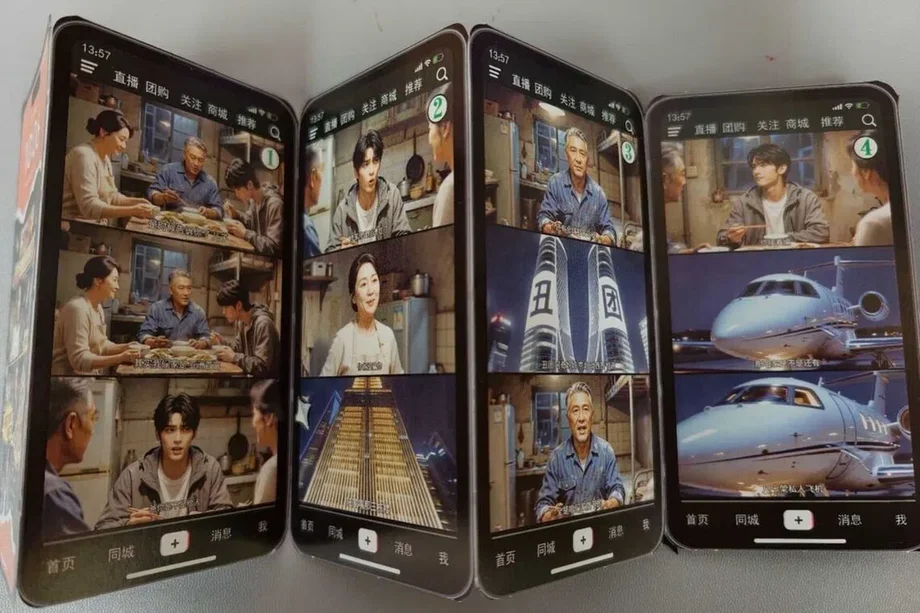
For 1 yuan, about 15 US cents, a Chinese primary school pupil could buy a story that folded to the size of a phone and opened into more than half a metre of screenshots and dialogue. The booklets, known as paper short dramas, offered tales of rebirth, revenge, sudden wealth and domineering chief executives without requiring an internet connection, a battery or a screen.
Contents
- A Pocket Craze That Spread and Vanished Within Days
- How Does a Paper Episode Work?
- The Phone Rules That Left a Break Time Gap
- Why Pupils Kept Turning the Pages
- What Children Could Read Without Screening
- Toy, Gift or Publication?
- Why the Toy Label Does Not Settle Copyright
- The Huge Industry Behind a 1 Yuan Booklet
- What Happened to the Listings?
- Why Some Specialists Warn Against Only Banning It
- Key Points
The craze spread among primary school pupils in mid to late November 2026. Children bought them at stationery stores and small shops near schools, swapped them during breaks and sometimes cut them into sections for wider circulation. A related Weibo hashtag had passed 170 million views by November 26. Some users called the booklets a new form of comic book, while others objected to adult plots reaching young children.
The commercial life of the first online wave was brief. Within about a week, many listings had disappeared from major shopping platforms. Some sellers said the goods were out of stock, while others cited copyright complaints. Searches increasingly returned unrelated products, although similar booklets remained visible on some platforms and promotional videos occasionally survived with purchase links that no longer worked.
The unusual format connects three larger stories: China's restrictions on phones at school, the enormous growth of microdramas and the difficulty of applying publishing, toy safety and copyright rules to a product that costs less than a bottle of water.
How Does a Paper Episode Work?
Each booklet uses thin card or stiff paper printed on both sides and folded like an accordion. Closed, it resembles a phone. Its cover can imitate a lock screen, complete with a title, a fixed time and a battery indicator that never changes. Opened, the strip presents scenes and dialogue in story order, sometimes with imitation viewer comments. One page may contain an episode or a sudden plot reversal.
The design turns phone habits into physical actions. A reader can colour a printed heart with a red pen to like a scene. Passing the booklet to a friend becomes sharing it. Children need no charging cable and encounter no advertising while reading. The small price and concealed shape also make the books easy to carry in a pocket or pencil case.
Xiao Zhou, a vendor in Chongqing, said children commonly bought four or five copies at once and asked when new titles would arrive. One homeroom teacher confiscated three booklets in a single day. Some sets included palm-sized audio keychains with buttons labelled Rebirth Opening, Villain Provocation and Comeback Face Slapping, adding music and sound effects to the printed story. The last phrase refers to a familiar drama convention in which a humiliated character returns to defeat and embarrass an opponent.
Prices varied considerably by seller. School shops commonly charged 1 yuan, with documented ranges of 1 to 3 yuan and 1 to 5 yuan. Wholesale offers could bring a copy below 1 yuan. Online deals included 10 books for 19.9 yuan, 24 for about 14 yuan and boxes containing several dramas for around 10 yuan. A wholesale supplier surnamed Chen confirmed that the product was inexpensive and selling well, while another estimate put printing costs at 0.7 to 0.8 yuan per booklet.
The Phone Rules That Left a Break Time Gap
China's Ministry of Education announced its national school phone notice on February 1, 2021. Primary and secondary pupils were, in principle, barred from bringing mobile phones to school. A child with a genuine need required a written application from parents, had to surrender the device to the school during school hours and could not take it into a classroom. Schools were told to provide public phones and teacher hotlines, and not to assign homework through mobile phones.
The ministry gave three principal aims: protecting eyesight, keeping pupils focused on study and preventing addiction to the internet and online games. Implementation had already produced strong memories for some pupils. Dai Hanyang, a 17-year-old high school student in Changsha, Hunan, recalled how his middle school head teacher enforced a ban with a hammer.
Seeing him using it to smash a classmate's mobile phone really let us know that he meant business.
Dai said keeping his own phone away helped him resist checking WeChat. Zheng Rui, another 17-year-old student in Changsha, said some classmates nevertheless brought phones into classrooms and found ways to evade teachers. Those experiences help explain why a printed substitute could circulate without triggering a device inspection.
Restrictions tightened further in 2025 as classroom controls on phones and electronic devices were linked to student mental health efforts. Chongqing, Guangzhou, Zhengzhou and Fujian were among the places announcing campus bans in October 2025, citing classroom disruption and concern about the effect of excessive phone use on development.
Parents and educators were never united simply around prohibition. Zhang Ting, a Beijing mother of a fourth grader, supported the rules and said a smartwatch provided enough communication for her 10-year-old daughter. Zhang Hengzhu, principal of Nanjing No. 9 Middle School, warned about sleep disorders, memory problems and deteriorating eyesight associated with misuse. Liu Changhai, an education professor at Huazhong University of Science and Technology, urged parents to set limits, saying some had used phones as free nannies during school holidays.
Why Pupils Kept Turning the Pages
The booklets offered entertainment and a social currency. Children could finish a story during a short break, exchange copies and discuss a plot in which a suffering protagonist returns wealthy, powerful or able to defeat a rival. Some pupils also made their own versions by taking screenshots of online videos, printing them and binding them for swapping or resale.
A third-grade girl explained the appeal in simple terms.
They are just fun. The dialogue in these booklets is simple, and we can swap them with classmates.
A sixth-grade pupil said reading them relieved stress. Their comments show why confiscating phones did not remove the demand for fast, easily shared stories. Paper supplied the same narrative rewards in a form that teachers and parents were less likely to notice.
Two parental discoveries illustrated the shift. A mother surnamed Zhang initially laughed at absurd dialogue in a stack belonging to her child, then found a title called Domineering CEO: Village Version and concluded that its values were troubling. Another parent, surnamed Sun, had watched a child spend three weekend hours on phone dramas. When the phone habit appeared to stop, the parent was relieved, only to discover that the child was buying stacks of printed versions instead.
Older readers compared the books with lianhuanhua, the inexpensive illustrated storybooks once sold at bookstalls. Parents born in the 1980s and 1990s recognised the portability and quick storytelling. The comparison has a limit: traditional picture storybooks generally passed through formal publishing review and often contained original work. Paper short dramas commonly reproduce screenshots selected from online successes, bringing plots already optimised for immediate stimulation directly into school circulation.
What Children Could Read Without Screening
Popular themes included rebirth, revenge, reversal of fortune, sudden riches and powerful businessmen. Titles on sale included CEO's Runaway Sweetheart, Reborn as a Tycoon's Beloved Daughter and The School Bully Forced Me to Date Him. In CEO's Runaway Sweetheart, a female character sleeps with a well-known chief executive and becomes the envy of her peers. Other material was described as vulgar, violent or preoccupied with bizarre plots.
The age of the reader matters. Online short drama platforms can use youth modes, content review, distribution limits and, for some material, age checks. Printing removes the story from those systems. A shopkeeper can sell a copy without knowing which online episode supplied the pictures, and a child can pass it around without any automated restriction.
Zhao Liangshan, a senior partner at Shaanxi Hengda Law Firm and a public interest lawyer, said this transfer amounted to an indirect evasion of content supervision for minors. Under the Law on the Protection of Minors, he argued, the loss of grading and review allowed vulgar and sensational subjects to enter schools and mislead children whose values were still forming.
Parents were particularly concerned about stories that present wealth, romance or revenge as instant solutions. The danger described by specialists is not simply that a child encounters an unfamiliar word or scene. It is that repeated plots can make manipulation, humiliation and sudden enrichment appear to be normal routes through life.
One Weibo user responded to the debate with a direct demand for controls.
Products like this need to be strictly controlled. Do not let them poison children.
Toy, Gift or Publication?
Sellers used inconsistent descriptions. Listings classified the same kind of booklet as a creative toy, a creative gift, a combined gift, a reward for students or a device for relieving study stress. Others called it a children's desktop game or a wildly popular primary school toy. Some pages named children and teenagers as the intended users, with stated age ranges extending from 3 to above 16.
The toy classification faced a technical problem. A new national standard called Toy Safety took effect on November 1, 2026. A lead drafter of that standard said the booklets had no meaningful play function, behaved like reading products and, strictly speaking, were not toys. Packaging nevertheless sometimes cited superseded versions of Toy Safety or Safety of Electric Toys, an especially poor fit for an ordinary paper booklet.
Yang Kun, deputy director of the Publishing Law and Copyright Research Institute at the Chinese Academy of Press and Publication, said the products met the form of a publication under the Publication Management Regulations. Selling them to pupils was distribution, he said, yet they lacked an ISBN, the standard book number used for formally published titles, and had not passed through a regular publishing editor. He said a book number issued through the National Press and Publication Administration and distribution by an authorised publisher were required.
Zhao went further, describing unnumbered and unedited products sold in bulk as typical illegal publications. He said calling them toys or board games was false classification that market regulation and culture and tourism enforcement bodies could investigate.
Other lawyers used more conditional language. Li Zhenwu, a lawyer and legal blogger, said the publishing status deserved scrutiny because a continuous illustrated narrative could circumvent publishing oversight when sold simply as a toy. You Yunting, a senior partner at Shanghai Debund Law Firm, said the answer depended on the physical product, how it was made and how it was sold. His comparison was with traditional picture storybooks, which can involve publishing activity and licensing.
Why the Toy Label Does Not Settle Copyright
Copyright begins with a different question: whether the seller had permission to copy the drama. Lawyers said original short dramas, including qualifying works generated by AI, can receive protection as audiovisual works under the Copyright Law. Reproducing screenshots, printing them in quantity and selling the copies can infringe the rights of reproduction and distribution.
You Yunting explained why changing the medium did not automatically make the copying lawful.
Taking screenshots of online short dramas, printing them into booklets and selling them essentially turns an audiovisual work into a paper copy. This may involve the right of reproduction, and unauthorized use may constitute infringement.
Fair use generally covers limited situations such as appropriate quotation for comment or introduction. You said a commercial booklet that substitutes a physical version of the story differs in purpose and presentation from reviewing or discussing it. The result in a particular case would still depend on ownership, licences, the amount used and any statutory exception.
Zhao said rights holders could demand removal, destruction of infringing copies and compensation. Yang also said unauthorised printing injured drama producers' copyright interests. A toy or gift label therefore changes which product and publishing rules sellers claim to follow, but it supplies no permission from the person or company that owns the drama.
A 2025 survey estimated that microdrama piracy could cause 20 billion yuan in lost output. For scale, that figure equals one fifth of the 100 billion yuan market threshold exceeded in 2025, although one number measures potential losses and the other measures market size.
The Huge Industry Behind a 1 Yuan Booklet
Domestic audience figures show why even an inexpensive printed spin-off attracted attention. Viewers of short dramas approached 664 million in December 2025. QuestMobile counted 851 million users after duplicates were removed in May 2026, while Hongguo Free Short Drama recorded 356 million monthly active users, up 79.1 percent from a year earlier. The National Radio and Television Administration said in September 2026 that the country had more than 800 million microdrama users.
Production expanded at similar speed. About 430,000 microdramas were released in the first eight months of 2026, 13 times the total for all of the previous year, and more than 90 percent involved generation by AI. The 2025 market exceeded 100 billion yuan. Those figures describe a vast supply of stories from which booklet makers could select scenes without bearing the original production costs.
An AI production boom had already made short dramas and video generation responsible for 55 percent of domestic AI token consumption, according to a June 2026 disclosure by Chinese Online. Tokens are units used to measure processing by AI systems. Cheaper and faster production can increase the number of available dramas, but it also intensifies competition and makes control over copying more valuable to studios.
What Happened to the Listings?
Searches on November 23 found multiple sellers offering paper short dramas. By November 26, most of the earlier listings on the first platform checked had disappeared, although similar products remained on other platforms. Some pages simply changed their labels. Elsewhere, advertising videos remained visible after their shopping links failed.
A short timeline shows how the controls and the craze converged:
- February 1, 2021: The Ministry of Education announced national restrictions on phones at primary and secondary schools.
- October 2025: Several regions announced campus bans amid wider concern about classroom disruption and student development.
- November 1, 2026: A new national Toy Safety standard took effect.
- Mid to late November 2026: Paper short dramas spread rapidly among primary school pupils.
- November 23 to 26, 2026: Many online listings vanished, while others remained or changed categories.
- November 26, 2026: A related Weibo hashtag passed 170 million views.
No nationwide seizure, fine or final legal classification was announced, and no deadline for a coordinated decision was given. The immediate change for families and schools was therefore uneven: a familiar listing could disappear while the same booklet continued circulating offline or under another description.
Possible consequences extend beyond removal. You said operators selling harmful content without required warnings could face rectification orders and fines. Other unlawful content could bring administrative liability, with criminal liability possible in serious cases. Market and cultural enforcement bodies could also examine false product classification.
Why Some Specialists Warn Against Only Banning It
Quality complaints add another reason for inspection. One examination of the products described paper scraps coming loose during reading and a noticeable smell. Yang said paper and ink quality often failed to meet the standards expected of publications for primary and secondary pupils. No public laboratory results established the cause of the smell or quantified a health risk, leaving ink, paper and printing safety as matters requiring testing rather than guesswork.
Zhang Xinhua, director and professor of the Digital Publishing Department at Beijing Institute of Graphic Communication, located part of the problem upstream. He said short dramas operate under a filing system, meaning they are registered for oversight without every script receiving advance approval. He warned that stories designed principally to deliver pleasure can carry weak standards of accuracy and realism before anyone turns them into paper.
Children experience those stories differently from adults, Zhang argued. An adult may treat an improbable revenge plot as temporary relaxation, while a child with limited experience may accept its shortcuts as realistic. The commercial strength of short dramas was enough to create an offline substitute that school phone rules had not anticipated.
Lao Ma, a senior editor in printing and publishing, cautioned that an outright ban alone would not resolve the underlying demand. His alternative was for legitimate publishers to learn from the format's portability, humour and emotional appeal while providing authorised, age suitable reading. That approach would require schools and parents to notice inexpensive paper products, platforms to act on infringing listings, and regulators to decide whether each product belongs in publishing review, toy safety inspection or both.
Key Points
- Paper short dramas fold to phone size and open into more than half a metre of screenshots and dialogue.
- Copies commonly sold for about 1 yuan, with bulk online offers reducing the price further.
- The craze spread among pupils in November 2026 as school phone restrictions left demand for quick, shareable entertainment.
- Many listings disappeared within about a week, but products remained on some platforms and in shops near schools.
- Lawyers say unauthorised printing can infringe reproduction and distribution rights, and a toy label does not supply permission.
- Missing ISBN numbers, outdated toy standards and adult plots have prompted publishing, safety and child protection concerns.
- China's microdrama audience exceeded 800 million in 2026, while potential piracy losses were estimated at 20 billion yuan.
- No nationwide enforcement decision or deadline for a final classification was announced.