December 4 marks an expansion, not the first screenings
A release announcement on Nov. 27 set Beth de Araújo's Josephine for Chinese cinemas on Dec. 4, presenting it as a day and date event with North America. The more precise distinction is that Dec. 4 brings the film's nationwide North American expansion. Sumerian Pictures had already opened it in limited theaters in the United States and United Kingdom on Nov. 20, with sold out screenings reported in New York and Los Angeles.
Contents
- December 4 marks an expansion, not the first screenings
- What happens to Josephine after the park
- The memory de Araújo carried for decades
- Why the director resists a simple healing story
- Research behind the assault and courtroom scenes
- Finding and protecting Mason Reeves
- The dates behind the awards campaign
- How the cast and camera build Josephine's world
- Acclaim is broad, but one review raises a different alarm
- Small opening numbers and the next dates
- What to Know
The first engagement used four venues: IFC Center and AMC Lincoln Square in New York, and AMC Burbank and AMC Century City in Los Angeles. It was scheduled to stay limited through Thanksgiving weekend. The number of theaters involved in the Dec. 4 expansion had not been disclosed. In Canada, Toronto and Vancouver were listed for Nov. 27, followed by a nationwide release on Dec. 4.
The Chinese announcement leans on an exceptional festival and review record. Josephine won both the Grand Jury Prize and the Audience Award in the U.S. Dramatic competition at Sundance, then played in the main competition at the 76th Berlin International Film Festival. At the time of the announcement, 97 percent of 133 reviews collected by Rotten Tomatoes were positive, with an average rating of 8.6 out of 10. Metacritic listed 87 out of 100 from 29 critics. The 97 percent figure measures the share of positive reviews, rather than acting as a score for the film itself.
What happens to Josephine after the park
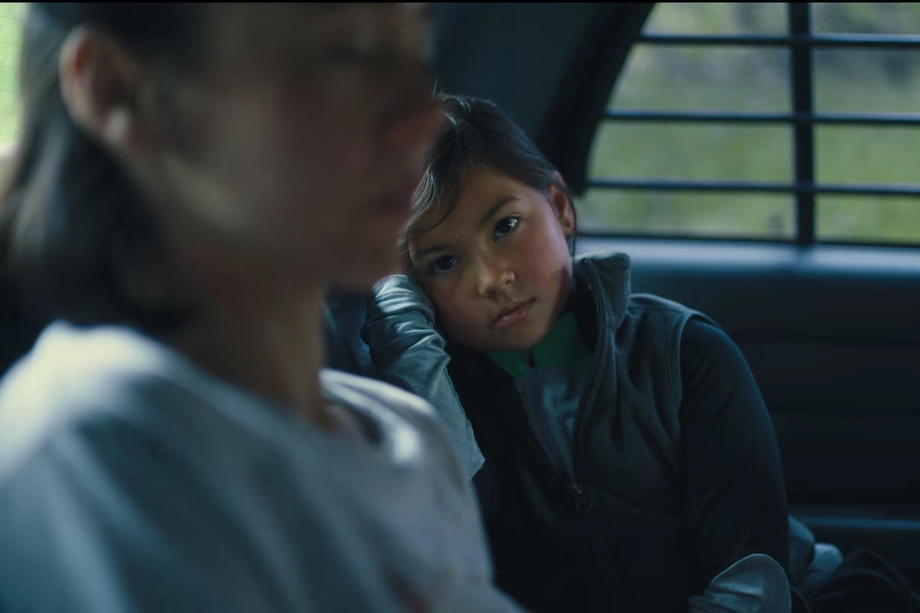
Mason Reeves plays Josephine, a girl who is eight and loves soccer, running and watching Premier League football with her father, Damien, played by Channing Tatum. Gemma Chan plays her mother, Claire. During a Sunday morning outing in San Francisco's Golden Gate Park, father and daughter take different paths. Josephine hears screams near a public restroom and witnesses a man raping a woman.
Damien arrives, helps protect his daughter and the survivor, pursues the attacker and contacts the police. The suspect is arrested, but the family's emergency is only beginning. Josephine comforts the survivor without fully understanding the crime, then becomes a central witness in the case against Philip Ettinger's character, Greg. Syra McCarthy plays Sandra, the survivor.
At home, Josephine becomes afraid of ordinary places and people. She takes her mother's phone and searches for 'raip', her attempted spelling of rape. She reacts with hostility to boys and to affection between her parents, begins lashing out and sees the attacker silently appearing in spaces where nobody else can see him.
Claire wants therapy and conversation. Damien favors physical defense classes, courtroom preparation and attempts to resume their old routine. Their loving but conflicting responses strain the marriage. The final part of the film becomes a courtroom drama in which Josephine may have to testify as the only eyewitness. Dana Millican plays defense lawyer Miss Hoffman, while Michael Angelo Covino plays lawyer Francisco Castellanos. The film carries warnings for depictions of sexual assault and animal cruelty.
The memory de Araújo carried for decades
The screenplay began with an experience from de Araújo's own childhood. Early one Saturday morning, when she was eight, she and her father were playing soccer in Golden Gate Park near their San Francisco home. They heard a woman scream. Her father, a former Olympic runner for Brazil, told her to stay where she was and ran to help. Frightened and alone, she followed him and found the woman in a clearing.
The attack was followed by silence at home. De Araújo developed hypervigilance, a state of continually scanning for danger. She repeatedly checked the locks at home and often had trouble sleeping. She occasionally overheard her parents discussing the park, the subsequent rape trial and the attacker's release from prison when she was 15.
In 2014, a stranger groped de Araújo in a theater, sending that persistent watchfulness into a darker period. After roughly 20 years, she finally asked her father for a full account of the park. She learned that the attacker had pulled a knife on him and that her father had followed the man at a distance until police arrived. Her father said he had avoided explaining events because he did not want to frighten her. De Araújo concluded that his loving attempt at protection had left her more afraid.
Within days, she wrote what she calls a 'vomit draft', an unfiltered first version of the screenplay. More than a decade of revision followed. One detail passed directly into the film: Josephine watches Sandra place her hands beneath her legs to stop them shaking, just as de Araújo remembers watching the woman in the park.
Why the director resists a simple healing story
The Chinese campaign uses the emotional progression 'She saw, she rebuilt, she healed' and describes Josephine gradually regaining control of her inner world. De Araújo calls the film 'fictionalized, but factual', yet her own description of recovery is more guarded. The screenplay concentrates on Josephine's immediate fear and confusion rather than promising that a single dramatic breakthrough can remove them.
De Araújo, who wrote and directed the film, has directly challenged the language of complete healing and catharsis.
I don't think that anyone ever fully heals or has this big, beautiful catharsis from anything having to do with sexual violence. I think you become a different person, and that person can continue.
She instead describes reclaiming the narrative by telling the story from her own perspective. She says she has begun sleeping through the night occasionally, something that was previously rare. Fear also supplies the screenplay's structure: Josephine's opening line and Damien's final line are the same admission, I'm scared. For de Araújo, the connection between those moments concerns sharing fear and deciding whom to trust with it.
Research behind the assault and courtroom scenes
De Araújo trained in San Francisco as a witness advocate, accompanying survivors to hospitals for rape kits within 72 hours of an assault. A rape kit is a medical examination used to provide care and collect forensic evidence. She also worked shifts for the LA Rape and Battering Hotline. She says she repeatedly heard survivors wish they had resisted differently, while advocate training stressed that staying alive was the first goal and that resistance can increase violence.
Screenwriting grants allowed her to follow sexual assault cases through San Francisco's Hall of Justice. Two judges, two public defenders and two prosecutors reviewed the script for accuracy within California's legal system. Their review covered details including the frequent assignment of female public defenders to represent men charged with rape. In the film, the defense lawyer tries to unsettle Josephine and suggests that she witnessed consensual role playing.
The director never testified in court about the incident from her childhood. She has said that writing Josephine's testimony was partly a way to state what she knows to be true. The courtroom scenes therefore draw on legal research, while the child's fear draws on memory.
The opening assault is shown explicitly because de Araújo wanted viewers to understand exactly what shapes Josephine's later reactions. The action was staged so Reeves did not witness it. This creative choice has become one of the film's most debated elements, especially because the camera keeps returning to Josephine's face and imagined visions of the attacker.
Finding and protecting Mason Reeves
De Araújo discovered Reeves sprinting through San Francisco's Clement Street Farmers Market. Josephine is her first acting role. The director wanted a child who was naturally athletic and could draw truthfully on her own feelings, rather than someone asked to immerse herself in the character's trauma.
The production used several safeguards:
- Reeves never read the complete screenplay.
- The assault was filmed so that she saw none of it.
- Filming took place only a few blocks from her home.
- Her mother was present on set every day.
- Her older brother received a small role, and her own dog played Josephine's dog.
The set also made room for an ordinary childhood celebration. When Reeves turned eight during production, the crew surprised her with a birthday party. Tatum gave her an Instax camera, sang and performed a dance she found funny. Chan gave her miniature toys, including a small Jenga set, a Spirograph and an Etch A Sketch. A piñata plan the following day turned into another joke when Tatum held it while Reeves swung blindfolded, prompting de Araújo to worry that he might be hit.
The dates behind the awards campaign
The film's development began years before its festival premiere. Gemma Chan joined in 2019 and remained involved as a producer, while the COVID-19 pandemic stalled the project. Funding was later secured, withdrawn and secured again, with de Araújo crediting Tatum's prominence for helping restore financial backing.
- 2018: The screenplay was selected for Sundance Institute screenwriting and directing labs.
- 2021: The project received a Dolby Institute Fellowship through SFFILM during development.
- April 2024: Principal photography began in San Francisco, with participation in the city's Scene in San Francisco incentive program.
- 2025: The production received support from the Rising Filmmakers Finishing Fund established by the Coalition of Asian Pacifics in Entertainment and The Asian American Foundation.
- Jan. 23, 2026: Josephine premiered in Sundance's U.S. Dramatic Competition. It won the Grand Jury Prize and Audience Award on Feb. 1.
- Feb. 20, 2026: The film had its international premiere in Berlin's main competition. Its Golden Bear nomination was recorded on Feb. 22, and the prize went to Yellow Letters.
- Nov. 20, 2026: Sumerian Pictures began the limited United States and United Kingdom release after acquiring American rights in February in a deal worth seven figures.
- Dec. 4, 2026: The North American expansion and Chinese opening were scheduled to coincide.
De Araújo also received Breakthrough Director awards at the Celebration of Cinema and Television on Oct. 2 and at Montclair on Oct. 18. Chan received the Lumiere Award at SCAD Savannah on Oct. 27. At the time of the Chinese announcement, Josephine had three nominations for the Gotham Awards on Nov. 30: Best Feature, Outstanding Supporting Performance for Tatum and Breakthrough Performer for Reeves. Those results were still pending.
How the cast and camera build Josephine's world
Damien was originally written as foreign born. De Araújo rewrote him after meeting Tatum and hearing him describe moving from the American South to a coastal city and feeling that he did not belong. Tatum gained 30 pounds for the role and developed Damien's physical protectiveness with the director, including discussions about how a father talks to his daughter about sexual assault.
Chan, who plays Claire and also serves as a producer, said the disagreement between the parents gripped her when she first read the screenplay.
When I first read the script, that was the thing that really gripped me. I didn't know what I would do in that situation. I really think these two parents both love their daughter so much, but they just don't agree on the best way to help her.
Tatum later said he realized that qualities which work within a couple's relationship can work against them when they are raising a child. Claire's calm and Damien's urgency can each be comforting in isolation, yet their combination leaves Josephine receiving mixed messages.
Cinematographer Greta Zozula and composer Miles Ross both previously worked with de Araújo on Soft & Quiet, her 2022 debut. In Josephine, low angles and brief shots from the child's point of view give way to intense close views of Reeves's face. Long shadows disturb the apparent safety of the family home, while muffled conversations and muted sounds express Josephine's loss of concentration. The editing team consists of Anisha Acharya, Nico Leunen and Kyle Reiter.
Acclaim is broad, but one review raises a different alarm
Much of the praise centers on Reeves's ability to move between terror, confusion, anger and playfulness without appearing to recite adult dialogue. Reviewers have also singled out Tatum's portrayal of a father whose emergency checklist cannot answer his daughter's questions, and Chan's portrait of a mother barely holding herself together. At an earlier premiere event, Tatum said the finished film made him cry several times. Berlin's festival journal praised the ensemble and de Araújo's restrained, insightful direction, predicting that the drama would linger in viewers' memories.
A forceful dissent called the drama weak and poorly shaped, found the parents' marital confrontations contrived and described the attacker's repeated appearances as manipulative. That review also questioned what audiences and the film industry ask of child performers. It acknowledged the safeguards around Reeves but remained uneasy about scenes in which her character experiences physical violence and severe distress.
The silent apparition divides viewers because it can be read as either an expressive portrait of trauma or an intrusive device. De Araújo has called the attacker 'an extension of her consciousness', explaining that a child who sees extreme cruelty may struggle to understand how she and the perpetrator belong to the same species. Josephine gives that confusion a direct moral question when she asks an adult: 'Do you think the man is bad on the inside? Or good on the inside, but does bad things?'
Small opening numbers and the next dates
An early projection put the four theater American opening at $84,200, equivalent to $21,050 per location. A box office listing gave $77,953 as the running gross. Both figures belong to the small initial engagement, while the Dec. 4 expansion had yet to supply a nationwide total.
Australian cinemas were scheduled to receive the film on Feb. 18. As for the Academy Awards language in the Chinese campaign, no Oscar nominations had been announced at the time of the release announcement. The immediate fixtures were the Gotham ceremony on Nov. 30 and the Dec. 4 expansion, with the number of additional theaters still undisclosed.
What to Know
- Josephine opens in Chinese cinemas on Dec. 4, matching its North American expansion rather than its first North American screenings.
- Mason Reeves plays Josephine, with Channing Tatum as Damien and Gemma Chan as Claire.
- The story follows a child who witnesses a rape in Golden Gate Park and later faces possible courtroom testimony.
- Writer and director Beth de Araújo drew the inciting incident from her own childhood and developed the screenplay for more than a decade.
- The film won Sundance's U.S. Dramatic Grand Jury Prize and Audience Award and was nominated for Berlin's Golden Bear.
- Rotten Tomatoes listed 97 percent positive reviews from 133 critics, while Metacritic listed 87 out of 100 from 29 critics.
- De Araújo rejects promises of complete healing, describing the film instead as a way to reclaim her own narrative.