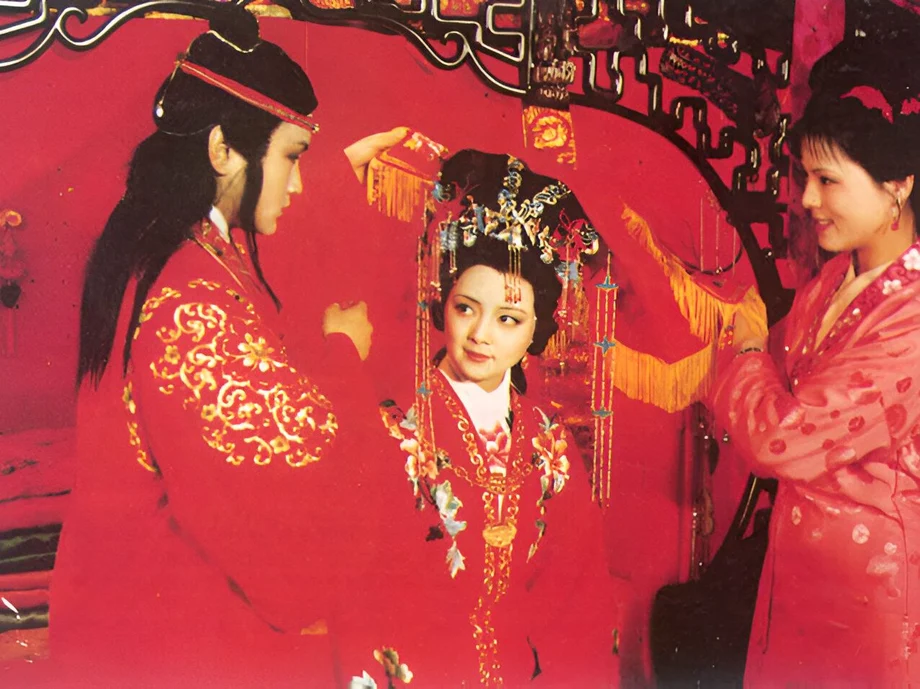
Familiar faces draw scrutiny to an AI revenge drama
An AI short drama accused of copying the faces of 17 actors from China's 1987 television adaptation of Dream of the Red Chamber was removed on the evening of November 12, 2026, after a public backlash. The controversy brings together several questions: who can authorize the digital reuse of an actor's face, what protection survives an actor's death, and how much responsibility belongs to the companies distributing AI entertainment.
Contents
- Familiar faces draw scrutiny to an AI revenge drama
- How an account turned nostalgia into attention
- The sequence from publication to removal
- Why recognition matters more than the method
- The law also reaches the material fed into AI
- Families can protect actors who have died
- A classic story carries several separate rights
- An AI label and consent serve different purposes
- Other actors' cases widen the responsibility debate
- Key Points
The series, Meng Hui Hong Lou, roughly translated as Dreaming Back to the Red Chamber, recasts the character Lin Daiyu as a woman returning to life to seek revenge. Its generated characters allegedly reproduce the facial features and expressions of performers including Chen Xiaoxu, Zhang Li and Deng Jie. Scenes described by viewers include Daiyu slapping Xue Baochai and the family matriarch kneeling before Daiyu.
The account began publishing AI episodes on October 18. Its most popular content attracted 115,000 likes, compared with the roughly 100 or so likes typical of its earlier television clips. Actor representatives reportedly filed portrait rights lawsuits and sought removal across platforms.
The figure of 17 comes from online tallies, and an authoritative complete list has not been published. Removal was reported on November 12, but its extent across platforms, the complete lawsuit details and any next hearing date remain publicly unconfirmed. Those gaps leave the legal outcome open while the dispute exposes how an old television performance can become the raw material for a new digital production.
How an account turned nostalgia into attention
The Meng Hui Hong Lou account had published 368 works related to Dream of the Red Chamber, including 21 AI drama episodes. Its account information identified a contract with Qichuang Media, an MCN, or business that manages online creators and helps organize their commercial activity.
The AI episodes represented about 5.7% of those 368 posts. Their prominence in the controversy shows how a relatively small part of an account's output can draw attention to its entire production process, including the source of its images and the permissions behind them.
The attraction combined familiar faces with a revenge plot. Viewers already knew the actors through the 1987 series, while the new story offered confrontations designed for short viewing sessions. Recognizable performers gave the generated characters an immediate connection to a much loved production.
The account's commercial affiliation also makes the authorization process a practical business issue. A production involving a creator, a management company and a distribution platform needs clarity about who obtained permission, what that permission covers and who checks it before publication.
The sequence from publication to removal
The controversy developed over less than a month after the account began releasing its AI drama. A separate portrait rights case involving actor Zhao Liying reached a hearing shortly before the Red Chamber dispute became a trending topic.
- October 18, 2026: The Meng Hui Hong Lou account began publishing AI episodes based on Dream of the Red Chamber.
- November 10: Zhao Liying's portrait rights lawsuit involving the Hongguo short drama service had an online hearing.
- November 12: Allegations that the Red Chamber AI drama infringed the portrait rights of 17 actors became a trending topic.
- November 12, evening: The disputed drama was reported removed following the backlash.
The two disputes concern different productions, but together they show why the legal debate now extends beyond the person generating a video. Actors are also directing claims toward the businesses involved in making that content available to audiences.
Why recognition matters more than the method
China's Civil Code addresses the use of technology to falsify another person's likeness. Article 1019 prohibits infringement of portrait rights through methods including technological fabrication and generally requires consent to create, use or publish another person's portrait, subject to legal exceptions.
Wang Jun, chief partner at Beijing Taoan Law Firm, explained that recognition by ordinary members of the public is central to assessing whether a generated character uses a particular person's likeness. The question is whether viewers can identify the person behind the image.
A recognizable portrait can involve more than a face. Distinctive body features, posture or movements may also identify someone. In this dispute, allegations concern facial features alongside expressions and the familiar manner of the original performances.
The Supreme People's Court issued its Opinions on the Lawful Adjudication of Disputes Involving Artificial Intelligence (《关于依法审理涉人工智能纠纷案件的意见》) on September 7, 2026. Comprising five parts and 24 articles, it is the first document setting out judicial adjudication rules for AI disputes issued by the country's highest judicial body. Article 4 provides that, unless otherwise specified by law, courts will uphold claims concerning name, portrait and other personality rights when AI is used without consent to process a person's name or likeness, generate a virtual digital image identifiable as that person, and use or publish it. Its approach places recognizable identity at the center of portrait protection. For producers, blending several faces still requires attention to whether a real individual remains identifiable in the result.
The law also reaches the material fed into AI
China's Personal Information Protection Law, published by the National People's Congress, provides another route for examining the production process. Adopted on August 20, 2021, and effective from November 1 that year, it regulates how organizations collect, use, process and disclose information about identifiable people.
Article 27 allows the processing of information that people have made public, or that has otherwise been lawfully disclosed, within a reasonable scope. When that processing has a major effect on a person's rights and interests, consent must be obtained in accordance with the law. A publicly accessible photograph therefore still comes with limits on its reuse.
Articles 28 and 29 place biometric information in the sensitive personal information category. Processing it requires a specific purpose, sufficient necessity and strict safeguards, with separate consent required under the sensitive information rules. Facial data used to identify or reproduce a person can bring these protections into the discussion.
The resulting legal inquiry has two stages: how a producer obtained and processed the original material, and what it later published. Even when a generated face becomes harder to recognize, the collection and processing of identifiable personal information can still require legal scrutiny. Producers need an appropriate legal basis throughout that process, including any applicable statutory exceptions.
Families can protect actors who have died
Chen Xiaoxu, whose portrayal of Lin Daiyu helped define the 1987 adaptation, is among the deceased performers whose likenesses allegedly appeared in the AI drama. Other publicly identified actors include Zhang Li as Xue Baochai, Deng Jie as Wang Xifeng, Ouyang Fenqiang as Jia Baoyu, Gao Hongliang as Jia Lian, Li Ting as the family matriarch and Sha Yuhua as Granny Liu.
Article 994 of the Civil Code protects certain personality interests after death, including interests connected with a person's name and portrait. Wang said close relatives can pursue civil remedies over infringement, including stopping the conduct, addressing its effects, an apology and compensation where legally justified.
The Personal Information Protection Law also addresses deceased people. Article 49 allows close relatives, for their own lawful and legitimate interests, to exercise rights such as access, copying, correction and deletion concerning the deceased person's information, unless that person made different arrangements during life.
For families, digital recreation can therefore involve both the public image placed on screen and the information used to produce it. These protections give relatives ways to challenge new uses of an actor's identity long after the original performance.
A classic story carries several separate rights
Dream of the Red Chamber is an old literary work that can be retold. The 1987 television production contains further creative contributions: its audiovisual recording, the actors' performances and the specific way its makers brought the story to the screen.
Wang identified potential issues involving reproduction rights, adaptation rights, protection of a work's integrity and performers' statutory rights. He pointed to allegations that the AI production reused movements, expressions and details of performances from the television series. Each claim would require examination of the material used and the relevant permissions.
The dramatic rewrite has also angered viewers. Daiyu becomes a revenge heroine, and relationships are reshaped into confrontations associated with household power struggles. That changes the meaning of scenes presented through faces audiences associate with the earlier production.
Some viewers also alleged that the matriarch's generated voice resembled the older woman's voice in The Story of Minglan. That allegation adds the question of voice authorization to the dispute. A producer working with a classic story may therefore need to resolve several permissions involving footage, performance, face and voice.
An AI label and consent serve different purposes
The drama's labeling is disputed. Its page was described as carrying a notice that the content was AI generated, while viewers also complained that the videos lacked such identification. The difference concerns what notice appeared and where audiences encountered it.
China's Provisions on the Administration of Deep Synthesis Internet Information Services and its Measures for Labeling Artificial Intelligence Generated Synthetic Content form part of the regulatory framework discussed in this case. Labels tell viewers that material has been generated or altered. Consent determines whether someone's identity or other protected material may be used.
The National Radio and Television Administration has also made unauthorized use of faces and voices, along with standards for AI short drama production, a focus of regulatory action. Earlier action against AI alterations targeted content that seriously distorted the central meaning of original works and their characters.
Platforms consequently face tasks at both publication and distribution: checking the basis for using protected material, identifying synthetic content and responding to complaints. Requiring authorization documents and checking generated characters for resemblance to public figures are proposed preventive measures arising from the controversy.
Other actors' cases widen the responsibility debate
Yi Yangqianxi and Yang Zi have also challenged alleged AI use of their likenesses in short dramas. Yi's studio acted after his generated likeness appeared in productions in April, while Yang's studio issued a statement and instructed lawyers to preserve evidence over a production identified in March.
A case involving Dilraba Dilmurat reached judgment. Two companies were ordered to apologize publicly and compensate economic losses and reasonable expenses after face replacement technology was used in paid short drama content that infringed her portrait rights.
Zhao Liying's case names Beijing Bimo Liuxiang Technology Co., the Hongguo operator, Beijing Douyin Information Service Co. and an individual as defendants. The November 10 online hearing puts the conduct of distribution businesses before a court alongside that of an individual defendant.
The Personal Information Protection Law gives a more precise basis for examining responsibility than assuming every participant has the same role. Article 20 provides for joint liability where parties jointly determine processing purposes and methods and cause harm through infringement. Article 58 requires qualifying major internet platforms to establish protection rules and stop services to providers that seriously violate personal information law.
Wang described preserving evidence, including through notarization, followed by platform complaints and legal action against responsible parties. For actors and ordinary users alike, that process can turn a fleeting video into evidence. For businesses, the practical task is to establish lawful access to faces, voices and performances before a successful clip spreads widely.
Key Points
- Meng Hui Hong Lou was reported removed on November 12, 2026, after allegations that it copied actors from the 1987 Dream of the Red Chamber.
- The figure of 17 affected actors comes from online tallies; a complete authoritative list has not been published.
- The account posted 21 AI episodes among 368 related works, with its most popular content reaching 115,000 likes.
- Portrait protection centers on whether an ordinary viewer can recognize a real person in the generated image.
- Personal information rules also govern how identifiable images and biometric data are collected and processed.
- Families can seek protection for deceased actors, while separate rights may cover footage, performances and voices.
- Actor representatives reportedly filed lawsuits, and the dispute has increased scrutiny of creators, management companies and platforms.