A fan dream meets a firm refusal
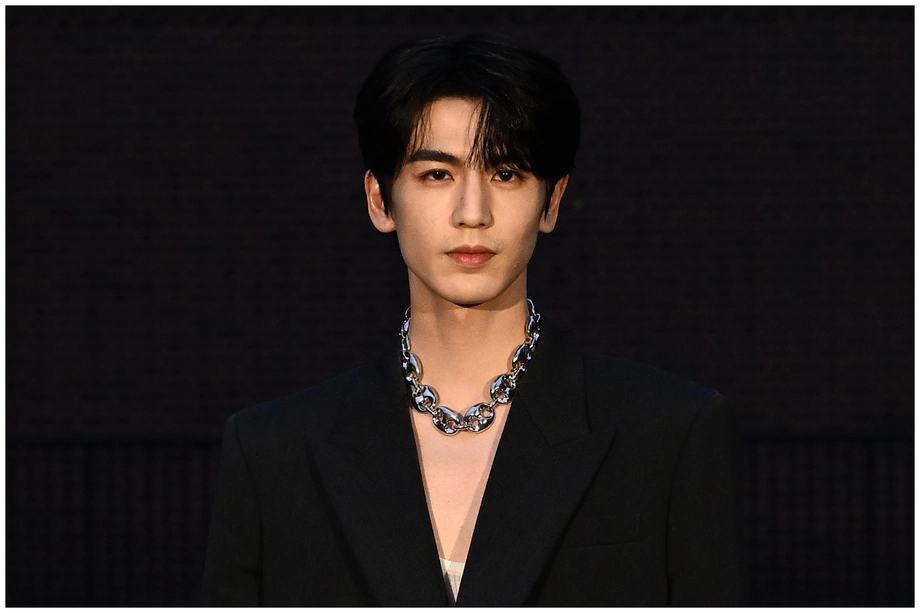
On Nov. 21, Zhang Linghe and Tian Xiwei drew more than 260,000 viewers to an online fan meeting for the hit period drama Pursuit of Jade. Zhang said he wanted to visit Taiwan, taste its food and meet fans in person. Five days later, Taiwan's Mainland Affairs Council (MAC) said that path was closed. Deputy minister and spokesman Liang Wen-chieh said the actor had reposted a Communist Party article on reunification after Taipei had held out a narrow chance for a future visit.
Contents
- A fan dream meets a firm refusal
- What the livestream actually showed
- Why Taipei first said no in October
- What united front means in this dispute
- How the November repost closed the door
- Beijing and Taipei trade accusations over culture
- Why election timing mattered in October
- A wider scrutiny debate reaches students and spouses
- How artists are pulled into politics on both sides
- What fans and officials can expect next
- Key Points
Zhang became a household name in 2026 when Pursuit of Jade swept across the region, and his wish to appear in Taiwan turned an entry decision into a public fight over culture, identity and political messaging. The MAC's message was simple: artists are welcome, but visits carrying what it calls united front work are not.
What the livestream actually showed
The event was the Pursuit of Jade fan meeting held on the We Love Dramas platform. Taiwan fans sent sun cakes, pineapple cakes, peanut brittle and mystery boxes with a Mazu theme. Zhang, who has never been to Taiwan, talked about night market snacks, Tainan beef soup, lard rice, Hualien homestays, an Alishan sunrise and Sun Moon Lake. Tian said she had visited Kenting during university.
Zhang said he 'wanted to visit Taiwan and meet fans' and described the wish as heartfelt. The event's tone was light, with behind the scenes stories and games, but the political setting was never far away. The Communist Party's Central National Security Commission Office later urged Taiwan not to block film and television exchanges, and China's Taiwan Affairs Office used the event to attack Taiwan's government.
Popular drama gives the dispute its force. In 2025, The Legend of Zhen Huan was aired 24 hours a day for 26 consecutive days in Taiwan and drew 20.31 million views. Those figures sit beside the 260,000 online viewers for Zhang's event and show why politicians on both sides see entertainment as a channel with reach.
Why Taipei first said no in October
The rejection became public on Oct. 21, when Zhang Han, spokesperson for China's State Council Taiwan Affairs Office (TAO), criticised Taiwan for blocking Zhang's application. The MAC then listed three reasons: past posts that demeaned Taiwan's status, Zhang's speech at the Straits Forum in Xiamen in June 2026, and an unclear purpose for the visit.
Liang said the application mixed a fan meeting with about 20 mainland industry representatives for an audiovisual industry forum. The organisers did not say whether the fan meeting would sell tickets, even though they said any surplus would go to charity. Taipei could not tell whether the case was a commercial event, an exchange or a charity activity. Liang also said the application had not been publicised by the MAC, the organisers or Taiwan media, yet the TAO knew about it and put it into a news conference.
He said the sequence looked planned. The suggestion mattered because Taipei judges not only the stated event but also who seems to be shaping it.
What united front means in this dispute
China's united front is a political strategy used by the Communist Party to influence people, groups and communities so they support party goals. Taipei sees the Straits Forum as one of the platforms for that work. In Zhang's case, the MAC first treated his social media posts, including lines saying Taiwan was a province of China and had never been a country, as possible pressure rather than a firm test. Liang said in April that old posts alone would not decide entry.
Liang told an Oct. 22 news conference that the June speech changed his view. He said Zhang used the language of reunification with ease, which made him look like an active participant.
I paid special attention to Zhang (at the forum). He was very practised at using 'united front' rhetoric. It seems he is not acting under compulsion but is actively cooperating.
The explanation became the core of the MAC's case. Liang said the council was not closing the door on cultural exchange, only on activity that carried a political task.
We welcome cross-strait cultural exchanges, but you cannot turn it into a united front activity.
How the November repost closed the door
On Nov. 13, Xinhua published a political article titled Solving the Taiwan Issue and Realizing Complete Reunification of the Motherland. Zhang reposted it on Weibo and added the line 国土不可分国家不可乱,民族不可散文明不可断, meaning that land cannot be divided, the country cannot be thrown into chaos, the nation cannot be scattered and civilisation cannot be broken.
Taipei had said it would watch Zhang after the October decision. Liang had used the phrase 青山绿水,有缘还能再见, meaning that if conditions changed, the two sides might meet again. The repost ended that possibility in the council's view. On Nov. 26, Liang said Zhang was not simply forced to cooperate with mainland united front bodies but was actively doing so. The MAC saw the choice as one Zhang made for market reasons.
Liang said the actor had chosen the mainland market and its political expectations. He added that Taipei would respect that choice while continuing to observe Zhang's words and actions. No new application or date for reconsideration was announced.
Beijing and Taipei trade accusations over culture
Zhang Han, the TAO spokesperson, said at a Nov. 25 news conference that the mainland supported film and television exchanges and that emotional ties were a natural bond. He accused Taiwan's Democratic Progressive Party authorities of blocking contact between people.
Emotional and cultural resonance is a natural bond that brings people on both sides of the Strait closer together.
The spokesperson added that the main obstacles to film cooperation did not lie on the mainland side and urged Taiwan to lift restrictions on mainland films and visits by film professionals.
The MAC answered that it supports healthy, orderly exchange without political conditions. It said real cultural exchange should rest on equality, dignity and respect for creative freedom, not on serving a political purpose. The council said Beijing was turning simple exchange events into propaganda and that Taiwanese society would not accept it.
The wider setting is a long dispute over sovereignty. Beijing claims Taiwan as its territory and has not renounced force to take it; Taiwan rejects that claim. Entertainment becomes contested when each side believes a song, a drama or a visit carries a message about that dispute.
Why election timing mattered in October
On Oct. 27, MAC Minister Chiu Chui-cheng defended the entry ban at the Legislative Yuan. He told reporters that entertainers could be used to interfere in Taiwan's local elections on Nov. 28, and he pointed to Zhang as an example. Chiu said members of the public had reported Zhang's Weibo posts as erasing the sovereignty of the Republic of China.
Chiu said Zhang's visit had political undertones because of the Straits Forum speech and because the TAO used its news conferences to promote the planned trip. He said a visit might be considered at a more appropriate time if political risks and united front elements were removed. The MAC described its standard as mutual respect, parity and dignity.
The position put the actor's popularity inside an election security argument. For ordinary fans, it meant a performance wish was being assessed alongside concerns about influence during a vote.
A wider scrutiny debate reaches students and spouses
Chen Yi-hsin, chairman of the Kuomintang's Culture and Communications Committee, said on Oct. 22 that the MAC had changed its standard. He noted that Liang said on April 30 that past political posts were not an entry test, then demanded to know which law had been used to bar Zhang. Chen said a confident democracy should tolerate different voices.
Mariah Thornton, a teaching fellow in the London School of Economics and Political Science Department of International Relations, has studied Taiwan's resistance to united front activity. She said recent cases show tighter checks on mainland nationals, influencers and spouses from the mainland who express support for reunification.
This has caused controversy over whether Lai is prioritising national security at the expense of freedom of speech.
The cases she cited span more than entertainment. In 2024, rapper Wang Yitai's two Taipei concerts were cancelled and he was barred from Taiwan after promotional material called the city 'Taipei, China'. On Oct. 16, a mainland exchange student was deported and banned for five years after posting a forced perspective photo that made it look as if he was pinching President Lai Ching-te's head. In 2025, influencer Liu Zhenya and a spouse from the mainland, Qian Li, lost residence permits after posts supporting armed reunification. Three other spouses from the mainland also lost permits in related cases.
How artists are pulled into politics on both sides
Taiwan's MAC used the Huang Yi-hao case to answer Beijing's accusation of political manipulation. Huang, a Taiwanese comedian, was injured in September when a car was said to have deliberately hit his scooter near his home. Five men were indicted on Oct. 21. Prosecutors said a person identified only as K offered NT$450,000 to have Huang seriously injured so he would miss a performance. The men received NT$250,000 upfront, but K withheld NT$200,000 because the injuries were minor. In May, two men were prosecuted for throwing faeces and paint at a Taipei comedy club on the day Huang was to perform.
Prosecutors have described such cases as transnational repression, meaning pressure or violence carried out across borders to intimidate people. The MAC said Beijing was in no position to complain about political maneuvering while those cases were unresolved.
Performers also face pressure when they lean toward Taiwan. Talk show host Kevin Tsai drew backlash in China after attending an event for DPP Taipei mayoral candidate Puma Shen on Oct. 4. Electric carmaker Leapmotor removed content about Tsai that evening. An account linked to the People's Liberation Army Daily, Jun Zhengping, said without naming Tsai that people who profit from the mainland while flirting with Taiwan independence would 'pay an unbearable price'. Taiwanese actor Nicky Wu drew criticism at home after posting congratulations on China's National Day and a video of himself waving a Chinese flag at Tiananmen Square in 2026.
Liang also pointed to the Taiwanese puppet film Su Huan-chen, which took four years to pass review and premiere in Shanghai. He said cinemas there showed only a Mandarin dub, with no Taiwanese language version, so the film lost part of its original character. His point was that access to the mainland market can require long review and changes, while Taiwan allows films to open more freely.
What fans and officials can expect next
Social media users in Taiwan were split. One Threads post put identity first: 'We are Taiwanese first, then we are fans.' Another fan argued for more entertainment and cultural exchange, saying more interaction could increase tourism revenue and let everyone make more money. Many fans still voiced disappointment, while others said they backed the MAC despite liking Zhang.
The practical result is that online events can still draw huge audiences, but an in person Zhang event in Taiwan remains blocked under the current review. Liang said Taipei will keep watching his words and actions. The MAC has not set a new review date, and the explanations given did not name a law that would govern a reversal.
The episode has turned a drama about romance and costume into a test of how far politics can travel with an actor. For fans, the question is no longer only whether Zhang wants to come. It is whether his public political signals change before any new invitation could be considered.
Key Points
- Zhang Linghe and Tian Xiwei drew more than 260,000 viewers to a Nov. 21 online Pursuit of Jade fan meeting.
- The MAC rejected Zhang's October visit over posts, his June 2026 Straits Forum speech and an unclear event plan involving about 20 industry figures.
- Liang said Zhang actively cooperated with united front work, a view sharpened by his Nov. 13 repost of a Xinhua reunification article.
- Beijing's Taiwan Affairs Office accused Taiwan of blocking cultural exchange; the MAC said Beijing was politicising simple exchange.
- Chiu Chui-cheng linked the case to election interference concerns before local elections on Nov. 28.
- The dispute sits amid wider scrutiny of mainland nationals, influencers and spouses, and artist cases on both sides of the Taiwan Strait.
- No new application, approval or review date was announced; Taipei said it would keep observing Zhang.