A Race Settled at 300 km
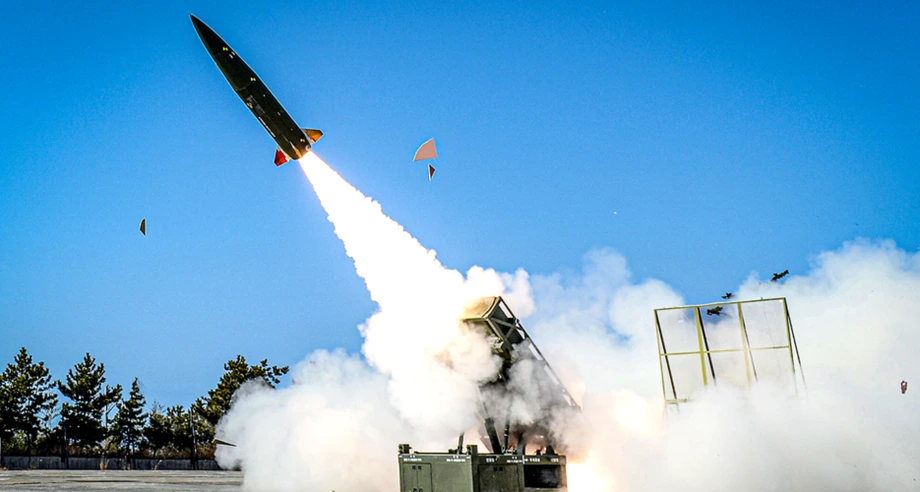
South Korea's Defense Acquisition Program Administration has approved the basic strategy for KTSSM-I Block II at a meeting of the Defense Acquisition Program Promotion Committee, the procedural step that turns a requirement into a funded programme. The concept keeps the army's launchers fixed to the ground and loads them with a longer weapon, the KTSSM-II Block II, whose reach of about 300 km doubles the 160 km of the KTSSM-I now deployed.
Contents
- A Race Settled at 300 km
- What the KTSSM-I Urea Does
- Block II Stretches the Same Launcher
- Trucks, Budgets and an Export Missile
- North Korea's Answer to an Ageing Scud Force
- A Low, Fast Missile Built to Slip Past Defences
- Cluster Bombs and Mines Aimed at Roads
- Two Hundred Fifty Launchers and a Plant in Hamhung
- A Test Record That Spans Four Years
- Nuclear Warheads and the Hwasan Family
- Combat Use in Ukraine
- What to Know
North Korea has approached the same distance from the other side. Its Hwasong-11ra, a small solid fuel missile that first flew in April 2022 with a range of roughly 110 km, has been improved to about 300 km. In April this year, under the direction of the Missile Administration, it was fired with cluster warheads and with warheads that scatter mines.
Geography explains the convergence. The Korean Peninsula is shallow, so a missile that flies 300 km from the western front can reach the mouth of the Yalu River, the border with China, and cover most of the North's military targets. A weapon that outranges artillery but costs less and arrives faster than an aircraft is now something a field commander can call for directly.
The two programmes answer each other. The KTSSM, a tactical surface to surface missile the South Korean army calls Urea, was built to destroy long range artillery that North Korea keeps in tunnels and bunkers near the demilitarized zone. The Hwasong-11ra replaces an ageing North Korean rocket force that once relied on copies of Soviet missiles.
What the KTSSM-I Urea Does
KTSSM-I reaches 160 km and carries a thermobaric warhead built for one narrow job. The round punches through the roof of a tunnel position or a covered bunker, senses the open space inside and detonates there, destroying the guns stored within. A launcher fixed to the ground fires four missiles in succession. The rounds sit sealed inside their canisters, which makes storage and transport simple, and a crane lifts the canisters onto the launcher.
Each missile costs about 800 million won at 2024 prices. Guidance runs on a military satellite navigation system designed to keep working through North Korean jamming, and it holds a navigation fix even in the last moments before impact, when a receiver is most exposed to interference.
Range was the weakness. North Korea has developed self-propelled guns and rocket launchers with greater reach, letting it threaten the Seoul metropolitan area from positions farther behind the border than a 160 km round can touch. That gap is what the Block II plan addresses.
Block II Stretches the Same Launcher
The Block II answer marries the old launcher to the new missile. The launchers already in the ground gain the KTSSM-II Block II round and its 300 km reach. The launcher carries more canisters than the current four, and the fire control algorithms have been rewritten to shorten the interval between shots, so one position can put several rounds on separate targets in a short window.
Targets arrive through the theater joint fire operating system, JFOS-K, which passes data to a fire command vehicle, which then orders the launchers to fire. The missiles carry countermeasures against electronic attack so that jamming does not break the lock on the target. Chunmoo rockets and American MLRS strike North Korean units just north of the demilitarized zone; the KTSSM is meant for the bunkers, gun pits and command posts behind them, the targets that would have to disappear early in a war before the fighting turns against the South.
Trucks, Budgets and an Export Missile
The Agency for Defense Development is running the KTSSM-II programme on 319.6 billion won spread across 2023 to 2028. Next year's defense budget request carries about 90.3 billion won, covering research equipment, test costs and facilities for three battalions. Block I begins its operational test and evaluation by next month, with development finishing next year. Block II starts its development test and evaluation by March, closes development around 2028 and moves into production, which runs to 2033.
Mobility separates the two blocks. Block I mounts the KTSSM-I on a launcher developed from the Chunmoo rocket artillery vehicle, carrying two missiles, with ammunition carriers and a fire command vehicle in the battery. Block II carries two canisters on a vehicle derived from the Hyunmoo-2 ballistic missile launcher, which normally carries a single round, and its missile body is longer and wider than Block I's, keeping more penetration while shedding warhead weight.
Export work has already tested the physics. The Chunmoo launchers sold to Poland fire the CTM-290, a missile with about 300 km of range that swaps the thermobaric warhead for high explosive; the lighter warhead is what buys the extra distance, and buyers in Europe and the Middle East have fewer underground facilities to destroy. A further round, CTM-X, is being developed with 500 km of range at the request of potential customers. South Korea is also developing a Korean tactical guided missile to replace the ageing ATACMS.
North Korea's Answer to an Ageing Scud Force
North Korea's short range force began with the KN-02, a copy of the Soviet SS-21 built under Kim Jong Il with a range of about 120 km. It worked in tandem with the long range artillery: the guns hit targets north of the Han River, the KN-02 hit those south of it. The KN-02 aged, and a replacement became necessary.
The Hwasong-11ra, the smallest member of the Hwasong-11 family, arrived in April 2022 on a three axle launcher. Its relatives spread across a wide span of ranges: Hwasong-11A up to 900 km, Hwasong-11B 410 km, Hwasong-11C about 600 km, Hwasong-11E with a hypersonic glide vehicle and Hwasong-11S launched from under water. Analysts treat the Hwasong-11ra as the North Korean counterpart to the KTSSM, filling the same battlefield role of hitting protected targets close to the front.
A Low, Fast Missile Built to Slip Past Defences
The Hwasong-11ra measures about 5.5 m long and 0.76 m across, weighs nearly 3,000 kg at launch and carries 500 to 700 kg of payload to between 100 and 300 km. It follows a shallow arc that peaks at about 50 km, well below the path of an older Scud, and it can manoeuvre as it dives. That mix of low altitude, short flight time and a moving impact point is what makes a missile hard to detect and intercept, and better accuracy cuts the number of rounds needed for a single target.
Guidance is inertial with corrections from satellite signals. In May 2024 the missile was tested with what state media called an autonomous navigation system. The warhead can be conventional, fragmentation, submunition or chemical, and the missile can carry the Hwasan-31 tactical nuclear device. A three axle launcher fires four missiles; a modular launcher displayed at a military exhibition on 4 October 2025 carries one Hwasong-11ra or several 122 mm or 240 mm rockets in two pods, a layout analysts compare with the American HIMARS.
North Korea says Kim Jong Un designed the whole system himself as a new central attack weapon for his forces. Norbert Brügge, a German analyst who tracks North Korean missiles, assesses the weapon as a form of multiple rocket launcher rather than the tactical ballistic missile North Korea describes. The American military gave it the designation KN-35 in April 2025.
Cluster Bombs and Mines Aimed at Roads
The April test-firings added new kinds of payload. A cluster warhead carries dozens to hundreds of submunitions that burst open in the air and scatter across a wide area, covering a runway or a stretch of highway with many small explosions instead of one. The second type leaves scatterable mines on the ground that do not explode on landing and then act as mines.
Mines change the arithmetic of movement. A single discovered device can close a route until sappers clear every mine in the area, and clearing takes time that an advancing column does not have. Aimed at the highways, airfields and railways of the central region, the two payloads turn a short range missile into a tool for delaying the arrival of South Korean and American reinforcements at the front.
Two Hundred Fifty Launchers and a Plant in Hamhung
Production has been the quiet part of the story. North Korea handed 250 launchers to frontline units at a ceremony on 4 August 2024, after building more than 250 of them. A deployment at Majang-ri reportedly replaced the older Hwasong-6, the Scud-C. The missiles come from the February 11 Plant, part of the Ryongsong Machine Complex in Hamhung, the only facility known to produce the Hwasong-11 line, and satellite imagery in November 2024 showed the plant being expanded.
The test record is steady. The International Institute for Strategic Studies counted at least nine Hwasong-11ra launches between 2022 and 2024. The same institute assessed in 2025 that North Korea held more than nine Hwasong-11B launchers, all listed as still in test. No date has been announced for the modular launcher to enter service, and no production schedule for the conversion of the fixed KTSSM launchers has been released.
A Test Record That Spans Four Years
- 16 April 2022: first flight from Chakto-dong near Hamhung, detected around 2 p.m.; the missile flew for 60 seconds to 110 km with a 25 km apogee and a top speed of about Mach 4, with Kim Jong Un watching.
- 25 April 2022: public display at a military parade.
- 2 November 2022: test at Chongju in North Pyongan Province.
- 9 March 2023: third test; the official name appeared in state coverage of the Hwasan-31 warhead.
- 17 May 2024: test with an autonomous navigation system.
- 4 August 2024: 250 launchers handed to frontline units.
- 4 October 2025: modular three axle launcher unveiled.
- 19 April 2026: state media names the Hwasongpho-11 Ra directly for the first time, and photographs show the areas the warheads hit.
- April to October 2026: firings with cluster and mine dispensing warheads, plus tests in May, June and October described as special mission launches.
- 12 October 2026: several ballistic missiles fired from the Pyongyang area, one of them flying more than 900 km in the October salvo.
Nuclear Warheads and the Hwasan Family
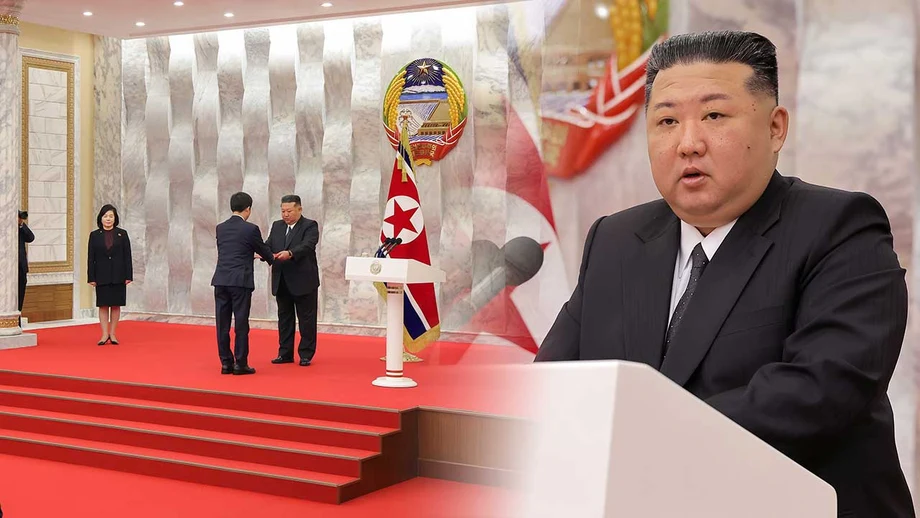
Behind the conventional payloads sits a nuclear one. On 25 November state media reported that Kim Jong Un had inspected a base producing weapons grade nuclear material, a site making nuclear power equipment and the Nuclear Weapons Institute, reviewing this year's output against the nuclear plan set at the party's ninth congress. Photographs showed warhead casings labelled Hwasan-31-1 and Hwasan-31-3, painted black and red, and barrel shaped casings marked Hwasan-21, Hwasan-22, Hwasan-24 and Hwasan-25.
Hwasan-31 was first shown in March 2023 as a tactical device small enough to fit short range ballistic and cruise missiles. Shin Jong Woo, secretary general of the Korea Defense and Security Forum, reads the new labels as a family of designs built on peanut and barrel shapes, with electronics sized for each warhead.
The Hwasan-25 is presumed to be a small hydrogen bomb.
Hong Min, a senior research fellow at the Korea Institute for National Unification, says the spread of designs lets the North fit warheads to different missions and launchers, so that South Korea and the United States must plan for nuclear and conventional weapons arriving on the same missile. The same disclosure included a facility for making nuclear power equipment, which specialists linked to the submarine North Korea says it is building, after images of a reactor for a submarine were shown for the first time.
South Korea's Ministry of National Defense said the North should stop trying to justify nuclear development and should carry out United Nations Security Council resolutions. It pointed to the Nuclear Consultative Group, created under the Washington Declaration of April 2023, as the channel for strengthening extended deterrence. The group's seventh meeting is being arranged for Washington next month, after the sixth in June discussed nuclear and conventional integration, in which American nuclear operations are backed by South Korean conventional forces. A report from the Asan Institute for Policy Studies treats the Hwasong-11 line as the mainstay of North Korea's short range nuclear strike force and examines where the 300 km class fits in that plan.
Combat Use in Ukraine
Hwasong-11 missiles have been fired in a war. Ukraine's military intelligence service said in August that North Korea had sent about 50 ballistic missiles by July, naming the KN-30 alongside the KN-23 and KN-24 for the first time without giving counts for each type. At the start of 2025 Ukrainian authorities put the total supplied at 148 Hwasong-11A and 11B missiles. Volodymyr Zelensky said in November that Russia receives dozens of missiles a month and argued that the battlefield is doubling as a test range.
North Korea is honing its ballistic missiles by having them used in this war. This creates additional challenges for the entire region surrounding Korea.
Six KN-30 launchers were being set up in Russia's Voronezh region, according to the Ukrainian assessment, with the capacity to fire up to 120 rounds at targets across seven Ukrainian regions: Sumy, Kharkiv, Chernihiv, Poltava, Kyiv, Dnipropetrovsk and Zaporizhzhia. North Korea said the KN-30 flew 600 km in its 2021 test; South Korean and Japanese measurements put that flight at about 420 to 450 km. The missile carries a warhead of up to 970 kg, against 480 kg for the Russian Iskander-M, which leaves a bigger crater and a stronger blast wave.
Ukrainian officials have attributed deaths to North Korean missiles: at least 15 people killed in Kyiv during an attack that lasted nearly nine hours on 19 and 20 August, a family of five killed in Radushne in Dnipropetrovsk region on 30 July, and seven workers killed and 21 injured at the Zaporizhstal steel plant on 10 August. Debris from the missiles has turned up in Bila Tserkva, Vitrova Balka and Rozhivka. A Ukrainian report in April found that missiles used in 2024 carried commercial electronics made by methods up to 50 years old and burned less efficient fuel, forcing North Korea to fit larger engines to match Russian ranges.
What to Know
- South Korea's Defense Acquisition Program Administration approved the basic strategy for KTSSM-I Block II, which puts a missile with about 300 km of range on launchers already fixed to the ground.
- The current KTSSM-I reaches 160 km, carries a thermobaric warhead that detonates inside tunnels and bunkers, and costs about 800 million won a round at 2024 prices.
- KTSSM-II Block I puts the same missile on a Chunmoo-based truck with two rounds; Block II reaches 300 km with two canisters on a launcher derived from the Hyunmoo-2 vehicle, with development ending around 2028 and production running to 2033.
- The programme has 319.6 billion won for 2023 to 2028, including about 90.3 billion won in next year's budget request.
- North Korea's Hwasong-11ra grew from about 110 km to about 300 km, flies a shallow arc near 50 km, and can carry the Hwasan-31 tactical nuclear warhead.
- In April the Missile Administration fired the missile with cluster warheads and warheads that scatter mines, a combination aimed at highways, airfields and railways in the central region.
- North Korea handed 250 launchers to frontline units on 4 August 2024, and the February 11 Plant in Hamhung remains the only known production site.
- Kim Jong Un inspected nuclear material and warhead facilities on 25 November, where casings marked Hwasan-31-1 and Hwasan-25 were displayed.
- Ukraine says North Korea supplied about 50 ballistic missiles by July, including KN-30 rounds deployed in Voronezh region with a reach covering seven Ukrainian regions.