A display with immediate military meaning
North Korea has shown equipment that appears to be a small reactor for a submarine for the first time, just as South Korea is coping with damage to two of its own conventionally powered attack boats. The Korean Central News Agency said on November 26, 2026 that Kim Jong Un had inspected a nuclear power equipment production base the previous day. His tour also covered a site producing material for weapons and the Nuclear Weapons Institute.
Contents
- A display with immediate military meaning
- The submarine behind the reactor images
- Why a small reactor is the hardest part
- Kim turns the tour into a negotiating position
- Yongbyon adds a second concern
- China and Japan shape the regional contest
- Seoul's plan costing 29 trillion won waits for fuel
- Two accidents reduce the fleet available now
- The dates to watch
- The Bottom Line
South Korean authorities are studying whether the newly produced equipment could propel the strategic missile submarine that North Korea says it is building. State media did not identify the locations of the facilities, release performance figures or describe the equipment as a small modular reactor. Its purpose and the submarine's propulsion system have not been independently verified.
Jung Yong Hoon, a professor in KAIST's Department of Nuclear and Quantum Engineering, said the external dimensions visible in the photographs were consistent with installation aboard a submarine.
Based on the photos released by North Korea, the reactor appears to be of a size that could be mounted on a submarine.
State photographs showed at least three silver cylinders standing slightly taller than an adult, along with three black cylinders. Shin Jong Woo, secretary general of the Korea Defense and Security Forum, tentatively identified them as a reactor and shielding equipment. North Korea left these objects unobscured while concealing other sensitive items. Ankit Panda of the Carnegie Endowment for International Peace called the images a very notable disclosure.
The submarine behind the reactor images
North Korea's stated destination for such a reactor is its strategic guided missile submarine with a declared displacement of 8,700 tons. Kim and his daughter, Kim Ju Ae, visited its construction site on December 24, 2025. Shin assessed that the equipment could be intended for a submarine that North Korea wants to launch around the middle of 2027. Other specialists have also suggested a launch during 2027, but no independent body has confirmed a date.
Writing before the reactor images emerged, Vann H. Van Diepen examined the program in a March 21, 2025 38 North assessment. He estimated a hull diameter of 11.5 to 12.5 meters and displacement between 5,000 and 8,000 tons. For comparison, the USS George Washington, the first American ballistic missile submarine propelled by nuclear energy, entered the water in 1959 at 116.36 meters long, 10.06 meters in diameter and 5,900 tons when surfaced.
Commercial satellite photographs provide a longer construction history. The building hall at the Pongdae Submarine Factory in the Sinpho South Shipyard was extended between July 2014 and November 2015. Components or construction equipment measuring about 11 meters appeared in imagery from 2016 and 2019, and again in early 2024. Van Diepen said work could have begun as early as 2014, with a possible interruption during North Korea's COVID-19 closure.
Submarine specialist H I Sutton estimated from later images that the vessel could carry 10 missiles in silos built into its sail, an unusual arrangement, alongside six torpedo tubes of 533 mm in the bow. He said its appearance drew from South Korea's KSS III design without suggesting that it was a copy. Van Diepen identified the Pukguksong-6 as a possible missile, while stressing that it had been paraded in April 2022 but had not been flight tested. At about 13 meters long and 2.2 meters in diameter, its size suggests a theoretical range approaching 12,000 kilometers.
Why a small reactor is the hardest part
Van Diepen called the reactor the pacing item, meaning the component most likely to determine when the submarine can become operational. A compact naval reactor must function at depth inside a moving vessel, operate without outside assistance and carry heavy shielding to protect the crew. North Korea's Experimental Light Water Reactor offers limited experience: construction began in November 2010, but operation did not start until October 2023, almost 13 years later.
Countries commonly test a prototype on land before installing a reactor aboard a submarine, and no such North Korean test facility has been publicly identified. The new photographs supply no information about output, fuel, radiation shielding or testing. Russian assistance could shorten the work, and Moon Keun Sik of Hanyang University has suggested a possible connection with Pyongyang's supply of troops and conventional weapons to Moscow. Public evidence of a reactor technology transfer is absent.
India illustrates why outside help does not guarantee quick results. Its program received extensive Soviet and Russian assistance, yet work that began in 1983 did not produce a commissioned ballistic missile submarine until 2016. For North Korea, launching a hull would be followed by fitting out and sea trials. One operational boat would also offer limited coverage because submarines spend time in maintenance and training; several would be needed for a persistent patrol force.
Kim turns the tour into a negotiating position
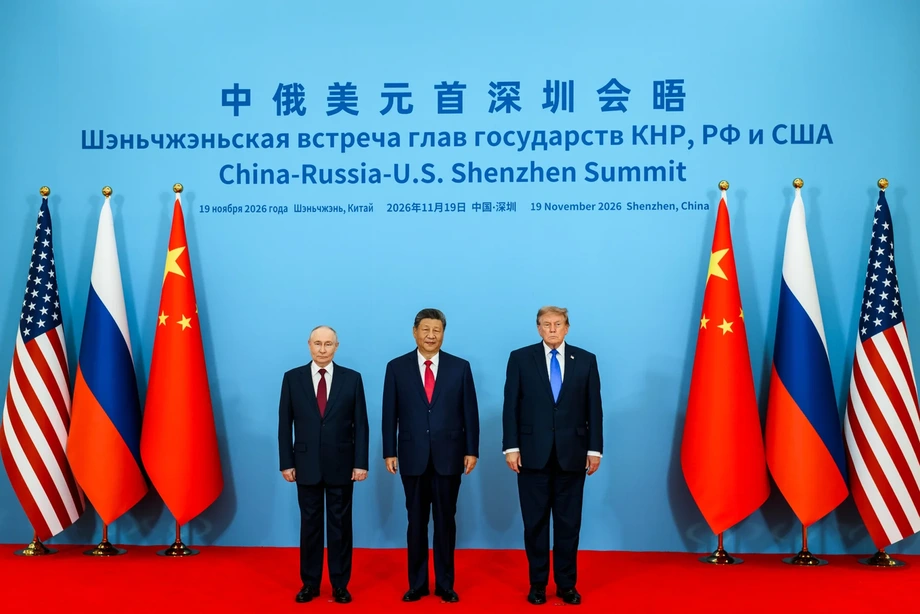
Kim's inspection came six days after the leaders of the United States, China and Russia said on November 19 that they would pursue dialogue to reduce nuclear risks and prevent proliferation. It also followed an unsuccessful effort to arrange a meeting between Kim and US President Donald Trump. Kim presented his country's nuclear status, written into its constitution in 2023, as permanent and said any attempt to remove it would be treated as an open declaration of war.
Kim, chairman of North Korea's State Affairs Commission, used the tour to reject outside demands for disarmament.
Our nuclear capability has now become a reality. Denying this reality is just the recognition of failure.
Lim Eul Chul, a professor at Kyungnam University, interpreted the message as an attempt to change the basis of any future negotiations rather than close every channel to Washington.
This is not so much North Korea permanently closing the door to dialogue with the United States as a strategy of raising the bar: 'denuclearisation talks' are over, and if talks open in future, it will deal only on a 'nuclear state versus nuclear state' basis.
The Nuclear Weapons Institute display added another element. Kim called for tactical nuclear weapons with different missions to be used across multiple domains. Tactical weapons generally have lower explosive yields and are intended for battlefield targets, while strategic weapons are designed for attacks at much greater distances. Photographs showed labels including Hwasan-31-1, Hwasan-31-2 and Hwasan-31-3. Shin said the shapes suggested several versions of peanut and rugby ball shaped hydrogen bombs.
North Korea has conducted six nuclear tests since 2006, most recently in 2017. South Korea's defense minister said in August 2026 that private research organizations generally estimated Pyongyang's stockpile at between 80 and 120 warheads, while cautioning that the government could not confirm that figure.
Yongbyon adds a second concern
The tour also showed densely packed rows of centrifuges, machines that spin uranium gas at high speed to separate the material needed for enrichment. Kim visited what state media called a newly built important materials production plant and another plant undergoing expansion. The low ceiling, dim lighting and spacing differed from facilities shown in September 2024 and June 2026. South Korea's government considers a new production site at Yongbyon the likely location.
David Albright, president of the Institute for Science and International Security, estimated that the expansion could yield more than 100 kilograms of uranium suitable for weapons each year, depending on its design and supply of material. He said that could support four to five additional weapons annually. His institute's satellite analysis described an interior hall about 95 meters long and 10 meters wide in an expansion that began in September.
International Atomic Energy Agency Director General Rafael Grossi said on November 18 that exterior construction had been completed by late October. He also addressed the wider expansion of North Korea's enrichment capacity.
The ongoing expansion of the DPRK's uranium enrichment programme remains a cause for serious concern.
Albright suggested that the building could raise uranium already enriched to a low level to about 90%, a concentration suitable for weapons. Its precise function remains unconfirmed, and inspectors have not verified that centrifuges inside the new hall have been installed or started operating.
China and Japan shape the regional contest
Kim defended his submarine program by accusing the United States of spreading naval nuclear technology through AUKUS, the partnership under which Washington and London are helping Australia acquire submarines propelled by nuclear reactors. He also accused Washington of encouraging allies near North Korea to obtain similar boats and of pursuing nuclear sharing. His comments were aimed at South Korea's approved program and Japan's current policy debate.
China already operates Northeast Asia's largest nuclear submarine force. The International Institute for Strategic Studies counts 61 Chinese submarines, including 15 propelled by nuclear reactors. The US Office of Naval Intelligence has projected as many as 80 Chinese submarines by 2035, with half using nuclear propulsion. That would raise the nuclear share from 15 of 61, roughly one quarter, to about 40 of 80, or one half.
Japan plans to revise its National Security Strategy, National Defense Strategy and Defense Buildup Plan as early as December 2026, with discussions under way about including submarine acquisition. A separate debate concerns possible exceptions to Japan's three principles against possessing, manufacturing or introducing nuclear weapons, specifically to permit American tactical weapons during an emergency. Nuclear propulsion concerns a vessel's engine; nuclear armament concerns the weapons it carries.
Seoul's plan costing 29 trillion won waits for fuel
South Korea's Defense Acquisition Program Administration committee approved the basic strategy for the Jangbogo N project on November 6. The plan commits about 29 trillion won to obtaining three submarines propelled by nuclear reactors, each displacing at least 8,000 tons, after the late 2030s. Design work is scheduled to begin in 2027 with 96.6 billion won allocated. Trump approved South Korea's pursuit of such vessels in October 2025.
Fuel remains the immediate obstacle. Seoul wants uranium enriched to a low level from the United States under a separate bilateral agreement. A government delegation from both countries held its first negotiation in June 2026, but a second round had not taken place by late November. No date for another meeting has been announced.
South Korea's Defense Ministry responded to Kim's tour by calling his intention to expand tactical nuclear weapons grave. Ministry spokesperson Chung Binna demanded compliance with United Nations Security Council resolutions.
For the sake of peace on the Korean Peninsula and in the region, North Korea must immediately cease its attempts to justify its nuclear development and comply with U.N. Security Council resolutions.
Seoul said it would strengthen deterrence through consultations with Washington and its three part response system: the Kill Chain plan for strikes before an imminent attack, the Korea Air and Missile Defense system, and the Korea Massive Punishment and Retaliation plan. Extended deterrence is the American commitment to defend South Korea with the full range of US military capabilities, including nuclear weapons. The next Nuclear Consultative Group meeting is expected in Washington in December.
Two accidents reduce the fleet available now
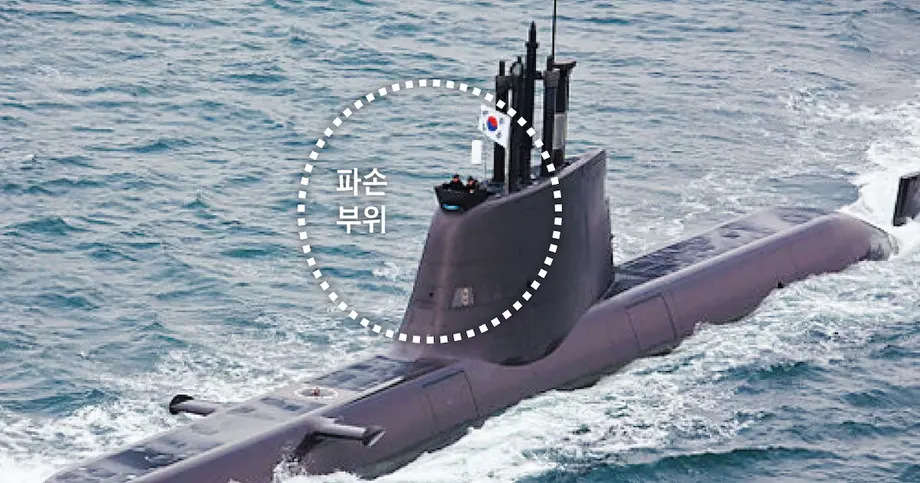
South Korea's immediate problem involves conventional submarines rather than its future nuclear program. During a nighttime mission in the Yellow Sea in September, one Son Won Il class boat displacing 1,800 tons became entangled in a discarded fishing net while submerged. Military officials said a steel wire attached to the net caught the conning tower, damaging the bridge, acoustic sensors mounted on the tower and several hatches.
The Navy's public account described damage to the protective hull coating and said the submarine's navigation systems remained intact. It returned to its home port under its own power, and no casualties were reported. A military official said the absence of direct hull damage should permit redeployment after repairs. Almost two months after the accident, however, no completion date had been set.
The second boat, the Hong Beom Do, caught fire on April 9 during a scheduled overhaul at HD Hyundai Heavy Industries' shipyard in Ulsan, about 300 kilometers southeast of Seoul. The Navy is assessing the damage and conducting repairs without a published completion date. Defense industry officials have cautioned that the scale of the fire could make restoration difficult.
Two damaged boats represent roughly 10% of a fleet numbering about 20. The remaining 18 cannot all be treated as ready for deployment because submarines periodically require deep overhauls in large shipyards as well as repairs for ordinary faults. The Navy said it was preserving readiness by adjusting maintenance schedules and deploying available boats flexibly, but the two accidents leave fewer options for patrols, training and routine maintenance.
The dates to watch
Several military and diplomatic schedules now run in parallel, while the most important repair and negotiation dates remain unsettled.
- January 2021: Kim told the Eighth Party Congress that the design of a submarine propelled by nuclear energy was under final examination.
- March 2025: North Korea released the first photographs of the new submarine's hull under construction.
- December 24, 2025: Kim and Kim Ju Ae visited the construction site of the vessel described as displacing 8,700 tons.
- April 9, 2026: A fire damaged the Hong Beom Do during its overhaul in Ulsan.
- June 2026: South Korea and the United States held their first negotiation over submarine fuel; no second round has followed.
- September 2026: A discarded fishing net and steel wire damaged another South Korean submarine in the Yellow Sea.
- November 25 and 26, 2026: Kim inspected the nuclear facilities and state media released the reactor and enrichment images.
December is expected to bring the Nuclear Consultative Group meeting in Washington and possibly Japan's revised security documents. South Korean design funding follows in 2027. Shin's estimate of a North Korean launch around the middle of that year is not a confirmed schedule, and neither South Korean repair program has a completion date.
The Bottom Line
- North Korea released its first images of equipment assessed by several specialists as a submarine reactor and shielding system.
- The equipment may support the submarine that Pyongyang says will displace 8,700 tons, but its purpose and performance remain unverified.
- Reactor testing, missile development, fitting out and sea trials could still require years after any launch.
- Kim coupled the display with a refusal to discuss denuclearisation and a call for broader use of tactical nuclear weapons.
- The Yongbyon expansion could produce enough additional weapons material for four to five warheads annually, according to David Albright's estimate.
- China operates 15 nuclear propelled submarines among 61 boats, while Japan and South Korea are pursuing their own programs.
- South Korea plans three large nuclear propelled submarines for about 29 trillion won, but talks over American fuel have stalled.
- Two South Korean conventional submarines are under repair after a fishing net accident and a shipyard fire, with no completion dates announced.