Berlin Invokes the Rome Statute but Avoids the Apartheid Label
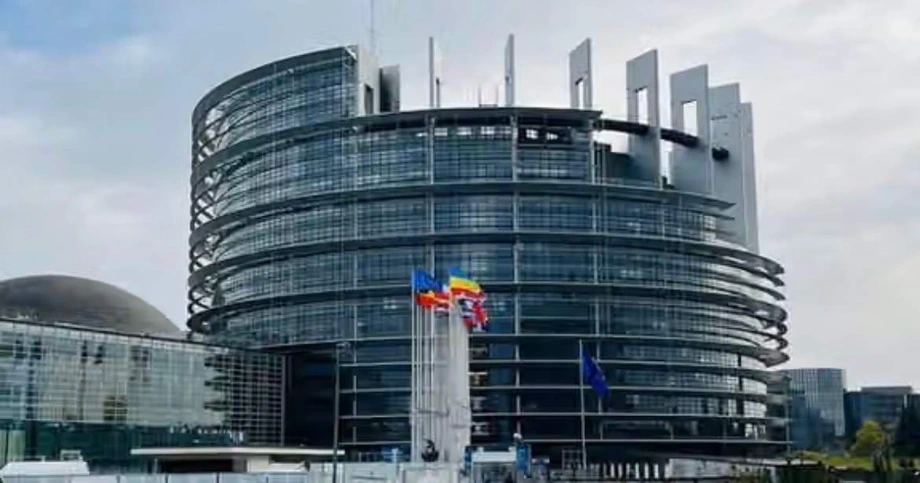
Germany's Federal Foreign Office said on Thursday, 26 November 2026, that the systematic and structural violation of the rights of Afghan women and girls could amount to persecution on gender grounds. That category is recognised as a crime against humanity under the Rome Statute, the founding treaty of the International Criminal Court (ICC). Afghanistan has been a state party to the statute since May 2003.
Contents
- Berlin Invokes the Rome Statute but Avoids the Apartheid Label
- What Gender Persecution Means in International Law
- Why France and Spain Have Chosen Stronger Language
- The Daily Reality Behind the Legal Argument
- Where Accountability Is Already Being Pursued
- Madrid Turns Legal Demands Into Political Pressure
- Afghan Opposition Figures Use Madrid to Seek Common Ground
- Aid and Engagement Continue Without Recognition
- What Remains Undecided
- Key Points
The statement gives Germany's condemnation a precise legal basis. Berlin was not simply objecting to individual Taliban decrees. It was addressing what it described as an organised structure of discrimination, while stopping short of calling that structure gender apartheid.
In the central sentence of its response, the Foreign Office set out the possible legal classification:
The systematic and structural violation of the rights of women and girls in Afghanistan may constitute persecution on the basis of gender.
Germany has so far withheld the apartheid label used by many Afghan activists and human rights organisations. The ministry did not explain that choice. It also reiterated that Berlin does not recognise the Taliban administration as Afghanistan's legitimate government. Contacts with the group remain at a technical level, with German officials using those exchanges to press for improvements in human rights, especially the protection of women and girls.
What Gender Persecution Means in International Law
Persecution involves the severe deprivation of fundamental rights because of a person's identity. Under article 7(1)(h) of the Rome Statute, persecution on gender grounds can be prosecuted as a crime against humanity. Crimes against humanity generally require a widespread or systematic attack directed against a civilian population, rather than an isolated abusive act.
Germany's use of the words systematic and structural therefore matters. They describe a pattern organised through official rules and institutions. In Afghanistan, that pattern includes exclusion from education, employment and public life, alongside restrictions on movement and healthcare.
Gender apartheid carries a related but broader argument. Activists use it to describe an institutional system of domination and exclusion based on gender, borrowing the idea of apartheid from the former system of racial separation in South Africa. No international treaty currently defines gender apartheid as a separate crime. Campaigners want it included in the proposed Convention on the Prevention and Punishment of Crimes Against Humanity, which governments are negotiating at the United Nations.
Berlin has chosen to invoke an offence already written into the Rome Statute. Paris and Madrid have gone further in their public language while also seeking a new legal definition. Germany's statement announced no new court filing or legal deadline, and no completion date has been given for the proposed convention.
Why France and Spain Have Chosen Stronger Language
French Foreign Minister Jean-Noël Barrot used the apartheid label in the National Assembly on Tuesday, 24 November, two days before Germany issued its response. He was answering Léa Balage El Mariky, a lawmaker from the Ecologists party, who had challenged the government over technical negotiations with the Taliban concerning Afghan nationals in France.
Barrot rejected any suggestion that administrative contacts implied diplomatic acceptance:
Any strictly technical exchanges that may take place do not constitute approval or recognition of this regime. This regime imposes the worst form of discrimination against women and girls in our century. This is gender apartheid.
His answer expanded France's position on recognition. Paris would talk to Taliban officials for limited purposes while denying the administration diplomatic legitimacy. Barrot said France had "no intention whatsoever" of establishing diplomatic relations with the group.
The immediate dispute concerned deportations. French officials want the faster removal of Afghan nationals whom they consider the greatest security risks. Balage El Mariky called the contacts "a betrayal" and said two Taliban representatives were expected to visit France. She asked for their identities and the length of their stay, but Barrot supplied neither names nor dates.
Spain has taken a similar public position. Foreign Minister José Manuel Albares has described Taliban rule as gender apartheid and said Spain would never recognise the group while it continues violating the fundamental rights of women and girls. Madrid also supports making gender apartheid a distinct crime under international law. France is pursuing the same goal through the forthcoming crimes against humanity convention.
The Daily Reality Behind the Legal Argument
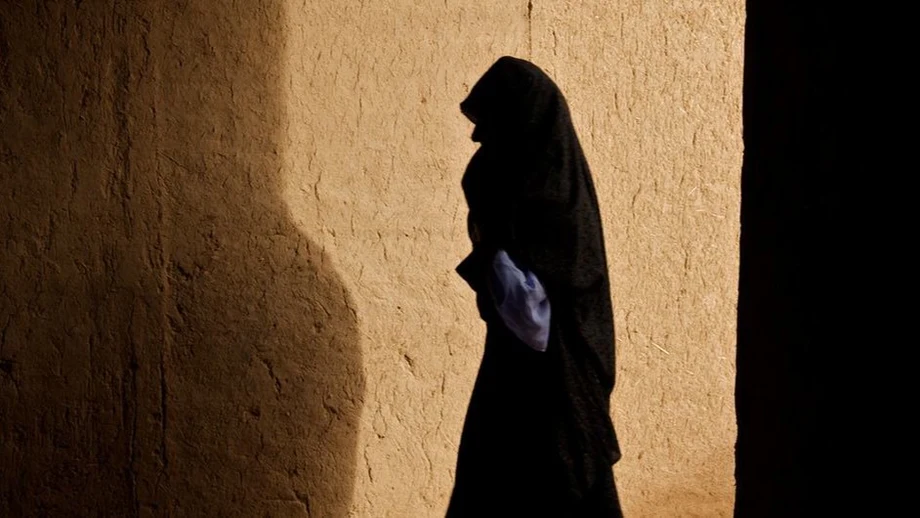
Taliban authorities have issued more than 100 decrees restricting women and girls since returning to power in August 2021. Girls have been barred from secondary education, women have been excluded from universities since 2022, and rules have tightened around employment, travel, movement and participation in public life. A male guardian is required for many journeys.
UNESCO and UNICEF said on 4 November 2026 that more than 2.6 million Afghan girls had been denied secondary schooling since 2021. Another consequential decision came in December 2024, when women were barred from medical training institutions, including nursing and midwifery programmes.
That education ban reaches into the health system. Afghanistan needs female doctors, nurses and midwives because cultural barriers often prevent women from receiving treatment from male staff. Preventing women from training today reduces the supply of female clinicians available to treat patients in future years.
On 20 November, a UN healthcare warning estimated that 22 million women and girls could lose access to essential healthcare because of Taliban restrictions combined with reductions in international assistance. Nearly 300 humanitarian health facilities had closed or suspended operations, affecting more than one million women and girls who depended on them for basic treatment, maternal care or emergency services.
Where Accountability Is Already Being Pursued
The International Criminal Court had already unsealed four arrest warrants on 5 October 2026. The suspects are Taliban supreme leader Haibatullah Akhundzada, Chief Justice Abdul Hakim Haqqani, Education Minister Habibullah Agha and Higher Education Minister Neda Mohammad Nadim. The warrants were originally issued on 8 July and 9 September 2025 and remained sealed until October 2026.
The principal allegation is gender persecution under article 7(1)(h). The court found reasonable grounds to believe that the suspects ordered, induced or solicited persecution against women, girls and people whose conduct did not conform to Taliban gender policy. The allegations also include political persecution of people regarded as allies of women and girls. The alleged crimes cover the period from the Taliban takeover on 15 August 2021 until at least 20 January 2025.
A second legal route runs through the Convention on the Elimination of All Forms of Discrimination against Women (CEDAW). Australia, Canada, Germany and the Netherlands announced on 25 September 2024 that they had formally initiated proceedings against Afghanistan. They argue that Taliban restrictions breach Afghanistan's obligations under the convention, which remain in force despite the change of power in Kabul.
Germany has also supported and helped finance an independent investigative mechanism created at the UN Human Rights Council. Its mandate is to collect, consolidate, preserve and analyse evidence of international crimes and the most serious violations of international law. Spain has contributed money to its launch as well. The mechanism is intended to preserve material that can support future proceedings. Berlin separately confirmed its continuing support for Richard Bennett, the UN Special Rapporteur on human rights in Afghanistan.
The sequence of legal and diplomatic action is now extensive:
- May 2003: Afghanistan became a state party to the Rome Statute.
- 15 August 2021: The Taliban returned to power and subsequently rebuilt restrictions on women and girls.
- 25 September 2024: Australia, Canada, Germany and the Netherlands initiated CEDAW proceedings.
- 5 October 2026: The ICC made public four warrants issued during 2025.
- 22 and 23 November 2026: Afghan activists and international officials met in Madrid to demand accountability.
- 24 November 2026: France publicly called Taliban rule gender apartheid.
- 26 November 2026: Germany said the violations could constitute gender persecution, a crime against humanity.
Madrid Turns Legal Demands Into Political Pressure
Around 70 Afghan women's rights activists, former lawmakers, researchers, religious scholars, diplomats and UN officials gathered for the Madrid accountability summit on 22 and 23 November. Spain's foreign ministry organised the fourth HearUs summit with Women for Afghanistan, chaired by former Afghan parliamentarian Fawzia Koofi. The 12th Herat Security Dialogue took place alongside it.
The theme was Afghan Women's Leadership in Achieving Justice and Peace through Accountability. Participants called for gender apartheid to be recognised as an international crime and for stronger action against systematic persecution, forced marriages and the exclusion of women from education, employment and public life.
Spanish Foreign Minister José Manuel Albares connected accountability to any durable settlement:
There can be no lasting peace without truth, without justice, without accountability and without women's participation.
Pramila Patten, the UN Special Representative on Sexual Violence in Conflict, said the Taliban had turned women's exclusion from public life into official government policy. Former Icelandic Prime Minister Katrín Jakobsdóttir presented the One Million Voices for the Women and Girls of Afghanistan campaign, which seeks one million signatures. Its demands include withholding recognition, expanding humanitarian visas and safe transfers, recognising gender apartheid in law and creating an international fund for women's education and employment.
Criticism in Madrid also reached governments and international organisations. Participants accused the UN Assistance Mission in Afghanistan of being too quiet about the treatment of women and questioned UN travel exemptions for sanctioned Taliban figures, including one reportedly obtained by Sirajuddin Haqqani to perform Umrah. They urged Organisation of Islamic Cooperation members to challenge education bans, arguing that denying schooling to girls contradicts Islamic teachings.
Participants also called on Washington to review reported cash assistance that they put at approximately $40 million a week and to reassess the Doha Agreement. They argued that political commitments associated with the agreement included inclusive government and guarantees concerning women's education and human rights.
Afghan Opposition Figures Use Madrid to Seek Common Ground
Spain's foreign ministry hosted a separate round of Afghan political talks on 25 November. Women for Afghanistan organised the third round of these discussions, with Koofi leading an effort to build trust among political figures, former officials, civil society representatives and activists.
Participants included former Higher Education Minister Abbas Basir, former Economy Minister Mustafa Mastoor, Afghan representative in Geneva Nasir Ahmad Andisha, former Deputy Minister of Women's Affairs Nabila Mosleh, former senator Rahela Dostum and former Communications and Information Technology Minister Masouma Khawari. Religious scholars, academics, diplomats and independent activists also attended.
Their agenda covered human dignity, meaningful participation by women in decisions, inclusive governance, the rule of law, justice and respect for Afghanistan's ethnic and social diversity. The meeting compared possible scenarios for the country and sought principles around which divided Afghan groups could cooperate.
Aid and Engagement Continue Without Recognition
Germany plans to keep providing assistance according to humanitarian principles, with an explicit aim of ensuring that aid reaches women and children in need. Berlin also supports international diplomatic efforts, including the Doha process led by the United Nations, and continues pressing Afghanistan to meet its CEDAW obligations.
France has combined its condemnation with education and humanitarian commitments. Barrot said 50 Afghan female students would be moved to France starting in January 2027. Another 35 women are due to receive government scholarships in September 2027, and he said France would welcome 200 Afghan women during 2027. France has provided €187 million in humanitarian assistance over five years.
These policies reveal the balance European governments are attempting to strike. Germany and France reject diplomatic recognition but retain technical channels for tasks such as aid, human rights advocacy or deportations. Afghan citizens, opponents of the Taliban and human rights organisations have criticised that engagement, warning that practical contacts can strengthen the authorities even when governments withhold formal recognition.
What Remains Undecided
Germany has not said when, if ever, it might adopt the term gender apartheid. The proposed crimes against humanity convention still has to settle whether that term will become a separately defined offence, and no adoption date was given. France has also left the reported Taliban visit unexplained, with no names or travel dates disclosed.
Germany's statement instead places its weight behind existing law, treaty proceedings, evidence preservation and humanitarian access. The next firm dates supplied by European officials concern the French student transfers and scholarships in 2027, rather than hearings in the ICC or CEDAW cases.
Key Points
- Germany said on 26 November that systematic violations of Afghan women's rights could constitute gender persecution, a crime against humanity under the Rome Statute.
- Berlin has so far avoided calling Taliban policies gender apartheid and continues to deny the administration diplomatic recognition.
- France used the apartheid label on 24 November, while Spain supports its recognition as a separate international crime.
- The ICC unsealed warrants for four senior Taliban figures in October 2026, with gender persecution as the principal allegation.
- Australia, Canada, Germany and the Netherlands initiated proceedings against Afghanistan under CEDAW in September 2024.
- More than 2.6 million girls have been barred from secondary school, while the UN warns that 22 million women and girls face losing essential healthcare.
- Germany backs evidence collection, Richard Bennett's UN mandate and continued humanitarian aid for Afghan women and children.