Five schools rewrite which talents open the door
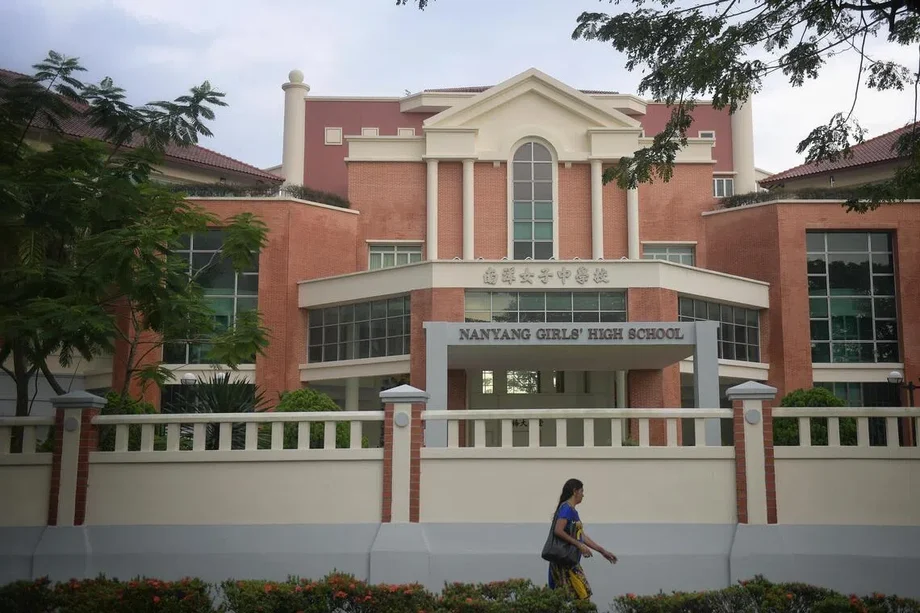
Nanyang Girls' High School has taken mathematics and science off its Direct School Admission list for 2026. CHIJ St Nicholas Girls' School stopped offering STEM (science, technology, engineering and mathematics) in the same exercise, and Singapore Chinese Girls' School dropped bilingualism and STEM while keeping English language and humanities.
Contents
- Five schools rewrite which talents open the door
- What DSA is, and why a 12 year old sits a talent trial
- Why Nanyang Girls' dropped mathematics and science
- Methodist Girls' trades a broad label for a narrow skill
- Temasek Junior College keeps Chinese language
- The ministry leaves the list to each school
- The review, and a minister's second front
- Will the changes reduce the coaching advantage?
- Two mothers, two views of the same scheme
- The dates that frame the change
- Key Points
The cuts run into 2027. Temasek Junior College will remove English language, mathematics and science from the DSA exercise for Year 1 of its Integrated Programme, and Methodist Girls' School will stop offering English language and STEM after adding computational thinking skills as a talent area in 2026.
None of the five presents the change as a lowering of standards. Each is shortening the list of strengths it recruits on, inside a scheme that still admits pupils for sport, music, leadership and other abilities. Three of the schools did not answer questions about the revisions, and Temasek Junior College declined to comment.
What DSA is, and why a 12 year old sits a talent trial
DSA lets pupils in their final primary year win a place at a secondary school before they sit the Primary School Leaving Examination (PSLE), the national exam that otherwise decides where they go. The scheme began in 2004 to recognise achievement in areas the exam does not measure, such as sport and the arts, and it now operates across secondary schools, each publishing its own talent areas. From 2018, schools were required to stop using general academic ability tests to pick pupils through the scheme.
Academic categories were the hardest to prepare for. Pupils applying on mathematics, science or English worked through practice papers and enrichment programmes, and faced assessments set by individual schools alongside interviews and talent trials. Those tests were designed to probe analytical and reasoning ability, and the preparation could be punishing. The Direct School Admission scheme has also shifted since the pandemic, when schools began looking harder at qualities that grades do not capture and at how they judge talent and character.
Why Nanyang Girls' dropped mathematics and science
Nanyang Girls' High School gave a practical reason in March, based on its own data and observations. Most pupils admitted through its academic talent areas, its principal said, had scored well enough in the PSLE to enter the school through regular posting anyway.
The logic is blunt. DSA exists to catch what the national exam misses. Where an academic category keeps admitting children the exam would have placed in the school regardless, the category stops widening the range of pupils a school takes in, and the school carries the cost of running trials and interviews for little change in its intake.
Methodist Girls' trades a broad label for a narrow skill
Methodist Girls' School is not simply retreating from academic selection. It has replaced a wide category with a specialised one, introducing computational thinking skills in 2026 and preparing to drop English language and STEM from the 2027 exercise. Vice-principal Wright Yi Na said the school weighed its strategic priorities, its available resources and its distinctive talent development programmes.
We are adjusting our talent areas under DSA to better focus on recognising diverse talents in areas not typically captured through conventional academic measures.
Computational thinking, as the school defines it, covers logical and algorithmic reasoning: breaking a complex problem into parts, spotting patterns, designing efficient solutions and linking ideas across different contexts. Wright described it as an emerging and highly relevant skill set, and as a more specific slice of the wider STEM field. The school told the government feedback portal AskGov that its existing programmes, including a G3 Computing subject for upper secondary pupils, leave it well placed to develop such students. G3 is the most demanding of the three subject bands used in secondary schools.
One detail on the school's AskGov page complicates any assumption that a shorter list means more places elsewhere. Methodist Girls' said it sets no fixed quota for any talent area, because offers depend on the quality of pupils who apply in a given year.
Temasek Junior College keeps Chinese language
Temasek Junior College is keeping one language category while cutting the rest. Its website says Chinese language stays because the college is one of nine schools offering the Chinese Language Elective Programme at Secondary Level, which allows it to keep developing pupils with aptitude and a keen interest in the subject. The college will remove English language, mathematics and science from the 2027 exercise for Year 1 of its Integrated Programme, the route that carries students to the A levels without the O levels in between.
For a parent reading the lists, the pattern is uneven rather than uniform. Two schools have cleared out science and mathematics, another has kept English and humanities, and one is holding on to Chinese language while letting English go. The decisions belong to individual schools, and they are being made one subject at a time.
The ministry leaves the list to each school
The Ministry of Education says the choice belongs to schools. "Schools may review DSA talent areas from time to time for a variety of reasons," it said, adding that schools have autonomy over DSA selection, including which talent areas they offer. The ministry pointed to the distinctive programmes and co-curricular activities every secondary school runs for its students, whether they arrived through DSA or through Secondary 1 posting.
That statement sets the frame for the argument now under way. Schools hold the pen on talent areas, while the ministry holds the review of how the scheme works as a whole: how it develops pupils' talents, how it selects applicants, and whether it stays open to children from every background.
The review, and a minister's second front
Pressure on the scheme is arriving from the top of the system too. On Sept 29, Second Minister for Education David Neo said DSA had become a "second front" in the education arms race for some families, adding to academic anxiety, because a child may be revising for the PSLE while also assembling a portfolio for DSA. He said the scheme would be one of the subjects taken up in the ministry's next phase of public engagements, after a series of education conversations that began in April and will continue into 2027. Those sessions will focus on the move from primary to secondary school, where pressure on young pupils is often sharpest.
Education Minister Chan Chun Sing set out the direction earlier, naming the DSA review among the ministry's priorities for 2025 and saying details of the changes would be released in the second quarter of that year. He singled out "green harvesting", the practice of spotting and recruiting young talent very early, and a bias towards children whose strong performances rest on professional training or academies their families can pay for, rather than on untapped potential.
We will insist and encourage that if you have a DSA system in your school, you must demonstrate development.
Chan added that no school should field a team made up entirely of DSA pupils, since that says nothing about a school's ability to nurture talent. He cited a figure of about 6 per cent of DSA pupils coming from families with lower incomes, a number that bears on the review's aim of keeping the scheme open. He also warned against assuming the most selective school is the right one, describing a "small fish in a big pond" effect when a child sits at the bottom of a demanding cohort and may struggle to climb.
It is not about whether this school is a good school, but whether this school is a good school for your child.
Will the changes reduce the coaching advantage?
Associate Professor Jason Tan of the National Institute of Education reads the schools' decisions as part of the scheme's incremental evolution rather than a break from it. DSA has grown since 2004 to cover all secondary schools, to admit a larger share of each intake and to weigh character and leadership alongside performance, he noted. Schools should keep the freedom to revise their talent areas, he said, while acknowledging that changes can frustrate families who have already spent time and money preparing a child for a category that disappears.
Tan also questioned how much the revisions change who gets ahead. Families able to pay for private coaching can move their spending to whichever category survives, and coaching centres can redesign their classes to match. "You're just shifting to a different area of focus. That's all," he said.
Two mothers, two views of the same scheme
Software consultant Cindy Kee, 44, took different approaches with her two daughters. The elder, 15, did not apply, having no particular passion to pursue. The younger applied for wushu, wanting to continue the sport, secure a place in the co-curricular activity and possibly the school team at Anglican High School, and drawn by the option of moving to a polytechnic after four years and meeting new people.
I think academic subjects are already assessed through PSLE, so perhaps DSA should focus more on talents, interests and strengths that may not be reflected in exam results.
Kee added that the scheme works best for children who genuinely want to go further in an interest, rather than as a way into a school they could not otherwise enter.
Another parent, who gave only the name Lee, saw the other side of it. Her eldest daughter won a DSA place at Raffles Girls' School for English, then scored well enough in the PSLE to fall inside the school's admission range anyway. The girl had joined her primary school's creative writing programme in Primary 5 and represented the school in several English competitions, while mother tongue was a struggle for her.
The PSLE is only one narrow measure of merit. DSA allowed our daughter to focus on developing her talents.
The dates that frame the change
- 2004: DSA is introduced to recognise talents beyond academic results, letting Primary 6 pupils win secondary places before the PSLE.
- 2018: Schools are required to stop using general academic ability tests for DSA selection.
- Early 2025: Chan names the DSA review among the ministry's priorities and promises details in the second quarter of that year.
- 2026: Nanyang Girls', CHIJ St Nicholas and Singapore Chinese Girls' open their exercises without the academic categories named here, and Methodist Girls' adds computational thinking.
- April 2026: A series of education conversations begins, running into 2027.
- Sept 29, 2026: Neo describes DSA as a "second front" in the arms race.
- 2027: Temasek Junior College and Methodist Girls' drop further academic categories.
The timetable Chan gave has since given way to a longer review, which the ministry still described in September 2026 as under way. No date has been set for its outcome, and no published set of rule changes has followed. The ministry has not said which talent areas schools will offer beyond 2027, or how the promised requirements on selection will be checked. The next checkpoint it has named is the engagement phase on the primary to secondary transition, part of a programme of conversations that continues into 2027.
Key Points
- Nanyang Girls' High School removed mathematics and science from its 2026 DSA exercise.
- CHIJ St Nicholas Girls' stopped offering STEM in 2026, and Singapore Chinese Girls' dropped bilingualism and STEM while keeping English language and humanities.
- Temasek Junior College will remove English language, mathematics and science from its 2027 exercise, keeping Chinese language as one of nine schools in the Chinese Language Elective Programme at Secondary Level.
- Methodist Girls' School added computational thinking in 2026 and will drop English language and STEM in 2027, saying it sets no fixed quota for any talent area.
- The Ministry of Education says schools have autonomy over DSA selection and talent areas.
- David Neo said on Sept 29 that DSA had become a "second front" in the education arms race; the ministry is reviewing how the scheme develops talent, selects applicants and stays accessible.
- Jason Tan of the National Institute of Education called the moves part of the scheme's incremental evolution and said parents can redirect coaching spending to other categories.
- About 6 per cent of DSA pupils come from families with lower incomes, a figure Chan Chun Sing cited while pressing schools to show they develop pupils admitted through other routes.