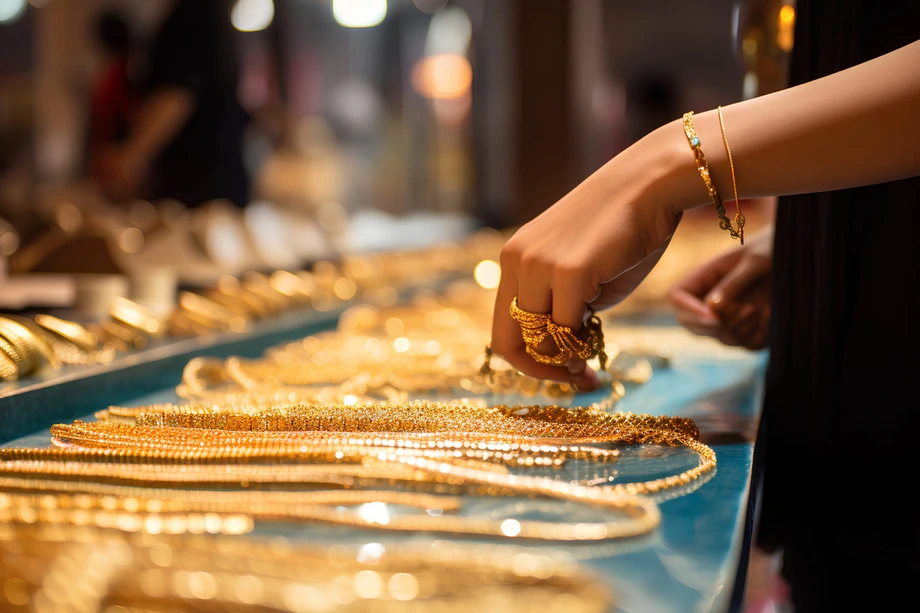
What Changed in the Gold Market
International gold prices have swung lower for three months since September 2026. On Wednesday, November 25, spot gold briefly dropped below US$3,500 an ounce. Market data put the low at US$3,426.35 an ounce, the weakest level since late August 2025. The fall below US$3,500 was described as the first since September 2025. By Friday, gold had rebounded, but it was still more than 30 percent below the US$5,596.33 an ounce peak recorded at the start of the year.
Contents
- What Changed in the Gold Market
- Why Shoppers Filled the Counters
- A Short Timeline of the Fall and Rebound
- What Buyers Paid on the Ground
- India and Singapore Join the Bargain Hunt
- Singapore Shoppers Buy Ahead of Weddings and Festivals
- Dip Buyers, Losses and Gold Fund Inflows
- Why Rates and the Dollar Matter
- Jewellery Buyers and Investors Are Playing Different Games
- Inside the Shops, Inventory Decides Who Is Exposed
- Stock Markets Are Watching the Next Cycle
- Authorities Push Risk Controls
- Key Points
The price fall has not emptied shops. It has filled them. In Shenzhen's Shuibei district, one of China's biggest gold jewellery hubs, merchants reported sales increases of 50 percent and weekend crowds so dense that customers could barely enter. In Changzhou, Jiangsu province, one store worker said visitor numbers rose from November 18 and were 120 percent above normal, with turnover 200 percent above normal.
Gold is different from a shirt or a phone. Buyers often treat it as both decoration and savings. Jewellery shoppers care about the price of the metal in a ring or bracelet. Investors care about what the same metal might be worth later. This week, both groups entered the market, but for different reasons.
Spot gold means metal traded for delivery now, while a futures contract sets a price for delivery later. The distinction matters because sharp moves in spot prices reach shop counters quickly, while future expectations shape bank warnings, stock prices and investor positioning.
Why Shoppers Filled the Counters
Shoppers in Shenzhen arrived with specific needs. Wu Shanshan, a merchant in Shuibei, said sales rose by 50 percent and that the weekend crowd was so thick that people could hardly get into the shop. Many customers came from other cities. Orders for wedding jewellery and gifts for older relatives increased, she said.
Chen Chen, who sells gold jewellery at wholesale in Shuibei, said downstream buyers were taking more goods than before. He put the increase in purchase volume at more than 50 percent. The rush was not limited to retail buyers. Shops that stock counters across China were rebuilding inventory while prices looked lower.
In Changzhou, Xie Jing, a worker at a gold counter, said the crowd began growing on November 18. Younger customers were trying small pieces, while families were choosing larger items. Stores added promotions such as discounts tied to weight and reductions on workmanship fees, the labour charge for shaping gold into jewellery.
Weddings and festival gifting gave the fall an extra push. In Shuibei, some couples who had watched prices above 1,200 yuan per gram finally bought pieces for weddings after quotes dropped into the 900 yuan range and then below 800 yuan. Buyers also purchased gifts for wives, girlfriends, newborns and older relatives. Some young women bought pieces with no special occasion, comparing the choice to buying clothes when a price feels right.
A Short Timeline of the Fall and Rebound
The newest buying wave followed a sequence of price changes across Asia and global markets. COMEX, a United States futures market, tracks contracts for later delivery.
- September 2026: International gold prices began a three month run of volatility and decline.
- November 9 to 20: COMEX gold fell from US$4,129 to US$3,526 an ounce over 10 trading days, a drop of about 14.4 percent.
- November 18: Traffic at one Changzhou gold counter began rising, according to the store worker.
- November 20: Shuibei's live gold price fell to 797 yuan per gram in the afternoon, from more than 840 yuan the day before.
- November 22: Shuibei quoted 918 yuan per gram for pure gold jewellery at wholesale, 75 yuan less than a week earlier.
- November 23: COMEX gold futures for the current month rose 3.41 percent to US$3,635.2 an ounce.
- November 25: Spot gold fell below US$3,500 an ounce and traded around US$3,545 at 10 a.m. in Singapore time.
- November 26: Shuibei quoted jewellery gold at 917 yuan per gram and recycling at 752 yuan.
- November 27: Shuibei quote rose to 926 yuan, with recycling at 759 yuan. Spot gold rose 1.6 percent to US$3,622.71 by 11:05 a.m. ET.
By November 27, gold was on track for a weekly gain of nearly 2.5 percent, its first weekly rise in three weeks. The rebound did not erase the earlier fall, and the buying rush continued in several markets.
What Buyers Paid on the Ground
Numbers at the counter explain the queues. A 20 gram plain gold bracelet cost about 1,500 yuan less in metal value than it had a week earlier after Shuibei wholesale quotes fell by 75 yuan per gram. In Hangzhou, one store quoted 810 yuan per gram. A customer buying 200 grams saved about 15,000 yuan compared with prices 20 days earlier.
Beijing Caibai saw a different kind of rush. By 11:30 a.m. on November 20, investment gold bars were sold out. One customer bought eleven 100 gram bars worth 850,000 yuan. When Au99.99, a reference price on the Shanghai Gold Exchange, fell to as low as 755 yuan per gram, 10 gram bars sold first, followed by 50 gram and 100 gram bars. The last 1 kilogram bar was gone within half an hour.
Shop prices also show why gold buyers watch the fine print. On November 27, Shuibei quoted jewellery gold at 926 yuan per gram, while brand counters quoted about 1,058 to 1,068 yuan. The gap of 132 to 142 yuan per gram reflects brand names, workmanship, store channels and rent. Recycling quotes are different again: a 759 yuan recycling price means the shop's buying back price, not what a customer paid at the counter.
The gap matters for investment bars. Someone buying at 926 yuan and later selling back at 759 yuan would face a 167 yuan per gram gap before any other charges. Jewellery buyers may accept that gap because they want to wear the piece. Investors hoping for a quick resale need to remember that the buyback quote can be far below the retail quote.
India and Singapore Join the Bargain Hunt
The price fall reached beyond China. In India, domestic gold fell to 117,906 rupees per 10 grams earlier in the week, the lowest level since October 28, 2025, before trading around 124,800 rupees on Friday. Dealers charged premiums of as much as US$19 an ounce above official domestic prices, up from US$17 the previous week. A premium is the extra amount buyers pay over a benchmark price. The quoted premiums included a 15 percent import levy and a 3 percent sales levy.
Chirag Thakkar, chief executive of bullion dealer Amrapali Group Gujarat, said the fall brought back both jewellery shoppers and investors buying coins and bars. He said buyers had not expected such a sharp move.
Buyers were not expecting such a sharp price correction. The decline is now driving a pickup in jewellery purchases among retail consumers, while also boosting demand for coins and bars from investors,
Mumbai jewellers were restocking because they expected stronger wedding season demand. In China, bullion traded at a US$9 an ounce premium over global benchmark prices. Peter Fung, head of dealing at Wing Fung Precious Metals, said strong sales left some shops short of stock and kept local prices firm.
Dealers reported robust sales, with some shops running low on inventory, helping keep local premiums firm,
Hong Kong Census and Statistics Department data showed China's net gold imports through Hong Kong rose 1.6 percent in October from September, the highest level since April. Other Asian markets were calmer. Singapore traded between a US$0.50 discount and a US$1.80 premium, Hong Kong at a US$2 premium and Japan between a US$0.50 discount and a US$0.50 premium.
Singapore Shoppers Buy Ahead of Weddings and Festivals
Singapore retail jewellery prices fell from about S$230 per gram to S$198 per gram, dropping below S$200 for the first time in nearly two years. Chen Weixiong, who helps his father run Chung Hwa Jade & Jewellery shop, said sales this month were about 30 percent higher than last month. He linked the rise to customers buying before weddings, celebrating newborns and preparing for Chinese New Year.
Prices are arguably at their most competitive in two years. Many customers worry that if they do not buy now, prices will rise again, so they have been coming in to buy after hearing the news. Some are buying six months ahead of their weddings, while others are buying gold jewellery for newborns or Chinese New Year.
Liu Yinqi, general manager of SK Jewellery, said transaction volumes rose about 20 percent this month. The company launched a Christmas collection and designs for the Year of the Goat. She said some customers returned for designs they had liked but delayed buying.
Some customers are also taking advantage of the lower prices to return and buy designs they had previously set their hearts on but held off purchasing, particularly heavier gold pieces.
Yang Xiangming, managing director of Dongfeng jewellery shop, said his store had not seen a sustained rush. He said customers who watched prices closely were buying early, while others expected another fall and stayed cautious because the economic outlook was uncertain.
Dip Buyers, Losses and Gold Fund Inflows
Lower prices drew investors as well as shoppers. In Australia, the price of gold fell 8.2 percent in October, but PMGOLD, a fund that holds gold and trades on the Australian Securities Exchange, recorded inflows of 1.31 percent during the month. That equalled 5,296 troy ounces and lifted total holdings to 409,020 ounces, worth US$2.23 billion.
John O'Donoghue, general manager of Institutions and Business Solutions at The Perth Mint, said physical bar and coin demand lifted as investors who had waited on the sidelines saw the dip as a chance to enter or add to holdings. He said the same pattern appeared in both the fund and physical products.
When the gold price pulls back, we often see investors who have been sitting on the sidelines view that as an opportunity to enter the market or add to their existing holdings,
China's appetite for investment metal was strong before the fall. Gold bar and coin consumption rose 26.26 percent year on year in the first nine months of 2026, according to the China Gold Association. Jia Shuchang, Asia Pacific research head at the World Gold Council, linked demand to lower deposit rates, weak property sentiment and cautious household behaviour. The World Gold Council put Chinese gold investment demand, including bars, coins and funds, at 342 tonnes in the first half of 2026, versus 136 tonnes of jewellery demand.
Some recent buyers were already facing paper losses. One Henan man bought two kilograms at 840 yuan per gram and saw a paper loss close to 140,000 yuan when prices fell to the 770 yuan range within three days. Luo Feng, a building materials businessman, raised his gold investment to 4.5 million yuan and was down about 1.1 million yuan. These are losses on paper unless the holders sell.
Why Rates and the Dollar Matter
The global selloff followed strong US inflation data, which strengthened expectations that the Federal Reserve would raise rates next month and again in early 2027. The United States central bank last raised rates in September. Third quarter growth was revised much faster than first estimated, and October inflation rose further. A Federal Reserve survey described growth at a slight to moderate pace, with sticky inflation and rising employment.
Higher rates hurt gold because gold pays no interest. When government bonds and savings products offer better returns, some investors ask for a lower price before holding metal that only pays through price changes. A stronger US dollar also makes bullion priced in US dollars more expensive for buyers using other currencies.
Ilya Spivak, head of global macro at Tastylive, said traders were closing bets that prices would fall before a major US holiday. A short is a bet that an asset will decline, and covering shorts means buying it back to close that bet.
Investors are covering shorts going into a major US holiday, which is driving the price action in gold today,
US President Donald Trump also imposed new tariffs on 14 major trading partners, including China, Japan and the European Union. The tariff move added to market tension, while a session with thinner holiday trading limited activity. Gold was not the only metal moving. On Friday, spot silver rose 4.4 percent to US$43.30 an ounce, platinum gained 2 percent to US$1,316.45 and palladium gained 2 percent to US$890.44. A day earlier, silver was US$41.88, platinum US$1,303.58 and palladium US$885.00.
Jewellery Buyers and Investors Are Playing Different Games
Chen Chuan, a name used by a Shuibei merchant with a decade in the trade, has watched buyers change behaviour over two years. He said the market is busiest when prices move sharply. Small falls bring small purchases, large falls bring larger purchases, and quiet markets bring little buying. Investors have become more cautious as prices fall, with some running out of money after adding holdings from the 900 yuan range down to the 700 yuan range.
Jewellery buyers make simpler calculations. If a couple needs a wedding bracelet, a lower price cuts the cost now. If a shopper wants a gift for a newborn or an older relative, waiting for the perfect bottom can miss the event. Chen said many people in Shuibei now buy because an item is attractive and affordable, not because they expect a fast resale profit.
That split has widened as more people entered gold businesses. Data from Tianyancha and Qichacha showed about 9,500 new companies linked to gold in China in 2025, a high not seen in nearly five years. New gold recycling companies numbered 746, up 80.63 percent from the previous year. In Shuibei, the number of gold jewellery companies rose from fewer than 8,000 at the end of 2024 to more than 9,000 at the end of 2025, all in a market of about one square kilometre.
Chen said restaurants, entertainment businesses and fruit stalls around Shuibei had all produced new gold sellers. He stayed out of raw metal speculation himself. When a supermarket owner wanted to buy silver, Chen used a village pig market analogy: too many buyers push prices up, and thin demand can pull them down. The owner later thanked him for talking him out of the purchase, according to Chen.
Inside the Shops, Inventory Decides Who Is Exposed
Busy counters do not automatically mean bigger profits. Chen's family bought most of its stock when gold was 400 to 500 yuan per gram, so the latest fall still leaves paper gains. The family business earns mainly a processing fee of a few yuan to about 10 yuan per gram on bracelets and beads sold to shops and other traders. Fast turnover matters more than the direction of gold.
High price stock is the weak point. For a merchant holding 100 kilograms, a fall of 100 yuan per gram cuts the paper value by 10 million yuan. Chen said some sellers kept buying from 1,200 yuan down to the 700 yuan range, while others ran out of cash near 900 yuan and now hold metal while waiting for a rebound.
Liang Yonghui, deputy secretary general of the precious metals branch at the China Nonferrous Metals Industry Association, said jewellery retail carries high inventory and heavy capital use. High gold prices raise stocking costs, and sharp swings increase the risk that inventory loses value. A survey by the World Gold Council found 45 percent of retailers planned to reduce gold product inventory.
For wholesalers, the arithmetic is different from retail. Selling more pieces can still produce only fee income, while unsold stock carries price risk. The merchants who do best in this phase are those with cheap old stock, steady cash and fast sales, rather than those betting that a rebound will rescue expensive inventory.
Stock Markets Are Watching the Next Cycle
Stock investors have been cooler than shoppers. By November 26, Zijin Mining closed at 23.75 yuan, more than 47 percent below its January 29 intraday high of 44.94 yuan. Chifeng Gold was more than 30 percent below its August 31 high of 51.99 yuan, closing at 35.30 yuan. China Gold and ChaoHongKee were both about 50 percent below their 2026 highs.
The gap is not odd. A shop sale today becomes a company's revenue only after the right channel, inventory and margin are counted. A lower gold price can also reduce the value of existing stock and slow the pace at which franchisees reorder. Mining companies face another test: whether resources, output, costs and project timing can survive a lower price.
Miners have kept spending anyway. Zijin Mining paid about 18.26 billion yuan to take control of Chifeng Gold, with the ownership change completed on October 22 and control moving to the Shanghang County Finance Bureau. It also planned to spend about 28 billion yuan to buy Canada's United Gold and said in February that it aimed to produce 130 to 140 tonnes of mined gold a year by 2028.
Other deals show the same drive. CMOC spent about 7.3 billion yuan, or US$1.015 billion, on four producing gold mines in Brazil. Hunan Gold said it planned to buy Gold Tianyue and Zhongnan Smelting. Data from Wind showed 10 listed gold mining companies in China earned more than 54 billion yuan in net profit in the first half of 2026, and six of them spent more than 30.8 billion yuan on acquisitions.
Authorities Push Risk Controls
The buying rush comes with official warnings. The Shanghai Gold Exchange, Bank of China and Industrial and Commercial Bank of China issued notices urging investors to watch market changes, guard against risk, control position size and keep allocations balanced over a medium to long horizon. A position is the amount of an asset an investor holds, often with borrowed money in leveraged trading.
Chinese banks have already narrowed retail access to some gold trading products. Industrial and Commercial Bank of China said it would stop individual precious metals trading linked to the Shanghai Gold Exchange from July 24. Postal Savings Bank of China, Ping An Bank and China Guangfa Bank have suspended or prepared to exit similar products. Bank of China and China CITIC Bank had raised margin requirements, with some reaching 140 percent. A margin above 100 percent means the customer must post collateral worth more than the position, a brake on speculation.
Robin Tsui, gold strategist for Asia Pacific at State Street Investment Management, said the measures were a response to volatility and were meant to curb speculative activity. He said Chinese gold demand over many years still rests mainly on physical investment and strategic allocation. Iris Tan, senior equity analyst at Morningstar, traced the tighter controls to the 2020 oil product scandal known as Crude Oil Treasure, when retail investors suffered heavy losses.
Investment banks have also cut forecasts. Goldman Sachs lowered its end of year gold target to US$4,900 an ounce from US$5,400. Deutsche Bank cut its fourth quarter forecast by 17 percent to US$4,800. Those forecasts sit alongside strong physical demand, leaving readers with two facts at once: counters are busy, and professional price views have become more cautious.
Whether the rebound can hold is still unknown. No exact date was given for the next Federal Reserve decision. The dates named are a possible rate rise next month and another possible rise in early 2027. Until those policy choices are clearer, gold buyers face a market moved by inflation data, currency moves, tariffs and the behaviour of other investors. The next useful signposts are store quotes, recycling quotes, import figures and bank notices showing whether demand stays strong or risk controls tighten again.
Key Points
- Spot gold fell below US$3,500 an ounce on November 25 after a three month decline, then rebounded but stayed more than 30 percent below the year's US$5,596.33 peak.
- Shuibei merchants reported sales up 50 percent, with some customers coming from other cities for weddings and gifts.
- A 20 gram bracelet cost about 1,500 yuan less in metal value after a fall of 75 yuan per gram over one week in Shuibei wholesale quotes.
- Beijing Caibai investment bars sold out, while India, Singapore and Australia also saw stronger buying.
- Investors faced both opportunities and losses, with fund inflows and bar demand rising alongside paper losses for some recent buyers.
- Risk notices and tighter bank trading controls show that volatility remains a central concern.
- Gold stocks did not follow shop traffic, as miners and retailers face separate tests over inventory, costs and future profits.