Singapore Draws a Line Between Its Own Laws and Washington's
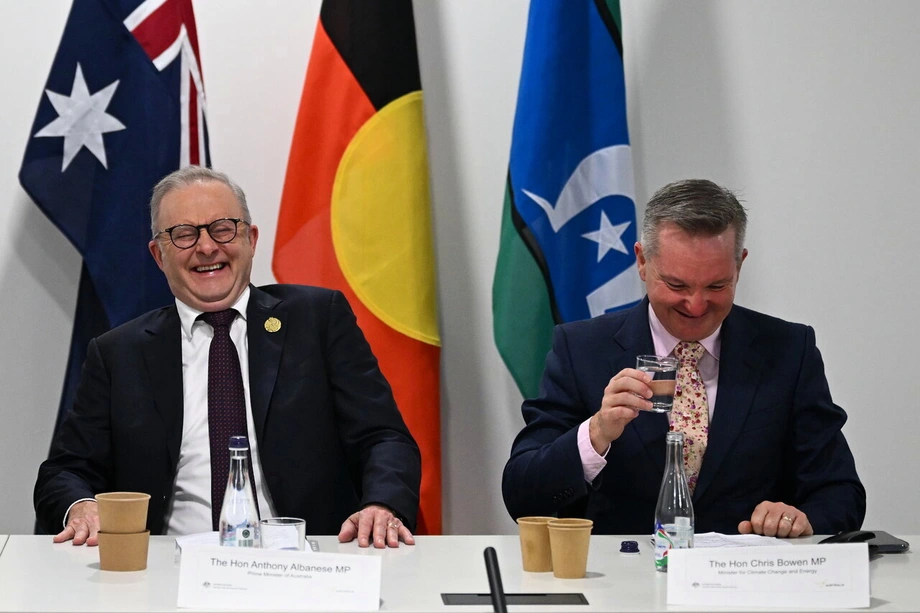
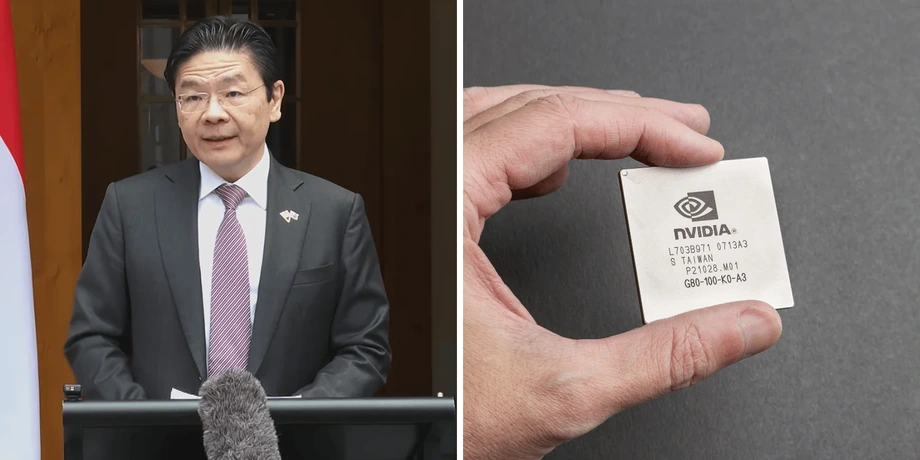
Anna Henderson of Australia's Special Broadcasting Service put the question to Lawrence Wong near the end of a joint press conference in Canberra on Nov 24, 2026. Singapore's prime minister was appearing with his Australian counterpart, Anthony Albanese, after the 11th Singapore-Australia Annual Leaders' Meeting, and Henderson tied together two stories that had been running on separate tracks: Nvidia's decision a day earlier to bring back chief executive Jensen Huang, and a Singapore investigation into a local chip company called Megaspeed that began in early 2025. She asked what concerns Singapore had raised with Washington when its authorities started looking into Megaspeed and its former executive Alice Huang, and what he would say to analysts who now describe Singapore as the weak link in the artificial intelligence race between the United States and China.
Contents
- Singapore Draws a Line Between Its Own Laws and Washington's
- What Singapore Can Check, and What It Says It Cannot
- The Blacklist That Landed Hours Before the Press Conference
- Why One Small Cloud Company Became the Test Case
- Alice Huang: Investigated, Warned, Then Barred
- The Other Investigation: Jensen Huang and Washington
- Congress Wants Its Own Answers
- The Rule That May Outlast the Scandal
- Data Centres Across Southeast Asia Recalculate
- What the Two Prime Ministers Agreed On
- Key Points
Wong answered by separating two sets of rules. Singapore enforces its own laws. It does not enforce American export controls, even though the chips those controls cover move through one of the world's busiest trading hubs.
America has export controls on its chips. We do not enforce America's export controls, but we do not want Singapore to be used and abused as a conduit by companies to circumvent America's export controls.
What Singapore offers Washington instead, he said, is help with American enforcement: checks carried out by US authorities on Singapore soil, information sharing, and a mechanism still under negotiation that would let the American government enforce its own rules from there.
On Huang the answer was shorter. Singapore is not investigating the Nvidia chief and has no plans to. "It is for the American government to decide, and we leave them to make those investigations and judgments," Wong said. "Nvidia's board will have to do what it needs to do. They have decided. So be it."
What Singapore Can Check, and What It Says It Cannot
The limits of that cooperation surfaced when Henderson asked whether Washington had done enough to help. Singapore asked for information about the shipments, Wong said, and did not receive all of it. "We did ask for some information, not all of it was forthcoming."
Megaspeed's purchases from Nvidia never arrived in Singapore, according to Wong. The company's chips were routed to other countries, which leaves Singaporean investigators looking at transactions whose end users sit outside their jurisdiction. "We cannot investigate all that is happening in third countries," he said. Singapore needs American records to establish who those end users are and to verify the documents behind each transaction.
The investigation into Megaspeed itself continues, and it is aimed at Singapore law rather than American export rules. Officers are examining whether the company breached any domestic statute, and separately whether other firms have been using Singapore's position as a trading and shipping hub to move restricted chips into Southeast Asia or beyond. "We do not have full information on where all these chips are sent to; they are not sent to Singapore as a final destination," Wong said.
The Blacklist That Landed Hours Before the Press Conference
Wong spoke a day after the US Commerce Department's Bureau of Industry and Security added Megaspeed and six related companies to its Entity List. The bureau cited the risk that advanced computing technology would be diverted to unauthorised end users or uses, and its Federal Register notice accused the firms of "acting contrary to the national security or foreign policy interests of the United States".
The six companies reach across three countries:
- Swiftdata, Megaspeed's parent company in Singapore
- MSFusion, Speedmatrix and Megaspeed International, all in Malaysia
- Megaspeed (Thailand)
- Apex Enterprise Solutions (Singapore), owned by Chinese technology group Alibaba and previously tied to Speedmatrix through a financial arrangement
Entities on the list face additional US export licensing requirements, and applications on their behalf are likely to be denied. The practical effect is that American suppliers of everything from processors to spare parts will find it hard to keep doing business with the group.
Wong said US interest in chips that pass through Singapore and are transhipped or rerouted onward has been growing, and that both governments are working closely on the problem. Singapore's own enquiries, he said, are not confined to Megaspeed.
Why One Small Cloud Company Became the Test Case
Megaspeed was founded in 2023 by Alice Huang and grew at a pace unusual even for the artificial intelligence boom. It won approval from Nvidia's partner network within four days of its creation and went on to become the chipmaker's largest customer in Southeast Asia. Its balance sheet expanded from US$33 million in 2023 to US$3 billion in 2024, and it was on course for more business in 2025.
The business model rested on renting rather than owning. Megaspeed bought top end Nvidia processors and sold access to them through data centres across Southeast Asia, largely to customers in China who could not buy the hardware directly because of US export controls. American investigators began looking at the company toward the end of 2025, first over that rental business and later over suspicion that it was not renting out remote access at all but smuggling chips into China.
Chim Lee, a senior China analyst at the Economist Intelligence Unit, said the company sits at the origin of the wider case.
The case that started all this was Megaspeed.
Lee said the company was allegedly doing something that was already a problem before the remote access rule existed. Megaspeed has denied wrongdoing in response to the US investigation. Its chief executive, Tan Yong Pong, said in a statement on Nov 12 that the company was committed to complying with American export control laws and would cooperate with the US government. "Megaspeed welcomes appropriate government scrutiny and is committed to demonstrating through concrete actions that it operates responsibly, transparently, and in accordance with applicable U.S. laws," Tan said.
Alice Huang: Investigated, Warned, Then Barred
Alice Huang's case is the one Singapore has explained in the most detail. The Ministry of Home Affairs said in a statement on Nov 12 that the police and Singapore Customs had begun independent investigations in February 2025 into several companies, including Megaspeed, and their key officers, over possibly inaccurate declarations about server purchases and other possible offences under Singapore law.
- February 2025: police and Singapore Customs open investigations into Megaspeed and its officers
- June 2025: Alice Huang is interviewed by police and her passport is impounded
- Aug 30, 2025: she leaves Megaspeed, a departure the company confirmed on Nov 15, 2026
- February 2026: police conclude there is insufficient evidence that she committed offences over the declarations
- Nov 23, 2026: the US adds Megaspeed and six related firms to its Entity List
- Nov 24, 2026: Wong sets out Singapore's position in Canberra
Huang was released but not cleared in every sense. Police issued her a stern warning and barred her from re-entering Singapore after assessing that she had knowingly given inaccurate information to play down her role at Megaspeed. The home ministry has said Singapore authorities did not investigate her for espionage. Investigations into Megaspeed and six other individuals remain open.
Wong described the process as thorough. "With Alice Huang, we took her in, we investigated her, but we eventually released her because there was no basis for further prosecution," he said. "America understands what we have done."
Her whereabouts are not publicly known. US intelligence officials suspect she worked for Chinese intelligence, an allegation Beijing has denied, and she was reported on Nov 12 to have resurfaced in Beijing.
The Other Investigation: Jensen Huang and Washington
Nvidia's board reinstated Huang unanimously on Nov 23, eleven days after he resigned over reports of multiple extramarital affairs, including one with Alice Huang. The board said it had received input from senior levels of the US government and was confident his return posed no national security risk, dropping a position it had stated publicly during a quarterly earnings call less than a week earlier. Nvidia shares rose 31.5 per cent on the news, adding nearly US$1 trillion in market value.
What the US government actually examined is contested in its own accounts. The Justice Department did not conduct a formal investigation into Huang before President Donald Trump pushed for his return, according to three people familiar with the matter. Attorney General Todd Blanche concluded there was no evidence Huang had broken any laws based on continuing investigations into two Nvidia customers, Super Micro Computer and Megaspeed, both suspected of moving advanced chips to China. No counter-intelligence investigation of Huang himself was opened.
Vice President JD Vance, speaking to reporters in Ohio on Nov 25, described the assurances he received.
I was told by the Department of Justice and multiple officials in our national security apparatus that he was under no investigation. Not even that he was about to be prosecuted; that he's under no investigation.
Trump had told CNBC two days earlier that an investigation had taken place. "They did a pretty good investigation, and they felt that he, himself, was exonerated," he said. Blanche, at a press conference on Nov 24, declined to say whether the department had investigated Huang at all. "What the president said is that he talked to a lot of people going into the decision that he made to encourage the board to reinstate him," Blanche said, adding that he had no reason to describe Nvidia as anything other than a good corporate citizen.
The FBI has given Nvidia's leadership at least two briefings on Chinese espionage methods, according to a law enforcement official. It is not clear whether those sessions were routine warnings offered to large technology firms or were focused on Alice Huang, or whether Huang himself attended. Steve Cash, a former CIA officer who heads an association of former national security officials called The Steady State, said the absence of a formal inquiry stood out.
No formal Justice Department investigation into the national security allegations has been reported. That's alarming, if unsurprising.
The company's own review of the reports that Huang was targeted by foreign intelligence continues. The resignation and the return also unsettled staff: one senior engineer in Nvidia's Shanghai robotics team, Shiqin Dai, had quit over the board's decision and was left weighing whether to come back.
Congress Wants Its Own Answers
Lawmakers return from Thanksgiving to a schedule built around the scandal. Huang is due to sit for a private transcribed interview on Dec 1 before three House committees led by Republicans: Foreign Affairs, Intelligence, and the select committee on China. Nvidia's general counsel, Tim Teter, faces the same panels the next day. Huang then appears at a public hearing before the Senate Banking Committee on Dec 3.
The three committee chairmen said in a joint statement that the board's decision left the underlying questions untouched.
The Nvidia board's brief internal investigation and reinstatement of Jensen Huang do not erase the national security threats and questions that must be addressed. We remain committed to getting answers on the mass smuggling of Nvidia products, their diversion for Chinese military purposes, and their key role in advancing our foremost adversary's AI capabilities.
Opposition has come from both parties. Outgoing Republican congressman Don Bacon wrote on X that Nvidia should have moved on without Huang and ignored what he called the administration's inexplicable desire to save him, and that Congress needed to establish who approved sales of top end chips to China. Senate Democratic leader Chuck Schumer said Democrats would "investigate any wrongdoing by the Trump administration, Jensen Huang, other Nvidia executives, and anyone selling out our national security for financial gain".
Several House Democratic committee leaders have written to Trump asking whether he is putting friends and allies ahead of economic and national security, and gave him until Dec 8 to answer. Democrats take control of both chambers in January, which puts subpoena power behind those promises.
The Rule That May Outlast the Scandal
Officials at the Commerce Department's Bureau of Industry and Security did more this month than name companies. They published an interim final rule on Nov 16 titled Addressing Remote Access to Advanced Semiconductors, which took effect on Nov 19 and closes a gap that had let Chinese firms use American chips they could not buy.
The mechanism matters. A developer in China does not need to own an Nvidia processor to use one; it can rent time on a machine sitting in a data centre abroad. Under the new rule, licences are required for exports, reexports and transfers in transit of advanced computing hardware to Malaysia, Singapore, Thailand, Indonesia and Brazil. A licence is also needed when a data centre anywhere in the world supplies computing power above an aggregate threshold of 12 million Total Processing Performance to a company headquartered in China or Macau, or in Country Group D:5, the list of states under US arms embargoes. Analysts put that threshold at roughly 750 of Nvidia's top end H100 chips. Cloud operators have 90 days from the effective date to comply, and companies whose ultimate parent sits in the US fall outside the destination licensing requirement as long as they file monthly reports.
The Institute for Progress, a research group in Washington, estimated that without the change, rented remote access would have supplied about a third of all the computing power Chinese firms used for AI development next year. Chinese technology groups have said the loss will be felt. Alibaba chief executive Eddie Wu said the company would concentrate on "self-developed domestic computing power" as the "foundational bedrock for Alibaba's full-stack AI technology".
Mark Shi, a Shanghai lawyer who specialises in export controls, said Chinese buyers would have to shift back to domestic capacity, where supply is thinner. "There are a lot of data centres in China, but the computing power cannot be compared to overseas," he said, predicting that prices at home would rise as more local facilities are used.
Lee of the Economist Intelligence Unit pointed to a slower cost on the Chinese side. "There is a concern around how fast Chinese models can iterate now with more access to chips. The risk is the gap between Chinese models and frontier models in the West will widen," he said. Most analysts put Chinese models six to eight months behind the best Western ones.
Data Centres Across Southeast Asia Recalculate
The rule lands on a building boom. Operators in the five named countries now need licences from Washington to buy advanced chips and must show that Chinese clients are not getting access to them. Malaysia's Trade Ministry has told data centres operating in the country to cut off companies blacklisted by the US, including Megaspeed.
Malaysia remains committed to a secure, transparent and rules-based trading environment and will not allow itself to be used as a channel to circumvent export controls. Action will be taken against parties found to have contravened any laws.
Shipments have already slowed. Nvidia stopped shipping servers to Thailand, Malaysia, Singapore and Indonesia on Nov 26, a pause that buyers learned about with no end date attached.
Evidence has also emerged inside China itself. Documents filed with Chinese lenders show Nvidia Blackwell hardware installed at a Shanghai data centre linked to Alice Huang. Shanghai Shuoyao offered a GB300 NVL72 rack, among Nvidia's most powerful products, as collateral for a 96 million yuan loan from Shanghai Innovation Bank. A second firm, Shanghai Kezhan, described a GB200 server when it obtained a 90 million yuan loan in late 2025 from a leasing company owned by a local Shanghai government agency. Both machines rely on Blackwell chips, which cannot legally be shipped to China without a US licence.
The site, known as the Yangtze River Delta Project, has been described in local media as designed to hold as many as 800,000 servers, a scale comparable to the hyperscale campuses used by companies such as OpenAI. A serial number on the rack matched a unit assembled by Taiwan's Gigabyte Technology, which declined to say to whom it sold the hardware. Nvidia shares fell as much as 2.6 per cent to US$145.39 on Nov 27 after the findings were published. Kang Wei, president of the project, has at times been introduced as Alice Huang's romantic partner.
Lenders are watching their exposure. Lee said banks have started reviewing financing agreements with smaller operators that depended on outside money. "There are definitely some pockets of risk there," he said.
What the Two Prime Ministers Agreed On
Beyond the questions about chips, Wong and Albanese used the Canberra meeting to widen cooperation on artificial intelligence, including work on greater cross border data flows between the two countries. Both said governance of the technology cannot be settled by any single power.
Ultimately, we do need a stronger global framework to ensure the responsible and safe use of AI, and to ensure that we never, ever lose control over these very powerful autonomous systems.
Albanese said the two countries approach the problem from a similar place, and that governments need to share information and experience and build best practices at regional and multilateral levels. "Singapore and Australia come at this from a very similar perspective," he said. Wong's visit ran from Nov 23 to 25, taking in Sydney and Canberra, and he arrived on Singapore Airlines' inaugural flight to Western Sydney International Airport.
Key Points
- Prime Minister Lawrence Wong said in Canberra on Nov 24, 2026, that any investigation of Nvidia chief executive Jensen Huang is for the US government to decide and that Singapore is not involved.
- Wong said Singapore does not enforce American export controls but will not let companies use the country as a conduit to circumvent them, and will act firmly against breaches of Singapore law.
- The US added Megaspeed and six related companies in Singapore, Malaysia and Thailand to its Entity List on Nov 23.
- Alice Huang was investigated from February 2025, released in February 2026 for lack of evidence, given a stern warning and barred from re-entering Singapore.
- Wong said chips bought by Megaspeed never entered Singapore and that not all information requested from the US was provided.
- A US rule effective Nov 19 requires licences for advanced chip exports to Singapore, Malaysia, Thailand, Indonesia and Brazil, and for remote computing access sold to firms headquartered in China.
- Huang faces a private House interview on Dec 1 and a public Senate Banking Committee hearing on Dec 3.