A failed return triggers a rapid clampdown
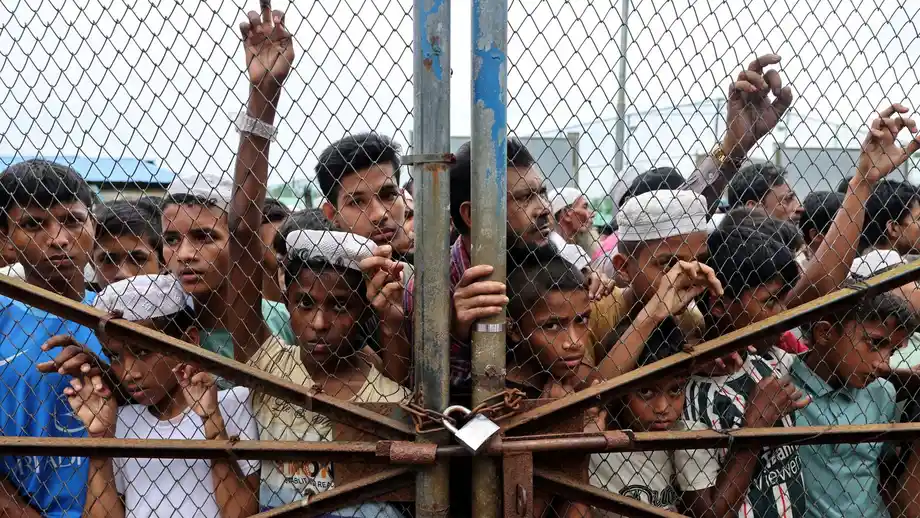
Bangladesh's attempt on 22 August 2019 to send 3,450 Rohingya refugees back to Myanmar ended without the planned returns. Repatriation means returning refugees to their home country. The refugees refused to go without citizenship, guarantees of safety and an international presence in Rakhine State, the region from which they had fled. Within a week, Bangladesh had barred 41 NGOs from activities in the camps, accusing them of malpractices, and had begun a broader campaign of controls on aid work, communications and movement.
Contents
- A failed return triggers a rapid clampdown
- A rally, a communications blackout and security warnings
- How Hasina's welcome gave way to tighter control
- Why the return deals failed
- What life inside Kutupalong reveals
- Why Bhasan Char became so contentious
- Political upheaval changes Dhaka's diplomacy
- The 2026 genocide judgment and Myanmar's response
- What to Know
Shahriar Alam, Bangladesh's state minister for foreign affairs at the time, accused aid organizations of encouraging refugees to remain and said foreign governments had paid too little attention to conditions inside Myanmar.
Until now, they [international community] have failed to visit those villages in Rakhine state [in western Myanmar] from where Rohingya people fled, but they are randomly working in Bangladesh without any interruption. Ignoring existing law and norms some, NGOs and aid agencies are infiltrating Rohingya to stay in Bangladesh. We must be harder against this.
Alam defended the measures as the right of a sovereign country sheltering more than a million people. "Bangladesh is an independent and sovereign country, but we have challenges in maintaining our own law and order," he said, adding that Bangladesh would take a tougher stance if problems arose from the refugee population. His remarks marked a sharp change in tone from the welcome offered two years earlier.
A rally, a communications blackout and security warnings
The immediate backdrop was a vast gathering on 25 August 2019, when refugees marked the second anniversary of the violence that drove them from Myanmar. More than 200,000 people took part according to figures cited during the ensuing crackdown, while other estimates put attendance at about 100,000. District officials knew a gathering was planned, but its scale alarmed national authorities.
Mohib Ullah, a Rohingya leader, asked local and international media in a video message not to portray the peaceful rally negatively. He also restated the conditions under which refugees said they would go home.
We are ready to return [to Myanmar] given our dignity, safety and rights are guaranteed.
Two agencies were subsequently stopped from operating in Cox's Bazar over accusations that they had secretly assisted or instigated refugees. They were identified as the US organization ADRA and the local organization Al Markazul Islami. Mohammad Abul Kalam, head of the Refugee Relief and Repatriation Commission, and seven other senior commission officials were also replaced after the rally.
The government then prohibited SIM card sales in the camps and ordered mobile services restricted, leaving many refugees with only much slower 2G connections. Refugee commissioner Mahbub Alam Talukder asked for the communications blackout to end, but the government refused. Dozens of Rohingya were also arrested around the country after authorities accused them of obtaining Bangladeshi passports and national identity cards illegally.
The army proposed surrounding the Cox's Bazar camps with barbed wire on security grounds. Lt. Col. Md Abdullah Ibn Zayed, director of its media wing, said the proposal had arisen in government meetings from what he called a clear need. At a 4 September meeting, the military said that 400,000 of the 1.2 million refugees in 31 makeshift camps were aged 12 to 17 and receiving no education. Lt. Gen. Mahfuzur Rahman warned that international terrorist organizations might try to recruit them. Human Rights Watch responded by urging Bangladesh to end restrictions on refugees' movement, internet access and online communications.
How Hasina's welcome gave way to tighter control
The crackdown of August 2017 had followed decades of persecution in Myanmar. An August 2018 study by the Ontario International Development Agency (OIDA) estimated that nearly 24,000 Rohingya were killed, at least 18,000 women and girls were raped, between 114,000 and 116,000 people were beaten, and between 34,000 and 36,000 were thrown into fires. The account cited in 2019 also listed more than 115,000 homes burned and another 113,000 vandalized.
Prime Minister Sheikh Hasina visited the camps in Cox's Bazar on 12 September 2017 and connected the refugees' experience with Bangladesh's own liberation war.
Our houses were also burnt down in 1971 [during liberation war]. Our people fled to India when they had nowhere to go. So, we are doing everything in our power to help the Rohingya.
Two days later, Hasina told parliament that Bangladeshis would share their food with the refugees if necessary. Her response earned her the description Mother of Humanity. At the 73rd UN General Assembly on 28 September 2018, she said Bangladesh was hosting 1.1 million Rohingya. Her government also worked with UNHCR on the 2019 Joint Response Plan for food, shelter, healthcare and education, while the World Bank committed nearly half a billion dollars in June 2018 for health, education, water, sanitation, disaster preparedness and social protection.
Public patience weakened as the emergency became prolonged. Local complaints focused on competition for work, the drug trade and pressure on services, while government officials increasingly discussed radicalization and security. The 2019 restrictions therefore reflected more than anger over one rally. They exposed the tension between Hasina's humanitarian image and a government demanding faster returns, tighter control of aid groups and greater international pressure on Myanmar.
Why the return deals failed
More than 723,000 Rohingya fled to Bangladesh after 25 August 2017, according to UNHCR, joining a refugee population already estimated at between 300,000 and 500,000. Myanmar and Bangladesh signed several agreements, but the number of people approved for return remained far below the number seeking refuge.
- 23 November 2017: Myanmar and Bangladesh signed a repatriation memorandum of understanding.
- 15 January 2018: The countries agreed on a return process intended to last two years.
- 14 March 2018: Myanmar agreed to repatriate only 374 people from a list of more than 8,000 refugees.
- 18 May 2018: Myanmar described 1,100 Rohingya as verified.
- 6 June 2018: The UN and Myanmar signed another memorandum on repatriation. Its text leaked on 29 June, and Rohingya leaders rejected it.
- 22 August 2019: The attempt to return 3,450 people failed after refugees repeated their demands for citizenship, safety and international safeguards.
Citizenship explains why the dispute has lasted so long. Myanmar's 1982 Citizenship Law left an estimated 800,000 Rohingya in northern Rakhine without a recognized nationality, making them stateless. Myanmar authorities have often called them Bengali migrants and denied that the state persecutes them. Refugees seeking restored citizenship, land and property, freedom of movement and international observers were asking for changes to the conditions that had driven earlier cycles of flight and return.
Hasina sought support from China and India, but neither pressed Myanmar directly in the way Bangladesh wanted. China supplied aid while referring to displaced persons rather than using the word Rohingya. India expressed concern about refugees reaching its borders and prioritized relations with Myanmar's government. Bangladesh was left managing the camps while bilateral agreements produced little movement.
What life inside Kutupalong reveals
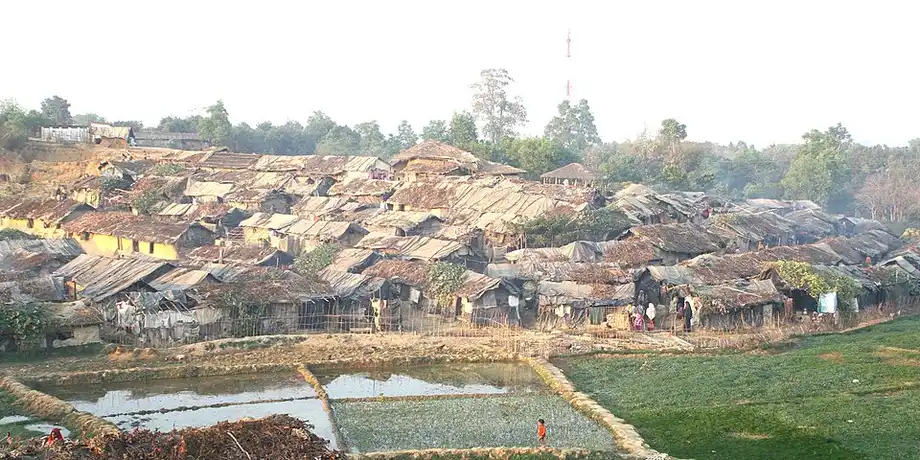
Kutupalong in Ukhiya, Cox's Bazar, has been the world's largest refugee camp since 2018. It began informally in 1991 after Rohingya fled the Burmese military's Operation Pyi Thaya. Kutupalong and nearby Nayapara together held only about 34,000 registered refugees in July 2017. Bangladesh subsequently allocated 3,000 acres for an expanded settlement intended to accommodate as many as 800,000 people.
On 31 December 2024, the registered Kutupalong camp contained 16,807 people and its expansion site contained 669,959, giving a combined population of 686,766. That was 88,221 more than the 598,545 recorded for the camp and expansion site in June 2020. Across Bangladesh, the refugee count stood at 1,005,520 people in 204,278 families. Children made up 52 percent of the population, and 3.03 percent were recorded as having disabilities.
The 2020 population occupied only 13 square kilometres, an average density of 46,042 people per square kilometre. Shelters built on steep hillsides face floods and landslides during monsoons, while overcrowding increases the difficulty of supplying clean water, sanitation, education and healthcare. A varicella outbreak recorded in December 2018 produced 82,297 cases, showing how quickly disease could move through the settlement.
The camps also transformed the surrounding environment. By late 2019, about 8,000 acres of forest had been affected, including more than 6,164 acres used for living space and 1,837 acres consumed for firewood and building materials. The environmental loss was estimated at Tk24.2 billion, or US$290.4 million. Asian elephants, whose migration and grazing routes cross the area, were involved in conflicts that killed at least 13 Rohingya by late 2019. UNHCR and conservation specialists responded with refugee volunteer teams trained to guide elephants away.
Later restoration work inside the camps has produced a different picture in some areas. Agencies have planted nearly one million tree seedlings, collective efforts have restored 200 hectares of land, and more than 159,000 refugees participate in gardening around their homes. Those gardens supplement food assistance and help stabilize damaged hillsides, but they do not replace the outside aid on which the camps still depend.
Why Bhasan Char became so contentious
Bhasan Char, a silt island formed in the 2000s by sediment from the Meghna River, sits about 40 kilometres, or 25 miles, from the nearest shore and more than 50 miles from the camps. Bangladesh first proposed relocating refugees there in 2015 and revived the plan after roughly 65,000 more Rohingya arrived between October and November 2016. The navy was assigned to make the island habitable.
In 2019, the government announced an expansion of the Ashrayan project, known as Ashrayan-3, with accommodation for 100,000 people. Shelters and elevated storm refuges were constructed. Refugee representatives and rights organizations objected that residents could be isolated from aid and society, exposed to cyclones and high tides, and left without farmland or adequate freedom to leave. The planned relocation was initially postponed. Foreign Minister AK Momen also warned that UN agencies might be expelled if they continued opposing the plan.
Bangladesh later said the island was ready and that only volunteers would move, citing overcrowding on the mainland. Nearly 20,000 refugees were relocated from December 2020 despite continuing criticism. N.R. Abdur Rashid, secretary general of the Rohingya Solidarity Organization, argued that Dhaka was directing pressure at the wrong government.
Bangladeshi government should put pressure on Myanmar to facilitate peaceful environment for Rohingya repatriation, rather than pressuring the refugees.
Political upheaval changes Dhaka's diplomacy
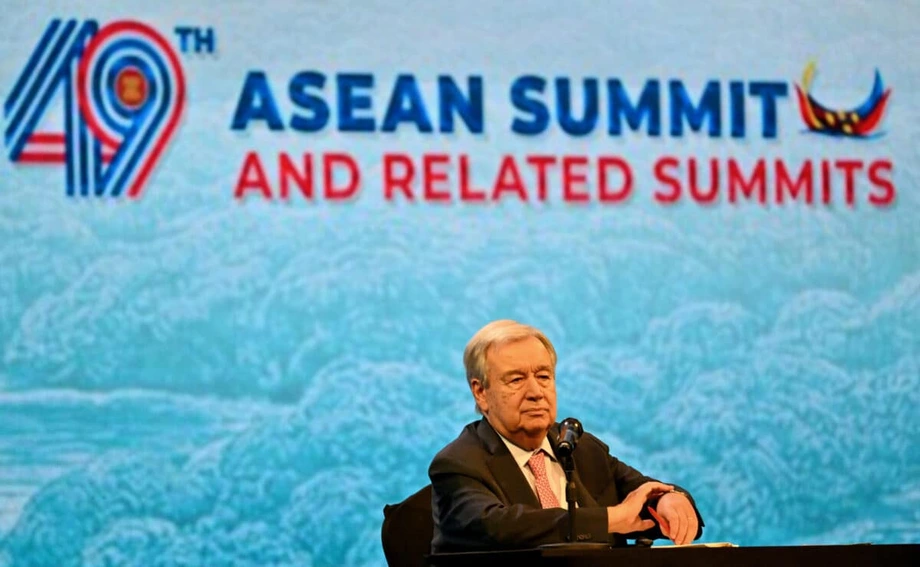
Mallaika Thapar and Aditya Gowdara Shivamurthy examined the next turn in an ORF analysis published on 9 January 2025. They described how Hasina was ousted in late 2024 after nearly 15 years in power, following student protests and allegations of corruption and authoritarian government. Nobel laureate Muhammad Yunus then headed an interim administration facing camp violence, local hostility and instability along the Myanmar border.
Yunus addressed repatriation at the 79th UN General Assembly and called for international cooperation to support lasting solutions. His approach placed greater weight on diplomacy involving several governments and international organizations, rather than relying principally on agreements between Dhaka and Myanmar. The practical problem remained severe: the Arakan Army, an armed force fighting Myanmar's military authorities, had defeated the State Administration Council in parts of Rakhine in late 2023 and gained control of areas near Bangladesh.
Thousands of Rohingya reportedly crossed into Bangladesh after September 2024, while others attempted dangerous sea journeys. On 20 December 2024, Sri Lankan authorities rescued 102 Rohingya from a fishing trawler off the country's northern coast. The rescue showed how violence in Rakhine could affect countries far beyond Bangladesh and Myanmar.
The United States had provided nearly US$199 million in additional humanitarian assistance for refugees and host communities in Bangladesh. The ORF authors warned that a second Trump presidency could reduce American funding and diplomatic engagement, creating another difficulty for Yunus's international approach.
Displacement continued even as new return proposals emerged. More than 120,000 Rohingya were reported to have fled after the Battle of Maungdaw. A repatriation pledge associated with BIMSTEC, the regional grouping of countries around the Bay of Bengal, subsequently proposed taking back 180,000 refugees in a first phase and verifying another 70,000. No start date for those returns was given.
The 2026 genocide judgment and Myanmar's response
The International Court of Justice delivered the November 2026 judgment in a case brought by The Gambia in November 2019 with backing from the Organization of Islamic Cooperation. On 19 November, judges ruled by nine votes to six that Myanmar violated the 1948 Genocide Convention during military operations in northern Rakhine. The 191 page judgment was final and binding, and it marked the first time in the court's 80 year history that a state had been held directly responsible for committing genocide.
Genocide under the convention requires acts such as killing or causing serious bodily or mental harm, combined with an intention to destroy a protected national, ethnic, racial or religious group in whole or in part. The court examined village burnings, sexual violence, attacks on children and measures intended to prevent births. It estimated that about 10,000 Rohingya were violently killed, while OIDA's earlier study had estimated nearly 24,000 deaths.
ICJ President Judge Yuji Iwasawa explained how the majority assessed the combined evidence.
The court concludes that all the evidence before it, taken together, supports a reasonable inference that Myanmar's security forces acted with genocidal intent.
Min Aung Hlaing, who commanded the military during the 2017 crackdown and later became Myanmar's president, responded at a cabinet meeting on 25 November. He did not identify which parts of the judgment he intended to reject. His remarks were published the following day.
Myanmar would take the actions appropriate for a responsible country but would not comply with requirements it considered inappropriate.
Myanmar's conditional response left refugees facing many of the same practical obstacles that defeated the 2019 repatriation exercise. Citizenship, physical safety, verification and international protection remain central to any return. For the more than one million people recorded in Bangladesh at the end of 2024, the court's finding supplied an authoritative account of the violence, while arrangements for a safe life back in Rakhine remained unfinished.
What to Know
- Bangladesh's failed attempt on 22 August 2019 to repatriate 3,450 Rohingya was followed by restrictions on 41 NGOs, communications and refugee movement.
- Refugees demanded citizenship, safety and an international presence before returning to Myanmar's Rakhine State.
- The 25 August 2019 commemoration drew more than 200,000 people by one contemporary count, while another estimate put attendance near 100,000.
- Kutupalong and its expansion site held 686,766 people at the end of 2024; Bangladesh's total Rohingya population was recorded as 1,005,520.
- Nearly 20,000 refugees were moved to Bhasan Char from December 2020 despite concerns about isolation, storms and freedom of movement.
- Muhammad Yunus's interim government pursued a broader international diplomatic approach after Sheikh Hasina was ousted in 2024.
- A proposal associated with BIMSTEC covered 180,000 returns in a first phase and verification of 70,000 more people, but no start date was given.
- The International Court of Justice ruled on 19 November 2026 that Myanmar committed genocide; Min Aung Hlaing subsequently said Myanmar would reject requirements it considered inappropriate.