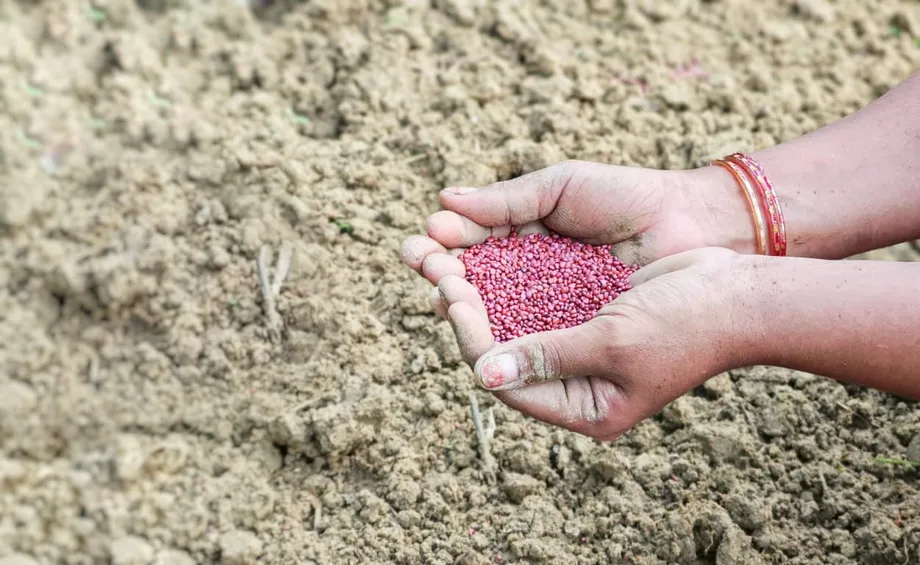
Gardens rise where the forest once stood
A nursery covering less than one tenth of a hectare, or under 1,000 square metres, grows between shelters in Camp 1W at Kutupalong. Amina Khatun, 58, organized a group of six women to raise seedlings and vegetables there. Their work is part of a broader attempt by Rohingya refugees to grow food, restore tree cover and stabilize hillsides in the world's largest refugee settlement.
Contents
- Gardens rise where the forest once stood
- How August 2017 remade the landscape
- Why lost trees became a daily danger
- Farming knowledge that crossed the border
- How aid programs built on refugee skills
- What nearly one million seedlings have achieved
- Six women and a nursery between shelters
- Who will protect the restored land
- What repatriation could leave behind
- What to Know
UNHCR, the UN refugee agency, says agencies have planted nearly one million tree seedlings, while collective efforts have restored 200 hectares (494 acres) of camp land. Across the camps, more than 159,000 refugees participate in homestead gardening. These gardens have gained urgency as international food aid has been cut deeply, although they supplement assistance rather than replace the entire food supply.
Roshid Ahamed Bin, 47, farms inside Camp 27. Before fleeing persecution in Myanmar in 2017, he cultivated rice, vegetables and fruit in Rakhine state. He described the contrast between that life and his confinement in Bangladesh.
It is like a jail, but it isn't a jail.
Amina also connects the gardens with the farming heritage that her family carried across the border. She lives without land of her own in a crowded sector of the settlement.
I feel so bad here as I have no land, but I am keeping my ancestors' heritage alive. Growing these crops reminds me of the life we had in Myanmar. Here, life is difficult.
How August 2017 remade the landscape
The United Nations Development Programme hosts an environmental impact report prepared to address questions from Bangladesh's Ministry of Environment and Forests. It estimated that 886,778 Rohingya crossed into Cox's Bazar after the crisis began in August 2017. A population table capturing an earlier stage listed 621,066 arrivals after 25 August, joining 212,518 Rohingya already recorded in the district, for a total of 833,584.
Before the influx, the Kutupalong area contained tropical evergreen forest dominated by garjan trees (Dipterocarpus species). It also provided habitat for Asian elephants (Elephas maximus), which are globally endangered and critically endangered within Bangladesh. The government initially allocated 3,000 acres (1,200 hectares) for a new camp in Ukhia. As the settlement expanded, roughly 2,500 hectares (6,100 acres) were allocated for the camps, and more than 1,500 hectares of forest were cleared for shelters, roads and firewood.
The official assessment recorded 1,502 hectares of forest land taken over by makeshift settlements across the Ukhia, Whykong and Teknaf forest ranges. That total comprised 793 hectares of natural forest and 709 hectares of plantations. More than 1,500 participants in social forestry plantations lost benefits when those plantations were cleared.
- 25 August 2017: Violence in Rakhine state triggered the mass crossing into Cox's Bazar.
- 2017 to 2018: FAO researchers measured 7,220 hectares of land degradation inside and outside the camp area.
- 2019: FAO Bangladesh researchers presented restoration plans at the WOCAT Symposium in Ethiopia.
- 2021: A satellite study used this year as its later point for measuring ecological change.
- July 2023: The journal Heliyon published that study of forests, settlements and ecosystem services.
FAO Bangladesh documented how quickly the settlement grew. Its estimates rose from about 200,000 refugees in eight camps covering 669 hectares in 2016 to about one million people in 34 camps covering 2,639 hectares in 2018. Camp land under the Bangladesh Forest Department expanded from 349 to 1,991 hectares. The 7,220 hectares degraded in one year included 1,380 hectares inside camps and 5,840 hectares outside them, meaning the surrounding landscape accounted for more than four times the degraded area within the fences.
Why lost trees became a daily danger
Roots and leaf cover once helped rainwater enter the soil. After vegetation was stripped away, water ran down bare slopes, carrying sand and loose earth toward shelters. The official assessment said its study team found about half of the hills in the influx area completely denuded. It classified land stability as a severe concern and warned that saturated soil on steep slopes could turn into heavy mud and slide.
The assessment identified 11 environmental effects. Six concerned physical conditions: groundwater, surface water, noise, indoor air, solid waste, and soils and terrain. Five concerned ecosystems: natural forests, protected habitats, vegetation, wildlife, and marine and freshwater environments. Clearing hills also reduced their ability to retain water, while erosion began blocking drainage in some places.
Cooking fuel added another pressure. FAO's 2019 assessment said wood was the only available energy source and estimated that 857 tons were being extracted daily from neighbouring lands. Annual wood fuel demand was projected to rise from 54,452 tons to 312,807 tons. The earlier environmental report found that collecting fuelwood also provided income, often through work by women and children who gathered wood and sold it at local markets. It recorded high tensions with host communities over firewood.
The camps lie near Teknaf Wildlife Sanctuary, Himchari National Park and the proposed Inani National Park. Forest loss in the region began well before 2017. Within Teknaf Wildlife Sanctuary, forest cover fell by 46 percent, from 3,304 hectares in 1989 to 1,794 hectares in 2009, while shrub-dominated forest expanded. The refugee influx accelerated pressure on an already damaged landscape.
A 2023 Heliyon study used satellite images and machine learning to measure the wider ecological change. Researchers found a 9.58 percent decrease in forest area and an 8.25 percent increase in settlement area following the influx. Their model estimated that the value of forest ecosystem services fell by 21.97 percent, equivalent to $5.33 million. Raw material values declined by 13.58 percent and biodiversity values by 14.57 percent.
Ecosystem services are the benefits people receive from nature, such as habitat for wildlife, raw materials and protection against erosion. Their modelled monetary value is not a humanitarian budget. The study put total ecosystem services value at $67.83 million in 2017 and $67.78 million in 2021, and found ecological quality shifting from good or very good conditions toward bad or very bad conditions. Its 2021 endpoint came before the latest camp restoration figures.
Farming knowledge that crossed the border
Roshid's family in Rakhine practised agroforestry, which means growing trees together with crops so that they provide food, shade and other benefits in the same space. Banana, papaya and mango trees stood beside vegetable gardens. The family removed insects by hand, added animal manure and composted leaves to the soil, and saved seeds from vigorous plants.
The camp version of this system uses several plant heights. Mango and papaya trees create shade above climbing bottle gourd and pumpkin, which can grow up trees, fences or shelter walls. Composted household waste and manure replace chemical inputs in gardens that follow organic methods. Intercropping, the cultivation of different crops together, allows families to harvest more from a small plot while roots help hold sandy soil.
Mabia Khatun, 38, lives in Camp 17 and joined the nursery work. She remembered how seed exchange and instruction from elders sustained farms in Myanmar.
Sometimes we exchanged seeds with neighbors. Our elders taught us to care for plants and protect the land.
Families fled too quickly to bring their own seed stocks. Distributed seeds now support crops including amaranth, Indian spinach, leafy vegetables and gourds, while refugees continue selecting and saving seed from healthy plants. Practices vary across the settlement. Some growers use chemical sprays or cultivate paddy rice, so the 159,000 participants in homestead gardening are not all practising agroforestry or avoiding synthetic pesticides.
How aid programs built on refugee skills
The UNHCR SuLMER project has rehabilitated the Shoa Ma'r Jhiri stream, stabilized slopes and introduced kitchen gardens. Community members help decide what to plant. CARE teaches gardening in sacks and on vertical structures, extending a Rohingya tradition of using very small spaces. The Food and Agriculture Organization (FAO) and the World Food Programme distribute seeds in ways that draw on refugee knowledge of intercropping and seed selection.
Jahir Ahamed, a staff member with the SuLMER project, said refugees already possess practical skills that can guide gardening activities.
They have skills in planting, fertilizer, pest control, harvesting, timing. We use suitable practices in gardening activities.
Arriving farmers still had to adjust to missing topsoil, hard sandy ground, scarce water and plots squeezed between shelters. Sack planting and bamboo structures on shelter walls created growing space where open farmland did not exist. Families also conserved water for young seedlings. Roshid said some plants grew well, but restricted space, poor soil and water shortages continued to make cultivation difficult.
FAO Bangladesh researchers Md. Fazlay Arafat, Matieu Henry, Rashed Jalal, Rajib Mahmood and Arif Tanjim set out a broader restoration system in their 2019 restoration assessment. It mapped 67,692 hectares across four planning zones: 2,639 hectares inside camps, 5,712 hectares within one kilometre of camp boundaries, 25,685 hectares between one and five kilometres away, and 33,656 hectares in the remaining area. The mapped land included places assigned to restoration, planting, seedling distribution or no activity.
The technical menu combined vetiver grass, trees and leguminous shrubs. Vetiver forms dense roots that can bind soil on slopes. Legumes such as pigeon pea work with soil bacteria to add nitrogen, improving fertility. Tree choices included Acacia auriculiformis, Gmelina arborea, Sesbania grandiflora, Trema orientalis and Neolamarckia cadamba. Habitat plans also included native garjan (Dipterocarpus turbinatus) on steeper slopes and plants selected with elephant and other wildlife food needs in mind.
What nearly one million seedlings have achieved
UNHCR's cumulative figures show the scale of the response: nearly one million seedlings planted, including native species, and 200 hectares of camp land restored. Fast ground cover can reduce exposure of bare soil, while native trees planted for slower growth support biodiversity and slope stability over many years. Returning canopy also provides shade and helps retain moisture in places previously covered by sand and tarpaulin.
The work combines catchment restoration with food production. Rehabilitating a stream requires different care from planting a garden, but both depend on preventing erosion and protecting young vegetation. FAO says reforestation and land stabilization have improved ecological conditions in restored areas. The 2019 implementation record listed coverage totaling 1,428,781 square metres, about 143 hectares, by participating organisations at that stage, with WFP and FAO, BRAC, and IOM and FAO among the largest contributors.
FAO also piloted planting during the dry season using methods designed to conserve water. Every seedling survived in the trial sites, a 100 percent rate. That result applies to the trials; FAO did not provide a single survival rate covering every plantation across the camps. Nor is there a campwide harvest total showing how much food all the gardens produce.
Restored slopes can reduce immediate hazards, but their value depends on seedlings reaching maturity. Heat, heavy rain and water shortages can kill young plants. Continued weeding, replacement of dead seedlings and protection from cutting therefore remain part of the work after the planting ceremonies and distributions end.
Six women and a nursery between shelters
Amina began after watching other residents cultivate small spaces. The plot used by her group was allocated temporarily by camp authorities and the SuLMER project for community gardening and nursery work. Papaya, banana and jackfruit grow beside bottle gourd and pumpkin trained over fences and nets. The women also cultivate winter crops such as brinjal and pepper.
The nursery's daily routine includes preparing soil, filling seedling bags, sowing, watering, weeding and checking the health of each plant. Some seedlings come from SuLMER seeds, while others are raised from seed the women buy in local markets. Members divide the tasks, with some preparing beds and others maintaining seedlings.
Mabia said she wanted to help restore greenery and protect the environment. She already knew how to grow plants in Rakhine, but the organized nursery added new skills and gave her a way to support her household and community. She described a wider change created by the work.
When women grow trees, they grow more than plants; they also grow confidence, knowledge, and hope for their community.
Amina earns money by selling surplus seedlings and vegetables to other refugees. She did not disclose an amount, but said the earnings help buy additional food and contribute to household costs. Mabia similarly said the nursery gives her an opportunity to support her family.
Public nursery work has also exposed the women to disapproval from residents unaccustomed to seeing women perform this kind of labour. Amina said some people look down on the profession, but she now feels able to continue. Their practical difficulties are equally persistent: obtaining good seed, finding enough water and working through heat and rain. The small size and temporary status of the plot limit how far the nursery can expand.
Who will protect the restored land
Bangladeshi law does not allow refugees to own land. Camp authorities can allocate space temporarily, but gardeners do not hold secure title to the soil they improve. This makes clear management arrangements essential, particularly when several agencies, camp officials and community groups share responsibility for a stream, slope or nursery.
The SuLMER assessment ties durability to continued funding, community oversight and monitoring. It identifies dumping solid waste into rehabilitated streams and cutting newly planted trees without authorization as risks. Without assigned management responsibilities, restored ground could lose vegetation again. Refugees remaining in prolonged uncertainty also makes decisions about irrigation, replacement planting and care over many years harder.
The food gardens have a more immediate value. Fresh vegetables add to household diets while aid budgets contract, and surplus produce can generate modest sales. The available figures do not give the size of the food aid cuts, average garden earnings or a total harvest for the settlement. Those gaps prevent a precise calculation of how much of the aid shortfall agriculture can fill.
What repatriation could leave behind
Bangladesh's government says Rohingya refugees are in the country temporarily and should return to Myanmar when conditions permit, a position repeated in Joint Response Plan documents. Those documents provide no repatriation date. Arrangements for transferring care of nurseries, streams and reforested slopes after a future return have not been settled.
The official environmental assessment anticipated this problem soon after the influx. It recommended closure and reclamation plans for abandoned camps, including landscaping, planting grass on bare hills, improving drainage, restoring soil and replanting forest. It also warned that experience from other displacement crises shows limited money often remains for reclamation after refugees repatriate or integrate elsewhere, and called on Bangladesh to secure adequate restoration resources.
For Mabia, the nursery is also a means of preserving identity and teaching children practices brought from Rakhine. Her hopes for the garden extend beyond food production or slope protection.
Growing a plant in the camp reminds me of my home in Rakhine and gives me hope for a better future. I want to pass on our traditions to the younger generation.
What to Know
- UNHCR says nearly one million seedlings have been planted and 200 hectares of camp land restored.
- More than 159,000 refugees participate in homestead gardening, using a range of farming methods.
- More than 1,500 hectares of forest were cleared as the settlement expanded after the 2017 influx.
- FAO measured 7,220 hectares of degradation inside and outside the camp area during 2017 and 2018.
- Amina Khatun organized six women to run a nursery on a temporary plot covering less than one tenth of a hectare.
- A dry season FAO trial achieved 100 percent seedling survival at its trial sites, not across every camp plantation.
- Continued funding, waste control, protection from tree cutting and clear land management remain unresolved needs.
- Bangladesh supports repatriation when conditions allow, but no return date or settled arrangement for future care of the restored land has been given.