What the Hanoi Agreement Changes
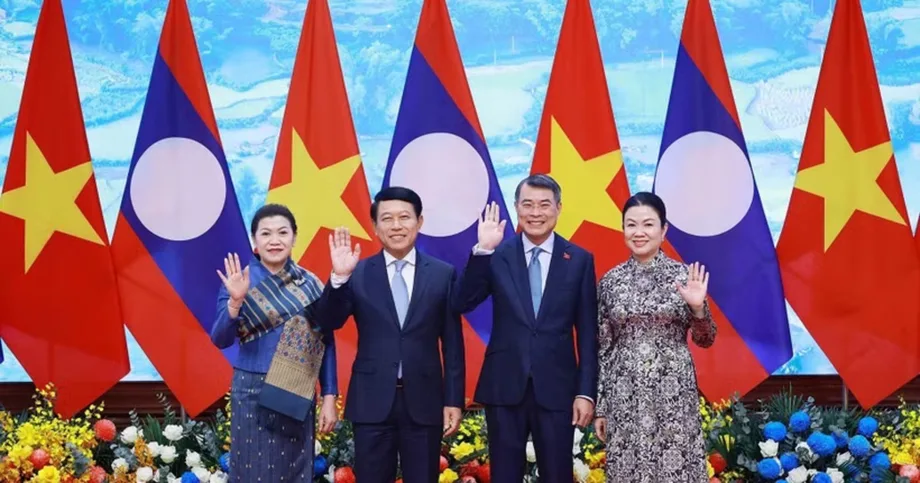
Prime Minister Le Minh Hung and Lao Prime Minister Saleumxay Kommasith agreed at the Government Headquarters in Hanoi on November 27, 2026 to draw up a roadmap for bilateral trade of US$5 billion, with US$10 billion as a goal for a later stage. The decision came during the Lao leader's first official visit to Vietnam as prime minister, a trip spanning November 27 and 28 that also took him to the 12th Cambodia, Laos, Myanmar and Vietnam summit and the 11th Ayeyawady, Chao Phraya and Mekong Economic Cooperation Strategy summit, known as ACMECS.
Contents
- What the Hanoi Agreement Changes
- Why the Trade Target Is a Big Jump
- Which Goods and Border Links Could Benefit
- Investment Grows, But Project Conditions Still Matter
- Energy Links Put Transmission at the Centre
- Security Cooperation Reaches Border Areas and War Remains
- Education, Youth and the People Behind the Relationship
- Parliaments Move From Symbols to Legal Framework
- The Mekong and Regional Forums Enter the Agenda
- What Changes for Farmers, Workers and Border Communities
- What Is Still Unknown and What Comes Next
- Key Points
The Lao leader arrived with his wife and a high level delegation after a formal welcoming ceremony. Both governments described the target as part of strategic cohesion, a phrase used here for a relationship that links political parties, governments, parliaments, security agencies, border provinces and economic projects. The leaders also agreed to keep high level exchanges, finish tasks set for 2026, prepare for the 49th Vietnam and Laos Intergovernmental Committee session and coordinate activities for the Vietnam and Laos Year of Friendship and Solidarity 2027.
The setting carried symbolic weight. Hanoi was also marking the approaching 51st National Day of Laos on December 2 and its official exit from the group of least developed countries on Tuesday, November 24, 2026. That group is a United Nations category for countries facing the deepest development constraints. Laos' graduation was in accordance with a United Nations General Assembly resolution dated November 24, 2021, and was documented in an op-ed posted by the Lao Ministry of Foreign Affairs, co-authored by Anouparb Vongnorkeo, Lao deputy minister of foreign affairs, and Bakhodir Burkhanov, the UN Resident Coordinator in the Lao PDR. The op-ed said Laos met all three graduation criteria in February 2021 and has maintained them for five years: income per capita, human assets, and economic and environmental vulnerability. It said the national poverty rate fell from 46 percent in 1993 to around 15 percent currently, under-five mortality declined from more than 100 deaths per 1,000 live births in 2000 to around 40 in 2022, and economic growth averaged 5.6 percent annually between 2015 and 2025. Prime Minister Hung congratulated Laos on the change and said Vietnam would keep supporting the country's development goals.
Why the Trade Target Is a Big Jump
Trade turnover means the combined value of goods moving in both directions. The US$5 billion goal is about 2.4 times the US$2.1 billion in bilateral trade that the Ministry of Foreign Affairs put for the first 10 months of 2026, a period when trade fell 17.6% from a year earlier. The two leaders did not announce a deadline for reaching the target, instead agreeing to formulate a roadmap and measures soon.
Vietnam's wider trading system is also expanding fast. Its goods trade crossed US$1 trillion by October 2026, with exports and imports both rising sharply. For Laos, a larger role as a supplier to Vietnam would give producers access to a much bigger market next door. For Vietnam, more balanced trade would reduce the risk that commerce flows mainly in one direction.
Which Goods and Border Links Could Benefit
Prime Minister Hung proposed widening the range of Lao goods with export potential in Vietnam, especially agricultural products and goods produced in border areas. He also called for stronger links between trade infrastructure, logistics, border gates and border gate economic zones. A border gate economic zone is an area near a crossing where customs facilities, warehouses, markets and factories are grouped so goods can move more easily.
The Vietnamese side asked Laos to keep supporting Vietnamese companies and to remove problems tied to mechanisms, procedures and the conditions needed to implement projects. Prime Minister Kommasith said he would direct relevant agencies to coordinate with their Vietnamese counterparts and create a favourable, stable and transparent environment for investment. In plain terms, investors want clear rules, predictable approvals and a path to solve disputes.
The two sides also finalised a process for payments in local currencies and set up a bilateral retail payment link using QR codes, according to information from the Vietnamese Ministry of Foreign Affairs. Those tools are intended to make everyday transactions simpler for traders, students and workers who deal across the border.
Investment Grows, But Project Conditions Still Matter
The figures attached to the prime ministerial talks showed 25 new Vietnamese investment projects in Laos during the first 10 months of 2026, with registered capital of US$671 million, up 70% from the same period a year earlier. That brought cumulative Vietnamese investment in Laos to about US$7.04 billion across 305 projects. Registered capital is the amount companies say they will invest, which may differ from money already spent.
The Ministry of Foreign Affairs briefing gave another measure for the same period: US$638.3 million in registered capital, up 4.2 times from 2025, and cumulative investment of US$7.04 billion across 300 projects, although another line in that briefing also used 305 projects. The figures all point to a large and growing Vietnamese presence, but the project count and period total depend on how the ministry compiled them.
Vietnam is among the largest foreign investors in Laos. Its projects span telecommunications, banking, energy, mining, rubber and food processing. The Ministry of Foreign Affairs said many of them create jobs, raise incomes for workers and add to the budget. That is why the request to solve procedural obstacles matters as much as the headline trade target: a project only helps workers and local services once approvals, land issues, financing and operating conditions are settled.
Energy Links Put Transmission at the Centre
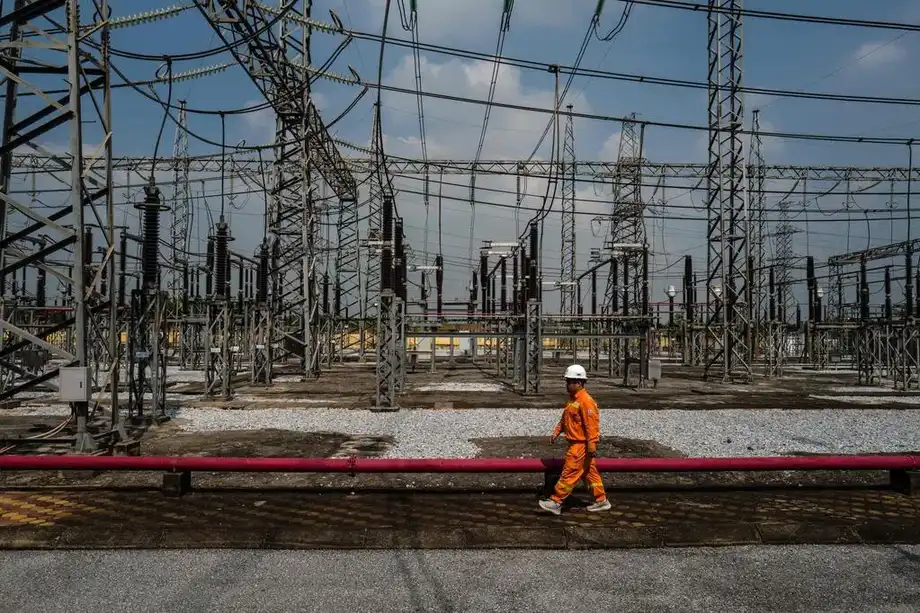
Prime Minister Kommasith spoke positively about bilateral energy cooperation and said Laos wanted to expand work in hydropower, renewable energy and electricity transmission. Hydropower uses rivers to generate power; transmission is the network of lines and substations that carries electricity from a plant to customers. Laos has more power potential than its own grid can absorb, so export projects need both generation plants and links reaching Vietnam.
The Lao power export plan already involves 47 projects with a combined capacity of 8,260 megawatts, including 13 plants already operating. A megawatt measures output capacity at a moment, while kilowatt hours measure electricity delivered over time. Vietnam Electricity said imports from Laos reached 2.92 billion kilowatt hours in the first quarter of 2026, up from 1.33 billion a year earlier.
The Monsoon Wind Power project shows how such deals work in practice. Its electricity goes to Vietnam through a dedicated transmission line, under a power purchase agreement, a contract that sets who buys the power and on what terms. The November talks did not name new plant deals or give a construction schedule, but both prime ministers said they would coordinate to remove difficulties and speed up projects.
Security Cooperation Reaches Border Areas and War Remains
Defence, security and border management took a large share of the talks. The two sides agreed to implement existing agreements, maintain political security and social order, and coordinate against crimes that cross borders, including drug trafficking, human trafficking, smuggling and crimes involving technology. They also linked security work to economic and social development in border areas, where poor roads, weak services and illegal trade can reinforce one another.
Prime Minister Hung thanked Laos for helping search for and repatriate the remains of Vietnamese volunteer soldiers and experts who died in Laos. He asked for continued support for a campaign lasting 500 days and nights to intensify the search, recovery and identification of fallen soldiers. Such work matters to families in Vietnam and to local communities in Laos where wartime remains may still be found.
At a separate meeting on November 27, General Secretary and President To Lam said defence and security cooperation should help keep the shared border stable. He also proposed closer exchanges on institutional reform, Party building, personnel work and efforts against corruption, wastefulness and misconduct, with Vietnam ready to share experience.
Education, Youth and the People Behind the Relationship
Education and human resources were treated as a practical pillar. The two prime ministers prioritised training strategic level officials, promising young cadres, meaning officials being prepared for public roles, and well trained workers. They agreed to implement existing accords, prepare an education cooperation protocol for 2028 to 2032 and accelerate the Laos Vietnam Friendship University project. They also pledged to make lawful residence, study, work and business easier for Vietnamese people in Laos.
General Secretary and President To Lam received Prime Minister Kommasith on the afternoon of November 27 and stressed that the visit was politically important because it was his first official trip to Vietnam as Lao prime minister. The Lao prime minister replied that his government put the relationship with Vietnam at the top of its priorities and described the bond in his own words.
the bilateral relationship is unique in international relations and an invaluable asset of strategic importance to the cause of national construction and defense in each country.
To Lam also called for more effective use of a population data and citizen identification management project in Laos. A citizen identification system links people to official records; in development planning, it can help governments deliver services and verify who receives benefits. Both leaders said younger generations should learn about the Vietnam and Laos relationship through cultural, sports, tourism and educational exchanges.
Parliaments Move From Symbols to Legal Framework
National Assembly President Tran Thanh Man met Prime Minister Kommasith at the National Assembly House on the evening of November 27. The meeting added a parliamentary layer to the day's diplomacy. Tran said cooperation between the two legislatures already ran from senior leaders to specialized committees and provincial People's Councils, with regular delegation exchanges and sharing on lawmaking and oversight.
Tran said the National Assemblies would continue working alongside their governments to implement high level agreements and build a sound legal framework for cooperation programmes. He urged Laos to support Vietnamese investors, improve the effectiveness of projects funded by aid and make better use of clean agriculture and livestock farming using modern technology for food security and exports.
Prime Minister Kommasith said the Lao Government would work with the Lao National Assembly and Vietnamese agencies to implement high level agreements and the outcomes of the 48th Vietnam and Laos Intergovernmental Committee meeting. Both sides agreed to coordinate activities in 2027, when the relationship reaches two anniversaries: 65 years of diplomatic relations and 50 years since the Treaty of Friendship and Cooperation.
The Mekong and Regional Forums Enter the Agenda
The prime ministers agreed to increase information sharing, consultation and coordination on issues of common interest and to support each other at ASEAN, the United Nations and other multilateral forums. They also discussed Mekong River water security, the East Sea, the Vietnamese name for the South China Sea, and security challenges that are not purely military, such as crime, water stress and sudden shocks.
They pledged to use trilateral cooperation among Vietnam, Laos and Cambodia more effectively. They also named three Mekong frameworks: ACMECS, CLMV and the Greater Mekong Subregion. ACMECS brings together countries along the Ayeyawady, Chao Phraya and Mekong rivers. CLMV means Cambodia, Laos, Myanmar and Vietnam. The Greater Mekong Subregion links governments sharing the Mekong basin in projects covering transport, energy, trade and development.
Prime Minister Kommasith's attendance at the ACMECS and CLMV summits in Hanoi on November 27 and 28 gave the bilateral talks a regional setting. General Secretary and President To Lam also sent greetings through him to Lao General Secretary and President Thongloun Sisoulith and other senior and former senior Lao leaders.
What Changes for Farmers, Workers and Border Communities
For a farmer in southern Laos, the trade target only becomes real when a buyer, a border gate, paperwork and payment all work. That is why the leaders linked the headline number to agricultural products, goods from border areas, logistics, customs points and economic zones. For a Vietnamese company in Laos, the promise of a stable and transparent investment environment is about the conditions that decide whether a factory can expand and keep workers employed.
The tourism, culture and sports exchanges are aimed at students and young people, rather than only officials. The two governments want the relationship taught as a living connection, with the 2027 anniversary year used for practical activities. Education projects, including the Friendship University initiative, are meant to build a pool of people who can work in both countries.
Local currency settlement and QR payments address the payment part of that journey. Clearer procedures address the paperwork part. For a trader buying goods across the border or a student paying for services, those changes could mean fewer delays and lower costs.
What Is Still Unknown and What Comes Next
The leaders agreed to formulate a roadmap soon, but no deadline was announced for reaching US$5 billion or US$10 billion. No new project list, financing package or construction schedule was attached to the energy pledges. The 49th Vietnam and Laos Intergovernmental Committee session was named as the next major bilateral meeting, but its date was not given in the announcements.
Several dates are already fixed. The ACMECS and CLMV summits ran on November 27 and 28 in Hanoi. Laos marked its official exit from the least developed countries group on November 24 and will celebrate its 51st National Day on December 2. In 2027, both countries will mark 65 years of diplomatic relations and 50 years since the Treaty of Friendship and Cooperation. The education protocol is planned for 2028 to 2032.
Those dates create a calendar for follow up. The roadmap, the committee session and the anniversary programme will show whether the language of strategic cohesion turns into more Lao goods entering Vietnam, faster project approvals, more electricity links and stronger daily connections between people.
Key Points
- Vietnam and Laos agreed on November 27, 2026 to work toward US$5 billion in bilateral trade, aiming later for US$10 billion.
- The two leaders agreed to prepare a roadmap, improve border trade links and address obstacles facing Vietnamese projects in Laos.
- Talks figures put new Vietnamese investment in Laos at 25 projects worth US$671 million in the first 10 months of 2026, up 70% from a year earlier.
- Bilateral trade was about US$2.1 billion in the first 10 months of 2026, down 17.6% from the same period in 2025.
- Energy, transport, security, education, digital transformation and regional cooperation were all part of the agreement.
- The next major steps include the 49th Intergovernmental Committee session and activities for the 2027 friendship year.