Why the Maldives changed its border checks
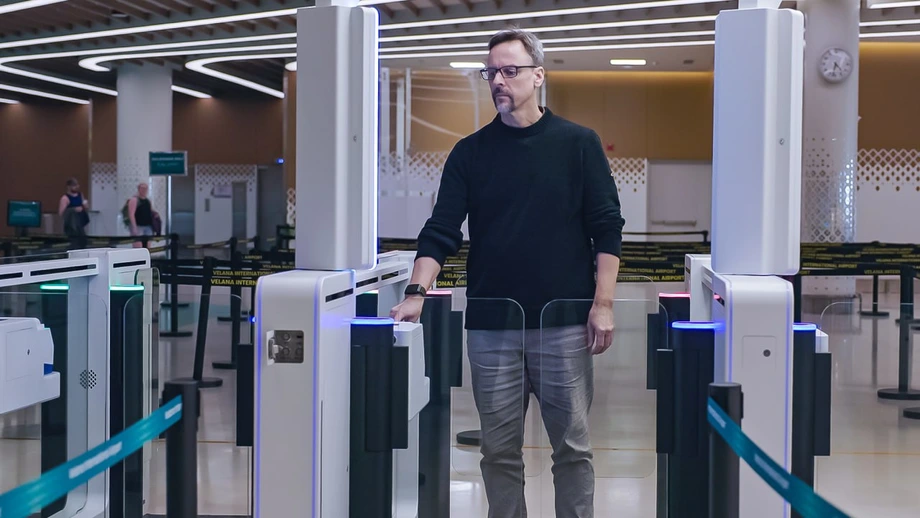
Velana International Airport opened a faster route through immigration for holidaymakers on 24 November 2026, pairing 35 automated gates with electronic tourist visas delivered by email. The change alters the first minutes of a Maldives holiday: eligible visitors with electronic passports can have their face, eyes and passport chip checked by a machine instead of waiting at a staffed counter.
Contents
- Why the Maldives changed its border checks
- What exactly opened at Velana airport
- How the gates check a passport in seconds
- How the electronic tourist visa arrives
- Who can use the automated gates
- What travellers still must prepare
- What officials said about speed and security
- How the rollout fits a wider digital push
- How this compares with biometric travel elsewhere
- What changes for holidaymakers and airport staff
- Key Points
Maldives Immigration says the airport now has 20 gates for arrivals and 15 for departures at Terminal 1. The system is open at first to passport holders from 46 countries travelling on 31 participating airlines. The immigration authority describes the Maldives as the first country in South Asia to offer automated immigration clearance to international travellers on such a broad scale.
Peak travel makes the change practical. Maldives Immigration says the country welcomes thousands of international visitors daily, and the airport has to move people from aircraft doors to baggage halls, customs and onward island transfers. Later steps such as baggage claim, customs and onward transfers remain outside the automated immigration transaction, but shorter gate queues can ease pressure when several flights arrive close together.
President Dr Mohamed Muizzu's push to modernise public services sits behind the programme, with Minister of Homeland Security, Labour and Technology Ali Ihusaan overseeing implementation. The wider policy is known as Maldives 2.0, a government programme built around digital infrastructure and smarter public services.
Travellers who are not eligible for the automated lanes can still use staffed immigration counters. They will also receive electronic tourist visas after clearance, so the visa change reaches beyond the passengers using the new machines.
What exactly opened at Velana airport
Maldives Immigration published the details in its e-Gate services statement, dated 24 November 2026. It said the Electronic Gate service had been extended from Maldivian citizens to eligible foreign travellers holding electronic passports. Both arrival and departure points are covered, with 20 gates in arrivals and 15 in departures.
The expansion was marked at Terminal 1 on the morning of 24 November 2026. Minister Ali Ihusaan inaugurated the service, joined by MACL Chief Executive Officer and Managing Director Ibrahim Shareef Mohamed, Deputy Managing Director Mujthaba Latheef, Ahmed Faseeh from Maldives Immigration and other senior officials. An international passenger arriving on an Emirates flight became the first foreign traveller to clear immigration through the expanded system.
Until that ceremony, the automated lanes had mainly served Maldivian passport holders. Terminal 1 had offered e-gate services to Maldivians since 31 December 2025. The new step opens the same physical lanes to foreign visitors who meet the passport, airline and eligibility conditions.
Maldives Airports Company Limited said continued investment in airport infrastructure and close cooperation with Maldives Immigration would improve passenger flow. For the airport, the change turns an existing service for citizens into part of the visitor arrival system.
How the gates check a passport in seconds
The gates use biometrics, which means measuring body features to confirm identity. At Velana, the system compares a traveller's face and iris, the coloured ring around the pupil, with data stored in an electronic passport chip. The facial and iris recognition technology was supplied by Germany's Dermalog.
The passport chip is checked in two ways. Passive Authentication (PA) checks that the information on the chip is genuine and has not been altered. Active Authentication (AA) checks that the chip itself is real and has not been cloned, a fraud method in which false chip data could copy another person's passport details.
Maldives Immigration says facial recognition lets eligible passengers complete the immigration transaction in about six to seven seconds. Home Minister Ali Ihusaan gave a wider gate range of 5 to 10 seconds against 30 to 50 seconds at a staffed counter, and in a launch speech used 5 to 15 seconds for gate clearance. Against the counter figure of 30 to 50 seconds, the official figure of six to seven seconds makes the check roughly four to eight times faster.
The seconds describe the individual immigration check, not the whole airport journey. A traveller may still need time to walk to baggage claim, pass customs, meet a driver or reach a domestic terminal. Those steps matter in the Maldives because many resort journeys begin with another flight, speedboat or seaplane after the international arrival.
How the electronic tourist visa arrives
International visitors admitted for tourism now receive an electronic visa after immigration clearance, whether they pass through an automated gate or a staffed counter. Details including the permitted duration of stay go to the email address the traveller supplied in the Traveller Declaration on the IMUGA portal. After a traveller checks in for a flight, IMUGA can notify eligible travellers and verify the check.
The Maldives is digitising its visa on arrival system while keeping the existing arrangement, with no advance application for tourists. Eligible visitors, including citizens of the United States, United Kingdom, Canada, Australia and New Zealand, can continue to receive a free tourist visa on arrival for stays of up to 30 days when they meet entry conditions. The electronic visa is cancelled automatically in the immigration system when the traveller leaves the Maldives.
Visitors can check visa status through the official website at immigration.gov.mv/visa/status by entering nationality, passport number and date of birth. The check shows the authorised stay period, which is useful if flights change or a traveller wants to confirm the record while planning the return journey.
Infants and older travellers without their own email address can use an accessible address belonging to a family member or companion. Travellers heading to remote islands should save a copy of the visa email before leaving the airport area, because internet access on some islands can be limited.
Who can use the automated gates
Maldives Immigration says the live rollout covers passports from 46 countries and 31 participating airlines, subject to eligibility rules. Earlier descriptions used 39 or 45 nationalities and 34 airlines during the lead up to launch; those figures appeared before the operational programme was settled. Travellers need an electronic passport for the gates.
A 16 November 2026 notice listed all 27 European Union member states: Austria, Belgium, Bulgaria, Croatia, Cyprus, Czech Republic, Denmark, Estonia, Finland, France, Germany, Greece, Hungary, Ireland, Italy, Latvia, Lithuania, Luxembourg, Malta, the Netherlands, Poland, Portugal, Romania, Slovakia, Slovenia and Spain. It also listed Bahrain, Kuwait, Oman, Qatar, Saudi Arabia and the United Arab Emirates, plus Australia, Canada, China, Japan, New Zealand, Norway, Russia, Singapore, South Korea, Switzerland, the United Kingdom and the United States.
Those named entries total 45 nationalities, leaving one place in the figure of 46 countries without a named entry in that notice. The full updated operational nationality list was not published at the launch, and no date was given for a later publication. The airline roster was also subject to operational updates.
Four UAE carriers, Emirates, Etihad, flydubai and Air Arabia, are among the participating airlines. Earlier testing arrangements included carriers such as Emirates, Qatar Airways, Etihad Airways, Turkish Airlines, flydubai, Air Arabia, British Airways, Virgin Atlantic, Singapore Airlines, Air Astana, Air India, IndiGo, Malaysia Airlines, SriLankan Airlines, Gulf Air, Saudia, Condor, Neos Air, Austrian Airlines, China Eastern Airlines, Hainan Airlines and Bangkok Airways. Russian carriers Aeroflot, S7 Airlines and AZUR air were absent from that earlier testing even though Russia appeared on the preliminary nationality list.
Passengers whose passport or airline is outside the programme continue through immigration counters. The electronic visa still arrives by email after clearance, so the digital visa process applies to them as well. Passengers should verify their nationality and airline status before departure.
What travellers still must prepare
The Traveller Declaration remains compulsory for every visitor, including children and infants. It must be submitted free of charge through the official IMUGA portal within 96 hours before arrival in the Maldives. IMUGA requires email OTP verification, meaning a short code is sent to confirm the address. An email address that is typed incorrectly can delay delivery of the visa confirmation.
Entry requirements remain in place. Travellers need a valid passport, confirmed return or onward travel, confirmed accommodation and sufficient funds or an approved sponsorship. A yellow fever vaccination certificate is required where applicable, depending on the traveller's route and health rules.
The declaration was introduced as a single digital form for arrival information. Since 15 August 2024, departing travellers have no longer needed to submit a departure declaration, so the form belongs to the inbound side of the journey.
Families should make sure each traveller has a separate declaration. Parents or companions can use one accessible email address for infants or older relatives who do not use email themselves, but the visa details will still be tied to the individual passport record.
What officials said about speed and security
Immigration Controller Ahmed Faseeh addressed security at the Terminal 1 ceremony. He said the new service had been introduced after research and preparation, and he gave a direct assurance to travellers. His words were:
I give my complete assurance that security will not be compromised in any form. We did our research, learned how it is done across the world and introduced this with full preparation,
Faseeh spoke as the immigration authority was opening lanes to foreign passports for the first time at this scale. The assurance aimed to answer the concern that faster processing might weaken document checks.
Minister of Homeland Security, Labour and Technology Ali Ihusaan linked the scheme to the government's wider digital policy and to the pressure created by arrival peaks. He said about 3,000 tourists can reach Velana International Airport in roughly two hours. On regional competition, he singled out Singapore as another country pursuing automated services and argued that the Maldives service was broader. His words were:
Singapore is also pursuing this. Even so, the service is not as wide and is not at our range in countries that offer E-Gate clearance services,
Ihusaan also said the setup would make repeat visits smoother when a passport had been used in the system before. For airport planning, the important number is throughput during a short arrival window; for visitors, the visible change is a shorter stop at the immigration counter or gate.
How the rollout fits a wider digital push
Maldives 2.0 is the policy name used by the government for moving public services into digital systems. The airport programme connects two parts of that plan: border clearance and visa records. Both now produce electronic records that immigration staff, airlines and travellers can refer to after arrival.
The changes followed several steps. The main dates are:
- 15 August 2024: the departure Traveller Declaration requirement was removed, leaving the arrival form as the active declaration for tourists.
- 23 November 2025: the Maldives began a digital visa system aimed mainly at foreign nationals working or living in the country.
- 31 December 2025: Terminal 1 began offering automated clearance to Maldivian passport holders.
- 16 November 2026: a notice listed nationalities expected to be covered by the foreign traveller rollout.
- 24 November 2026: the electronic tourist visa system and international e-gate service became operational at Velana International Airport.
The sequence shows a gradual shift. The country first digitised part of its visa work, then used the IMUGA form as the delivery channel for tourist visas, and finally opened the existing automated gates to eligible foreign passports.
How this compares with biometric travel elsewhere
The Maldives is adding machines at a fixed border point. A different approach appeared in Indonesia's walking immigration corridors, which introduced three biometric lanes at Jakarta's Soekarno Hatta International Airport and Surabaya's Juanda International Airport in November 2025. Initial access focused on elderly travellers and passengers with disabilities, with checks carried out while people kept walking rather than stopping at a gate.
Both systems use biometrics to move identity checks away from the traditional counter. The Indonesian corridors used several cameras and 3D imaging, with much of the record prepared before the flight through the All Indonesia app. The Maldives gates rely on an electronic passport chip, facial and iris matching, and the IMUGA Traveller Declaration. One system aims to reduce the stop, while the other shortens the stop to seconds.
Maldives Immigration calls the Velana rollout the first of its kind in South Asia on this scale. Ihusaan said other countries were working on similar services, including Singapore, but placed the Maldives programme at a wider range. The comparison matters for tourism because airports compete on the arrival experience as well as on beaches, resorts and flights.
What changes for holidaymakers and airport staff
For an eligible traveller, the arrival routine now has a clear digital sequence. The visitor submits the Traveller Declaration before the flight, arrives with an electronic passport, uses a gate if eligible or a counter if not, and then receives the visa by email after clearance. The email shows the stay period, and the immigration system closes the record when the traveller departs.
Airport staff gain a faster way to process routine arrivals, while the same technology adds document authentication at the gate. Passport checks still matter because the machine is reading data from the travel document; the biometric match confirms that the person in front of the gate is the person named in that document.
The practical benefit is strongest when flights land together. Ihusaan's figure of up to 3,000 tourists arriving in about two hours shows why a few seconds per person can matter: thousands of small savings can ease pressure on the immigration hall. The first visible result will be queue movement inside the immigration hall; total time to reach a resort island also includes baggage, customs and the onward journey.
Key Points
- The electronic tourist visa system and international e-gate service became operational at Velana International Airport on 24 November 2026.
- The airport has 35 automated gates, with 20 for arrivals and 15 for departures at Terminal 1.
- Maldives Immigration says 46 countries and 31 airlines are in the initial rollout; a nationality notice named 45 entries and the full updated lists were not published at launch.
- Eligible travellers use electronic passports, facial recognition, iris matching and passport chip authentication; the electronic visa is emailed after clearance and cancelled on departure.
- Travellers must still complete the free IMUGA Traveller Declaration within 96 hours before arrival and meet existing entry requirements.
- Official clearance time is about six to seven seconds for the individual check, while Home Minister Ali Ihusaan gave gate ranges of 5 to 10 seconds and 5 to 15 seconds against 30 to 50 seconds at counters.