Flights disappear as the funding runs out
On Friday 27 November 2026, Norwegian airport operator Avinor listed the Oslo to Phuket flight as cancelled. The airline's own flight overview showed two more cancellations on Saturday 28 November, from Bangkok to Oslo and from Phuket to Stockholm. The Norway and Sweden links were part of a winter push built around Thailand, and the cancellations left passengers at both ends of those routes with no reliable plan.
Contents
- Flights disappear as the funding runs out
- How four days turned a warning into a bankruptcy
- Travellers face costly choices far from home
- What passengers can do about tickets and refunds
- A Thailand network built for the winter rush
- Why fuel prices broke the airline's maths
- Lessors, employees and a partner airline feel the shock
- How a low cost long haul airline reached this point
- What still is not settled
- Key Points
Norse had suspended every flight on Thursday 26 November while it searched for short term financing. The board said it intended to file for bankruptcy if money did not arrive quickly. On Friday, after investors failed to provide the needed funding, the company filed for bankruptcy in Agder County Court. A carrier that had been selling seats for the peak travel season stopped flying, and the online booking system no longer offered a way forward.
Norse's board made the warning in a statement to the Oslo Stock Exchange.
If a short-term financing solution is not secured urgently, it is the Board's intention to file for bankruptcy.
The company also said there could be no assurance that a viable solution would be found. That sentence became the bridge between a funding appeal and a full grounding.
Norse apologized to passengers for the inconvenience but gave no refund plan or timetable for a restart. Swedish airport operator Swedavia referred questions about Stockholm departures to the airline. There were no departures from Stockholm on Thursday, and a Friday Bangkok flight was listed without a clear answer. The booking page remained open for a short period even as flights were gone, which left some travellers unsure whether a ticket still meant a seat.
How four days turned a warning into a bankruptcy
The crisis moved quickly after Norse told the market that its finances were critical. Its shares fell 85 percent on Wednesday, closing at NOK 0.03, and the Oslo Stock Exchange put the shares under special observation. The company had lost about 99 percent of its market value since the start of the year.
- November 25: Norse disclosed a critical financial position and held a meeting with holders of US$52 million in senior secured bonds.
- November 26: The airline suspended all flights, said it was talking with investors about a takeover that could include funding, and said bankruptcy would follow without urgent cash.
- November 27: Aircraft lessors cancelled contracts, the airline stopped ticket sales, and the board filed for bankruptcy at 2pm in Agder County Court.
- November 30: The quarterly report, delayed earlier in the week, was due to be released, according to the information given at the time.
The parent company, Norse Atlantic ASA, said the airline no longer had a basis to continue operations. Chief executive Eivind Roald said the board acted after attempts to keep the airline moving failed.
The Board of Norse Atlantic Airways AS has made the difficult decision to file for bankruptcy despite extensive efforts from the Company and the Group to find a solution.
Roald said the listed parent company and a British subsidiary were still looking for a solution that might allow part of the business to continue.
Travellers face costly choices far from home
Emilie Kristiansen, 24, from Narvik, was due to fly home from Bangkok on 1 December after nine and a half months of backpacking in Asia. She had budgeted food money until her departure date and could barely afford one more day in Thailand. She also held a separate ticket from Oslo to northern Norway. Alternative fares she found cost between NOK 7,000 and NOK 20,000, and several routes took 20 to 35 hours just to reach Oslo. She had decided to keep her Norse ticket and wait, but there was no working plan for the 1 December departure.
Kim Håkenstad was due to travel from Norway to Thailand the following week with his family. He and his family had paid around NOK 41,000 to 42,000 for return tickets, including premium seats. A cancellation turns that into a larger problem than a missed holiday, because the money was spent before the collapse and replacement seats may cost more.
Around 2,500 British passengers were believed to have bookings on Norse flights home. Fred, a London traveller due to fly to Cape Town for a friend's wedding, said he changed his plans after the same flight was cancelled and his email went unanswered.
Yesterday the exact same flight I was going to get was cancelled, so I was worried. I sent an email to Norse and have had nothing back.
He paid an extra £1,000 to rebook with another airline. Claire, a traveller from Herefordshire holidaying in South Africa with her daughter, said they were looking at an expensive flight home after receiving an automated reply that promised a response within three business days.
What passengers can do about tickets and refunds
Airline passengers normally have a right to a replacement trip or a refund when a carrier cancels a flight. Bankruptcy changes the practical route to getting money back. A refund claim may become a claim against the bankruptcy estate, where individual passengers can wait a long time and may receive little or nothing.
Hanna Bornstedt, a counselor at the Swedish Consumer Agency, explained the problem for passengers who had paid for Norse tickets.
It becomes very difficult.
Bornstedt also said passengers have stronger protection when they paid with a credit card instead of a regular debit card. Norway's consumer council told passengers they normally had a right to be rebooked as soon as possible, but warned that an airline in an acute economic crisis may not carry out that duty. Card refunds, where available, may cover the ticket price only, not the cost of a new flight or a hotel.
Norway's consumer council had already received more than 5,000 airline complaints so far that year, more than double the number received during the same period the previous year. It alerted the state transport ministry, saying passengers were often left to arrange and pay for new tickets. Mette Fossum, an official with the council, said the council was concerned that passengers would give up claims.
We are worried that the airlines speculate that many of their passengers won't have time or energy to take their claims further.
Before the filing, consumer group Which? urged customers not to cancel their own bookings because doing so could remove refund rights. Rory Boland, travel editor at Which?, set out how payment method mattered.
If Norse does go bust, whether you get a refund depends on how you booked and paid. If you booked directly with Norse, you may be able to claim a refund via your credit card provider, or possibly your debit card.
Travellers on package holidays were advised to contact their tour operator. After the filing, Norse said customer service for its Norwegian and British operations was no longer reachable by phone, email, chat or social media, so the airline itself offered little direct help.
A Thailand network built for the winter rush
Norse had made Thailand central to its winter plans. Schedule data from Cirium listed seven active routes on 26 November, five of them serving Thailand. Two more Thailand routes were due to start in December, including a Gatwick to Phuket service planned for 4 December and a Manchester to Bangkok service planned for the following month.
- London Gatwick to Bangkok Suvarnabhumi was active.
- London Gatwick to Cape Town and London Gatwick to Orlando were active.
- Oslo Gardermoen to Bangkok Suvarnabhumi and Oslo Gardermoen to Phuket were active.
- Stockholm Arlanda to Bangkok Suvarnabhumi and Stockholm Arlanda to Phuket were active.
- London Gatwick to Phuket and Manchester to Bangkok were planned for December.
The winter schedule gave route frequencies that show how large the Thailand plan was. London Gatwick to Bangkok was set at four flights per week from December. London Gatwick to Phuket was to be a new direct service three times per week. Manchester to Bangkok was planned four times per week. Oslo to Bangkok was listed up to five times per week, Oslo to Phuket up to twice weekly, Stockholm to Bangkok up to five times weekly, and Stockholm to Phuket up to twice weekly.
The Tourism Authority of Thailand had partnered with Norse Atlantic to promote winter travel from Britain. For Thailand, the collapse interrupts a route system intended to bring long haul visitors during the country's peak tourism season. For Scandinavian passengers, it interrupts visits already booked around Christmas and the New Year.
Why fuel prices broke the airline's maths
Jet fuel is one of an airline's largest costs. Hedging means buying fuel or price protection ahead of time at a fixed price, a bit like locking in the cost of a winter holiday before prices rise. Norse had not hedged its fuel requirements. When the war in Iran pushed energy prices up, the airline had no shield.
European jet fuel prices more than doubled in March after supply disruption linked to the war and stayed volatile through the year. The Jet Fuel Price Monitor from the International Air Transport Association put jet fuel at US$155 per barrel for the week ending 20 November, nearly 72 percent higher than a year earlier. Norse reported a first half loss of US$94.6 million. By the week of the suspension, its board was talking to holders of US$52 million in senior secured bonds, a form of company borrowing that gives lenders a strong claim on assets if a firm fails.
The damage showed up in the share price and in the route network. In May, chief executive Eivind Roald said Norse had cancelled more than 700 flights since the start of the Iran war, affecting more than 240,000 passengers. Ryanair chief executive Michael O'Leary warned in April about the coming winter season.
if jet fuel prices continued to stay elevated throughout the year, then other European airlines were likely to face financial difficulties during the winter season.
Norse became the clearest example of that warning. Latvian carrier airBaltic had entered Chapter 11 bankruptcy proceedings in September. Slovakia's AirExplore, Spain's AlbaStar, Ireland's Fly4 and Spain's Plus Ultra also stopped operating this winter, with Plus Ultra cancelling all flights without permanently closing.
Lessors, employees and a partner airline feel the shock
The ITF, a global federation for transport workers, said Norse told employees on Wednesday that it could not pay their salaries. It was working with affiliated unions to support pilots, cabin crew and ground staff. The labour union for Norse pilots confirmed that November pay had not arrived.
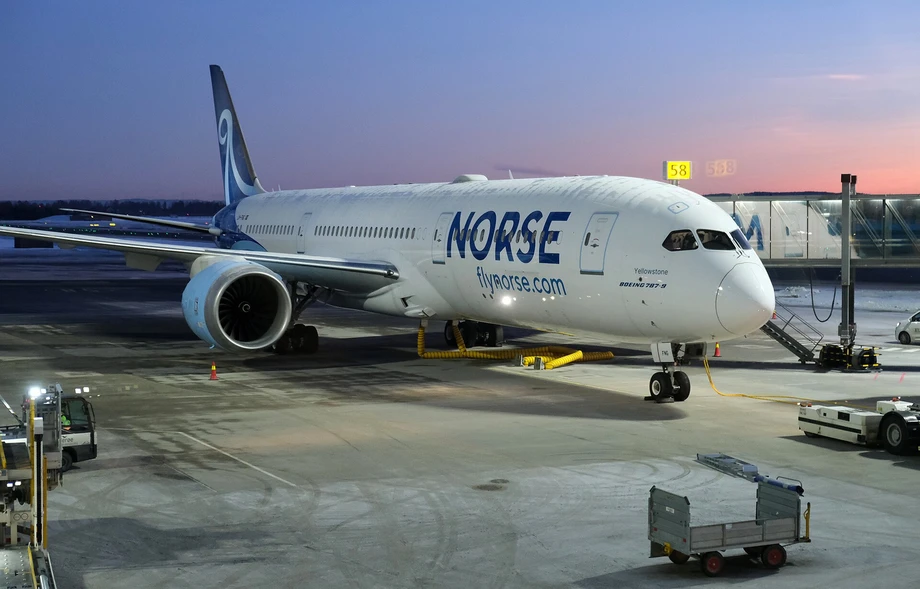
Aircraft owners also moved quickly. Chief executive Eivind Roald said aircraft were returned to bases in Norway, Sweden and Britain. By Friday, leasing companies had terminated leases on all 12 of Norse's Boeing 787-9 aircraft, and Norse disputed the validity of those notices. Around half of the fleet had already been leased to India's Indigo. Once the leases ended, there were no planes left to operate the Thailand routes.
Pakistan International Airlines, known as PIA, was caught in the outage because it had been using two Norse Boeing 787-9 aircraft and crews under a wet lease, an arrangement where one airline supplies the plane, crew, maintenance and insurance. The first aircraft arrived in Islamabad on 1 November. PIA cancelled PK786 from Heathrow to Islamabad and PK710 from Manchester to Lahore after Norse stopped operations without warning.
PIA wrote on X that it was cancelling one departure at short notice.
Due to an unexpected outage at our partner Norse, without prior notice, we are cancelling tonight's flight.
PIA said its own Boeing 777 aircraft would operate all UK flights from 26 November and that affected passengers would be rebooked.
How a low cost long haul airline reached this point
Norse Atlantic was founded in 2021 by Norwegian entrepreneur Bjørn Tore Larsen after Norwegian Air withdrew from long haul flying during the pandemic. Norse tried to offer cheaper seats across the Atlantic and beyond using 12 Boeing 787 Dreamliners, many of them taken from the older Norwegian fleet. It later added charter flights, aircraft leasing and cargo services as scheduled passenger flying failed to produce steady profit.
The airline had already started cutting costs. Its Project Falcon programme aimed to save US$50 million, about £38 million, and included about 75 job cuts. Norse moved its headquarters out of Norway to cheaper offices in Latvia. Founder Bjørn Tore Larsen left as chief executive, and Eivind Roald, a former SAS executive in Norway, took over. Roald had said in February that Norse could make money by selling aircraft capacity to other carriers, an idea sometimes called airline on demand.
Low cost long haul flying is difficult because the aircraft are expensive to run, demand changes with the season and passengers compare fares across many airlines. Established carriers can spread costs across larger networks. Norse had been looking for a buyer since July and had explored a sale or merger in the summer. Spirit Airlines had failed in May after fuel costs rose. By November, Norse's search for a takeover had become a search for enough cash to keep the lights on.
What still is not settled
No restart date was given. Refund arrangements were not set out. Norse did not say how many passengers were stranded in Thailand. The bankruptcy petition was filed in Agder County Court because Norse was originally based in Arendal, and a trustee will manage the process. The board, management and advisers of the listed company and the British subsidiary were still seeking a way for some operations to continue. No date was given for a further hearing.
The airline's quarterly report had been delayed from Wednesday to Monday. Before the collapse, chief executive Eivind Roald had still predicted a large burst of business in December. The planned Gatwick to Phuket launch on 4 December and the Manchester to Bangkok launch were now part of the same uncertainty as the rest of the network.
Norse said in its website notice after the filing that flying had stopped.
Norse Atlantic has stopped flying.
The company said customer service for its Norwegian and British operations was no longer accessible by phone, email, chat or social media. It suggested passengers contact tour leaders or travel agencies, while offering no help of its own. For passengers in Thailand, Scandinavia, Britain and South Africa, the immediate task was not finding the cheapest fare. It was finding any workable fare at all.
Key Points
- Norse Atlantic cancelled Oslo to Phuket, Bangkok to Oslo and Phuket to Stockholm flights around 27 and 28 November 2026.
- The airline suspended all flights on 26 November and filed for bankruptcy in Agder County Court at 2pm on 27 November.
- Five of seven active routes served Thailand, and two more Thailand routes had been planned for December.
- Passengers face refund claims against a bankruptcy estate, with stronger protection often available through credit card bookings.
- Jet fuel prices, an unhedged fuel position, a US$94.6 million first half loss and a US$52 million bond obligation all added pressure.
- All 12 Boeing 787-9 leases were cancelled, a move Norse disputed, and PIA cancelled two UK flights after its Norse aircraft stopped operating.