A funded study, not yet a cable
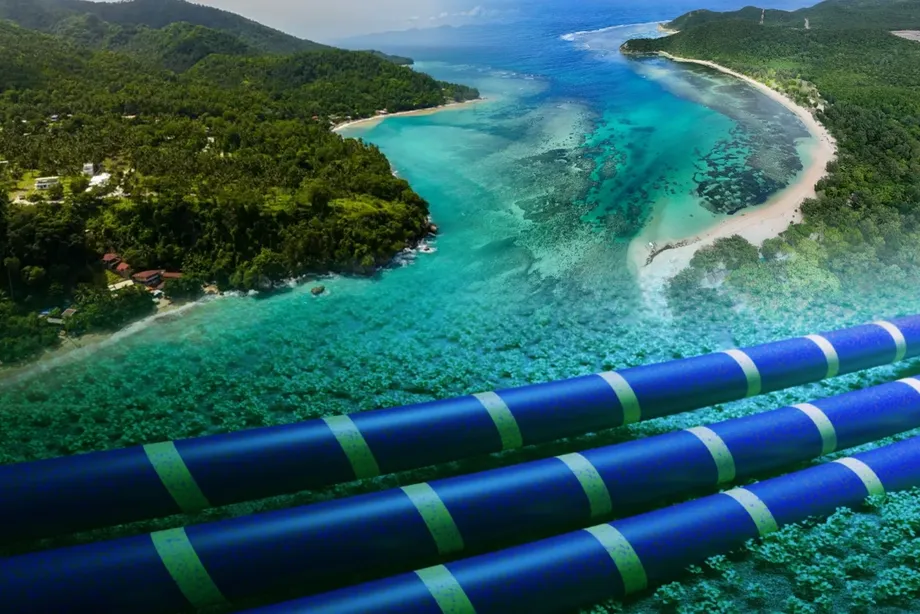
The U.S. Trade and Development Agency signed an agreement with Philippine wholesale telecommunications company InfiniVAN Inc. to pay for a feasibility study of the Silangan Submarine Cable System, a proposal to run a subsea fiber route down the country's eastern seaboard. The agency announced the agreement in a statement dated Nov. 19, 2026. The cable would link a landing station in Claveria, Cagayan, in northern Luzon to Davao in southern Mindanao, a span of about 2,166 kilometers, with between seven and 15 landing stations planned along the way.
Contents
- A funded study, not yet a cable
- What the study has to answer
- Where the cable would land
- The gap the cable would fill
- Data centers, AI and the courtship of American cloud companies
- Trusted technology and the security argument
- Who is InfiniVAN
- What is not settled, and what happens next
- Other cable plans and the political weather
- Key Points
InfiniVAN selected Lambda Consulting LLC, a firm based in Nevada, to carry out the assessment. USTDA is paying for the study and not for the cable. The announcement did not name a construction contractor, did not confirm a final alignment and did not give an in-service date, so the project remains at the stage where consultants test whether it makes sense to build at all.
The proposal sits at the junction of two priorities. The Philippines is attracting a wave of international cables that land on Luzon and Mindanao, and it wants to become a regional hub for data centers, the large buildings full of servers that store and process the world's digital traffic. Washington wants American suppliers of cable systems, cloud services and sensing equipment to win work in a market of more than 117 million people.
USTDA describes the domestic gap in blunt terms. New international landings are expanding the country's global connectivity, yet the fiber that should carry that capacity inland is thin beyond the big cities. Telecommunications operators have few alternative routes when a cable fails, and data center developers struggle to find enough capacity to expand outside Manila.
The proposed system would add a second domestic path beneath the sea along the eastern coast, so that traffic can move between the country's two largest islands without depending only on existing links.
What the study has to answer
Lambda Consulting's work is broader than a map of the seabed. USTDA listed the tasks in its announcement, and each one answers a question that has to be settled before anyone spends money on cable or ships.
- Market demand, to test whether customers will buy capacity on the system
- Technical, environmental and economic viability, including equipment procurement
- A high-level route and preliminary designs for seven to 15 cable landing stations
- The permits and regulatory approvals the project would need
- A process for selecting the companies that would build it
- An implementation roadmap
- A commercialization and financing plan, to find capacity buyers and attract investors and lenders
The range of seven to 15 landing stations is itself a design question. Each landing point costs money and adds permitting work, but each one also brings a coastal community closer to the network. The study is where the cost of extra connections gets weighed against the reach they deliver.
For carriers, the worth of a second route depends on where it plugs into the existing network and how independently it can run when another cable is cut. A path that shares the same landing points and the same inland links as the routes already in place would not help much during an outage. Landing choices also decide which towns and provinces get a direct connection and whether local access networks can use the added capacity.
Where the cable would land
Claveria in northern Luzon is already a gateway. It is the landing point for Google's TPU cable, which connects the Philippines to the United States, and Globe Telecom subsidiary Innove is the landing party and owner at a new cable landing station built to host that system. Silangan would begin from a landing station there, tying a domestic route into an international gateway that already carries traffic across the Pacific.
Further down the eastern coast, InfiniVAN is building a landing station in Baler, Aurora, which is among the planned stops on the route. The southern end is Davao, in southern Mindanao, where the country's international connectivity has also been growing.
The eastern alignment is the core of the proposal. Running down the Pacific side gives the country a route that does not simply duplicate the western corridors that already carry most traffic between Manila and the south. USTDA says Silangan would connect international gateways through domestic infrastructure that offers additional route diversity.
The gap the cable would fill
The Philippines is made up of more than 7,600 islands, and that geography explains much of its connectivity problem. International cables can land on its shores, but carrying that capacity to the towns and provinces where people live depends on domestic links, both underground and undersea. When those links are scarce, the benefits of global connectivity collect in a few urban centers.
USTDA points out the same bottleneck in a different way. International landings in northern Luzon and Mindanao are multiplying, yet the domestic fiber that should distribute that capacity stops short of major urban centers. Operators that lose a connection have few ways around the breakage, and data center builders looking for land and power outside Metro Manila cannot secure enough transmission to make a project work.
USTDA says the project would also help narrow the digital divide across the archipelago, expand internet access, and support job creation beyond the big cities. Those promises rest on where the landing stations end up and whether local networks can connect to them, questions the study is meant to answer.
Data centers, AI and the courtship of American cloud companies
The Philippines wants a share of the data center business that is growing across Southeast Asia, and the pitch to investors is straightforward: the country has land, a young workforce and proximity to submarine cable routes. What it has lacked is enough domestic transport to move traffic between regions at the volumes that cloud and artificial intelligence workloads require.
Alejandro A. Aquino, InfiniVAN's executive advisor for strategic partnerships and business development, framed the agency's support as timely for that ambition.
USTDA's catalytic support comes at a critical time as the Philippines' digital infrastructure enters its next phase of development. Silangan would extend InfiniVAN's leadership as a wholesale digital backbone provider beyond the Philippine Domestic Submarine Cable Network and the company's growing domestic and international fiber networks, positioning the Philippines to attract AI and cloud-focused investments while also serving the public through increased capabilities in maritime awareness, disaster warning and connectivity for underserved communities.
Aquino's mention of maritime awareness and disaster warning points to a second use for a coastal cable. Sensors and cable systems along the seabed can support monitoring of waters and early warning for storms and other hazards, functions that matter in a country that sits on the Pacific typhoon belt.
USTDA says the project would open new markets for American technology companies and give the Philippines the domestic capacity it needs to become a regional data center hub. The study's financing plan is meant to do part of that work by introducing InfiniVAN to companies that could buy capacity on the system and to institutional investors who might fund construction.
Trusted technology and the security argument
USTDA says the proposed use of trusted technology would help protect sensitive data against cyberattacks, espionage and other security threats. The phrase describes equipment and suppliers vetted by governments that worry about foreign control of the physical layer of the internet, the cables, landing stations and routers that carry traffic between countries.
Thomas R. Hardy, USTDA's deputy director, tied the cable to the alliance between Manila and Washington and to commercial opportunity for American firms.
Silangan is more than a cable. It is a trusted digital backbone that would link the Philippines' international gateways and communities along its eastern seaboard into one secure, resilient network. A connected, secure Philippines makes America safer, strengthens our alliance, and gives American SI and cloud providers a trusted foundation to grow across a market of more than 117 million people.
The initials SI refer to superintelligence, the term used in the AI industry for advanced systems that would outstrip current models. Hardy's argument places a submarine cable inside a wider contest over where AI computing is hosted and who supplies the equipment underneath it.
USTDA was formed in 1992 as an independent agency of the U.S. government and works to further economic development and American commercial interests in developing and middle-income countries. It has supported submarine cable work before, including AFR-IX Telecom's Medusa system, which it helped extend to West Africa, and National Telecom's planned cable between Thailand and the United States.
Who is InfiniVAN
InfiniVAN is the Philippine subsidiary of IPS Inc., a telecommunications company based in Tokyo. It jointly operates the Philippine Domestic Submarine Cable Network, a system that links the archipelago's islands, and it runs a consumer network business alongside its wholesale operations. Silangan would extend that role, in Aquino's words, beyond the domestic network and the company's international fiber routes.
The company has said it looks forward to working with U.S. companies that specialize in submarine cable systems and sensing technology to move the project forward. That interest aligns with the agency's own goal of connecting American suppliers to the work.
What is not settled, and what happens next
Nothing in the announcement commits either government or company to build the cable. The final route, the technical specifications, the financing arrangements and the construction timeline have yet to be established. The next visible milestone is the completion of the study, which will report on demand, possible landing sites and whether a viable case exists to build the system.
A short sequence shows how the project has moved so far.
- Aug. 2026: Globe, Smart and Converge put forward a separate domestic loop cable estimated at $500 million
- Nov. 19, 2026: USTDA and InfiniVAN sign the agreement funding the Silangan feasibility study
- Nov. 23, 2026: The agreement is reported publicly, with the route described as Claveria to Davao
- Next: the study reports on demand, landing sites and the case for construction
Other cable plans and the political weather
Philippine carriers have not waited for Washington. In August 2026, Globe, Smart and Converge pitched a domestic loop cable that would cost about $500 million, a sign that the same bottleneck USTDA describes is felt across the industry. Manila has also been talking to Taipei about cable cooperation, though no agreement has been signed.
The Silangan proposal lands in a country where some digital infrastructure projects backed by the United States have run into public opposition. A separate initiative known as Pax Silica, which aims to secure supply chains for semiconductors, artificial intelligence and critical minerals, has drawn criticism over its proposed technology hub in New Clark City, Tarlac, with opponents raising concerns about land displacement, environmental protection and the use of local resources.
For the coastal communities along the eastern seaboard, the practical questions are narrower. A landing station can bring a direct connection and construction jobs, and it can also bring land acquisition disputes and environmental review. Which of those outcomes materializes depends on choices the feasibility study is meant to inform, and on permits that have not yet been filed.
Key Points
- USTDA signed an agreement with InfiniVAN Inc. on Nov. 19, 2026, to fund a feasibility study of the Silangan Submarine Cable System
- The proposed cable would run about 2,166 kilometers from Claveria, Cagayan, to Davao, with seven to 15 landing stations including Baler, Aurora
- Lambda Consulting LLC of Nevada will conduct the study, covering demand, technical, environmental and financial viability, permits, contractor selection, an implementation roadmap and a financing plan
- The agency is funding the study only; no construction contract, final alignment or in-service date has been announced
- USTDA says thin domestic fiber limits how far international cable capacity reaches beyond major cities and leaves operators with few backup routes
- Claveria is the landing point for Google's TPU cable, with Globe Telecom subsidiary Innove as landing party and owner at a new landing station
- InfiniVAN is the Philippine subsidiary of Tokyo-based IPS Inc. and jointly operates the Philippine Domestic Submarine Cable Network
- USTDA Deputy Director Thomas R. Hardy said the cable would give American SI and cloud providers a trusted foundation in a market of more than 117 million people
- Globe, Smart and Converge proposed a separate domestic loop cable worth about $500 million in August 2026, and Manila has held cable talks with Taipei without a signed deal