A new factory puts drivers' daily earnings in focus
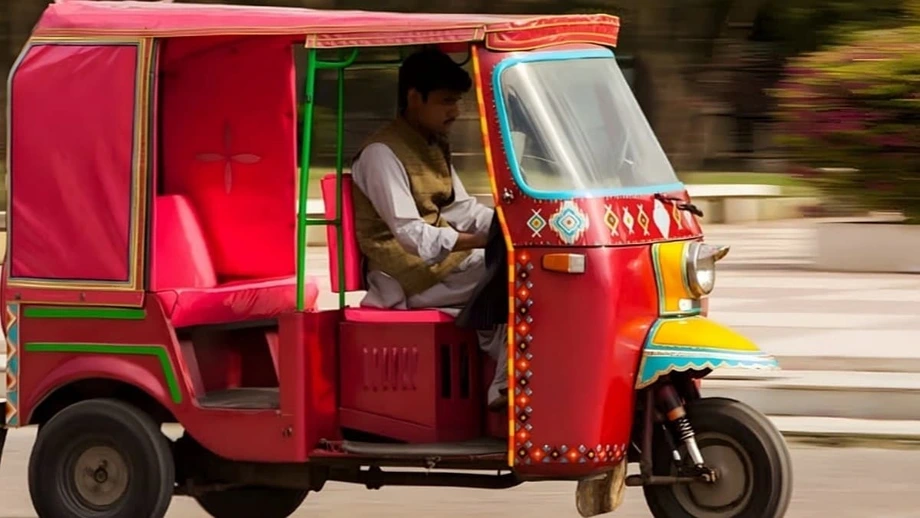
A factory in Barangay Mamplasan, Biñan City, Laguna, can assemble about 12,000 three wheeled vehicles a year, with electric models expected to account for 60 percent of its initial production. President Ferdinand Marcos Jr. inaugurated the Sazgar Philippines Inc. plant on October 29, 2026, presenting the investment as a way to reduce tricycle drivers' gasoline expenses and expand local manufacturing.
Contents
- A new factory puts drivers' daily earnings in focus
- Can one charge cover a full working day?
- What the government's cost figures show
- The purchase price is the other half of the calculation
- What 12,000 vehicles a year could mean
- Local batteries, seats and skills matter too
- The Philippines already has an e-trike industry
- How the 2040 target fits the roadmap
- The inauguration also drew a false vehicle claim
- Key Points
For drivers, the most immediate issue is how much money remains after a day's work. Regino Cabrera, president of the Mamplasan Tricycle Operators and Drivers Association, said drivers currently earn around ₱500 daily, with the amount they take home depending on operating expenses. He suggested earnings could reach around ₱800, or potentially double, if charging were free.
The difference between ₱500 and ₱800 is ₱300 a day, a 60 percent increase. Cabrera's estimate expresses what drivers hope to gain. Actual savings will depend on electricity charges, vehicle payments, battery expenses and the number of paying trips they can complete.
Marcos connected the switch to electricity with both household income and national energy security during his visit to the plant.
"For the country, every vehicle that runs on electricity means a little less dependence on imported fuel," he said.
The central question for operators is whether lower daily energy spending can cover the cost of buying and maintaining an electric tricycle. The government's electric vehicle roadmap provides useful figures for that calculation, while the Sazgar announcement adds new assembly capacity to an industry already operating in the Philippines.
Can one charge cover a full working day?
Marcos said Sazgar's electric models can travel between 100 and 210 kilometers on one charge, depending on battery configuration. Charging takes six to eight hours. He compared that range with typical tricycle travel of about 90 kilometers daily in urban areas and 110 to 120 kilometers in provincial areas.
A model rated for 100 kilometers would have a nominal margin of 10 kilometers over the cited urban daily distance. Against the provincial estimate, it would fall short by 10 to 20 kilometers. A model rated for 210 kilometers would have a much larger margin, exceeding the cited provincial distance by 90 to 100 kilometers.
Battery choice therefore matters to a driver's working schedule. Someone covering longer routes would need enough range for the day's trips or access to charging during a break. A charging period of six to eight hours also makes the location and availability of an overnight connection part of the purchase decision.
The Philippine Information Agency's account of the inauguration records Cabrera's interest in charging at little or no cost. For an operator, electricity becomes a regular expense in place of gasoline, and the tariff paid helps determine how much of the saving reaches the household.
What the government's cost figures show
The Department of Energy's electric vehicle roadmap includes an illustrative comparison of energy costs. Using gasoline at ₱70 per liter and electricity at ₱11 per kilowatt hour, it estimates a cost of ₱5 per kilometer for a vehicle with an internal combustion engine, against ₱1.83 for a battery electric vehicle.
Those figures produce an energy cost difference of ₱3.17 per kilometer, or about 63 percent. Applied to the daily distances cited by Marcos, the arithmetic gives the following illustration:
- At 90 kilometers, energy costs would be about ₱450 for gasoline and ₱164.70 for electricity, a difference of ₱285.30.
- At 110 kilometers, costs would be about ₱550 and ₱201.30, a difference of ₱348.70.
- At 120 kilometers, costs would be about ₱600 and ₱219.60, a difference of ₱380.40.
The roadmap's comparison uses general vehicle efficiency and energy price assumptions. A Sazgar driver's actual bill would depend on the model's electricity consumption, the rate charged and the distance traveled. The comparison helps explain why drivers are interested: even a modest reduction in the cost of each kilometer can add up over a full working day.
The purchase price is the other half of the calculation
The roadmap's separate comparison for tricycles places the investment cost of an electric unit at ₱350,000, against ₱176,000 for a conventional unit. That is an initial difference of ₱174,000, with the electric vehicle costing nearly twice as much to acquire in the model.
The same calculation includes ₱108,000 for battery replacement and higher financing costs for the electric tricycle. It also estimates lower energy and regular maintenance expenses. Taken together, the roadmap puts the electric tricycle's financial cost at about ₱1.84 million, compared with ₱2.48 million for the conventional vehicle, a difference of approximately ₱644,192.
Those totals are expressed as net present value. This is a method of comparing money spent at different times by converting future costs into an equivalent value today. It allows the purchase price, later battery spending and years of energy bills to be considered together.
A driver still needs to manage the timing of those payments. Lower running costs arrive gradually, while a deposit or loan payment may be due much sooner. No Sazgar retail prices, driver financing terms, battery replacement prices or free charging arrangements were given in the inauguration accounts. Those details will determine how accessible the vehicles are to drivers earning around the level Cabrera described.
What 12,000 vehicles a year could mean
Sazgar Philippines is 60 percent Filipino owned and is a subsidiary of Pakistan's Sazgar Engineering Works Limited. The Laguna facility is the company's first manufacturing operation outside Pakistan and is intended to serve as a hub for Southeast Asia.
The plant's annual assembly capacity of approximately 12,000 units covers both electric vehicles and models with internal combustion engines. Applying the planned initial electric share of 60 percent to full annual capacity would yield about 7,200 electric units and 4,800 conventional units. Actual output will depend on production schedules and demand.
Sazgar plans to introduce passenger and commercial rickshaws alongside its electric vehicles. The investment therefore serves more than one transport market, with potential customers among both passenger operators and businesses moving goods.
Transportation Secretary Vince Dizon, Pakistan's Ambassador to the Philippines Asima Rabbani and Sazgar Philippines President Muhammad Fahim attended the inauguration. Rabbani congratulated Sazgar Engineering Works on the expansion, which was supported by the Pakistani embassy.
The plant's regional ambition connects with the government's aim to make the Philippines a producer and exporter of electric vehicles by 2040. Reaching that goal requires sustained production and customers at home and abroad, alongside the factory's ability to assemble vehicles.
Local batteries, seats and skills matter too
Marcos urged Sazgar to buy more components from Philippine manufacturers, including batteries, seats and other parts. Local sourcing would spread some of the factory's spending to businesses beyond the assembly plant and create opportunities for Filipino suppliers.
The president said the project qualified under the Strategic Investment Priority Plan because it adds value locally. He described the kind of investment the government wants to attract.
"Not just companies that sell to Filipinos, but companies that make things with Filipinos," Marcos said.
The roadmap places manufacturing alongside three other areas of work: electric vehicles and charging stations, human resource development, and research and development. Together, these cover the vehicles, their supporting infrastructure, the people who service them and the technology used to improve them.
The document identifies a shortage of workers with electric vehicle technical skills. It describes training competencies for troubleshooting, repair and maintenance of electric vehicles with two, three and four wheels. For drivers, access to capable repair services is a practical concern because time spent waiting for maintenance can also mean lost fares.
The Philippines already has an e-trike industry
The 2023 roadmap records more than a decade of Philippine electric tricycle production and assembly. It identifies seven local companies involved in production or assembly from imported component kits, with eight electric tricycle models available locally: six made in the Philippines and two imported.
The document also shows how small electric vehicle registration remained in 2021. Around 9,000 electric vehicles were registered out of nearly 13 million motor vehicles, about 0.07 percent. The combined motorcycle and tricycle category accounted for 834 registered electric vehicles that year.
Local governments have played a large role in bringing electric tricycles onto roads. The roadmap attributes much of the increase in their numbers to local initiatives and cites the Department of Energy's E-Trike Project with the Asian Development Bank and Clean Technology Fund.
That project originally aimed to shift 100,000 tricycles to electricity, with projected reductions in petroleum consumption and carbon dioxide emissions. The roadmap records that, in 2019, the energy department handed over 272 units to government agencies and 2,728 to local government recipients, totaling 3,000 units.
Malay's program for Boracay also shows the services needed around the vehicle. Its work includes driver and operator support, financing, battery leasing, charging and boundary payments. A boundary payment is the amount a driver pays an owner for using a vehicle. Each of these costs affects what the driver keeps after work.
How the 2040 target fits the roadmap
Marcos presented the Laguna investment as progress toward a 50 percent electric share of the country's vehicle fleet by 2040. The roadmap's Clean Energy Scenario sets out more detailed targets by sector and vehicle type.
Under that scenario, at least 50 percent of fleets outside the household sector would shift to electric vehicles by 2040. The household target is 10 percent. For the combined motorcycle and tricycle category, the targets are 50 percent by 2030 and 60 percent by 2040.
The roadmap also contains a compliance schedule calling for at least a 5 percent electric share in specified corporate, government, public transport, industrial and commercial fleets by 2034, rising to 10 percent by 2040. Readers therefore need to distinguish between the more ambitious scenario targets and the document's separate compliance milestones.
The policy began before the Laguna inauguration and extends well beyond it:
- April 15, 2022: Republic Act No. 11697, the Electric Vehicle Industry Development Act, became law and mandated the roadmap.
- October 29, 2026: Marcos inaugurated Sazgar's manufacturing and assembly facility in Biñan.
- 2030: The Clean Energy Scenario targets a 50 percent electric share for motorcycles and tricycles.
- 2040: The roadmap aims to position the Philippine electric vehicle industry as a producer and exporter.
EVIDA provides the policy framework for vehicle adoption, charging infrastructure and industry development. The roadmap is designed to be updated annually, allowing its plans to change as the market and infrastructure develop.
The inauguration also drew a false vehicle claim
A Facebook reel posted on October 30 portrayed the electric tricycles shown during Marcos's visit as newly acquired government vehicles. The footage showed the president trying a Sazgar model at the factory inauguration.
Marcos discussed a general directive for government agencies to prioritize electric vehicles when buying vehicles or consider them when renting. Neither his remarks nor Palace Press Officer Claire Castro's statement announced a government purchase of the displayed tricycles.
By November 5, the reel had drawn more than 7,000 views, 400 reactions and 100 comments. The event concerned a private manufacturing investment and the government's wider electric vehicle policy, with drivers' operating costs and local production at the center of the announcement.
Key Points
- Sazgar's Laguna plant can assemble about 12,000 vehicles annually, with electric models planned to make up 60 percent of initial production.
- Marcos cited a range of 100 to 210 kilometers per charge and charging times of six to eight hours.
- A local drivers' association leader hopes lower energy expenses could raise daily earnings from around ₱500 to about ₱800, depending partly on charging costs.
- The government's roadmap models lower energy and maintenance expenses for electric tricycles, alongside higher purchase costs and battery spending.
- Sazgar vehicle prices, financing terms and charging arrangements will shape affordability for drivers.
- The investment supports local manufacturing and a wider push to expand electric transport through 2040.