A September window replaces the April plan
Pakistan will host the 14th South Asian Games from 18 to 27 September 2027, after the Pakistan Olympic Association secured agreement from all South Asian national Olympic committees. The decision, announced on 27 November 2026, moves the event away from its previous 3 to 11 April 2027 plan, which had been set across Islamabad, Lahore and Peshawar. Some later planning listed the old dates as 4 to 11 April. In Nepal's calendar, the earlier window was also given as 2083 Chait 20 to 28.
Contents
- A September window replaces the April plan
- Why the calendar moved again
- What the January decision already allowed
- How the dates changed over time
- What athletes and fans will see
- How host cities and preparations are taking shape
- India's participation remains the big question
- Why the delay matters for Pakistan and South Asia
- What is still unknown before kickoff
- Key Points
The shift gives the region's athletes a different chance: compete at the Asian Indoor and Martial Arts Games in Riyadh in late March and early April, then travel to Pakistan about five months later for the South Asian Games. For a competition that has already missed several target dates, the new window is also a narrow attempt to keep the event in 2027 before the crowded 2028 Olympic year.
The Pakistan Olympic Association said the consensus showed solidarity and cooperation inside the South Asian Olympic movement. It also thanked the region's Olympic committees for their support and said it looked forward to welcoming athletes, officials and delegations to Pakistan in September 2027.
For ordinary readers, the change is simple: the Games are still planned, but the start date has moved from spring to late summer. For governments, federations and athletes, it means accommodation lists, transport plans, security details and competition schedules must now be rebuilt around a new date. That matters for ticket planning, training camps and leave from work or school.
Why the calendar moved again
The immediate reason was a clash with the 6th Asian Indoor and Martial Arts Games. Organisers moved that event to Riyadh from 28 March to 8 April 2027, after it had been set for 11 to 21 December 2026. The Olympic Council of Asia and the Saudi Olympic and Paralympic Committee made the change. Security concerns were cited, with Houthi attacks on Riyadh and the wider Iran and US conflict named as pressures behind the shift.
South Asian officials had hoped to keep the two competitions apart by almost four months. Once the Riyadh event landed in late March, the old South Asian Games dates overlapped it. Most South Asian member countries were more interested in the Riyadh event, which pushed the host to move the regional Games rather than ask athletes to choose.
POA Secretary General Muhammad Khalid Mahmood put the reason in athlete terms.
The revised dates take into account the rescheduling of the 6th Asian Indoor and Martial Arts Games, with the welfare and well-being of athletes remaining paramount and ensuring opportunities for their participation in both events.
The new dates sit inside a 15 to 30 September 2027 window that planners had identified as the only practical opening. A crowded international calendar, delays already built into the project and the approach of an Olympic year made other slots difficult. Officials warned that missing 2027 could make staging the Games in 2028 very difficult.
Bangladesh Olympic Association director general Brigadier General (retd) ABM Shefaul Kabir described the September idea when it was still a proposal.
With the Asian Indoor and Martial Arts Games being postponed, Pakistan has proposed holding the South Asian Games in September instead of March next year. But the proposal has not yet been approved. It is still at the proposal stage.
That statement came before final concurrence. By 27 November, the POA said all participating NOCs had formally agreed, turning the proposal into the announced schedule.
What the January decision already allowed
Pakistan's room to move the date was built into an earlier decision. Pakistan Olympic Association / NOC Pakistan published its January press release after a South Asian NOC meeting held on 26 January 2026 in Tashkent, on the sidelines of the 46th Olympic Council of Asia General Assembly. The document said the NOCs unanimously set the Games for 23 to 31 March 2027 and authorised the host to adjust the schedule within that period by up to one week for operational or logistical reasons.
The meeting was chaired by HRH Prince Jigyel Ugyen Wangchuck, OCA Vice President for South Asia. Presidents or secretaries general from Bangladesh, Bhutan, India, Maldives, Nepal, Pakistan and Sri Lanka attended. Arif Saeed, president of both the POA and the South Asia Olympic Council, took part alongside Mohyuddin Ahmad Wani, Federal Secretary in Pakistan's Ministry of Sports.
The South Asian Olympic family congratulated Sheikh Joaan bin Hamad bin Khalifa Al Thani on his unanimous election as OCA president. The meeting agreed that the sports and events fixed at the SAOC Executive Committee meeting of 25 February 2025 in Lahore would remain unchanged. Wani invited South Asian countries to visit Pakistan in May 2026 to review preparations and monitor progress. The same document said countries would continue talks on a more sustainable, future oriented model for regional sport, including long term cooperation and efficient delivery of events with many disciplines. It also kept the host city planning clock moving.
How the dates changed over time
The 14th South Asian Games have been moving since Pakistan was awarded hosting rights. They were first planned for 2021, then pushed toward March 2023 and March 2024. COVID-19, administrative delays, funding problems, disputes between the POA and the Pakistan Sports Board, and clashes with the regional sporting calendar all featured in the reasons given over the years. Lahore's winter smog also made a cold season date difficult, according to people involved in the planning discussions.
The sequence of fixed dates shows why the new announcement matters:
- 2021: Pakistan received hosting rights for the 14th edition.
- March 2023 and March 2024: earlier targets slipped after the pandemic and organisational problems.
- 25 February 2025: the SAOC Executive Committee in Lahore fixed the sports and events.
- 23 to 31 January 2026: a three city plan fell through.
- 26 January 2026: South Asian NOCs in Tashkent chose 23 to 31 March 2027, with up to one week of flexibility.
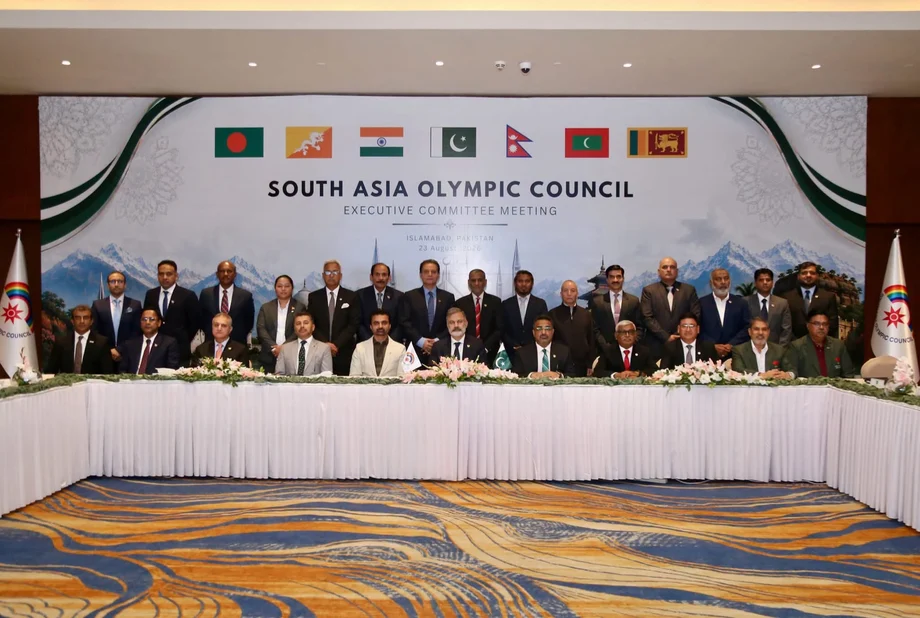
- 23 and 24 August 2026: the SAOC Executive Committee in Islamabad reviewed a 3 to 11 April 2027 plan, also listed in some planning as 4 to 11 April.
- 23 November 2026: the POA postponed the April plan while new dates were still being settled.
- 27 November 2026: the POA announced 18 to 27 September 2027.
Descriptions of the total number of postponements used both fifth and sixth, depending on whether the original 2021 target was counted as a missed date. The dated list is clearer than the count: the same edition has missed a series of windows over several years.
What athletes and fans will see
The September Games are planned around 28 sports. Earlier SAOC planning set 346 medal events across 28 venues, with women competing in 25 sports. A medal event is one contest that awards medals. The same planning projected about 3,200 athletes and roughly 4,200 participants, a figure that includes officials and other delegation members. Pakistani authorities later spoke of more than 6,000 athletes and officials, a broader estimate that shows how the event has grown in official planning.
The programme includes athletics, archery, badminton, basketball, boxing, cricket, football, hockey, kabaddi, shooting, swimming, tennis, wrestling, weightlifting and several other regional and Olympic disciplines. Separate planning put Islamabad at 15 sports, Lahore at 10 and Peshawar at three.
Kabaddi could draw unusual attention. India and Pakistan are among the sport's strongest teams in the region, and a home crowd in Pakistan would add pressure and noise. Kabaddi is a contact sport in which players tag opponents while holding their breath and chanting, so a close match can become tense quickly. The Games also give teams such as Bangladesh, Nepal, Sri Lanka, Bhutan and Maldives more chances to face established sides.
Rana Mashhood Ahmad Khan, chairman of the Prime Minister's Youth Programme, spoke about the event's value for young competitors at a reception during the August meetings.
The South Asian Games offer young players an excellent opportunity to present their abilities before the world.
That focus on young athletes is practical. Regional events can give competitors a first taste of large team environments before they move toward Asian Games, Commonwealth Games or Olympic competition.
How host cities and preparations are taking shape
The Games were planned across Islamabad, Lahore and Peshawar, with 28 competition venues. That spread turns the event into a national project rather than a single city tournament. Islamabad was associated with athletics, badminton, basketball, billiards and snooker, football, kabaddi, karate, rowing, squash, table tennis, tennis, triathlon, weightlifting, wushu and shooting. Lahore was associated with boxing, cricket, fencing, golf, handball, hockey, rugby, swimming, taekwondo and wrestling. Peshawar was set to host archery, judo and volleyball, with volleyball moved there to spread the programme more evenly and make better use of available infrastructure.
Some planning added that cricket, hockey and swimming were planned for Lahore, while tennis, squash and several martial arts were planned for Islamabad. Delegates reviewed accommodation, transport, coordination meetings, Games services, operational guides and manuals, along with plans for a 100 Days to Go milestone.
Venue inspections have already been part of preparations. Delegates visited the Pakistan Sports Complex, including Jinnah Stadium, Amir Khan Hall, Hamidi Hall, Rodham Hall, Liaquat Gymnasium, the shooting range and Rawal Lake. They also toured the Pakistan Tennis Federation complex, where secretary general Colonel Zia-ud-Din Tufail briefed them on facilities and ongoing work. Pakistan Sports Board Director General Yawar Hussain, Arif Saeed and POA Secretary General Khalid Mahmood briefed visitors on infrastructure.
Pakistan's preparations have been running through several layers of government. Deputy Prime Minister and Foreign Minister Ishaq Dar chaired a steering committee that reviewed accommodation, transport, medical facilities, venues and security. Provincial authorities were directed to provide security for athletes, officials, journalists and spectators from arrival until departure.
Dar also directed the creation of subcommittees for financing, infrastructure, athlete preparation and logistics. The government decided to set up a SAARC Games Secretariat in Islamabad and upgrade the Pakistan Sports Complex. A road map had the Games Secretariat becoming operational in September 2026, with upgrades due by January 2027 and venue inspections planned afterwards. Prime Minister Shehbaz Sharif approved a Rs 11 billion budget in July 2026 for preparations and sporting infrastructure.
The August programme also mixed sport with diplomacy and culture. Delegates were received at the Prime Minister's Office and visited the Taxila Museum, Gandharan Museum and Faisal Mosque. The Pakistan Olympic Association described the tour as a reflection of history, diversity and shared heritage across South Asia.
India's participation remains the big question
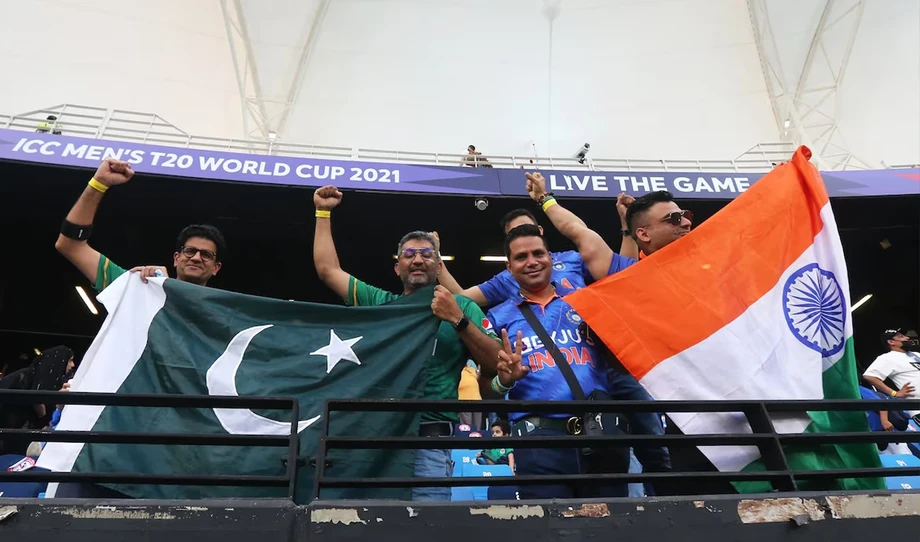
India's role is the most sensitive part of the preparation. The POA said India had agreed in principle to take part, accepted the invitation at regional Olympic level and would provide contingent details in January 2027. India's IOA president P. T. Usha was among the representatives who joined the SAOC Executive Committee meeting in Islamabad on 23 August 2026 by video link. Indian representatives had also supported the earlier schedule.
That is not the same as final travel clearance. No separate public confirmation from the Indian Olympic Association or the Government of India had been given on permission for athletes to travel to Pakistan. Indian policy rules out bilateral sporting events on Pakistani soil, meaning contests between only two countries, but it leaves room for competitions with many countries.
An India Ministry of Youth Affairs and Sports circular from May explains that policy. A multilateral event is simply one with teams from several countries, rather than a single match between two countries.
With regard to international and multilateral events, in India or abroad, we are guided by the practices of international sports bodies and the interests of our own sportspersons. Accordingly, Indian teams and individual players will take part in international events that also have teams or players from Pakistan. Similarly, Pakistani players and teams will be able to participate in such multilateral events hosted by India.
If that policy is applied to the Games, Indian athletes could travel as part of a regional field. The next concrete checkpoint was January 2027, when contingent details were expected. Until then, India's presence is best understood as regional sporting agreement with final government clearance still unexplained in public.
Why the delay matters for Pakistan and South Asia
Pakistan last hosted the South Asian Games in Islamabad in 2004. The 2027 edition will be the third time the country has staged them, after Islamabad in 1989 and Islamabad again in 2004. The last edition was held in Nepal in 2019. The Games are traditionally held every two years, so the pause has been long.
The return gives Pakistan a chance to show upgraded venues and organisational capacity to visitors from Bangladesh, Bhutan, India, Maldives, Nepal, Sri Lanka and its own athletes. Sport can work as a form of soft power, meaning a country builds goodwill through culture, hospitality and competition rather than argument. Ishaq Dar framed the event as a chance to show sporting talent and hospitality and to carry a message of peace, friendship, goodwill and harmony.
For athletes, the effect is more direct. Competing at home can reduce travel costs and the strain of unfamiliar facilities. It can also put young Pakistani competitors in front of larger crowds and national federations. For the region, a successful event would give athletes a shared stage after years of delays.
For Peshawar and Lahore, hosting also spreads attention beyond Islamabad. Peshawar's role in archery, judo and volleyball and Lahore's role in sports such as cricket, hockey and swimming give local communities a direct part in the Games. The challenge is to turn preparations into facilities that remain useful after September 2027.
The new date also creates a sharper deadline. The next Olympic year begins after 2027, and planners have said further slippage would be difficult to manage.
What is still unknown before kickoff
The date is now fixed, but several details remain open. No final day by day competition schedule for 18 to 27 September was given after the date change. The closing ceremony venue was listed in Islamabad in one plan and in Lahore in another, and no new ceremony decision was announced with the September dates.
The January 2026 document invited South Asian countries to visit Pakistan in May 2026 to review preparations. No outcome of that visit was given with the new announcement. Security plans will need to be refreshed for the new dates, especially because the Games move into a different season and involve venues in three cities.
Athletes and federations will be watching the January 2027 milestones. Venue upgrades were due by then, and delegations had been expected to inspect facilities after the work. The next firm date after that is the opening of the Games on 18 September 2027.
Key Points
- The 14th South Asian Games will be held in Pakistan from 18 to 27 September 2027.
- The Pakistan Olympic Association said all South Asian national Olympic committees agreed to the revised dates.
- The move followed the rescheduling of the 6th Asian Indoor and Martial Arts Games to Riyadh from 28 March to 8 April 2027.
- The Games are planned across Islamabad, Lahore and Peshawar, with 28 sports and 346 medal events in the programme.
- India has agreed in principle, according to the POA, but no public government travel clearance or final contingent details were available.
- Pakistan last hosted the Games in 2004 and had originally been expected to stage the 14th edition in 2021.