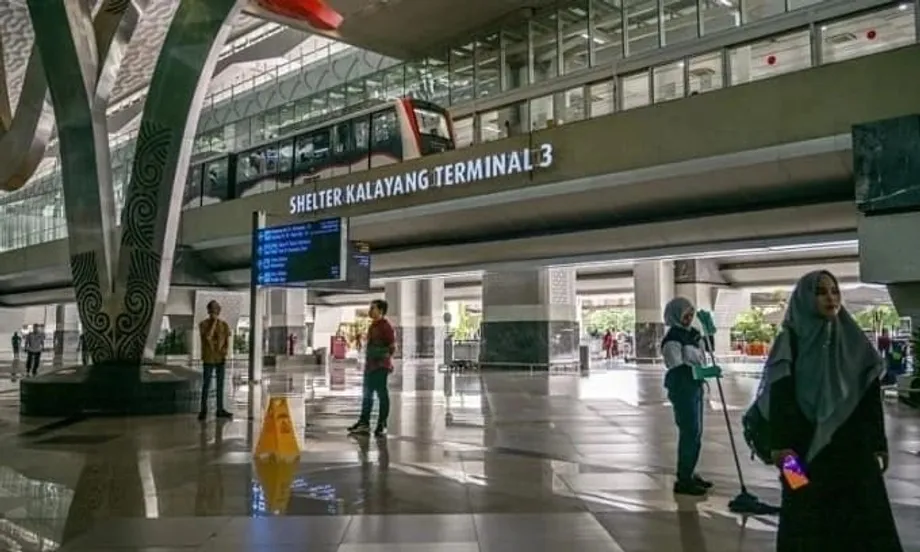
Three corridors bring immigration checks into motion
Indonesia has introduced three biometric immigration corridors, two at Jakarta's Soekarno Hatta International Airport and one at Surabaya's Juanda International Airport, allowing eligible international arrivals to have their identities checked while they keep walking. The country is the first to move beyond immigration counters and automated gates with a system that completes identity checks in motion.
Contents
- Three corridors bring immigration checks into motion
- What travelers complete before the flight
- How cameras recognize people on the move
- Why seniors and passengers with disabilities go first
- What the Hajj trial showed
- Who is building and supporting the system
- Consent and the handling of identity data
- How Indonesia compares with other airports
- What wider access will require
- Key Points
As of November 24, 2025, the initial service focuses on elderly travelers and passengers with disabilities. The corridors form part of the government led All Indonesia program, which aims to simplify arrivals and eventually extend the approach across the country. National coverage for all travelers is the goal once the system proves reliable at a larger scale.
Amadeus supplies the technology, which uses artificial intelligence and biometrics, in collaboration with Indonesia's Directorate General of Immigration and local partner PT Sinergi Teknoglobal Perkasa. Biometrics means using a physical feature, in this case a person's face, to help confirm identity.
Eligible passengers register before traveling, allowing immigration authorities to carry out checks before their flight. At the airport, cameras compare the arriving traveler with the cleared record as that person moves through a wide lane. Successful processing removes the familiar stop to present documents at a counter or wait for an automated gate to open.
The corridors operate alongside Indonesia's 243 automated border control gates. This combination keeps existing processing available while introducing a faster route for passengers who may find long queues especially difficult. The immediate change is therefore concentrated at two airports and on an initial group of travelers, with broader access planned over time.
What travelers complete before the flight
The All Indonesia app brings immigration, customs, health and quarantine declarations together in one place. Travelers can register remotely, share their passport details and complete the required declarations before arriving at the airport.
Enrollment is voluntary. After a traveler opts in and submits passport information, the immigration authority conducts background checks and creates a secure ticket for that journey. Much of the identity verification therefore happens before the flight, leaving the corridor to perform the final authentication on arrival.
At the corridor, multiple cameras capture a live image and match it against the record that has already been cleared. Screens provide signals to guide the traveler through the lane, and the final check takes seconds. A passenger who completes this process can continue without showing documents or handling paper at that point.
Moving checks earlier changes where the work takes place. Instead of beginning the entire process when a traveler reaches an immigration booth, authorities prepare the record in advance and confirm that the person entering the corridor matches it. The app and the airport equipment are therefore two parts of the same journey.
How cameras recognize people on the move
The corridor uses several cameras and 3D imaging to capture travelers from different angles. The equipment is designed to account for varied heights and small groups, conditions that make a moving lane more complex than a gate where one person stands in a fixed position.
Machine learning helps the system determine how many people are in view and keep its tracking focused on the authorized traveler. A matcher then evaluates the images for quality, liveness and similarity to the record cleared before arrival. Liveness checks help assess whether the camera is seeing a real person rather than a substitute image.
Presentation attack detection is used to identify attempts to fool the system with printed photographs or screens. Image quality must also meet international standards. Frames without sufficient sharpness or suitable lighting are discarded, so every captured image does not automatically become part of the identity decision.
The reported identification rate in operation in Indonesia is above 98 percent while maintaining strict image quality requirements. Remote verification remains central to the design: most checks take place before the flight, and the corridor supplies the final confirmation.
Rudy Daniello, executive vice president for airport operations at Amadeus, described the aim as removing friction while maintaining security. He said:
In combination with digital identity and biometrics at key airport service points, it is now possible to provide a truly seamless, secure experience with no paperwork, no queues and no physical barriers.
Why seniors and passengers with disabilities go first
Elderly travelers and passengers with disabilities are the first groups supported by the rollout. They can enroll through the All Indonesia app at home and receive guidance at the airport, reducing the need to complete the entire immigration process while standing in a queue.
The lanes are wide and step free, with space for wheelchairs and assistance devices. Removing a gate or counter stop can make the border crossing easier for people who need help moving through an airport, while the contactless process reduces paper handling.
Border officers remain stationed at the end of the corridor with tablets. They handle exceptions, including cases where the confidence of an identity match falls below the required threshold or a traveler needs extra assistance. A match threshold is the minimum level of confidence the system requires before accepting a result.
Traditional processing remains available for travelers who prefer it. Quick handling of unsuccessful matches and clear alternatives for people who do not or cannot enroll are part of making the service usable beyond those who pass through without difficulty.
What the Hajj trial showed
Indonesia tested the corridor concept during the Hajj season, when large groups of pilgrims registered in advance traveled between Indonesia and Saudi Arabia. The volume of travelers gave the system a demanding setting in which to demonstrate how it handled surges.
More than 50,000 pilgrims were processed using the system. At peak times, each corridor handled more than 30 border crossings per minute, roughly ten times the throughput of current biometric eGates.
At a continuous rate of 30 crossings per minute, one corridor would process about 1,800 people in an hour. That calculation comes from multiplying 30 by 60. It illustrates the capacity of uninterrupted movement, while the Hajj performance figure describes the peak rate reached during operations.
Higher throughput changes the work of border staff as well as the length of a queue. Officers can devote more time to passengers whose cases need attention instead of repeating the same document check for everyone. The Hajj trial provided an early indication that verification in motion can handle intense arrivals.
Jakarta and other busy hubs also face groups of flights arriving close together, including late at night. A corridor that keeps passengers moving can help airports manage those concentrated periods without relying solely on more immigration booths.
Who is building and supporting the system
Amadeus is working with PT Sinergi Teknoglobal Perkasa and the Directorate General of Immigration on the deployment. The partnership combines a global travel technology platform with local integration, training and support so Indonesian teams can operate and develop the system.
Andi Syach, CEO of Sinergi Teknoglobal Perkasa, has described the project as a partnership bringing global expertise together with local innovation and building lasting capability in Indonesia. Local support matters to the operation of the corridors because airport teams must manage both the technology and the passengers using it.
The deployment builds on years of progress in capturing biometric information at speed. Its camera system captures multiple faces and bodies in real time, while matching software evaluates whether an image is usable, whether it shows a live person and how closely it matches the cleared record.
Industry trials have pushed technology suppliers toward high accuracy despite challenging lighting and movement. Indonesia's reported identification rate above 98 percent reflects performance in actual operation, with officers handling exceptions at the end of the lane to allow the rest of the flow to continue.
Consent and the handling of identity data
Travelers choose whether to enroll through the All Indonesia app, share passport information and allow checks before arrival for their trip. Consent is central to a process that connects a passport record with facial verification at the border.
The corridor uses targeted identification against the record registered for that journey, rather than searching a large central database of every visitor. This design, together with consent and limits on the purpose for which information is used, is intended to reduce privacy risks while supporting security and convenience.
Immigration authorities, airports and airlines also need to coordinate and explain how data is used and retained. Countries that align these organizations and communicate the rules tend to move faster in adopting such systems. Clear communication helps travelers understand what they are agreeing to before they enroll.
Finland provides an example of advanced biometrics operating under strong privacy laws. Regions with stricter data rules can introduce verification in motion when the necessary controls are built into the process. Indonesia's voluntary start for elderly travelers and passengers with disabilities offers a cautious introduction intended to build public trust.
Cybersecurity and data retention still require transparent rules and auditing. The operating description does not specify how long travelers' biometric data is kept or give a date for opening the corridors to every eligible passenger.
How Indonesia compares with other airports
The United States, Australia, the Middle East and the United Arab Emirates have pursued biometric travel for years. Europe has proceeded more cautiously because of data protection requirements and upcoming changes to border procedures.
Indonesia's distinction is the deployment of a corridor in which identity is confirmed while a traveler walks, under a national program spanning more than one airport. Its three operating corridors are the beginning of a planned wider network.
Dubai introduced a biometric path in 2018, but travelers still had to pass through eGates. Amadeus is also piloting contactless smart gates in Manchester and similar processes in Curacao. Indonesia's approach removes the final physical stop associated with a gate.
The developments span an earlier airport initiative, a trial during a major travel event and the current rollout:
- 2018: Dubai introduced a biometric path that still required travelers to pass through eGates.
- During the Hajj season: Indonesia tested its corridor concept with groups traveling between Indonesia and Saudi Arabia, processing more than 50,000 pilgrims.
- By November 24, 2025: Two corridors were operating at Jakarta's Soekarno Hatta airport and one at Surabaya's Juanda airport, initially supporting elderly travelers and passengers with disabilities.
Indonesia's model sets a new reference point for the region by combining advance checks with final verification in motion. Its existing 243 automated border control gates continue to provide another route as the new process develops.
What wider access will require
Airport capacity, accessibility and staffing are all affected by the move from individual stops to continuous movement. Wide lanes can support wheelchairs and assistance devices, contactless checks reduce paper handling, and officers can focus on complex cases.
Cameras must still perform reliably in varied lighting, and face coverings can reduce match rates. When the system fails to recognize an eligible traveler, officers need to resolve the case promptly. Passengers who cannot use the app or choose not to enroll also need a clear alternative.
Expansion to the general public will test reliability with more travelers, different trip types and different staffing demands. The app must work as part of that wider journey, from registration at home to final processing at the airport.
Indonesia's next objective is to extend access to all eligible passengers over time and reproduce the model across the country through All Indonesia. The Hajj trial shows the potential to handle large flows, while the initial airport rollout puts accessibility, advance verification and officer support at the center of daily operations.
Key Points
- Indonesia has introduced biometric immigration corridors that confirm identity while eligible travelers keep walking.
- Two corridors operate at Jakarta's Soekarno Hatta airport and one at Surabaya's Juanda airport.
- The initial service focuses on elderly travelers and passengers with disabilities, with wider access and national expansion planned.
- Voluntary registration through the All Indonesia app brings passport details and immigration, customs, health and quarantine declarations together before arrival.
- The system processed more than 50,000 Hajj pilgrims and exceeded 30 crossings per minute per corridor at peak times.
- Identification above 98 percent is reported in Indonesian operations, with officers available to handle exceptions.
- Amadeus, PT Sinergi Teknoglobal Perkasa and the Directorate General of Immigration are partners in the deployment.
- The corridors operate alongside 243 automated border control gates, with traditional processing available.
- Privacy controls, cybersecurity, camera performance and staffing remain important to wider deployment.