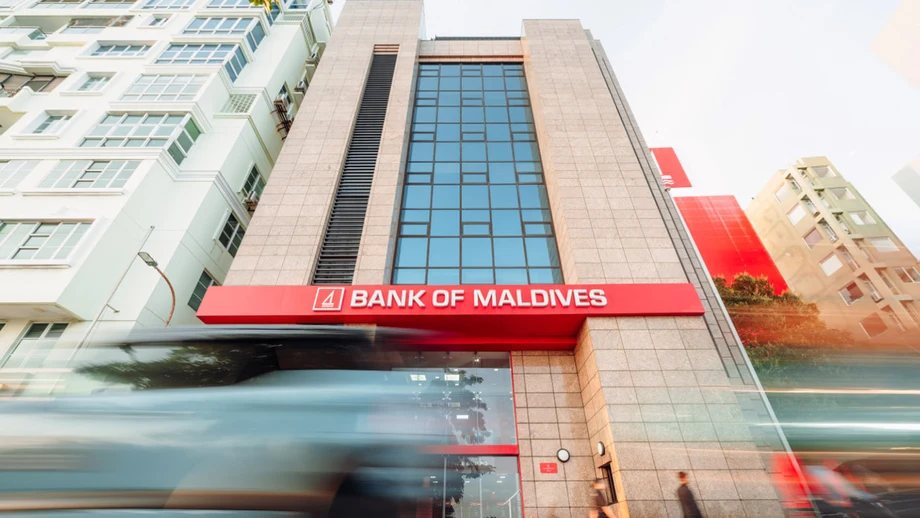
Hotel payments stall as Russia seeks talks
Bank of Maldives has been returning payments for Russian tourists' hotel stays since October 18, 2026, leaving an estimated $2 million delayed or returned by November 6 and forcing some holidaymakers to pay again before receiving rooms. The disruption has also affected transfers sent by foreign companies acting for Russian tour operators.
Contents
- Hotel payments stall as Russia seeks talks
- What Bank of Maldives says its policy covers
- How guests end up paying twice
- From October returns to government intervention
- Why Russia matters to the Maldives
- Some operators can still settle hotel bills
- A tax reversal adds another business concern
- What travellers and businesses are waiting for
- Key Points
Russia's Economic Development Ministry said on November 9 that it had asked the Maldives' Ministry of Tourism and the Maldivian embassy in Russia to resolve the problem. Talks between the two countries' central banks are also planned. No date for those talks or agreement to resume the affected transfers has been announced.
The dispute affects a major source of visitors for the Maldives. Russian tourists accounted for 258,100 arrivals from January through October, or 14.3% of the total, making Russia the country's second largest tourism market after China. Russian tour operators say uncertainty over hotel payments could affect their spending on the destination and efforts to promote it.
For travellers, the immediate problem is straightforward: paying a tour company does not put the money directly into a hotel's account. When the bank handling the hotel's payment returns the transfer, the accommodation can remain unpaid even though the guest has already bought the trip.
What Bank of Maldives says its policy covers
Bank of Maldives, the country's largest bank, confirmed that its restrictions cover transfers connected to Russia. The bank described its policy in a statement:
Under our current policy, Russia is on the list of countries with restricted access for money transfers. This means that money transfers (including incoming and outgoing) connected to or related to Russia are not processed, as required by law and regulations.
The statement gives the bank's reason for returning payments but does not identify the particular law or regulation behind the restriction. Tour operators are seeking a clearer explanation of which transactions the bank considers connected to Russia and what payment arrangements it will accept.
The Russian Union of Tourism Industry, known as RST, says transfers have been returned even when the sender was a company registered outside Russia. The union believes the bank may regard payment for Russian guests as a sufficient connection to Russia. That explanation remains the union's interpretation of how the policy is being applied.
The problem described by operators concerns transfers used to settle accommodation bills. Its reach therefore extends beyond the country in which the company sending the money is registered: an overseas intermediary can still encounter a returned payment when the underlying booking involves Russian travellers.
How guests end up paying twice
Hotels that have not received payment have asked guests to settle their accommodation bills again or refused to accommodate them, according to tour operators. Some travellers faced the prospect of losing their rooms after arrival while companies tried to resolve the missing payments.
Georgy Mokhov, founder of the Persona Grata agency, said several Russian tour operators had experienced difficulties. Guests were eventually accommodated in the same properties or comparable accommodation after another payment was made. The disruption therefore reached travellers even as businesses worked to settle the bills.
Dmitry Arutyunov, head of tour operator Art-tour, described additional expenses from repeated banking transactions. A returned transfer can leave a company paying bank charges while still owing the hotel. Sending another payment adds further costs and requires more money to be available before the original transaction has been fully resolved.
Resort Life, a company handling tourism services in the Maldives, was among the businesses affected. Market participants estimated the value of delayed or returned payments at $2 million on November 6. That figure describes disrupted transfers, with no published breakdown of how much had already been returned and how much remained delayed.
From October returns to government intervention
RST asked Russia's Economic Development Ministry and Levan Dzhagaryan, Russia's ambassador to Sri Lanka and the Maldives, to arrange consultations with Maldivian officials. Its letters were dated November 6, after operators had experienced payment problems for several weeks.
The ministry subsequently said it had sent its own appeal to the Maldivian tourism ministry and embassy in Russia. Its response moved the matter beyond requests from the travel industry, with central bank discussions also planned.
- October 18, 2026: Operators encountered returned payments for accommodation bookings, including transfers sent by foreign companies.
- November 6: RST dated its appeals to Russian officials. Market participants put disrupted payments at about $2 million.
- November 9: Russia's Economic Development Ministry said it had contacted Maldivian authorities and that talks between the central banks would be organised.
Artur Muradyan, an RST board member and chief executive of Space Travel, said businesses needed an explanation of the bank's approach and a reliable way to pay hotels:
Industry players need to understand what drives this approach and how to ensure timely payment for hotel services.
For operators, government talks have a practical purpose: obtaining payment conditions they can use when confirming bookings and sending money. Until those conditions are clear, a company may have a confirmed reservation without confidence that its intended transfer will reach the hotel.
Why Russia matters to the Maldives
The Maldives received 258,100 Russian visitors in the first ten months of 2026, an increase of 11.3% compared with the same period a year earlier. The figures put Russia behind China but ahead of the United Kingdom among the country's leading tourism markets.
China accounted for 18.4% of arrivals between January and October, Russia for 14.3%, and the United Kingdom for 7.6%. Russia's share was therefore almost twice the British share, illustrating the size of the customer base involved in the payment dispute.
The Maldives also ranks among the top ten destinations sold by Russian tour operators, although it represented only 1.7% of their bookings for November, according to figures from the Association of Tour Operators of Russia. Its importance to those businesses comes partly from the high price of each trip.
The average Maldives package booked for November cost 585,600 rubles, up 14.6% from a year earlier. The comparable figure for Egypt was 246,000 rubles. A Maldives booking was therefore worth about 2.4 times an Egypt booking, making even a relatively small number of disrupted reservations financially substantial.
Some operators can still settle hotel bills
Anex deputy general director Yana Muromova said her company continued to pay Maldivian hotels through a foreign principal, the overseas business through which it conducts those transactions. Her account shows that operators have experienced different outcomes depending on their payment arrangements.
Muromova nevertheless warned that accommodation problems at other companies could damage confidence in the destination and reduce demand. A traveller considering an expensive holiday may be discouraged by the prospect of having to find money for a second hotel payment upon arrival.
Mokhov described several methods Russian travel businesses use to pay foreign partners: establishing a company in the destination country, transferring funds through businesses in third countries, or using Russian banks that route payments through other jurisdictions. Each additional step can increase the cost of settling a bill.
Foreign intermediaries have already appeared among the senders whose payments were returned by Bank of Maldives. Operators therefore want more than a different route for one transfer. They are asking for an explanation of which arrangements will be accepted consistently.
A tax reversal adds another business concern
The banking dispute follows a separate disagreement over taxation. At the end of August, Maldivian authorities decided to extend a 17% goods and services tax, or GST, to overseas suppliers of tourism services. The proposed charge would have applied to the margins of tour operators and agents selling services in the Maldives.
A margin is the difference between what a business receives from a sale and what it pays for the services it sells. Applying a tax to that amount would require information about the overseas seller's business figures. Travel companies questioned how Maldivian authorities would obtain those records.
On November 6, Maldives Tourism and Civil Aviation Minister Mohamed Ameen said the country was abandoning that decision. The reversal addressed a tax concern for foreign tourism businesses while the bank payment problem continued.
Muradyan and other industry representatives warned that prolonged uncertainty over payments could lead Russian operators to reconsider investment and promotion of the Maldives. Their concern is concrete: selling more holidays creates further obligations to hotels, and those obligations require a dependable way to transfer money.
What travellers and businesses are waiting for
The next announced step is discussion between the Russian and Maldivian central banks, alongside the Russian ministry's approach to tourism officials. Operators are seeking clarity on the reasons for returned transfers, the conditions for accepted payments and the handling of hotel bills already affected.
Guests caught in the dispute have received accommodation after repeat payments, according to Mokhov. For businesses, those solutions bring extra transaction costs and can require funds to be sent again while earlier payments are still being resolved. The immediate task is to make existing bookings payable without another confrontation at hotel reception.
Key Points
- Bank of Maldives began returning affected accommodation payments on October 18, 2026, including some sent by foreign intermediary companies.
- Market participants estimated delayed or returned transfers at $2 million by November 6.
- Some Russian tourists had to pay again before receiving accommodation.
- Russia's Economic Development Ministry has contacted Maldivian authorities, and central bank talks are planned.
- Russia supplied 258,100 visitors, or 14.3% of Maldives arrivals, from January through October.
- Operators want clear payment conditions before committing further money to bookings and promotion.