A Daily Meal With a Founder Behind It
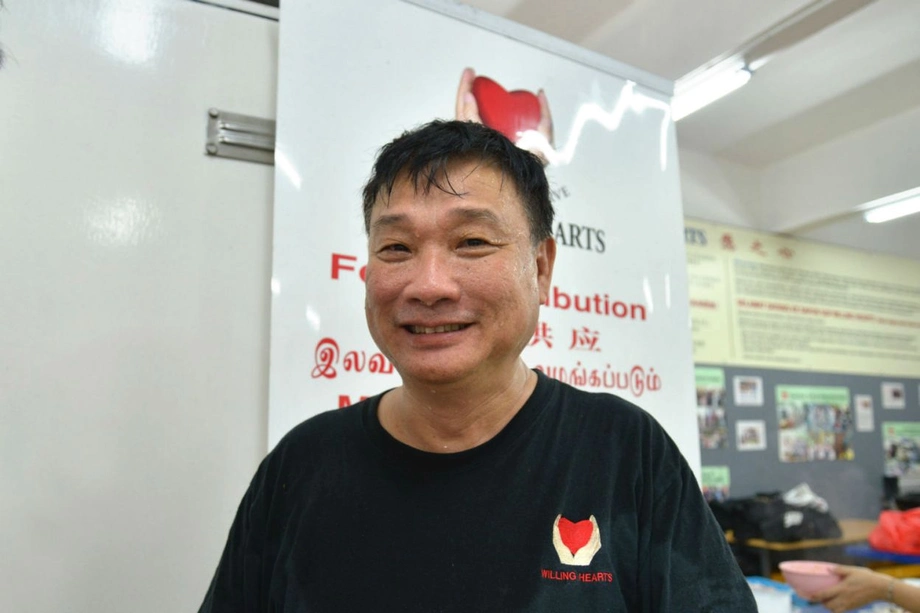
Tony Tay, born in 1947, has spent more than two decades turning a small act of food sharing into a daily delivery of about 10,000 food packets across Singapore, seven days a week. Willing Hearts, the volunteer group he founded, prepares and sends out packed meals to people who may be elderly, sick, have disabilities, come from families with little money or be migrant workers. A soup kitchen is simply a place where meals are cooked and packed for people who need them, and Tay's operation now works on the scale of a small delivery business. Although nuns and a church appear in its early story, the charity is secular and not tied to one religious body.
Contents
- A Daily Meal With a Founder Behind It
- How Leftover Bread Became a Kitchen
- The Elderly Man Who Asked for Cooked Food
- A Boyhood With Huckleberry Finn Echoes
- Jobs, Unpaid Wages and a Ride Home
- The Business Life Before Willing Hearts
- Why a Meal Can Hold a Family Together
- Inside the Telok Kurau Campus
- Why Finding a Successor Is Not Simple
- Tay's Test for the Next Leader
- The Lessons He Still Carries
- Key Points
On Nov 5, 2026, Tay was among 59 honourees at the Spirit of Enterprise Awards 2026. He was also the first recipient of the SOE-EATZ Social Impact & Entrepreneurship Recognition. The award put a formal label on work that began with leftover bread, pots from his late mother's kitchen and a question from a nun: would he collect food for people in need?
Tay is a businessman as well as a charity founder, and his life has moved between jobs, family responsibilities and a stubborn habit of noticing hunger. He dates Willing Hearts to 2003. The organisation was registered in 2005 and joined the National Council of Social Service, a national body for social service groups, the following year. The scale is large now. The reason behind it remains small and clear: if someone cannot cook or cannot afford a proper meal, someone else can prepare one.
How Leftover Bread Became a Kitchen
The first tools were domestic ones. Around the time of the SARS outbreak, Tay's mother bought cooking utensils, gave some to her church and kept the rest at home. After she died, friends used those pots to cook for mourners at her wake. Tay handed leftover food to neighbours and workers renovating nearby houses, an early version of the same idea that would later feed thousands: extra food should go to people who can use it.
In a 2017 interview in Manila, Tay linked the early collections to his mother's charity work with the Canossian Sisters. After a nun asked him to collect bread, he agreed to help once and kept going. Each night, he gathered 200 to 300 loaves. The nun kept 20 or 30, and Tay delivered the rest the next morning to elderly residents in Bukit Ho Swee.
The dates show how a habit became an organisation:
- 2003: Tay began using his late mother's cooking equipment to feed people in need.
- 2005: The work was formally registered as Willing Hearts.
- 2006: Willing Hearts joined the National Council of Social Service.
- 2017: Tay received the Ramon Magsaysay Award, often called Asia's Nobel.
- Nov 5, 2026: Tay was recognised at the Spirit of Enterprise Awards 2026.
SARS, the disease behind that early period, is a severe respiratory illness. The kitchen that grew after it was built on ordinary household equipment, donated breakfasts, fruit and vegetables, and people willing to turn up before the day was properly light.
The Elderly Man Who Asked for Cooked Food
Tay, the founder of Willing Hearts, recalled the moment when raw ingredients stopped being enough. He and his wife Mary were giving out bread and vegetables. One elderly man took the bread but left the vegetables, and Mary asked why. The man said he could not cook. That answer led to two packets of cooked food, then four, then a stream of requests.
Tay, founder of Willing Hearts, described the exchange in his own words:
We first started by collecting leftover bread and vegetables to distribute to people in need. One day, an elderly man came to collect bread but did not take any vegetables. My wife asked him why he didn't take the vegetables. He replied that he couldn't cook.
Mary brought the man two packets of food from their home in Jalan Taman. Another elderly resident asked for a meal after seeing them. Tay, the founder who still describes the kitchen in family terms, said the number grew step by step:
What started with just two meals grew to four, then gradually to 100 packets. And that was how our kitchen began.
Tay and Mary cooked at home, rose early, gathered donated breakfasts and fruit, and stretched what they had. The Church of St Michael joined the effort. Tay's son later suggested registering the group because food given to others has to follow safety rules and donations need careful handling. Food safety rules have a simple purpose: food must be stored, cooked and delivered so it does not make people sick. Tay remembers early helpers, many of them older women, as people who simply turned up and came 'with one heart'.
A Boyhood With Huckleberry Finn Echoes
Before Willing Hearts had buildings and vehicles, Tay had to make do with very little. When he was five and a half, his family broke apart and he was placed with his siblings at Canossian Convent. Boys had to leave at 10, he recalled, while girls could stay until 18 or 19. He moved with an older sister to their grandmother's home in Mackenzie Road, behind Rex Theatre. His other sisters stayed with the nuns.
Tay, now known for feeding thousands of people, remembered a childhood with scrapes, small freedoms and real deprivation. He once slipped into a cinema with friends because there was no money for tickets:
We used to sneak through the back door of Cathay Theatre to watch movies for free.
School lasted about a year because the family could no longer pay fees, buy books or cover food. A later place at a vocational institute to study electrical work also ended quickly. Tay's memories have a Huckleberry Finn quality, full of rivers, fruit and improvised fun, but the poverty underneath was serious. He recalls playing in rivers, picking fruit and cooking it on the spot. Everyday freedoms he knew as a child have shrunk, in his view, as rules have multiplied.
Jobs, Unpaid Wages and a Ride Home
At 12, Tay did odd jobs at a milkshake bar in The Arcade, near Change Alley. At 13, he sold vegetables. At 14, he took a bus to Tapah and a taxi onward to the Cameron Highlands to work at the Eastern Hotel. The job involved heavy cleaning, little rest and meals of kidney beans, eggs and meat that never seemed enough.
The hotel then stopped paying him for two or three months. Tay ran away. A Malaysian taxi driver took him to Kuala Lumpur and arranged for a friend to help him return to Singapore. Tay, the charity founder who later built a routine of feeding strangers, recalled the help he received as a boy:
So I was given help by a Malaysian.
By 16, he had held a string of jobs, most lasting a year or less. The lesson he took from those years was practical rather than abstract. People with few options survive when someone notices what is needed and acts without ceremony. Years later, that same plain generosity became the engine of Willing Hearts.
The Business Life Before Willing Hearts
Tay's working life did not begin in charity. In 1973, he started an insurance agency that grew to about 160 agents and occupied him until around 1990. After that, he moved into printing. Mary, whom he married in 1969, ran a shipping and forwarding agency that brought the family a steadier income.
The couple raised three children and now have nine grandchildren and one great-grandchild. Tay's schooling had ended early, so experience had to do much of the teaching. He could have stayed among printing presses and business papers. Instead, the pots in his mother's kitchen and the needs of neighbours pulled him toward Jalan Taman, where meals began to leave the house each day.
Why a Meal Can Hold a Family Together
Tay, founder of Willing Hearts, told an interviewer in Manila that food is more than calories. He was born to poverty and says he was deprived of food as a child, so asking people what to eat next is not a small concern for him. He explained that a meal gives energy and lets people think about other parts of life:
Food keeps families together, and it gives strength, it gives energy, and without food, it will be a big problem. So food comes to unite people because when you bring the food, you see the people together, you unite them.
That daily practice helped earn Tay a reputation as a Singapore food sharing pioneer. Willing Hearts grew from 11 volunteers in 2003 to about 300 by 2017. It started with about 300 meals a day and was serving about 6,000 daily meals by then, sent to more than 40 locations. By 2026, Tay's account put the daily distribution at about 10,000 food packets. Using those daily counts, that is 4,000 more than the 2017 figure. About 200 volunteers were distributing food on the ground in 2017, while others cooked, drove or brought their children to help.
The people served include neglected and abandoned elderly residents, people with disabilities, sick people, children of single parents, families with little money and migrant workers. Tay received the Ramon Magsaysay Award in 2017, an honour often described as Asia's Nobel. The Ramon Magsaysay Award Foundation described his dedication as quiet and abiding when the award was given. Tay said the recognition would make volunteers happy and bring more of them back. He has also described the group's vision in spiritual terms, calling it what he called God's vision, while insisting that the work must be handled one day at a time.
Inside the Telok Kurau Campus
Willing Hearts now works from a campus in Telok Kurau with three buildings. They hold spaces for food preparation and cooking, medical and renal care offered at low cost, and accommodation for rough sleepers. Renal care means care for the kidneys. Rough sleepers are people sleeping outdoors or in public places not meant for sleeping.
Tay, the founder, said the 2026 operation runs with 22 paid employees, 13 cars and four drivers. In December 2025, he had described 20 paid employees earning S$2,000 to S$3,000 a month, with bonuses only if there was a surplus at the end of the year. He draws no salary, and others outside that paid core are not remunerated. Cooking starts at 5am, meals go to about 4,000 households, and about 300 people are involved in the daily effort.
Delivery is one of the pressure points. Tay, founder of Willing Hearts, said more drivers are needed:
We do need more volunteer drivers to help deliver food!
The campus shows how the original kitchen has changed. It is no longer two packets of food carried by Mary to an elderly man. It is a place where meals, basic care and a bed can be organised under one roof, with vehicles moving food across the island.
Why Finding a Successor Is Not Simple
Succession means the handover of leadership. For Willing Hearts, the question is becoming more visible as Tay ages. In December 2025, he was 78 and said he intended to keep leading for as long as he could. No successor has been named and no handover date has been set.
Other charities in Singapore face the same problem. Raymond Khoo, chairman of The Saturday Movement, has been looking for a general manager for months. The group, started in 2010, offers S$5,000 a month for a role that would be its first salaried staff position. Many candidates or recommendations he received earned far more and managed as many as 20 staff. Khoo, chairman of The Saturday Movement, explained why pay is tight:
The majority of our money goes back to (the beneficiaries). When we want to hire ... then we need to go out and look for money to do this. So finance is always a key issue.
Jack Sim, founder and director of the World Toilet Organization, spent a year interviewing about 40 candidates before finding an executive director in October. Some expected S$15,000 to S$20,000 a month, which they called the 'market rate'. Sim, whose organisation campaigns for sanitation and has been recognised at the United Nations, said people in the social sector still have bills to pay.
Project Dignity has taken a different route. Its founder and executive director, Koh Seng Choon, 66, is grooming his son Christopher Koh, 32, after an outside search failed. A heart bypass in March made the handover urgent, and Koh has set 2028 as the target year.
Associate Professor Louis Ng from NUS College said the social sector has long been seen as poorly paid work, and that charity work should be valued on par with corporate jobs. Ms Carrie Tan, head of social mobility at Tri-Sector Associates, said finding a leader with management experience and an understanding of social services is difficult. She also said founders often imagine a successor with the same passion, values and working style, an expectation that can narrow the search. Ms Carol Pereira, a social work academic at the Singapore University of Social Sciences, also spoke about pay perceptions and what charities expect from future leaders.
Tay's Test for the Next Leader
Tay's answer is less about titles and more about hands. Tay, founder of Willing Hearts, said he would keep working while he could:
We do what we can as long as we are alive.
He has said a future chief executive must be able to work, not simply want status. His test is practical: a successor should be able to 'use his two hands and use a bit of brain' and come with the right intentions. That means accepting work that starts at 5am, food preparation, coordination with volunteers and the daily discipline of delivery to thousands of households.
Tay, founder of Willing Hearts, said the charity avoids publicity built on sadness because he wants people to keep helping over time. He explained the approach like this:
We want to touch people's hands, so they will come back and contribute long term.
Asked about who might eventually lead the group, Tay has used an image from nature. He compares leaders to birds: when one disappears, another comes. He is confident that someone will emerge. In a 2017 interview, he said he did not know when he would stop and left that to God's will. For now, the known plan is continuity rather than a named handover.
The Lessons He Still Carries
Tay speaks with regret about leaving school early. Tay, the founder of Willing Hearts, said street smarts helped him survive poverty, but study matters more in a world shaped by artificial intelligence:
At that time, I had no regrets. We just needed to work smart and be street smart. Today, everything is about AI, so education is important.
His childhood memories are not only hard. He recalls rivers, fruit and life near the sea. He once operated a boat, though his last outing was about 22 years ago. Having gone without food as a boy, he says he has no favourite dish. All food is good to him, a simple answer from a man who now spends his mornings making sure other people have something to eat.
The Willing Hearts founder also described his method for volunteers in a 2017 interview. He said people should come as they are, look around and do what they can, instead of being assigned elaborate roles. That approach helps explain how a kitchen that began with two meals could keep growing while staying focused on the next meal needed.
Key Points
- Tony Tay, born in 1947, founded Willing Hearts in 2003 and registered it in 2005.
- The organisation now delivers about 10,000 food packets across Singapore, seven days a week.
- Its first meals grew from two packets for an elderly man who could not cook.
- Tay received the Ramon Magsaysay Award in 2017 and was recognised at the Spirit of Enterprise Awards 2026 on Nov 5.
- The Telok Kurau campus includes cooking facilities, medical and kidney care offered at low cost, and accommodation for rough sleepers.
- No successor or handover date has been named; Tay says he will keep working as long as he can.