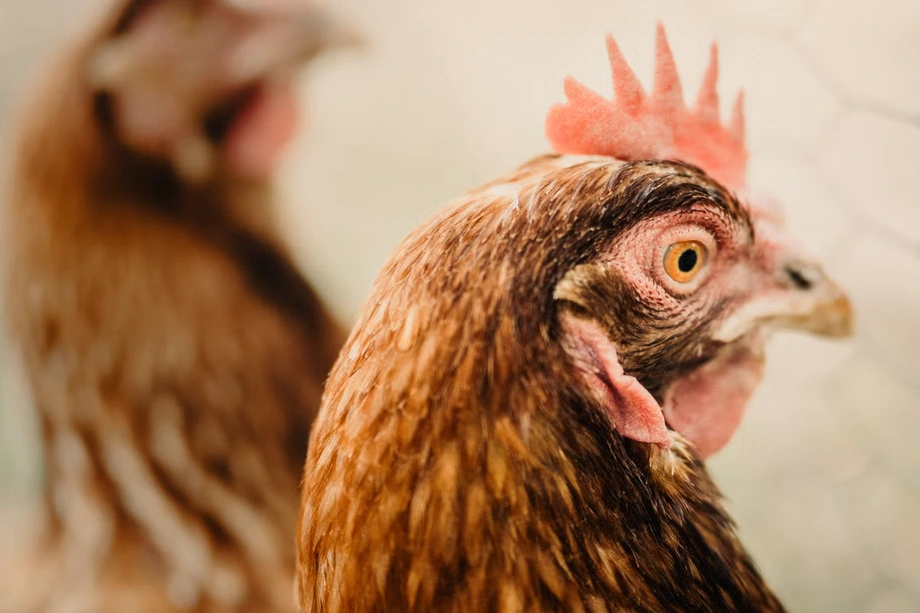
The Case of the Crossroad Chicken
A civil lawsuit in Singapore involving an unexpected traffic hazard has concluded with a ruling that highlights the legal limits of blame following a roadside emergency. District Judge Jonathan Ng Pang Ern dismissed a claim brought by passenger Yvonne Chen Qianyun against her private hire driver, Tan Teng Kiat, after a chicken darted across Holland Road. The judgment, delivered in the district court on November 18, 2026, addressed an incident that occurred on February 19, 2024, when Mr Tan braked abruptly to avoid a collision, resulting in injuries to Ms Chen.
Contents
Judge Ng ruled that Mr Tan acted appropriately under the circumstances and was not responsible for the accident. The court ordered Ms Chen to pay S$15,000 (US$11,628) in legal costs. In his written grounds of decision, the judge captured the unusual nature of the litigation with a memorable observation, noting that the events arose entirely from an animal crossing the asphalt.
This was a trial that arose because a chicken crossed the road. The law does not seek out a tortfeasor for every loss that is suffered. In an imperfect world, some losses must lie where they fall. This incident, caused as it was by a chicken crossing the road, was unfortunately, but also undoubtedly, part of the vicissitudes of life.
Legal responsibility, known in civil law as tort liability, requires a plaintiff to prove that a defendant breached a recognized duty of care, thereby directly causing harm. When unexpected emergencies occur on public roads, courts evaluate whether a driver reacted as an ordinary, reasonable, and careful motorist would. In this instance, the judiciary determined that the sudden appearance of the bird created an unavoidable crisis requiring immediate defensive action.
Disputed Details and Courtroom Arguments
Legal proceedings revealed conflicting accounts regarding the exact movements of the animal and the behavior of the vehicles involved. Ms Chen maintained that the bird was already stationary on the road when the vehicle approached. Mr Tan countered that the creature suddenly flew across his path, forcing an immediate reaction to prevent an impact.
The two parties also disagreed on the biological classification of the animal itself. Ms Chen referred to the creature as a jungle fowl, while the driver maintained it was a domestic rooster. District Judge Ng noted that these specific discrepancies were ultimately immaterial to the core legal question. What mattered to the court was the undisputed fact that the animal's sudden movement caused the vehicle immediately ahead to apply its brakes.
Represented by Mr Raj Singh Shergill and Ms Desiree Koh from the law firm Lee Shergill, Ms Chen argued that her driver failed to maintain a safe following distance. She contended that Mr Tan was traveling approximately four to five metres behind the lead vehicle and executed an unnecessarily forceful stop that caused her back injuries. Mr Tan, represented by Mr Willy Tay from Willy Tay's Chambers, testified that he was driving at about 50 kilometers per hour and maintained a distance of roughly 10 metres from the car in front of him.
According to Singapore Highway Code guidelines, motorists are generally advised to maintain a following distance of at least one car length for every 16 kilometers of speed to ensure adequate stopping space. At 50 kilometers per hour, this formula suggests a gap of approximately three car lengths, where an average car measures four to five metres. However, the court did not need to issue a final ruling on whether the specific following distance was technically sufficient.
The Split Second Reaction and Emergency Braking
Judicial reasoning focused heavily on the timeline and the suddenness of the events rather than rigid mathematical formulas. Both individuals in the vehicle agreed that the situation unfolded within a split second, leaving no time for deliberate preparation or anticipation. The judge observed that neither driver possessed the luxury of time required to execute a smooth, gradual stop when confronted with a sudden hazard.
Evidence presented during cross-examination included Ms Chen's own reaction immediately following the incident. Testimony indicated that she asked Mr Tan if he had recorded the license plate number of the vehicle ahead so she could pursue a legal claim against that driver, mentioning that her pain had immediately worsened. She also asked him to serve as a witness for that intended claim before changing her mind about whom to sue.
Judge Ng noted that this immediate response suggested the stop was indeed forceful, supporting the conclusion that an emergency occurred. He stated that expecting a driver to execute a gentle, normal brake when confronted with a sudden hazard would be entirely unrealistic. Similar scenarios in motor accident guidebooks often examine public transport drivers braking for stray animals, where sudden deceleration is recognized as a standard and expected reflex to prevent multi-vehicle collisions.
Broader Legal Context and Previous Claims
The civil action stood out not only for its unusual catalyst but also because of disclosures regarding the claimant's legal history. During the proceedings, the district court identified at least two other active claims involving Ms Chen as a passenger in separate road accidents. One case concerned an incident in September 2022 involving a private hire vehicle, while another involved her husband's car in October 2024.
These prior actions formed part of the court's review of the wider circumstances surrounding the litigation. While being an innocent passenger in multiple unfortunate transport incidents remains statistically possible, courts examine each case based strictly on the specific evidence tied to the alleged breach of duty. In this instance, the absence of any contact between Mr Tan's car and the vehicle ahead reinforced the finding that the driver successfully avoided a collision through standard defensive maneuvering.
Dissatisfied with the district court's decision, Ms Chen filed an appeal to the High Court to challenge the dismissal and the cost order. Legal analysts note that civil appeals against factual findings in minor accident claims face high procedural thresholds, as appellate courts generally defer to trial judges on matters involving witness credibility and the immediate assessment of fast-moving roadway events.
Chronology of Events
The timeline of the case details the progression from the roadway hazard to the appellate filing:
- February 19, 2024: The incident occurs on Holland Road when a chicken crosses the path of traffic, prompting sudden braking.
- September 2022: An unrelated road accident occurs involving Ms Chen as a passenger in a private hire vehicle, later noted in court records.
- October 2024: A separate road accident occurs involving a vehicle driven by Ms Chen's husband, where she was also a passenger.
- November 18, 2026: District Judge Jonathan Ng Pang Ern publishes the grounds of decision, dismissing the lawsuit and ordering S$15,000 in costs.
- November 19, 2026: Media outlets report on the judgment, bringing public attention to the unusual legal reasoning.
- Following the November 2026 ruling: Ms Chen files an appeal with the High Court to contest the district court decision.
At a Glance
- A Singapore court dismissed a lawsuit where a passenger sued her driver for injuries sustained after he braked to avoid a chicken.
- District Judge Jonathan Ng Pang Ern ruled that the driver was not negligent and that the event was an unfortunate part of life.
- The claimant, Yvonne Chen Qianyun, was ordered to pay S$15,000 in legal costs to the driver, Tan Teng Kiat.
- The court noted that the claimant had at least two other pending court claims regarding separate road accidents.
- The claimant has filed an appeal against the district court ruling to the High Court.