North Korea Directs Attention Inward After Regional Diplomacy
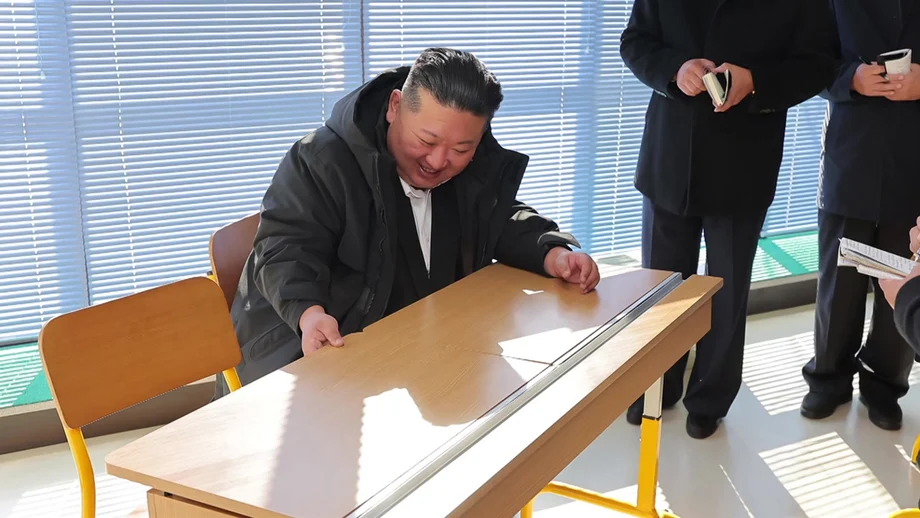
North Korean leader Kim Jong Un inspected construction sites for educational facilities on November 20, 2026, choosing to focus on domestic manufacturing rather than meeting with foreign leaders. The inspections took place in Pyongyang at the School Fixtures Factory and the Educational Apparatus Factory under construction, according to the Korean Central News Agency. The timing coincided with the conclusion of an Asian tour by United States President Donald Trump. While international attention focused on high level diplomatic meetings in Shenzhen, North Korean state media published photographs of the leadership examining teaching equipment and science class materials. The official reports omitted any mention of potential meetings with American officials, signalling a clear preference for internal economic projects over foreign engagement.
Contents
President Trump concluded his trip to Asia on November 19, 2026, following a trilateral summit that included Chinese President Xi Jinping and Russian President Vladimir Putin. During the visit, the American leader repeatedly suggested that another meeting with Kim was possible, telling reporters that he and the North Korean leader would eventually talk. No such meeting materialized during the tour. Analysts point out that Pyongyang has remained silent regarding these overtures, choosing instead to highlight domestic accomplishments and educational infrastructure.
Inspecting Educational Infrastructure in Pyongyang
The field guidance on November 20, 2026, brought senior officials to construction sites designed to modernise the country's schools. Kim was accompanied by Jo Yong Won and Kim Sung Du, who serve as secretaries of the Central Committee of the Workers' Party of Korea, alongside Pak Jong Chon, an advisor to the Ministry of National Defence. Official photographs indicated that the factories are situated near major new residential developments in Pyongyang, such as the Ryugyong Hotel vicinity and the Songsin and Songhwa districts. Factory managers and military builders greeted the delegation upon arrival.
During the inspection of the School Fixtures Factory, the leadership reviewed samples of desks, chairs, and classroom furniture intended for primary schools, middle schools, and universities nationwide. Officials evaluated the quality of construction and the readiness of assembly lines. The leadership praised the military builders for maintaining high standards of construction despite material constraints. The tour then continued to the Educational Apparatus Factory, where officials examined material preparing shops, plastic processing units, metal processing workshops, and general assembly areas.
The Strategic Value of School Investments
State media recorded specific statements from the leadership regarding the role of education in national development. The production of educational equipment is treated as a comprehensive investment in future generations rather than a routine administrative task. Education reform requires reliable material foundations to succeed, according to official statements released after the visit. The construction sites represent a tangible effort to upgrade the country's learning environments by providing advanced experimental apparatuses and standard furniture.
"As the viewpoint on science and education is the clearest expression of our revolutionaries' outlook on the future and the revolution, the production of the fixtures for primary and middle schools and universities across the country constitutes the full and comprehensive investment in future generations, in education," the leadership stated, according to the Korean Central News Agency. Officials were instructed to plan educational developments carefully over the long term to ensure that modern science teaching tools reach students across all regions.
Analyzing the Diplomatic Silence
The decision to bypass a meeting with American diplomats reflects a broader strategic calculation by Pyongyang. Experts suggest that closer military and economic ties with Beijing and Moscow have reduced the urgency for North Korea to negotiate with Washington. Following a series of high level exchanges with Russia and China, the leadership feels secure enough to ignore external diplomatic overtures. This strategy contrasts with previous diplomatic efforts during Trump's first term, which included three summits aimed at curbing the nuclear program but ultimately yielded no formal disarmament agreements.
Foreign policy specialists note that North Korea has firmly enshrined its nuclear status in domestic legislation, declaring its arsenal permanent and irreversible. International sanctions imposed by the United Nations have failed to halt weapons development, and Pyongyang continues to expand its military capabilities. Observers suggest that holding high level talks without thorough preparation carries political risks, leading the North Korean leadership to prioritize internal economic goals and local industrial inspections.
A Week of Varied Public Engagements
The factory visits formed part of a broader inspection tour conducted across multiple provinces in mid-November 2026. On November 15 and 16, state media reported visits to tourism and development zones near the Chinese border, including Mount Paektu and the Samjiyon ski resort. These appearances involved family members, including Ri Sol Ju and daughter Ju Ae, as seen in reports on the evolving succession strategy which detail how younger generations are integrated into public state events. Following the northern visits, the schedule shifted toward economic and military infrastructure in the eastern provinces.
On November 17 and 18, the itinerary included inspections of fish farms and greenhouse agricultural projects in South Hamgyong Province, followed by a stop at the Kim Jong Suk Naval University in Hamhung. At the naval institution, the leadership emphasized the growing importance of maritime defense and modern tactical readiness. These regional stops preceded the return to Pyongyang for the educational factory inspections, reinforcing a narrative of active engagement with civilian welfare, agricultural production, and military training.
The Broader Geopolitical Context
The absence of a meeting in Shenzhen left international observers examining the future of bilateral relations on the Korean Peninsula. While Washington maintains that communication remains the primary path toward resolving security concerns, regional analysts argue that Seoul and Washington face limited options while Pyongyang pursues closer alignment with Moscow. The diplomatic stalemate persists as North Korea prepares for upcoming political gatherings, including central committee meetings scheduled for December to evaluate annual economic achievements and set policy directions for the coming year.
At a Glance
- North Korean leader Kim Jong Un inspected the School Fixtures Factory and Educational Apparatus Factory under construction in Pyongyang on November 20, 2026.
- The field guidance occurred while United States President Donald Trump concluded an Asian tour that included a trilateral summit with Chinese and Russian leaders in Shenzhen.
- North Korean state media released photographs and reports on November 21, 2026, without mentioning any diplomatic overtures or proposed meetings with American representatives.
- Official statements emphasized that investments in school equipment and science laboratories represent foundational steps toward a broader national education revolution.
- Previous regional stops in mid-November included visits to Mount Paektu, agricultural cooperatives in South Hamgyong Province, and the Kim Jong Suk Naval University.