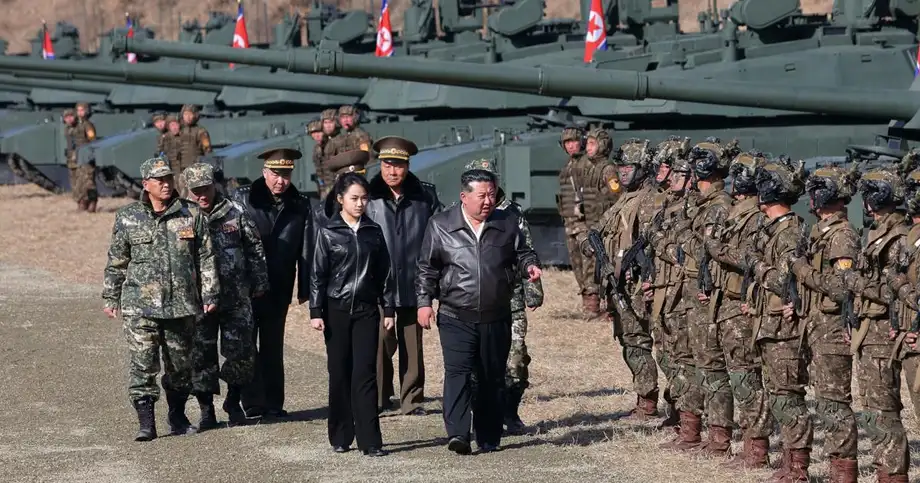
A teenage daughter moves closer to the center of power
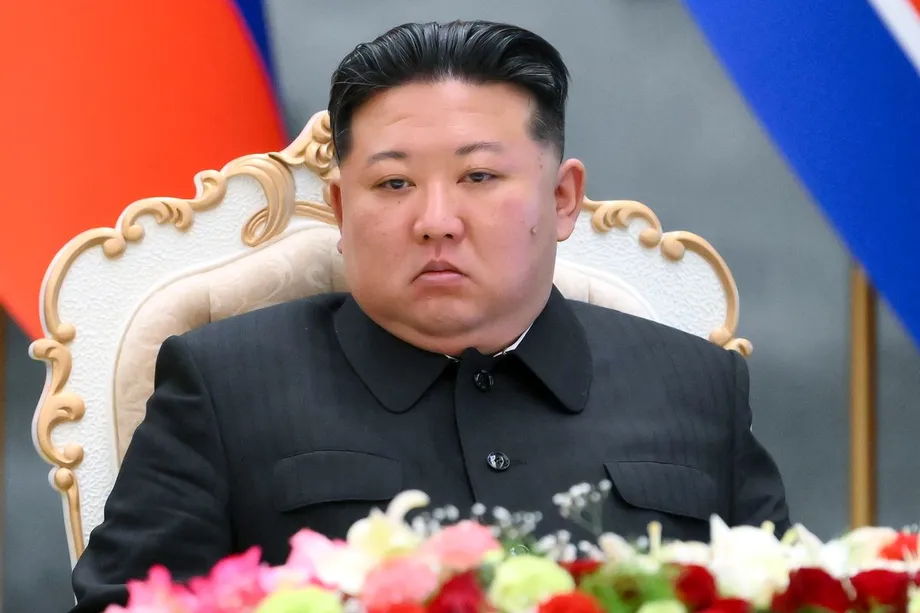
South Korea's intelligence agency says about 60% of Kim Ju Ae's public appearances involve the military, a concentration it sees as part of North Korea's effort to prepare its people for a possible fourth generation of Kim family rule. The girl, reportedly about 13, has appeared beside her father, Kim Jong Un, at missile launches, military parades, weapons factories and other carefully arranged events since November 2022.
Contents
- A teenage daughter moves closer to the center of power
- Why her treatment attracts so much attention
- Military events provide the strongest public message
- From a missile launch to an international appearance
- What contacts inside North Korea are saying
- Could family status overcome the gender barrier?
- Why visibility may serve more than one purpose
- Earlier successions show why preparation matters
- Timing matters for the family and ordinary citizens
- Key Points
South Korea's National Intelligence Service (NIS) has moved toward increasingly firm assessments of her prospects. In a parliamentary briefing, its director, Lee Jong-seok, said the judgment that she could be seen as the successor rested on credible intelligence. At an October 29, 2026 parliamentary audit, the agency described a campaign to strengthen her standing and build an image of a future military leader.
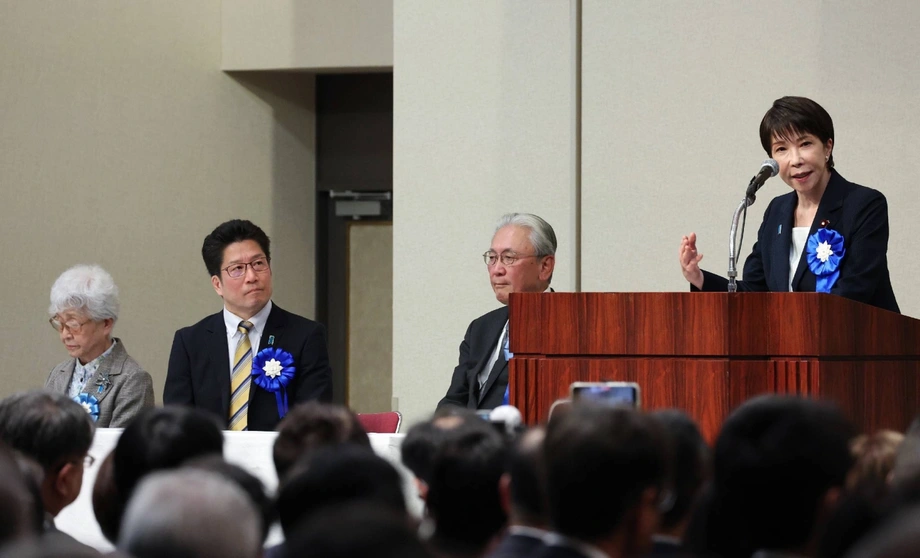
The assessment was delivered to the National Assembly's Intelligence Committee during its audit at NIS headquarters in Seoul and relayed to reporters by lawmakers Yun Kun-young and Yu Young-ha. The agency said its analysis of her public activities since 2022 showed that her successor status was being reinforced step by step, calling this "a strategy to gradually increase public acceptance." It said military activities accounted for "60%" of her public activities and described her appearances as "building a military-leader narrative," including portrayals of her appearing to take part in practical nuclear-missile work.
Kim Ju Ae has no publicly identified office in the ruling Workers' Party, government or armed forces. North Korea has announced neither a formal succession appointment nor a timetable for transferring power. Her public prominence has nevertheless made her the leading focus of debate about who could eventually govern a country of roughly 26 million people with nuclear weapons and little political freedom.
Eight of 11 North Korean defectors interviewed about the succession question believed she was being prepared to inherit power. Several maintain contacts inside North Korea, where discussion of the ruling family's future can be dangerous.
The central issue is now larger than whether Kim wants his daughter to follow him. It also concerns how a young woman could gain authority over senior officials and military commanders in a political system that has passed power between male members of one family since its founding in 1948.
Why her treatment attracts so much attention
Kim Ju Ae's appearances carry messages through seating, positioning and ceremony. State images have shown a senior general kneeling before her and the girl standing in front of her father. North Korean media have described her as his "most beloved" and "respected" child.
Tae Yongho, a former minister at North Korea's embassy in London who defected to South Korea in 2016, says the conduct of senior officials is especially revealing. He interprets their treatment of her during visits to missile sites and factories as the kind reserved for a future leader.
Tae compared those scenes with Kim Jong Un's appearances alongside his own father before taking power:
They are repeating the same protocol and treatment they provided for Kim Jong Un.
That interpretation places the focus on how officials behave around her, rather than simply how often she appears. In a system where public displays of rank and loyalty are tightly managed, repeated deference can help make a new hierarchy familiar.
Military events provide the strongest public message
The NIS says North Korea is presenting Kim Ju Ae as though she participates in practical work involving nuclear weapons and missiles. Lawmakers relaying the intelligence assessment said military events accounted for about three out of every five public appearances, with commemorative photographs involving her concentrated at military occasions.
One particularly striking display showed her driving a battle tank carrying her father and military personnel. The agency interpreted those images as an effort to promote her military capabilities and echo footage of Kim Jong Un aboard a tank before his own succession.
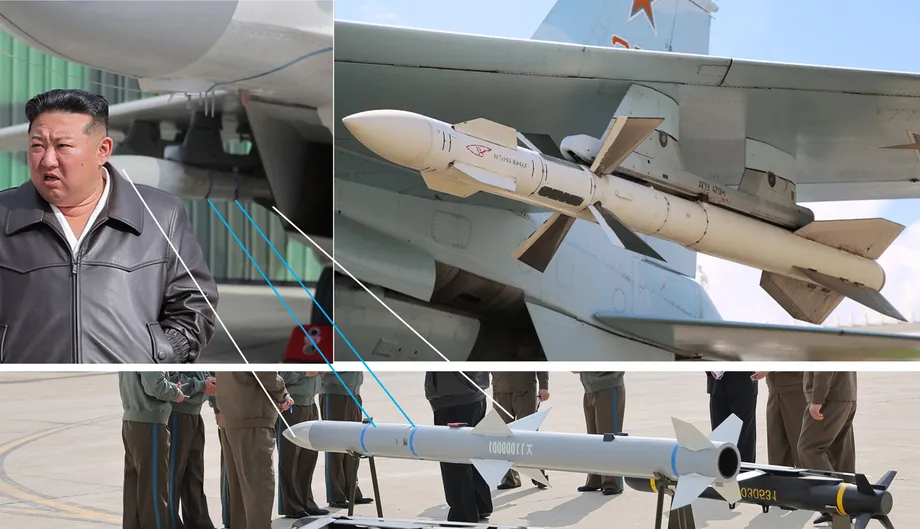
Her public schedule has also included observing trials of a new warship. Together, these appearances associate her with the weapons and institutions on which the leadership relies for security and international influence.
The NIS believes the military emphasis serves another purpose: reducing skepticism about a female successor. Familiarity could help prepare officers and citizens to accept her presence in a sphere long dominated by men. Building that image is a different task from giving her an actual command position, which would carry responsibilities, staff and institutional authority.
From a missile launch to an international appearance
Kim Ju Ae first appeared publicly with her father at a missile launch in November 2022. Her schedule subsequently widened beyond weapons events, including a visit to China in September 2025. Her first appearance in Beijing placed her in the international spotlight as Kim attended China's Victory Day commemoration.
Her identification has also become firmer. Earlier discussion included a suggestion that her name might be Ju Hae. South Korea's intelligence agency later confirmed Kim Ju Ae as her name, while North Korean state media continued to identify her through her relationship to her father. Seoul's confirmation of her name accompanied its assessment that her potential succession role was growing stronger.
The public sequence shows how the issue has developed over several years:
- November 2022: Kim Jong Un introduces his daughter publicly at a missile launch.
- September 2025: She accompanies her father to Beijing, extending her visibility beyond North Korea.
- January 1, 2026: Footage from the Kumsusan Palace of the Sun renews debate about her place in the dynasty.
- February 12, 2026: South Korean intelligence briefs lawmakers that she is being groomed for succession.
- October 29, 2026: The NIS describes further strengthening of her successor standing and a public image centered on military leadership.
What contacts inside North Korea are saying
Kang Mi-jin, a defector who runs a business analyzing North Korea's economy, says contacts inside the country told her through smuggled phones that they expected Kim Ju Ae to succeed her father. Jung Gwang-il, who works to bring outside information into North Korea, described similar views among North Koreans he encountered in Chinese border towns.
Those conversations offer glimpses of private expectations in a country where residents have no role in choosing their supreme leader. Contact through smuggled phones also shows how information and opinion can move beyond official channels despite strict surveillance.
Disagreement exists within those networks. Kim Jeong-ah, a former North Korean army officer who settled in South Korea in 2009, says her contacts find the idea of revering a young girl as supreme leader unacceptable. Lee Si-young, who heads Free North Korea Radio in Seoul, likewise says some older contacts dislike the prospect of a woman taking power.
The disagreement centers on two powerful features of North Korean politics: traditional expectations of male leadership and the exceptional status of the Kim family. People who doubt a female leader may still regard membership of that family as the strongest claim to rule.
Could family status overcome the gender barrier?
South Korea's Unification Ministry says only one of the Workers' Party's 17 department directors is a woman: Kim Jong Un's younger sister, Kim Yo Jong. That is roughly 6% of those positions, a measure of how few women occupy this particular level of the ruling structure.
Kim Yo Jong's prominence shows that a woman from the ruling family can wield influence. Kim Ju Ae would face a larger challenge if she sought the supreme leadership, with authority over the party, security services and military rather than a senior role beneath her father.
Lee Si-young, the head of Free North Korea Radio, argues that the family's political status may outweigh resistance to a woman. Describing how the dynasty is regarded, she said its members:
"are like gods reigning over humans so gender really doesn't matter".
Kim Jong Un's repeated appearances with his daughter could gradually make that possibility more familiar. Her eventual authority would also depend on the backing of officials who control appointments, information and armed institutions. Public respect, family ancestry and practical command would all matter during a transfer of power.
Why visibility may serve more than one purpose
Kim Ju Ae could strengthen the dynasty even without becoming its next ruler. One interpretation of her prominence is that she provides a familiar symbol of family continuity, someone whose presence could help hold officials together during a leadership change.
Naming a successor early also creates political risks for the current ruler. Senior officials may begin cultivating ties with the expected heir to protect their future positions. In plain terms, attention and loyalty can start moving toward tomorrow's leader while today's leader is still in charge.
Keeping the succession unresolved gives Kim Jong Un control over timing. He can make his daughter familiar to the public while retaining the option to assign her a different role or choose another child. South Korean officials believe she has a younger sibling whose gender has not been confirmed.
Formal appointments would give observers more concrete information about her responsibilities. A party position, military rank, governing duties or a sustained change in official language would show how her public image connects to the institutions that exercise power.
Earlier successions show why preparation matters
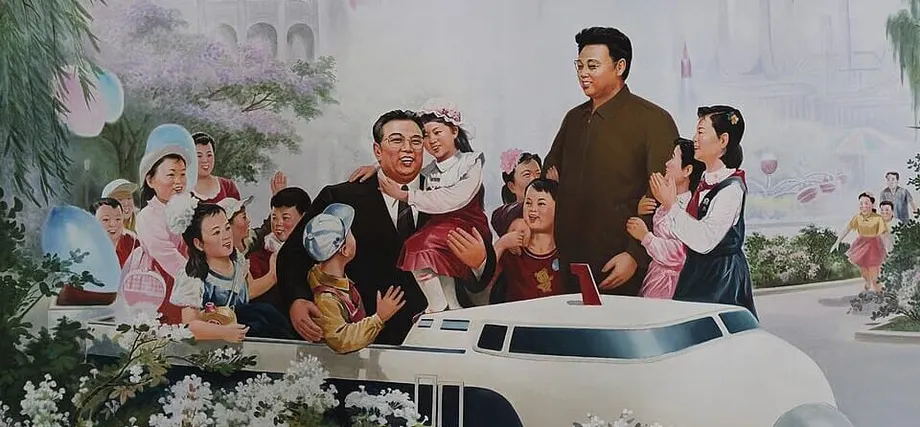
Kim Jong Il was 52 when he succeeded his father, state founder Kim Il Sung, in 1994. He had already spent about two decades as the designated successor, working alongside his father and building authority within the system.
Kim Jong Un was 27 when he succeeded Kim Jong Il in 2011. Foreign observers initially questioned his youth and experience. He secured his position through purges and executions, including the killing of his powerful uncle Jang Song Thaek in 2013. General Ri Yong Ho, a senior military figure, was also removed during the early consolidation of his rule.
Those transitions help explain why a family connection and control of government institutions must develop together. Kim Ju Ae is becoming publicly familiar much earlier in life, while the visible evidence of her party and military responsibilities remains limited.
Oh Gyeong-seob, an analyst at Seoul's Korea Institute for National Unification, describes hereditary succession as an accepted part of North Korea's political system. Defectors and specialists generally expect another family transfer to meet little open resistance, as happened in 1994 and 2011.
Timing matters for the family and ordinary citizens
Kim Jong Un, described as 42, could have years to prepare a successor. South Korean intelligence has identified obesity and cardiovascular risks; at the October audit, it said his basic health indicators were being managed within normal ranges and identified elevated blood fats. The length of his remaining rule would affect how much experience his daughter could acquire.
Kim Yo Jong features in competing assessments of an unexpected transition. Some interpretations place her as a possible immediate successor or regent, a person governing while a younger heir gains experience. In another parliamentary briefing, however, the NIS assessed that she held no real power. Her position in a succession crisis is therefore disputed.
At the October 29, 2026 audit, the NIS described Kim Yo Jong, Choe Son Hui, Jo Yong Won and Pak Jong Chon as a loyal "core inner circle" helping manage regime stability. That assessment concerned the current leadership rather than identifying who would take charge in a succession crisis.
For ordinary North Koreans, the question concerns daily life under another generation of the same family. Kim Yumi, 32, fled by boat with her family after pandemic restrictions damaged their fishing business. Now living in Seoul, she says seeing Kim Jong Un with his daughter reinforced her fear that her children would grow up under a fourth generation of dictatorship.
Jeon Jae-hyun, another defector, says pervasive surveillance prevents people from openly expressing discontent. Choi Song-juk, who left in 2015, recalls accepting earlier successions while living in North Korea and rejecting them after leaving. Their experiences help explain why public obedience and private opinion can move in different directions, even as the leadership presents an orderly future.
Key Points
- South Korean intelligence increasingly views Kim Ju Ae as Kim Jong Un's likely successor.
- About 60% of her public appearances involve the military, according to the NIS.
- She has no publicly identified party, government or military office, and no transfer timetable has been announced.
- Her family status supports her prospects, while her age and North Korea's male leadership traditions complicate them.
- Formal responsibilities and support from senior officials would be central to turning public prominence into governing authority.
- North Korea's citizens have no say in selecting the next leader.