Sovereignty at the Chai Badan Range
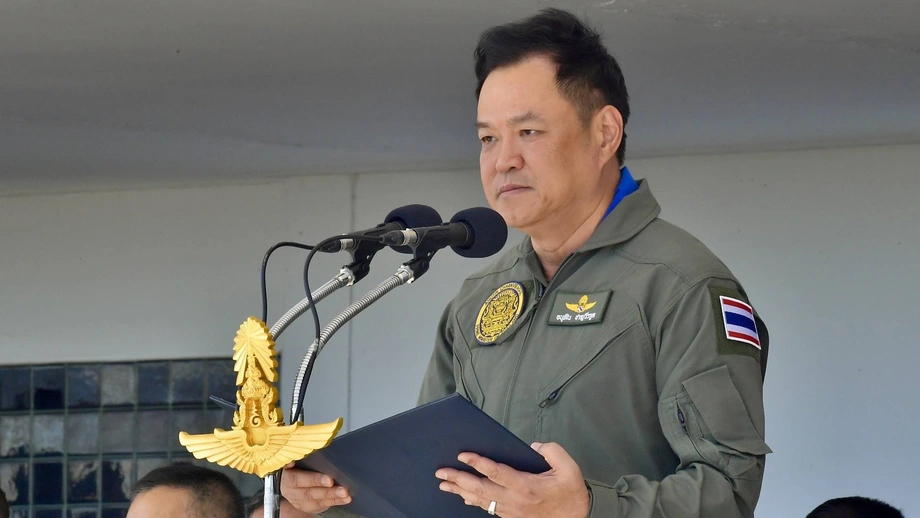
Prime Minister Anutin Charnvirakul put national defence in plain words at a training range in Lop Buri on 26 November 2026. At 12.30, after opening the Royal Thai Air Force's 2027 Tactical Air Operations Testing and Evaluation exercise, he told reporters that sovereignty is not something Thailand can hand over temporarily. Sovereignty means the authority of a state to govern its own territory and people. For Anutin, who is both prime minister and interior minister, even a short intrusion crosses a line that cannot be negotiated away.
Contents
- Sovereignty at the Chai Badan Range
- Air Power on Display
- The Budget Argument Beyond Weapons
- Border Tensions Behind the Speech
- Gripen Plans Move Ahead of the Old Timetable
- What the Fighter Plan Costs and Includes
- The F-35 Option and the Question of Timing
- Why Meetings Between Leaders Are Not Enough
- Timeline From Border Crisis to Jet Plans
- What the Speech Changes for People and Institutions
- What Remains Unsettled
- Key Points
The opening ceremony began at 11.45 at the Chai Badan Air Weapons Range in Khao Laem subdistrict, Chai Badan district, Lop Buri. Anutin wore a pilot's flight suit and arrived by air force S-92A helicopter. Defence Minister Lt Gen Adul Boonthamcharoen attended with armed forces representatives, and Air Chief Marshal Seksan Kantha, the air force commander, welcomed them.
Anutin said the armed forces were ready if Thailand were invaded. He rejected the idea that Bangkok could tolerate a small incursion and retake the ground later, saying no one responsible for Thai territory could accept such a plan. He recalled former air force chief Air Chief Marshal Voranart Apicharee, who once said that even a person entering Thailand without permission to buy a glass of iced black coffee and then leaving would be an intrusion. In Anutin's account, Voranart said Thailand could not lose even a square inch.
Anutin, prime minister and interior minister, made the government's position clear.
We cannot lend out Thailand's sovereignty, even for a minute. It must remain with Thailand at all times.
The prime minister linked that language to economic and cyber conflict, where conventional war remains possible. Cyber attacks use digital tools to damage or disrupt computers and networks. He said Thailand had to prepare for terrorism, threats involving technology and armed clashes, even when national leaders meet often.
Air Power on Display
The exercise opened at a large air force training area and runs from 16 November 2026 to 26 February 2027. It uses Chai Badan plus training areas of Wings 1, 2, 4, 5, 46 and 56 and the Flying Training School. The Royal Thai Air Force, or RTAF, divided it into two categories and eight disciplines. Five general events cover aerial photographic reconnaissance, tactical bombing, combat search and rescue, turnaround time assessment for ground crews and tactical unmanned aerial vehicle operations. Three internal events cover air defence personnel, airborne warning and electronic warfare.
Aircraft taking part included F-5, F-16, T-50TH, Gripen and Alpha Jet jets. Demonstrations involved bombs weighing 500 pounds, electronic warfare, suppression of enemy air defences and air strikes. An EC-725 helicopter worked with a Medical Emergency Response Team on medical evacuation and rescue, a drill that matters in disasters as well as war. The air force also showed royal rainmaking, wildfire control, air transport, drones developed by the service and royally bestowed unmanned aerial vehicles.
A mobile command and control centre called C2 Mobile was set up at the range. Command and control is the system that connects information to decisions for forces. The air force said the centre was meant to integrate operational information and support faster decisions. A community outreach unit distributed medicines, medical supplies, blankets and sports equipment to schools and residents near the training ground. Members of the public could watch live through the air force's Facebook page and TikTok from about 10.30.
Anutin said the drill would strengthen the air force for national defence, security work and disaster assistance. He told units to carry out their tasks to the fullest extent while following operational standards and strict safety measures.
The show had a political purpose as well. Anutin said cabinet ministers, MPs and senators who decide defence budgets should see military capability for themselves. He said demonstrations could reassure the public and show the government what support the armed forces needed.
The Budget Argument Beyond Weapons
Anutin's strongest appeal was to households along the Cambodian border. He urged people worried about defence spending to speak to residents affected by the 2025 clashes. He said families in seven border provinces had gone to bed fearing bombardment, with evacuations and damaged homes. He named Kantharalak district in Si Sa Ket province and communities in Surin and Buri Ram.
The prime minister put his point in one sentence.
Ask the villagers who were affected, who had to evacuate.
He argued that spending on defence cannot be judged only by the price of aircraft or weapons. If fighting breaks out, he said, the state still has to evacuate families, compensate people and repair homes and property. Anutin said the government weighed those future costs when drawing up the annual defence budget and reviewed proposed purchases for necessity.
That framing links defence spending to ordinary public services. An evacuation is not just a military order. It means moving people to safer places, feeding and sheltering them, and later paying for reconstruction. Anutin's argument was that prevention and readiness can be cheaper than paying those bills after a border crisis turns violent.
Border Tensions Behind the Speech
The remarks came after months of strained relations with Cambodia. Thailand has kept all seven crossings on the Cambodian border closed to people and goods since June 2025. On 31 October 2026, Anutin tied any reopening to land and maritime disputes, scam networks and the safety of Thai citizens. He gave no reopening date. The border closures have affected ordinary travel and trade, not only official movements.
A ceasefire agreed on 27 December 2025 followed renewed clashes, but key steps such as joint border demarcation and demining have not been carried out. Demarcation means marking an agreed boundary on the ground. Demining means removing buried explosives so civilians can return safely.
Cambodian Prime Minister Hun Manet said on 15 November that about 20,000 Cambodians remained unable to return home and called for joint surveying and demarcation to resume. The figure of 20,000 displaced Cambodians showed how a ceasefire can stop gunfire while daily life remains unsettled. Thailand and Cambodia were also due to hold a third round of sea border talks in Kuala Lumpur from 24 to 27 November, focused on technical aspects of the disputed maritime boundary.
Arms purchases have become part of the same landscape. The White House announced the HIMARS purchase on 18 November, a $123 million plan to buy a truck mounted rocket system from the United States. HIMARS can launch guided rockets or a large tactical missile, giving a country the ability to strike distant military targets and move quickly after firing. That deal and the Gripen plan are separate projects, but both sit inside the security argument Anutin made in Lop Buri.
Gripen Plans Move Ahead of the Old Timetable
While Anutin avoided naming a purchase he would back, the air force is preparing a specific fighter plan. The RTAF is merging the second and third phases of its Saab Gripen programme into one acquisition of eight aircraft. An RTAF spokesperson said on 26 November that budget preparation would take place in 2027 and the project would start in 2028. The plan is meant to reduce the risk of a fighter shortfall as older aircraft approach retirement.
The service had already ordered four Gripen E/F aircraft from Sweden in August 2025. Those aircraft are due to arrive in 2029 and 2030. The eight additional jets would form a squadron intended to replace Lockheed Martin F-16A/B aircraft flown by 102 Squadron, Wing 1, at Korat Royal Thai Air Force Base in Nakhon Ratchasima province.
An RTAF spokesperson described the change on 26 November.
Phases 2 and 3 of the Gripen procurement will be combined into a single project, with budget preparation in 2027 and project commencement in 2028.
The revised plan is faster than the air force's 2025 white paper. That document put phase two from 2028 to 2032 and phase three from 2030 to 2034, with four aircraft in each phase. Combining the remaining phases brings the start of phase three forward by two years. In June 2025, the air force said it aimed to have eight Gripen E/Fs in service by 2032 and all 12 by 2034.
Thailand selected the Gripen E/F in 2024 after comparing it with the F-16 Block 70/72. The air force cited capability, commonality with aircraft already in service and opportunities for industrial collaboration. Commonality can make training, spare parts and maintenance easier. Industrial collaboration means work or investment that can benefit Thai companies.
What the Fighter Plan Costs and Includes
Air Chief Marshal Seksan Kantha presented a proposal for eight more Gripen E/F aircraft to Anutin on 25 November, after a press conference marking the air force's 90th anniversary. He estimated the full programme of 12 aircraft at 60 billion baht, or US$1.77 billion. That figure includes the four aircraft bought in the first phase and benefits under the Offset Policy. An offset is an industrial or economic arrangement linked to a defence purchase, such as local work, technology transfer or investment.
The proposal includes ten economic and industrial offsets. Kantha expects the benefits to exceed the value of the procurement programme. Formal project and budget preparation are expected in 2027, with funding sought in fiscal 2028. No final contract for the eight additional aircraft has been announced.
The first four Gripen E/Fs are part of an August 2025 agreement with Sweden for three single seat Gripen E aircraft and one two seat Gripen F. They are scheduled to arrive at Wing 1 in 2029 and 2030. The air force wants a full squadron to replace the aging F-16A/B fleet of 102 Squadron.
Anutin's answer on 26 November was cautious. Asked whether his government would support buying Gripen fighters, he said he would back measures that strengthened Thailand's security. He gave no commitment to a particular purchase. The government will assess proposals for necessity before putting money into the annual budget.
The F-35 Option and the Question of Timing
Kantha said the F-35 remains a candidate for a separate fighter programme. The air force plans to maintain three frontline fighter squadrons and expects to review replacement aircraft for another unit within five years. One existing fleet is due to be phased out within that period, so officials are looking at options before the gap becomes urgent.
Thailand sought the F-35 in 2023, but the United States refused the request. Kantha said performance would not be the only test. Acquisition cost, operating cost, logistics and long term maintenance would also shape any decision. Logistics means the supply of spare parts, fuel, tools and transport needed to keep aircraft flying.
Kantha stressed that no decision has been made because the security environment could change. The air force is reviewing its programmes as technology and threats change, with attention to aircraft and trained personnel.
Anutin made a similar point about predictions. Asked whether the display proved Thailand's military could beat any force in the world, he declined to compare armies or forecast a winner. He said Thailand had no intention of invading anyone and that the armed forces were not meant to fight neighbouring countries. He also said threats could come from terrorism or technology, beyond the actions of a neighbouring state.
Why Meetings Between Leaders Are Not Enough
Anutin said frequent meetings between national leaders could not rule out armed clashes. He put that view in direct terms after being asked about diplomacy and military readiness. The prime minister said:
We can't assume that there will be no conflict simply because national leaders meet several times a year.
He said economic and technological competition had changed the nature of conflict, but conventional fighting remained possible. Conventional fighting means organised forces using weapons and military tactics, as distinct from cyber attacks or economic pressure. His point was that Thailand needs both diplomacy and defence capability.
Anutin also made a pledge to people who fear attack. He said any threat would meet armed forces that are ready and would keep improving. The prime minister said:
If anyone thinks of invading or threatening us, we will not accept it. Anyone who thinks of doing so will find us ready, and we will become more prepared.
The statement was about deterrence, a simple idea with a serious purpose. A country makes clear that an attack would be resisted, with the aim of preventing the attack from happening. Anutin paired that message with a promise that Thailand had no intention of invading another country.
Timeline From Border Crisis to Jet Plans
The sequence helps explain the speech, spanning border closures, fighting, ceasefire talks, arms buying and the drill.
- June 2025: all seven Cambodian crossings closed to people and goods.
- July 2025: clashes between Thailand and Cambodia killed people and forced families from their homes.
- August 2025: Thailand agreed to buy four Gripen E/F aircraft from Sweden.
- October 31, 2026: Anutin tied any reopening to land and maritime disputes, scam networks and citizen safety.
- November 15, 2026: Hun Manet said about 20,000 Cambodians remained unable to return home.
- November 17 and 18, 2026: Thai and US officials reviewed HIMARS documents; the White House announced a $123 million plan.
- November 24 to 27, 2026: Thailand and Cambodia were due to hold maritime boundary talks in Kuala Lumpur.
- November 25, 2026: the air force commander proposed eight more Gripen E/F aircraft.
- November 26, 2026: Anutin opened the exercise at Chai Badan and spoke to reporters at 12.30.
- 2027: Gripen budget preparation is expected; the exercise continues to 26 February.
- Fiscal 2028: funding is being sought for the eight aircraft project.
- 2029 and 2030: the first four Gripen aircraft are due to arrive.
- 2032 and 2034: targets for eight Gripen E/Fs in service and all 12 acquired.
This timeline shows that the speech was not a reaction to one drill alone. It came while border access remained closed, maritime talks were under way, fighter purchases were moving through budget planning and displaced families were still waiting.
What the Speech Changes for People and Institutions
For border communities, the concrete issue is safety. Families in seven provinces were told to leave homes during the 2025 fighting, and Anutin used their experience to defend budget requests. For people near the Chai Badan range, the exercise had a smaller but visible effect: a community outreach unit handed out medicines, medical supplies, blankets and sports equipment.
For the air force, the speech gave public backing to modernisation. Anutin said the government was committed to developing all branches of the armed forces through technology, integration between services and personnel development. Integration means making different military branches work with shared plans and equipment where possible.
For lawmakers, the message was that defence budgets should reflect what forces need and what crises cost. Cabinet ministers, MPs and senators will face the formal budget process in 2027 and fiscal 2028 if the Gripen proposal advances. The air force says combining phases reduces the risk of a capability shortfall, while the government says it will scrutinise necessity.
For Thailand's neighbours, the language mixes reassurance and warning. Anutin said Thailand had no intention of invading anyone, but he also said any threat would be met with ready forces. That combination is meant to calm domestic fears while signalling that border disputes will not lead to an unprepared response.
What Remains Unsettled
Several decisions are still open. No date has been given for reopening the seven Cambodian crossings. Thailand has set conditions but no timetable for judging progress on the land border, maritime dispute, scam networks and citizen safety.
The eight aircraft Gripen plan is a proposal, not a completed purchase. Budget preparation is expected in 2027 and funding in fiscal 2028. Final approval and a signed contract were not announced. The first four aircraft already ordered are due in 2029 and 2030.
The F-35 question is undecided. Air force leaders say it remains one option for another fighter programme, but no choice has been made. Cost, logistics, maintenance and the changing security environment all matter.
The exercise continues until 26 February 2027, with assessments of air units, air defence units, support personnel, planning, weapons use and mission execution. The maritime talks were scheduled to end on 27 November, with no outcome announced by the time of Anutin's remarks.
Key Points
- Anutin said sovereignty cannot be loaned "even for a minute" and that the armed forces are ready.
- He linked defence spending to evacuations, compensation and repairs in seven provinces after 2025 clashes.
- The RTAF displayed fighter jets, drones, rescue and command systems in an exercise running to 26 February 2027.
- The RTAF is merging Gripen phases 2 and 3 into an eight aircraft order, with budget preparation in 2027 and a start in 2028.
- The 12 aircraft programme is estimated at 60 billion baht, or US$1.77 billion, including offsets.
- Anutin backed stronger security but gave no commitment to a particular fighter purchase.
- Border crossings remain closed, maritime talks continue and the F-35 decision is pending.