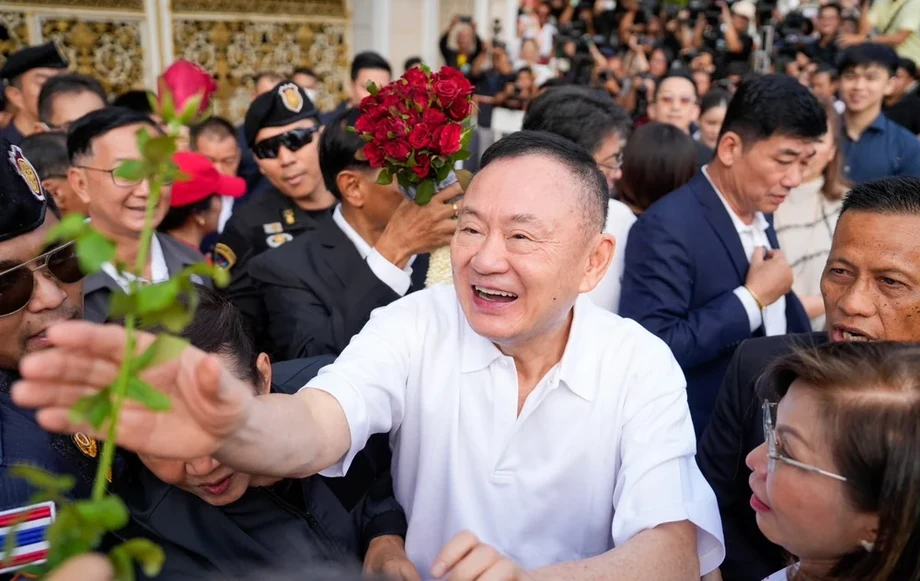
Four cases move toward a screening decision
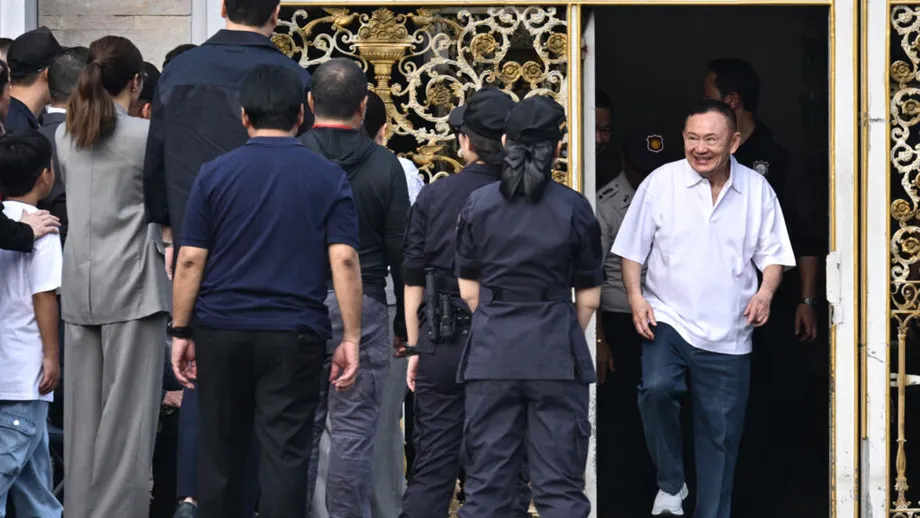
Thailand's Justice Ministry has received an amnesty request concerning four cases involving former prime minister Thaksin Shinawatra, with Justice Minister Pol Lt Gen Rutthaphon Naowarat saying on November 4, 2026, that recommendations would go to the national reconciliation committee after preliminary screening.
Contents
The cases concern a 4 billion baht Export Import Bank of Thailand loan, a government lottery scheme, telecommunications and satellite concession changes involving Thaicom, and the seizure of 46 billion baht in assets. Thaksin wants relief from liability and the clearing of records connected with cases that his legal team describes as political.
Justice Ministry permanent secretary Piyasiri Wattanawarangkul, who chairs the screening subcommittee, was preparing to place the request on its second meeting agenda. The full Committee for the Promotion of a Peaceful Society, chaired by Deputy Prime Minister Pakorn Nilpraphan, holds the decision making authority.
Rutthaphon said completed recommendations could be sent forward in groups rather than held until every petition had been examined. That approach would allow some applicants to receive decisions while work continued on other cases.
Thaksin's application brings a central eligibility dispute before the committee: his lawyers point to the political origins of investigations following the 2006 coup, while the cases also involve corruption allegations, a category described as excluded from the amnesty framework. The committee must decide how the eligibility provisions and exclusions apply to his request.
What Thaksin asked for
Thaksin authorised his personal lawyer, Winyat Chatmontree, to submit the petition on October 8, 2026. Winyat disclosed the filing on October 12, saying it had gone through the joint service centre of the Office of the Permanent Secretary of the Prime Minister's Office to the reconciliation committee chairman.
Winyat described a request for recognition of Thaksin's entitlement to amnesty and release from all liability under the legislation. He said the application covered all relevant cases together, rather than presenting a separate petition for each case. Officials subsequently discussed the request in terms of four cases.
Winyat said his client wanted the accusations against him cleared, wished to conduct private business and hoped to live peacefully without returning to political activity. He asked the committee to interpret the legislation broadly, examine the circumstances fully and avoid discrimination.
The law is identified in the November statements as the Promotion of a Peaceful Society Act, B.E. 2569, equivalent to 2026. Winyat's October account instead names B.E. 2568, or 2025. The different legislative years remain unresolved in those statements.
Who examines the application?
Chatchai Bangchuad, permanent secretary of the Prime Minister's Office and secretary of the reconciliation committee, explained in October that an application would first go to the screening subcommittee chaired by the Justice Ministry permanent secretary. It would examine whether the request qualified before forwarding it to the full committee.
Chatchai said political motivation was part of that examination. An ordinary case without a political connection would fall outside the framework, he explained, and some applications would require evidence supporting the claimed political motive.
Associate Professor Yutthaporn Issarachai, a screening subcommittee member and political scientist at Sukhothai Thammathirat Open University, said on November 2 that Thaksin's four cases had not been considered at the first screening meeting. The secretariat was gathering legal arguments and evidence. He also raised the possibility that an application submitted directly to the full committee might follow a different route.
Rutthaphon's November 4 explanation described the next step as forwarding the screening panel's opinion to the full committee. Yutthaporn said the screening panel itself lacked authority to reject a petition conclusively; that power belonged to the full committee. No date was announced for the second screening meeting or for a decision on Thaksin's application.
The dates behind the review
The process spans the establishment of the screening panel, Thaksin's filing and the panel's first meeting. Thailand uses the Buddhist Era calendar in official dates; subtracting 543 gives the corresponding year in the Gregorian calendar.
- August 24, 2026: The date from which Yutthaporn said Section 8 took effect for qualifying political criminal records.
- September 24, 2026: Pakorn appointed the screening subcommittee.
- October 8, 2026: Winyat submitted Thaksin's application under his authorisation.
- October 12, 2026: Winyat publicly described the request, and Chatchai explained the screening procedure.
- November 2, 2026: The screening subcommittee held its first formal meeting. Thaksin's four cases were absent from its agenda.
- November 4, 2026: Rutthaphon outlined how recommendations could move to the full committee in batches.
- January 2027: The committee wants applicants to submit requests by this month to allow time for examination.
- March 20, 2027: The stated deadline for completing the committee's initial 180 day process.
Yutthaporn described the 180 days as running from the full committee's first meeting. The November 2 meeting was the screening subcommittee's first session, a different body with a preliminary role.
Why the four cases face an eligibility test
The four matters identified in connection with Thaksin's petition cover different government decisions and legal outcomes. The EXIM Bank case concerns a loan of 4 billion baht. The lottery case concerns a government scheme selling tickets based on two and three digit numbers. Another involves changes to telecommunications and satellite concession payments, including Thaicom. The fourth concerns the seizure of 46 billion baht in assets.
Thaksin's legal argument centres on the investigations that followed the September 2006 coup. The Assets Examination Committee, established under the military authorities, investigated matters that later passed through anticorruption investigators, prosecutors and the courts.
The application invokes the law's schedule, including item 31, which covers certain people accused, prosecuted or otherwise affected by announcements and orders of military bodies responsible for coups. Thaksin's team argues that the origins of the proceedings provide a route to consideration under that provision.
The framework also excludes corruption cases. This makes the legal classification of each matter central to the decision: the committee must examine both the claimed connection to military orders and the restrictions on the kinds of offences eligible for relief.
Former Red Shirt leader Nattawut Saikuar defended Thaksin's right to apply in a November 2 Facebook statement. He argued that the cases began through the authority of the coup leadership and said the outcome belonged to the committee.
What the first meeting considered
The November 2 screening meeting had 23 agenda items in total. Within that agenda, five matters involving political demonstrations concerned seven people. The larger figure describes the entire meeting agenda; the smaller figures describe the protest cases and the people involved.
Two of the seven were former prime minister Abhisit Vejjajiva and former deputy prime minister Suthep Thaugsuban. The panel supported amnesty in matters associated with the People's Democratic Reform Committee protests and supported ending the Department of Special Investigation inquiries concerned.
The screening panel considered their conduct to meet the criteria for cases involving political demonstrations. Its recommendations illustrate the kind of examination now facing other applicants: identifying the conduct, examining its political connection and deciding whether it fits the statutory categories.
Yutthaporn said discussions involved several broad groups of cases and people from different political camps over roughly two decades. He also said former prime minister Yingluck Shinawatra had not submitted an amnesty petition as of November 2.
What relief could mean for applicants
The legislation was described as covering qualifying cases connected with political demonstrations between January 1, 2005, and July 16, 2025. Its exclusions include Section 112 offences concerning the monarchy, corruption, serious bodily injury under Section 297 and certain offences involving private parties.
For eligible applicants, relief can involve ending investigations, removing cases from court proceedings, releasing people from detention or clearing criminal records. Which action is relevant depends on whether a person's case is still being investigated, is before a court or has already ended.
Yutthaporn said Section 8 required qualifying political criminal records to end from August 24, 2026. He said agencies such as the Royal Thai Police could act within their responsibilities without waiting for an individual committee ruling.
Nattawut described Thaksin's immediate objective as clearing criminal records. He said Thaksin had no remaining prison sentence from the cases already concluded following his release.
Nattawut also said Thaksin's Section 112 case was at the Court of Appeal and would continue through the courts because that offence was expressly excluded from the legislation. The amnesty application therefore sits alongside a separate court process involving that charge.
Deadlines, court challenges and political claims
The committee aims to finish its work within 180 days, with March 20, 2027, identified as the deadline. Yutthaporn said it wanted applications submitted by January so officials would have time to collect facts and examine the legal issues.
The framework allows two extensions of up to 90 days each if work remains unfinished. Together, those extensions could add as many as 180 days, matching the length of the initial period. Officials nevertheless described completion within the first 180 days as their target.
Rutthaphon said Pakorn wanted the full committee to meet as soon as possible. He expected a resolution once a completed recommendation reached a meeting, while allowing the screening panel to continue examining other petitions in parallel.
Yutthaporn said an applicant whose petition was rejected by the full committee could challenge the decision in the Administrative Court. An administrative decision is an exercise of government authority affecting a person's rights; judicial review allows a court to examine a challenge to that decision.
Yutthaporn also rejected claims that amnesty was being negotiated in exchange for Pheu Thai Party votes in a no confidence debate. He denied claims of advance efforts to disqualify Thaksin and said the screening panel had faced no pressure or lobbying. Nattawut separately rejected the alleged voting bargain.
For Thaksin, the next procedural step is the screening panel's examination and the submission of its opinion to Pakorn's committee. For other applicants, the decision to send completed recommendations forward in batches means their cases can proceed without waiting for the entire collection of petitions to be resolved.
Key Points
- Thaksin's lawyer filed an amnesty application on October 8, 2026; officials identify four cases within its scope.
- The Justice Ministry was preparing the request for a second screening meeting after it was absent from the November 2 agenda.
- The full reconciliation committee, chaired by Deputy Prime Minister Pakorn Nilpraphan, holds the decision making authority.
- Thaksin's team cites the origins of investigations after the 2006 coup; the framework also excludes corruption cases.
- The committee's stated initial deadline is March 20, 2027, with two possible extensions of up to 90 days each.
- Yutthaporn said rejected applicants could challenge committee decisions in the Administrative Court.