Less Rain Could Reach Families Already Struggling to Eat
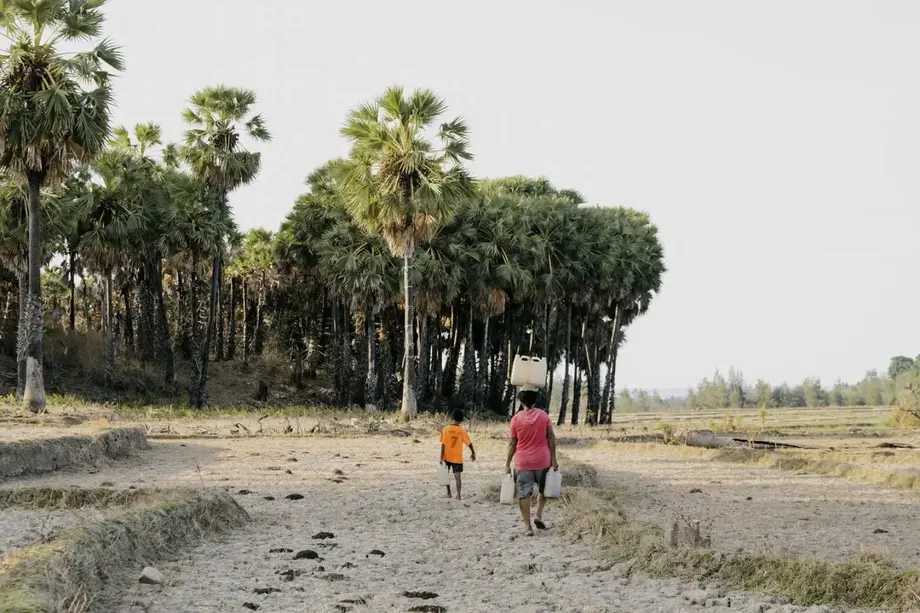
Timor-Leste faces a forecast of reduced rainfall from November 2026 to April 2027 with many families already struggling to obtain enough nutritious food. The latest nationally representative Food Security Assessment found that 42 percent of households experienced moderate or severe food insecurity in 2023. Nearly half could not consume an adequate diet, while chronic malnutrition remained widespread among children under five.
Contents
- Less Rain Could Reach Families Already Struggling to Eat
- Why the Planting Calendar Matters
- Different Municipalities Face Different Pressures
- What the 2015/16 Drought Reveals
- Why Children Face Risks Beyond Hunger
- Imported Food and Fuel Add Pressure
- What the $202 Million Appeal Covers
- How Early Assistance Would Be Activated
- How Priorities Will Be Updated
- Key Points
UNICEF identifies that six month rainfall window in its El Niño outlook and calls for preparedness during October to December 2026. The timing matters because the expected peak of El Niño overlaps with the country's main planting period. Most agricultural production depends on rain, leaving farmers exposed if seasonal rains arrive late, fall irregularly or provide too little water.
A poor start to planting could reduce food production and rural earnings well into 2027. Families could face smaller harvests at the same time as drinking water becomes harder to obtain and purchased food places greater pressure on household budgets.
The immediate task is to prepare for several connected problems: crops needing water, children needing safe drinking supplies, and households needing enough income to buy food. Historical drought evidence suggests that losses of income and borrowing can be especially important in determining which families struggle most.
Why the Planting Calendar Matters
El Niño is a recurring climate pattern involving changes in tropical Pacific Ocean temperatures that alter weather across the world. Its effects vary by region. For Timor-Leste, current forecasts point to an increased risk of rainfall below the seasonal average during the 2026/27 agricultural season.
Farmers relying on rainfall need sufficient moisture when crops are planted and while they grow. Disruption early in the season can carry through to the harvest, reducing both food kept for household use and produce available to sell. A family may then have less food of its own and less money to replace it.
UNICEF warns that the coming period could bring extreme drought and heat, water shortages, erratic rainfall and reduced agricultural production. The severity and location of drought during 2026/27 remain uncertain. Local rainfall monitoring will therefore be central to deciding when and where assistance is needed.
The main dates show how preparation and agricultural risk overlap:
- 2023: The nationally representative Food Security Assessment recorded moderate or severe food insecurity in 42 percent of households.
- June 2026 to March 2027: The joint FAO and WFP appeal covers preparations and anticipatory assistance across priority countries, including Timor-Leste.
- October to December 2026: UNICEF identifies a key period for preparedness before the crisis reaches its peak.
- November 2026 to April 2027: UNICEF expects reduced seasonal rainfall in Timor-Leste.
- Into 2027: Disrupted planting could continue to affect household production and livelihoods.
Different Municipalities Face Different Pressures
Ermera, Manufahi and Ainaro warrant close attention because historical drought impacts and household vulnerability suggest they could be exposed if rainfall deficits develop. This assessment draws on how earlier droughts affected families, including their ability to maintain food supplies and livelihoods.
Current monitoring adds another set of locations. The FAO Combined Drought Index indicates that Bobonaro, Baucau, Liquiçá and Ermera are approaching drought activation thresholds. These thresholds are agreed levels of monitored conditions that can inform decisions about whether to activate a response.
Covalima, Atauro, Liquiçá and Oecusse face additional concerns involving food affordability, access to markets and continuity of supplies. Households in these places may struggle because food becomes harder to buy or obtain, alongside any agricultural losses.
Ermera appears in both the historical vulnerability analysis and current drought monitoring. Liquiçá appears in current monitoring and the assessment of market and affordability risks. Those overlaps give planners concrete reasons to track several pressures together, including rainfall, prices, water access and household income.
What the 2015/16 Drought Reveals
A drought comparable to the 2015/16 event could affect around half of all households, with about one in five potentially experiencing severe impacts. Those estimates describe the possible reach of a similar event and help planners judge the scale of preparation required.
The earlier drought affected municipalities through different combinations of crop losses, water shortages, declining income, market constraints and reduced food availability. A household with a damaged harvest but continued earnings could face a different situation from one losing crops, drinking water and income together.
Household analysis found that income losses and borrowing associated with drought were more strongly linked to adverse food security outcomes than production losses alone. The practical concern is purchasing power: whether a family has enough money to obtain food when its own supplies fall.
Borrowing may help a household meet an immediate need, but repayment adds another demand on later earnings. Tracking debt alongside harvest conditions can help identify families whose difficulties continue after rainfall improves.
Reduced access to drinking water was reported almost as widely as crop production losses during the 2015/16 drought. That finding makes water security a central part of food security planning, alongside support for farms and household income.
Why Children Face Risks Beyond Hunger
UNICEF identifies children's health, nutrition, education and protection as major areas of concern. Timor-Leste enters the forecast dry period with widespread chronic malnutrition among young children, making the quality and regularity of meals especially important.
Safe water is another immediate priority. Families need it for drinking, preparing food and maintaining hygiene. When supplies become scarce or unsafe, the pressure extends from household nutrition to health and school attendance.
Women and girls face particular concerns around water access and dignity, according to UNICEF. The agency also identifies children's mental well-being and protection among the areas that drought can affect. A response focused only on crop production would leave these needs outside its reach.
UNICEF calls for early investment in municipalities facing the greatest risks, with preparations during October to December intended to prevent avoidable malnutrition, exposure to unsafe water, learning loss and protection problems. The timetable places action before the expected rainfall deficit has run through the full agricultural season.
Imported Food and Fuel Add Pressure
Timor-Leste depends on imported food, fuel and agricultural inputs. That dependence exposes households and farmers to international price increases and interruptions in supply, even while local rainfall determines how much food the country can grow.
A family receiving less food from its own harvest may need to buy more. If seasonal earnings also fall while food and transport costs rise, its budget is squeezed from several directions. Food may remain available in a market while becoming increasingly difficult for that family to afford.
FAO and WFP warn that international disruption involving the Strait of Hormuz is adding costs and uncertainty to food, fuel and fertilizer markets. For Timor-Leste, the relevant risk is that a local agricultural setback coincides with more expensive imported supplies.
Neighbouring Indonesia has also prepared for drought, including through its agricultural drought response announced in April 2026. Its measures included seeds, pumps, pipes and irrigation. In Timor-Leste, the current analysis places particular attention on the combined pressures of rainfall, household purchasing power and market access.
What the $202 Million Appeal Covers
The Food and Agriculture Organization of the United Nations and the World Food Programme are seeking $202 million to support anticipatory action for 8.8 million people across 22 priority countries. Their joint anticipatory action appeal covers June 2026 to March 2027 and includes Timor-Leste among four priority countries in Asia and the Pacific.
Afghanistan, Pakistan and the Philippines are the other three regional priorities. The agencies identify expected conditions that are drier than normal in Timor-Leste and place the country among those where an existing FAO or WFP framework could support rapid expansion of assistance.
FAO and WFP say they are positioned to support 1.2 million people immediately across the appeal countries. Another $167 million would extend assistance to 7.6 million more people, bringing the total to 8.8 million. The $202 million request covers the multinational programme; a Timor-Leste allocation is not specified.
Anticipatory action means delivering help before a forecast hazard causes its worst damage. The appeal combines two goals: protecting local food production and helping vulnerable households maintain access to nutritious food without exhausting the resources they need to earn a living.
How Early Assistance Would Be Activated
FAO and WFP state that assistance at country level depends on local forecasts, agreed thresholds and operational decisions. An El Niño forecast prompts increased readiness; activation follows the more specific conditions set for each country.
The appeal lists early warnings, agricultural advice, cash transfers, seeds of varieties that tolerate drought, water management, livestock feed and veterinary support among possible actions. The combination would depend on local conditions and the systems already in place.
Timing determines how useful those measures can be. Seeds need to reach farmers in time for planting. Cash needs to arrive while households can still use it to protect food consumption and livelihoods. Water storage and other preparations require supplies and funding before shortages become severe.
FAO and WFP cite their experience during the 2023/24 El Niño, when they supported more than 3 million people ahead of peak impacts. Assistance arrived up to ten months earlier than response interventions and generated up to $3 in avoided losses for every $1 invested. Their broader appeal cites evidence that returns can reach $7 for each $1 invested in anticipatory action.
How Priorities Will Be Updated
Upcoming Food Security Assessment findings, Integrated Food Security Phase Classification analysis and operational assessments will help determine geographical priorities. No release dates are given for those exercises. The Integrated Food Security Phase Classification, commonly called IPC, uses a shared system to assess the severity of acute food insecurity.
Different assessments can identify different priority areas because they measure different needs. An area with worsening rainfall may require agricultural support, while another with high malnutrition or severe affordability problems may require a different package of assistance.
Planners will need to follow several measures together: rainfall, access to drinking water, crop conditions, food stocks, earnings, borrowing, market supplies and prices. Households facing several pressures at once are likely to need the closest attention.
The immediate opportunity is to use the months before peak impacts to prepare water supplies, agricultural support and assistance for families. As the season develops, updated evidence can guide where those resources go and how quickly they are deployed.
Key Points
- UNICEF expects reduced seasonal rainfall in Timor-Leste from November 2026 to April 2027, overlapping with the main planting period.
- The 2023 Food Security Assessment found moderate or severe food insecurity in 42 percent of households.
- Bobonaro, Baucau, Liquiçá and Ermera are approaching drought activation thresholds in current FAO monitoring.
- Historical evidence highlights income loss, borrowing and drinking water shortages alongside crop losses.
- UNICEF calls for preparedness during October to December 2026 to protect children's nutrition, health, education and safety.
- Timor-Leste is included in a $202 million FAO and WFP appeal covering 22 countries. Local forecasts and agreed thresholds guide activation.