Higher fines, earlier intervention and pressure through business ties
Singapore's Parliament unanimously passed amendments to the Transboundary Haze Pollution Act on November 4, 2026, increasing the maximum criminal fine for its main offence from S$2 million to S$20 million and giving authorities new ways to restrict business dealings with entities linked to haze.
Contents
- Higher fines, earlier intervention and pressure through business ties
- What the new penalties mean
- Acting before smoke arrives
- Assessors will investigate fires and corporate relationships
- Why a private law firm will coordinate inquiries
- Restrictions could reach trade, loans and financial services
- Safeguards for businesses further along the supply chain
- Old investigations continue under limits on retroactive punishment
- New procedures address missing evidence and absent defendants
- Preventing fires still requires action beyond Singapore
- Key Points
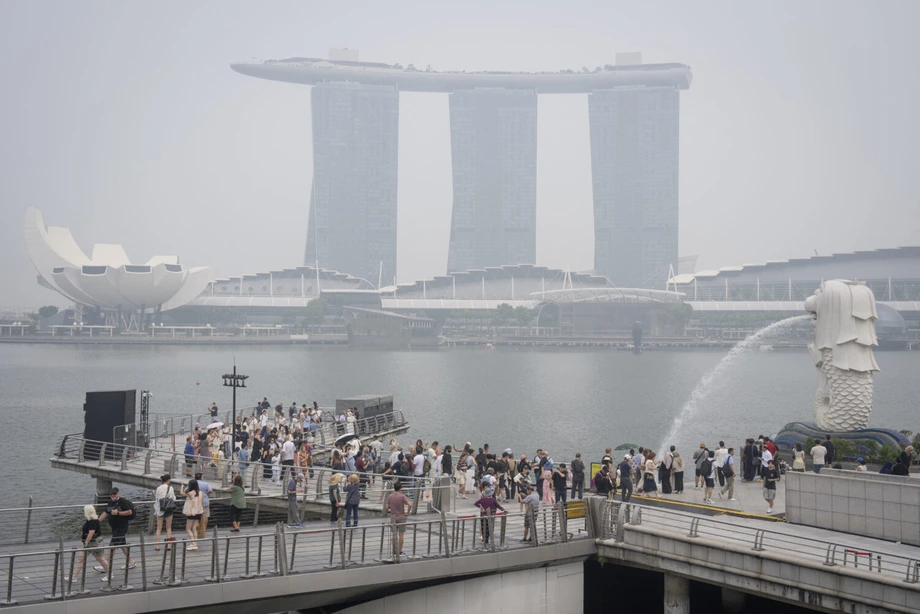
The changes follow a haze episode from September 4 to October 25 during which Singapore recorded 33 days of unhealthy air and five days of very unhealthy air. Authorities will be able to act against risks before smoke reaches Singapore, compel companies to undergo independent assessments and pursue civil penalties when the evidence meets the civil standard rather than the higher criminal standard.
Parliament approved the Bill after about six hours of debate involving 24 MPs: 14 from the People's Action Party, seven from the Workers' Party and three Nominated MPs. A Certificate of Urgency signed by the President allowed all three readings to take place in one sitting.
Sustainability and Environment Minister Grace Fu said the government needed better access to information about fires, land management and corporate relationships. The amendments seek to reach beyond the company operating a burning plantation to relevant business partners, related companies and providers of finance.
Singapore's central challenge remains gathering evidence about conduct overseas. Four investigations involving companies served notices in 2015 are still open, and Fu said three of those companies also feature in the current haze investigation. The new approach combines court proceedings with economic pressure, giving authorities several routes to act when a conventional prosecution is difficult.
What the new penalties mean
The maximum daily criminal fine rises from S$100,000 to S$1 million, while the total cap increases from S$2 million to S$20 million. Both limits are ten times their previous level. Courts will determine the actual penalty according to the circumstances of each case.
The amendments also allow courts to impose additional penalties reflecting profits gained or losses avoided through an offence. This addresses the financial benefit a company might obtain from irresponsible land clearance or from avoiding the expense of preventing fires.
A new civil enforcement route carries a maximum penalty of S$10 million. With the public prosecutor's consent, the National Environment Agency (NEA) can bring a civil action in court. An entity cannot receive both civil and criminal penalties for the same case.
Criminal cases require proof beyond reasonable doubt. Civil cases use the balance of probabilities, meaning the court decides whether the alleged conduct was more likely than not to have occurred. The lower civil maximum accompanies that lower threshold of proof.
MP David Hoe asked whether penalties should instead be tied to company turnover or profits. Fu said turnover based fines had been considered, but obtaining reliable turnover information for every target could be difficult. The government chose fixed maximum amounts alongside the ability to address financial gains from an offence.
Acting before smoke arrives
The earlier law's haze trigger required Singapore's Pollutant Standards Index (PSI), a measure of air quality, to remain in the unhealthy range somewhere in the country for at least 24 hours. The amendments extend the law to overseas fires that pose a risk of haze pollution in Singapore.
NEA will assess that risk using regional fire and haze monitoring, rainfall, wind direction and speed, scientific evidence and models. Fu said extensive fires combined with weather conditions likely to worsen Singapore's air quality could provide grounds for earlier action.
Authorities could then take measures without first tracing pollution in Singapore to one specific fire hotspot. For residents, the practical change is that intervention can begin while the threat is developing, rather than waiting for prolonged unhealthy air.
Fu said the assessment would depend on the circumstances. Fires occurring while Singapore's air is healthy and weather conditions indicate no haze risk would give NEA no reason to act on that basis. Courts would still have to be satisfied that the required elements of an offence had been met.
Assessors will investigate fires and corporate relationships
Government approved independent assessors can examine fires, company operations, business relationships and supply chains. Companies directed to appoint them will bear the cost, and the findings will go to NEA to help establish facts and determine further action.
Fu identified three categories that may receive assessment directions:
- Entities convicted of an offence or failing to comply with requirements under the Act.
- Entities known or suspected to have business dealings with those in the first category.
- Entities known or suspected to be sufficiently related to entities in either of the first two categories.
Assessors will establish relevant facts. Enforcement decisions remain with the authorities, and courts decide liability. Depending on the findings, NEA may require remedial action, publicise an adverse or qualified assessment, prosecute, designate an entity for restrictions or put it on notice.
The broader reach matters because ownership, land operations, trading and financing can sit in different companies. Examining those relationships gives authorities a way to follow responsibility through a corporate group or supply chain, rather than stopping with the name attached to a land concession.
Fu said detailed rules governing assessments would be set out in subsidiary legislation, which supplies the practical rules for carrying out an Act. No commencement date or timetable for those detailed rules was given. She also confirmed that legal advice and litigation privilege would remain protected, preserving confidentiality for qualifying communications and material.
Why a private law firm will coordinate inquiries
Davinder Singh Chambers has been appointed to advise on coordinating inquiries across jurisdictions. Workers' Party MP Sylvia Lim asked why the Attorney-General's Chambers (AGC), which has an international affairs division, was not handling that role.
Senior Minister K Shanmugam, who is also coordinating minister for national security and home affairs minister, explained that government agencies face restrictions when seeking to investigate abroad. Foreign authorities may refuse them access because they represent the Singapore government.
Shanmugam described the arrangement under which the companies appoint private investigators, law firms and other specialists:
So it had to be structured as the companies appointing private firms to do the work – investigative firms, law firms, and others are now the companies' appointees, and therefore they will have the ability to go into foreign jurisdictions.
The companies under investigation will pay for the coordinating firm's work. Shanmugam said assessor reports would be available to government agencies, and AGC would examine the findings and evidence to decide what further action Singapore could take.
Private firms will still operate within the laws of the countries concerned. Shanmugam acknowledged that foreign authorities could restrict their work, while explaining that access was more likely under this structure.
Restrictions could reach trade, loans and financial services
The amendments give the government power to designate entities or individuals and restrict business dealings with them. Grounds can include committing or being suspected of an offence, failing to comply with notices or directions, or receiving an adverse assessment. A criminal conviction is not required before designation.
Restrictions may cover purchasing and supplying goods or services, lending and other financial support. Authorities may also issue notices requiring relevant businesses to exclude offending entities from commercial relationships and supply chains.
Breaching applicable restrictions or notices can attract a fine of up to S$1 million per offence, plus up to S$100,000 for each day a violation continues. For financial services provided by financial institutions, the minister responsible for the Monetary Authority of Singapore (MAS) will determine and administer the relevant orders.
MAS has already reminded banks to impose conditions on companies that may have breached environmental laws and to consider ending business relationships. The new framework adds legal restrictions to that pressure, potentially affecting access to Singapore's financing and trading networks.
Simon Tay, chairman of the Singapore Institute of International Affairs, said restrictions on commercial activity and financing could turn an offending firm into "a corporate pariah". His assessment points to a consequence beyond a court fine: losing business partners and access to services can make irresponsible practices more costly to sustain.
Safeguards for businesses further along the supply chain
MPs questioned how the expanded powers would affect businesses far removed from a fire. PAP MP Lee Hong Chuang raised the example of a Singapore trader or food manufacturer several steps away from those responsible for burning land.
PAP MP Jessica Tan asked how haze risk would be assessed and what protections would ensure proportionate enforcement, given the possible effects on commercial relationships, financing and operations. She stated the balance she wanted authorities to strike:
Prevention must be swift, but accuracy matters too.
Fu said NEA would implement its powers in a measured and targeted way and seek to minimise compliance costs for small and medium enterprises. Businesses would not be penalised where they lacked knowledge and had no reason to believe they were dealing with a designated entity.
The government will also consider reasonable transition arrangements where appropriate, so legitimate business activity can adjust to restrictions without unnecessary disruption. NEA will work with other agencies, including MAS, on implementation.
Poh Li San, MP for Sembawang West, warned that stricter rules could affect companies with substantial operations in Indonesia and might prompt some to leave Singapore. Workers' Party MP He Ting Ru called for responsible financing assessments to examine entire companies or borrowing groups, and urged GIC and Temasek to disclose haze and forest management policies. Those were proposals raised in the debate.
Old investigations continue under limits on retroactive punishment
Singapore enacted the Transboundary Haze Pollution Act in 2014. In 2015, it issued preventive action notices to six Indonesian timber and plantation companies. Two cases were closed in 2017 after authorities accepted explanations that the companies were no longer connected to the affected land before the fires.
Investigations into the remaining four companies continue. Fu attributed the long passage of time to procedural issues and said three of those companies also appear in the current investigation. MPs, including Poh and Workers' Party Non-Constituency MP Eileen Chong, questioned why strengthening the law had taken 11 years.
Conduct occurring before the amendments take effect remains subject to the previous offences and penalties. NEA said the restriction on retroactive punishment follows Article 11 of Singapore's Constitution. Authorities may consider past conduct when deciding on assessments, designations or compliance notices under the new system.
The sequence of enforcement and legislative action is:
- 2014: Singapore enacted the Transboundary Haze Pollution Act.
- 2015: Six Indonesian companies received preventive action notices.
- 2017: Two of those cases were closed; four investigations remained open.
- September 4 to October 25, 2026: Singapore experienced the latest prolonged haze episode.
- November 2: All 10 Singapore registered companies recently served information notices had indicated willingness to cooperate by the deadline.
- November 4: Parliament unanimously passed the amendments after about six hours of debate.
New procedures address missing evidence and absent defendants
The amendments permit legal notices to be served electronically and through channels including the media or NEA's website. Fu warned that evidence can disappear or be altered as time passes, making delays a practical obstacle to investigations.
Authorities gain powers to arrest people involved in alleged offences when they are in Singapore. Courts may also conduct trials in a defendant's absence under specified conditions: proper service of the summons or notice, awareness that proceedings may continue without attendance, and no sufficient reason to postpone the trial.
NEA recently issued Section 9 preventive action notices to 10 Indonesian companies, directing them to stop burning, prevent or extinguish fires and submit action plans. Section 10 notices to 10 Singapore registered companies sought information about related businesses, Indonesian land concessions and fire prevention measures.
The Singapore companies were also asked to fund investigations into their operations and business relationships. All had indicated willingness to cooperate by November 2. NEA will evaluate the information and evidence before deciding on further action.
Preventing fires still requires action beyond Singapore
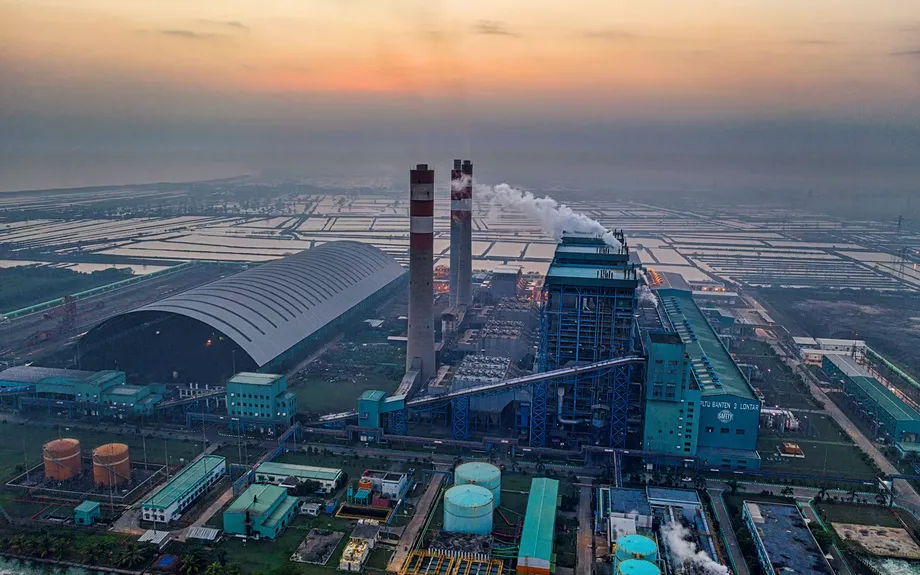
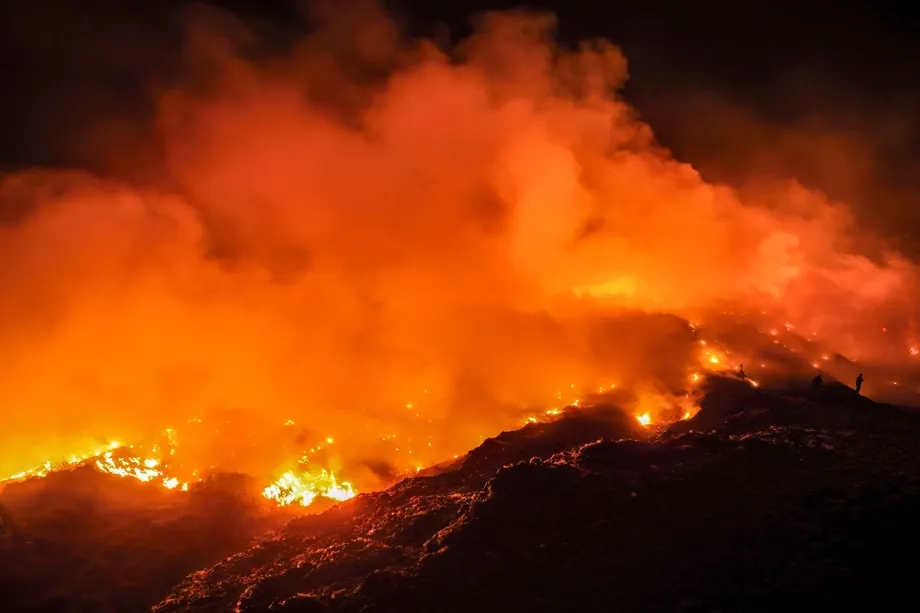
Indonesia's fires burned more than 1.9 million hectares from January through September, according to the Nusantara Atlas monitor. Fires in forests and peatlands in Sumatra and Borneo sent smoke across the region. Drought associated with a strong El Niño contributed to conditions, alongside deforestation and the drying of peatlands.
Peat is a layer of partly decomposed plant material that builds up in wet ground. Draining it for plantations makes it easier to burn, and fires can be difficult to extinguish. Companies blaming third parties for fires on their land will need to demonstrate reasonable steps to prevent and fight the blazes.
Workers' Party MP Gerald Giam proposed water level requirements and audited fire prevention plans for relevant plantations. Fu said peatland restoration could form part of directions to prevent fires, with specific remedies depending on each case.
Other Workers' Party MPs proposed prioritising credible forest and peatland carbon credit projects with water monitoring and fire prevention measures. Nominated MP Goh Teck Tuan urged cooperation with foreign governments, communities and industry groups on land management.
Singapore said it would work with ASEAN members to strengthen implementation of the regional transboundary haze agreement when it assumes the bloc's chairmanship the following year. Greenpeace Malaysia interim country representative Heng Kiah Chun called for greater cooperation in sharing evidence, improving corporate transparency and preventing peatland fires at their source.
Fu described the law's place within that wider effort:
The THPA is not a silver bullet. It is one of many tools we must use to address the transboundary haze situation.
Singapore can impose consequences through its courts, businesses and financial system. Access to overseas evidence, effective land management and cooperation with neighbouring countries remain central to preventing the next haze episode.
Key Points
- Parliament unanimously passed the amendments on November 4 after a debate involving 24 MPs.
- The main criminal fine rises to S$1 million per day, capped at S$20 million.
- A civil enforcement route carries a maximum penalty of S$10 million.
- Authorities can assess haze risks before smoke reaches Singapore and restrict dealings with designated entities.
- Companies can be required to fund independent assessments of operations and corporate relationships.
- Earlier conduct remains subject to the previous offences and penalties; four investigations linked to 2015 remain open.
- Regional cooperation and fire prevention remain necessary alongside Singapore's stronger enforcement powers.