A rejected investigation leaves borrowers seeking relief
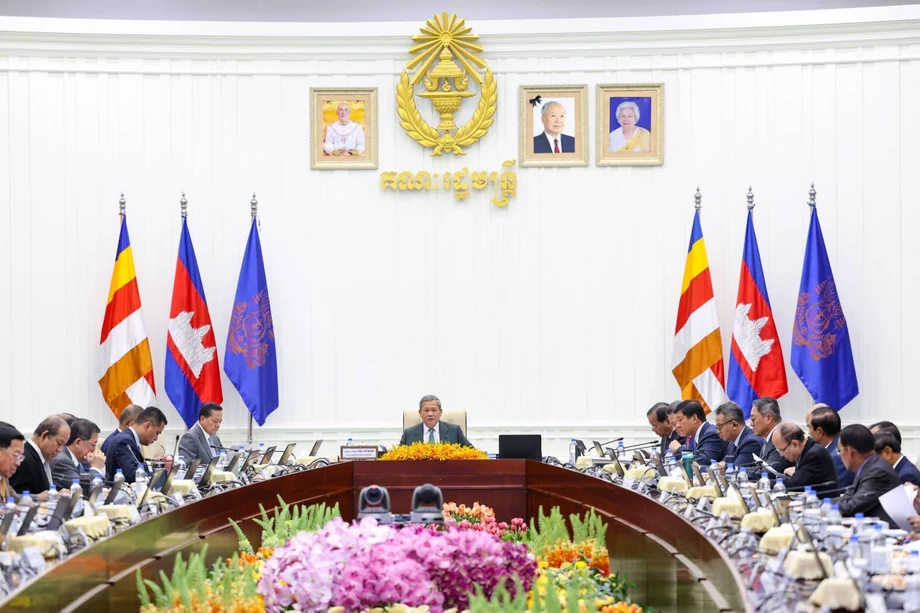
The International Finance Corporation's board rejected its watchdog's findings on June 24, 2026, after an investigation into more than $400 million invested in Cambodian microfinance lenders found failures to follow safeguards and harm to borrowers. The board instead found no breach of the institution's sustainability policy, while promising help for the 18 people behind the complaint.
Contents
- A rejected investigation leaves borrowers seeking relief
- A farming family's debt reaches $37,000
- Six lenders and a much larger financial network
- How the complaint became an investigation
- The argument over who the safeguards protect
- Land sales, migration and children leaving school
- Lenders defend microfinance and cite debt relief
- A wider shutdown of microfinance complaints
- What help is available to the complainants?
- Key Points
Janine Ferretti, director general of the Compliance Advisor Ombudsman (CAO), resigned the next day. The board subsequently barred the watchdog from processing new microlending complaints and ordered ongoing work suspended, affecting 10 cases in Cambodia and one in Rwanda.
The dispute reaches far beyond an argument over institutional rules. Borrowers described pressure to sell farmland, withdraw children from school and take out new loans to repay existing debts. The CAO concluded that the IFC, the World Bank Group institution that finances private businesses, had failed to carry out adequate checks and supervision.
The IFC board defended the benefits of its Cambodian investments, saying its clients had reached more than 400,000 microenterprises and 1.7 million farmers, creating jobs and supporting livelihoods. IFC management argued that the policies cited by the watchdog did not apply to microfinance.
For families seeking relief, the immediate offer is narrower than the investigation they pursued: a local facilitator to help the 18 complainants restructure their loans and use Cambodian consumer complaint mechanisms. Only two families have accepted. Others say they no longer trust the IFC to handle their concerns independently and fairly.
A farming family's debt reaches $37,000
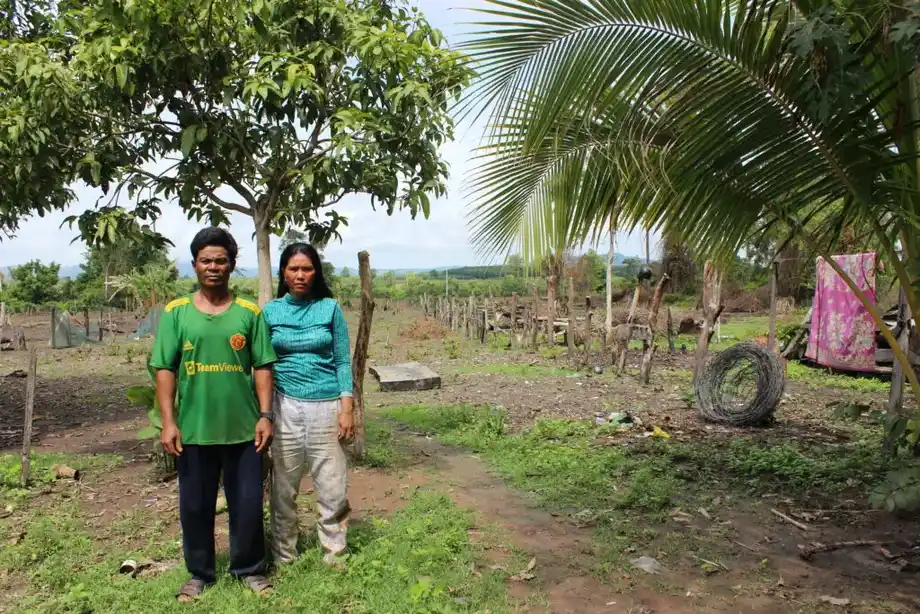
In Ratanakiri province, Rochom Katael and Sal Theun borrowed nearly $8,000 from Amret for their cassava farm. A failed harvest left them struggling with monthly payments. Their borrowing eventually totaled about $37,000 across four lenders, all supported by the IFC, while the family's annual earnings were about $750.
Those figures put the debt at roughly 49 times one year's earnings. Their daughter, now 16, said an Amret credit officer suggested that her parents sell her to a business known for sex work when she was 14.
The girl described her reaction to the officer's visit:
"I was scared. I went to my room and cried," she said.
Amret confirmed that its officer suggested the girl work to help repay the loan, but denied that he suggested sex work. The girl has since stopped attending school and spends her days farming. Her family eats less to save money.
The CAO investigation found that some families had been told to sell their children. It also found inadequate assessments of borrowers' ability to repay. For a household dependent on a harvest, a failed crop can remove the income expected to cover a loan while leaving the repayment schedule unchanged.
Six lenders and a much larger financial network
The complaint covered ACLEDA, Amret, Prasac, Hattha Bank, LOLC and Sathapana. Together, the six institutions represented more than 70 percent of Cambodia's microfinance market when the investigation was being considered. IFC financing reached lenders both directly and through other investment organisations.
Four financial intermediaries were also identified for scrutiny: the Microfinance Enhancement Facility, the Microfinance Initiative for Asia Debt Fund, Advans S.A. and North Haven Thai Private Equity Fund L.P. An intermediary channels money from investors into other businesses, placing another organisation between the IFC and the lender dealing with a household.
The IFC also held nearly 20 percent of Amret at the time of the initial investigation dispute. Its connections to Cambodian microfinance therefore included an ownership stake as well as financing.
Cambodia's microfinance industry held $10.8 billion in assets on December 31, 2022, according to the National Bank of Cambodia's 2022 Annual Supervision Report. LICADHO's research put the average microloan at $4,280 at the end of 2020, more than the annual income of 95 percent of Cambodians at that time.
LICADHO's June 2021 study, covering 14 communities in eight provinces, described widespread use of land titles as collateral. Collateral is property that secures a loan. When the property is a family's farm, repayment pressure can threaten both its home and its source of income.
How the complaint became an investigation
LICADHO and Equitable Cambodia say they filed the complaint in February 2022 on behalf of affected borrowers; the initial reporting on the investigation's suspension placed the filing in January. The CAO accepted it for review in May 2022.
Equitable Cambodia's complaint stage statement explains why the case moved toward a compliance review: some complainants chose that route, while other borrowers and financial institutions did not reach mutual agreement to enter dispute resolution. Dispute resolution seeks an agreed settlement. Compliance review examines whether the IFC followed its own rules.
The organisations alleged violations involving child labour, Indigenous Peoples' land rights and five IFC Performance Standards. Those standards concern risk assessment, working conditions, community safety, land acquisition and Indigenous Peoples. The statement also alleged breaches of the IFC's list of prohibited investments.
The main steps unfolded over several years:
- Early 2022: Borrowers, represented by LICADHO and Equitable Cambodia, submitted their complaint.
- May 2022: The CAO accepted the complaint for review.
- 2023: IFC management sought a board review of the decision to investigate, then withdrew its objection.
- October 2025: The CAO submitted a report of 142 pages to the board after an investigation lasting about two years.
- June 24, 2026: The board rejected the finding of policy noncompliance and directed management to address harm to the 18 complainants.
- June 25, 2026: Ferretti announced her resignation.
The initial appraisal, completed after nine months, found preliminary indications of harm and possible failures to meet IFC standards. The completed investigation went further, finding failures in the IFC's checks before investing and its supervision afterward.
The argument over who the safeguards protect
IFC management first tried to stop the investigation in 2023 through a review procedure introduced in 2021. Its June 29 request followed the CAO's June 13 decision that an investigation was warranted. It was the first use of that review procedure. Management later withdrew the request, allowing the investigation to proceed.
The central disagreement concerned whether the IFC's environmental and social protections covered harm experienced by borrowers themselves. Management argued that the relevant rules addressed the effects of a financed business, such as a farm or shop, on surrounding people and places, rather than the effects of lending on the borrower.
The CAO rejected that interpretation in its initial appraisal. It considered the alleged harms plausibly linked to potential failures by the IFC and said proper checks could have reduced those risks. Its final investigation concluded that the IFC had failed to comply with its sustainability policies.
The board sided with management. In its June 24 decision, it stated that there was:
no policy noncompliance under IFC's Policy on Environmental and Social Sustainability.
The decision leaves borrowers with an offer of assistance through management, while rejecting the watchdog's conclusion about institutional responsibility. The board also said it remained committed to a strong, independent accountability mechanism.
Land sales, migration and children leaving school
LICADHO and Equitable Cambodia have documented debt pressures for years, including land sales, reduced food consumption, migration for work and children leaving school. Equitable Cambodia executive director Eang Vuthy said his organisation had heard similar experiences from hundreds of families.
Research supported by the German government, cited by University of Hamburg development anthropologist Frank Bliss, estimated more than 167,000 sales of land associated with debt since 2017. LICADHO outreach director Naly Pilorge cited that research as finding a sale driven by debt every 16 minutes.
Bliss differed with advocates over the causes. He pointed to unethical credit officers and circumstances surrounding individual borrowing decisions. LICADHO and other researchers focused on industry practices, including reliance on land as security, aggressive solicitation and loans growing faster than incomes.
A borrower using the pseudonym Sam described the pressure in Siem Reap in 2022. His family had taken a loan of about $20,000 from Sathapana, with monthly repayments of roughly $500. Before COVID-19, he earned about $13 to $15 a day driving a tuk-tuk, while his wife earned $2 to $5.
The loss of tourism cut their income sharply. Sam went to Thailand for work in 2020, returned after the work ended and eventually put land up for sale. His account shows how a loan taken to support a family's plans can become unmanageable when earnings collapse.
Lenders defend microfinance and cite debt relief
The IFC says Cambodian microfinance has helped people expand businesses, earn more and create jobs. It has also acknowledged concerns about indebtedness and cited its work with the National Bank of Cambodia to establish a credit bureau, which gives lenders information about existing borrowing.
A credit bureau can help a lender see whether someone already owes money elsewhere. That information matters when families hold several loans, as the Ratanakiri family did. The CAO's findings also concerned how lenders assessed household income and collected repayments.
LOLC Cambodia chief executive Sok Voeun said in 2022 that the lender had written off more than $4.5 million for 4,600 hardship cases. Writing off debt removes the amount the lender expects to recover. He welcomed the investigation and defended the role of responsible microfinance in serving people who might otherwise depend on unregulated moneylenders.
ACLEDA president and group managing director In Channy rejected the NGOs' allegations as politicised and baseless. Cambodia Microfinance Association spokesperson Tongngy Kaing said the association welcomed an independent investigation and would support it. The association also said it had a policy of zero tolerance toward misconduct by members.
The institutions' responses set out different positions: some defended their practices, while others pointed to debt relief and industry rules. The CAO's completed investigation nevertheless found harm to borrowers and failures in the IFC's oversight.
A wider shutdown of microfinance complaints
The board's instruction to suspend ongoing microlending work extends the effect of the Cambodian decision beyond the original 18 complainants. Ten cases in Cambodia and one in Rwanda are affected, alongside the bar on processing new complaints in this field.
Arna Hartmann, a senior adjunct professor at Johns Hopkins University's School of Advanced International Studies who has worked on development bank accountability, called the decision "unheard of." She said directing complainants back to IFC management would damage both people's interests and the watchdog's effectiveness.
David Pred, executive director of Inclusive Development International, described the rejection as unprecedented in development finance accountability. He said public funding makes access to remedies essential for people harmed by financed projects. More than 60 nonprofit organisations and development finance experts also criticised the decision.
The World Bank announced in June that it would merge the CAO with its two other accountability mechanisms, saying the change was intended to make the process simpler for complainants. Stephanie Amoako, policy director at Accountability Counsel, questioned whether the combined mechanism would have sufficient independence, leadership and institutional support.
Ferretti's departure places that restructuring alongside a dispute over the watchdog's authority. Borrowers who spent years pursuing a formal investigation now face a process in which management, rather than the CAO, is expected to help resolve their microfinance grievances.
What help is available to the complainants?
The World Bank's proposed local facilitator would help the 18 borrowers negotiate changes to their loans and use existing Cambodian complaint channels. Loan restructuring can change repayment terms, but no timetable or detailed settlement terms have been announced.
Only two families have agreed to that assistance. Other complainants say their trust has broken down after the IFC rejected the watchdog's findings. Their decision leaves a gap between the bank's offer and the relief most complainants are willing to pursue.
Eang Vuthy had said when the case entered compliance review that an investigation could bring relief and compensation. During the investigation, he was charged with incitement to commit a felony or disturb social security. He said borrowers and advocates faced serious risks when speaking out.
For the Ratanakiri family, the consequences already include a daughter out of school, less food and debt far beyond annual earnings. The immediate measure of any assistance will be whether it produces repayment terms the family can manage and allows household spending to recover.
Key Points
- The CAO found failures in IFC oversight of Cambodian microfinance investments exceeding $400 million.
- The IFC board rejected the policy findings on June 24, 2026; CAO chief Janine Ferretti resigned the next day.
- The investigation covered six major Cambodian lenders and allegations including land loss, child labour and harmful debt collection.
- The board halted ongoing microlending work affecting 10 Cambodian cases and one Rwandan case, and barred new complaints.
- Only two of the 18 complainant families have accepted the proposed assistance.
- The World Bank also plans to merge the CAO with its two other accountability mechanisms.