A third round with much at stake
Thailand and Cambodia are due to meet in Kuala Lumpur from Nov. 24 to 27 for a third round of talks on their disputed maritime boundary. The Permanent Court of Arbitration (PCA) says the discussions will focus on the boundary's technical aspects and give the sides a chance to identify areas where they can agree.
Contents
The meeting comes as the countries remain at odds over how to share or divide waters in the Gulf of Thailand. All land border crossings remain closed more than a year after deadly clashes, according to the current account of the dispute. The sea negotiations are proceeding through a separate international process, even as disagreements over the land border continue to shape relations.
Cambodia says it wants a clear maritime boundary. If the countries cannot agree on one, it is also seeking a deal to develop and share resources in the disputed area. Thailand's Foreign Minister Sihasak Phuangketkeow has said Bangkok will not discuss sharing resources until the boundary is defined.
The PCA said the first two meetings produced "productive exchanges." The Kuala Lumpur session will be held in camera, meaning the discussions will take place privately. The PCA is serving as the proceedings' registry with both countries' agreement.
How did the conciliation begin?
Cambodia began compulsory conciliation on June 2 under the 1982 United Nations Convention on the Law of the Sea, known as UNCLOS. Thailand responded on June 19. Cambodia took the step after Thailand ended the 2001 memorandum of understanding, or MOU, that had provided a framework for discussing overlapping continental shelf claims in the Gulf of Thailand.
The disputed area is covered by claims that have remained unresolved for more than 50 years. The MOU concerned roughly 26,000 square kilometres of sea. Estimates cited in coverage of the dispute put the area's natural gas reserves at nearly 340 billion cubic metres and the value of its oil at about US$300 billion.
Those figures help explain why the disagreement is about more than drawing a line on a map. A boundary could determine which country has rights to explore and use resources in different parts of the sea. A shared development arrangement would let the countries work together in some areas while leaving the final boundary unsettled, though Thailand and Cambodia have not agreed to such a plan.
The talks also follow armed clashes that flared again in July 2025 at a separate land border area. The clashes temporarily stopped, but tensions have continued. The maritime conciliation is intended to address sea claims, not settle the land border dispute.
What can the commission do?
UNCLOS Annex V sets out how conciliation works. In compulsory conciliation, a country notified of proceedings is required to participate; its failure to reply or take part does not stop the process. The UNCLOS Annex V says a commission normally has five members and should report within 12 months of being constituted.
The commission hears the parties, examines their claims and objections, and can suggest ways to reach an amicable settlement. Its report records any agreements and, if no agreement is reached, its findings on relevant questions of fact or law and recommendations. Those recommendations are not binding on either country.
The five commissioners are chaired by Australian diplomat Katrina Cooper. The other members are Peter Taksøe Jensen of Denmark, Jean Marc Thouvenin of France, Albert Hoffmann of South Africa and Rüdiger Wolfrum of Germany. The commission held its first meeting in Singapore from Sept. 14 to 16 and its second in The Hague from Oct. 14 to 18.
During the second meeting, Cambodia and Thailand finalised confidence building measures, according to information about the proceedings. The Kuala Lumpur meeting is expected to continue from that work, with attention on technical questions involved in delimiting a boundary. The commission's constitution date has not been specified, so the 12 month reporting period cannot be assigned a precise end date here.
What outcomes does Cambodia want?
Cambodia has set out three possible results. Its first choice is a treaty establishing a single maritime boundary. If that proves impossible, it wants an agreement to develop and share resources in the disputed waters. As a third option, Cambodia could ask the commission to issue recommendations to guide later negotiations.
Cambodia's Foreign Ministry described the Kuala Lumpur meeting as "another positive step" and said the talks would pay special attention to the technical aspects of the boundary. The Cambodian delegation is to be led by Deputy Prime Minister and Foreign Minister Prak Sokhonn. Deputy Prime Minister and Justice Minister Koeut Rith is the lead negotiator, while Lam Chea, the minister responsible for border affairs, is deputy agent.
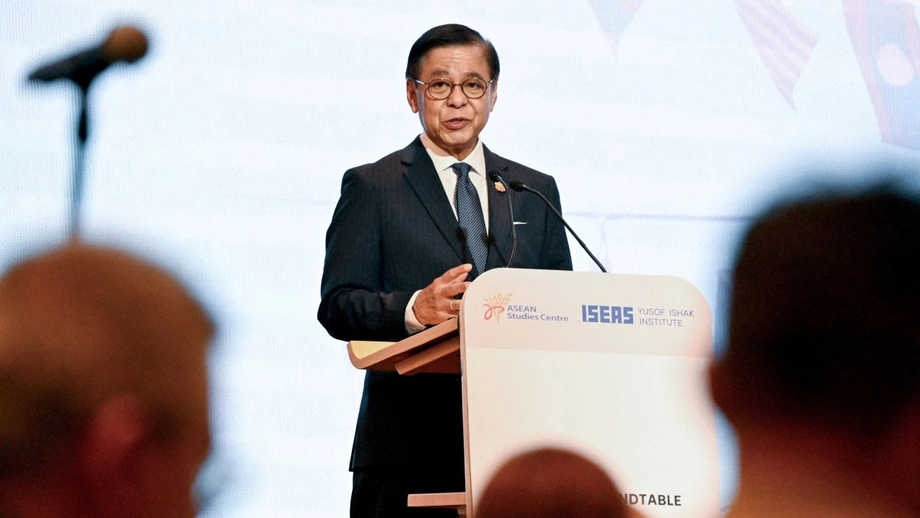
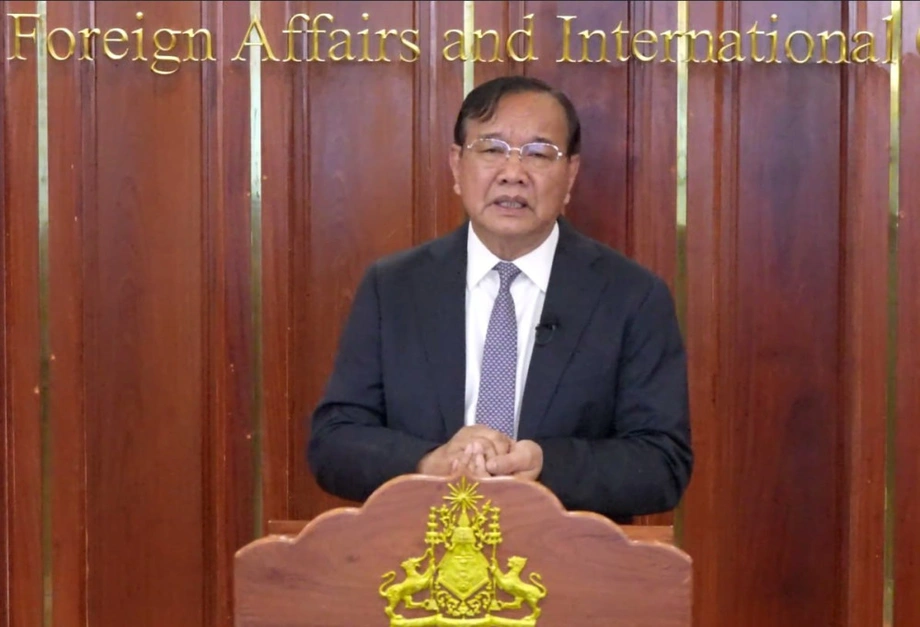
At the opening meeting in Singapore, Prak said Cambodia had begun the process as a peaceful way to address the dispute. He also said the country hoped for a boundary treaty or an arrangement for joint development and equitable sharing.
Prak Sokhonn, Cambodia's deputy prime minister and foreign minister, described the purpose of the process this way:
Cambodia took this step to find a peaceful pathway forward in accordance with international law. Cambodia sees this conciliation process as a means to rebuild trust, not as a form of escalation.
Why does Thailand insist on a boundary first?
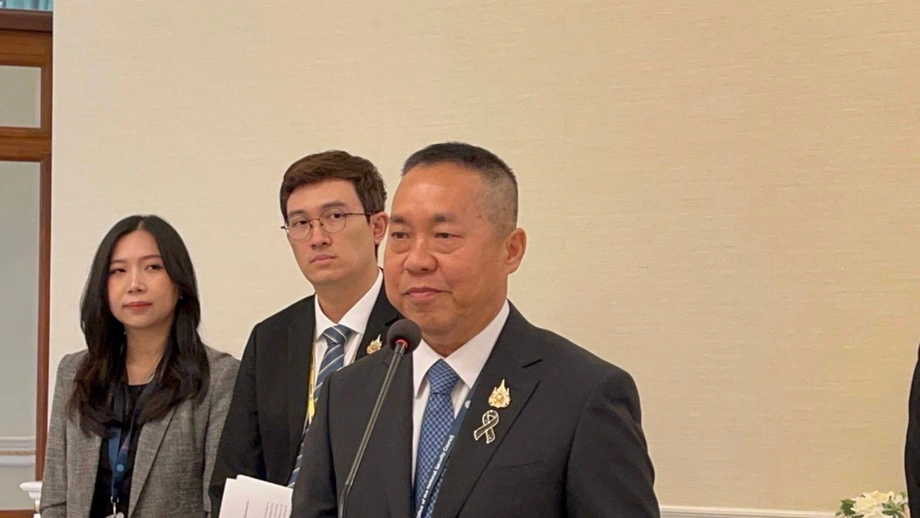
Sihasak has said Thailand is willing to take part in the conciliation, while drawing a clear line between boundary talks and resource sharing. After the September meeting, he said Bangkok would not discuss sharing resources before the maritime boundary had been drawn.
Sihasak, who is also a deputy prime minister, stated Thailand's position as follows:
On our side, we stand firm that the maritime boundary must be clearly defined. Joint development or resource-sharing must be discussed afterwards.
Thailand has also said the sea process should not cover sovereignty over land. Sihasak has reiterated that Koh Kood belongs to Thailand and rejected Cambodia's 1972 continental shelf claim line. Cambodia's positions and Thailand's objections show why a technical meeting may still face difficult political questions.
The countries have also disagreed about the history of negotiations. Cambodia says it initiated compulsory conciliation after Thailand ended the 2001 MOU. Sihasak has disputed Cambodia's account, saying the two sides held only two official rounds of talks over 25 years and that Thailand had proposed direct discussions before moving to conciliation.
How does the land dispute affect the talks?
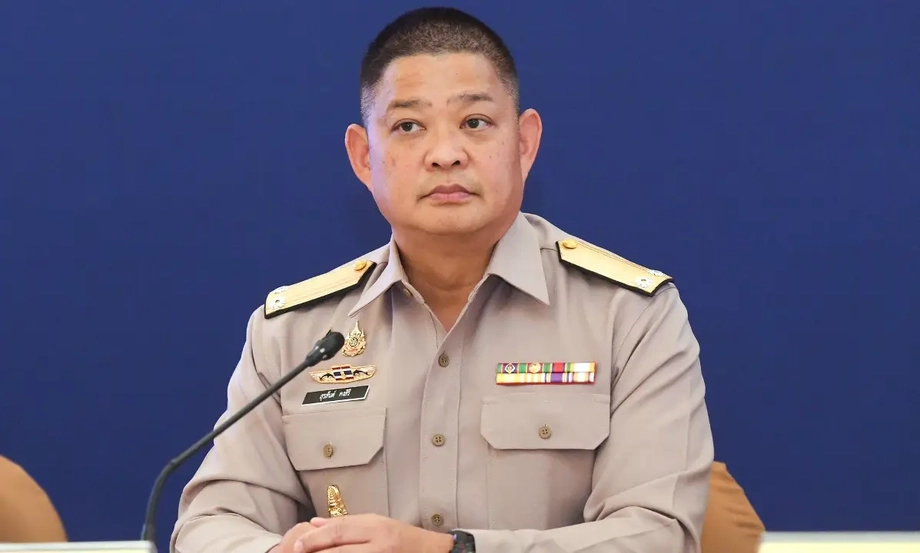
Thai officials say unresolved security issues along the land border must also be addressed. Rear Adm. Surasant Kongsiri, a Thai Defence Ministry spokesman, has accused Cambodia of breaching five of the 16 commitments in a joint statement signed by the two countries' defence ministers on Dec. 27, 2025. The clauses he cited concern provocation and incursions, joint mine clearance, cross border crime, border coordination and direct communication to counter false information.
Surasant said joint mine clearance must be completed before boundary demarcation can proceed, because teams need to enter the area safely. He also said Thai forces remained on alert and accused Cambodia of continued provocation and frequent drone flights. These are Thai government allegations; the claims do not form a finding by the maritime commission.
A separate diplomatic dispute surfaced at the 47th General Assembly of the ASEAN Inter Parliamentary Assembly on Nov. 18. Thai House Speaker Sophon Sarum said Cambodia agreed to remove wording about more than 20,000 displaced civilians from an AIPA ASEAN Interface report after Thailand objected that the claim and figure had not been jointly checked. His account illustrates how arguments over the border are also being carried into regional political forums.
Thai Prime Minister Anutin Charnvirakul is scheduled to discuss his conversations with Cambodian Prime Minister Hun Manet in a broadcast on Nov. 21, including maritime claims, boundary demarcation and Thailand's position on compulsory conciliation. The broadcast is expected before the Kuala Lumpur meeting begins.
Key dates in the process
June 2: Cambodia initiates compulsory conciliation under UNCLOS.
June 19: Thailand submits its response.
Sept. 14 to 16: The commission holds its first meeting in Singapore.
Oct. 14 to 18: The second meeting takes place in The Hague, where the parties finalise confidence building measures.
Nov. 24 to 27: The third meeting is scheduled in Kuala Lumpur, with technical aspects of the maritime boundary on the agenda.
What to Know
Thailand and Cambodia will hold their third maritime conciliation meeting in Kuala Lumpur from Nov. 24 to 27.
Cambodia wants a boundary treaty, a resource sharing arrangement or commission recommendations to guide future talks.
Thailand says the boundary must be defined before it discusses sharing resources.
The commission's recommendations are not binding, and UNCLOS calls for it to report within 12 months of its constitution.
Thai officials say land border security and mine clearance remain unresolved, while all land crossings remain closed.