A monumental burial, and a small chamber at its heart
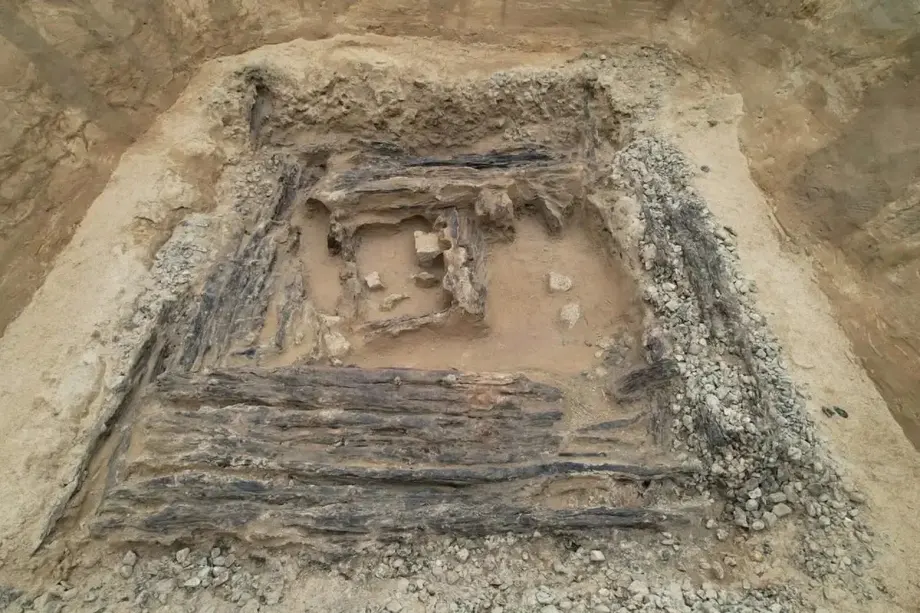
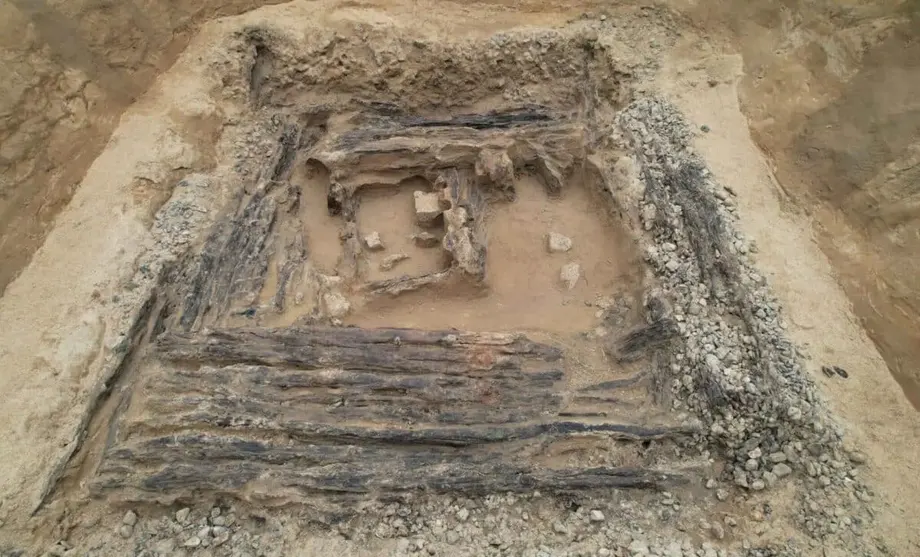
Archaeologists have completed a four year excavation of Tomb No. 160 at Duurlig Nars in Mongolia's Khentii province, uncovering 413 objects in the largest Xiongnu tomb recorded in the country. The burial stretches about 73 metres, including its entrance passage, and reaches 14.5 metres below ground. Its contents include 15 carved jade pieces, silver horse ornaments resembling finds from the Korean Peninsula, a circular gold ornament with coloured details and a glass cup that may have come from the Roman Empire.
Contents
- A monumental burial, and a small chamber at its heart
- Where is Tomb No. 160?
- Four years of excavation, after decades of cooperation
- How was the tomb built?
- What do the 413 objects reveal?
- Jade with a local design
- A rich grave from a period of change
- What can DNA and material tests answer?
- A short timeline of the site and excavation
- Key Points
The tomb was built roughly 2,000 years ago, in the late first or second century CE, when Xiongnu political power was weakening. Its enormous outer structure contrasts with a central burial chamber that is smaller and shallower than those in some other elite Xiongnu tombs. Researchers say that difference may reflect changes in Xiongnu society, though the person buried there has not yet been identified.
The National Museum of Korea presented the completed excavation's findings on November 6, 2026. The work was carried out by the museum, the Institute of Archaeology of the Mongolian Academy of Sciences and the National Museum of Mongolia. A previous account of the excavation described the 413 finds and the questions researchers hope further tests will answer.
Where is Tomb No. 160?
The tomb lies at Duurlig Nars, near Bayan-Adarga in eastern Mongolia. The cemetery contains hundreds of Xiongnu burial mounds, often called kurgans, and is one of six major burial grounds for Xiongnu elites identified in Mongolia. The municipal site description says more than 200 aristocratic tombs are spread across the pine grove. Other accounts put the number at about 300.
Duurlig Nars is considered the easternmost of Mongolia's major Xiongnu elite burial grounds. Researchers have suggested its graves may be connected to aristocrats who governed the eastern part of the Xiongnu realm. That is a possible regional link, not an identification of the occupant of Tomb No. 160.
The cemetery itself has been studied for decades. Khöдөөгийн Пэрлээ first identified it in 1974, and a Mongolian-Japanese survey recorded the tombs in 1990. Earlier excavations found gold coffin decorations, jade, bronze and iron vessels, decorated pottery and a stone pendant shaped like a bird. Some objects, including iron cooking pots and strainers, were unusual among finds from Xiongnu sites.
Four years of excavation, after decades of cooperation
Work on Tomb No. 160 began in 2023 and finished in 2026. The excavation forms part of a long running Mongolian and South Korean archaeological partnership. One joint programme, known as Mon-Sol, has studied Duurlig Nars since 2006; the wider Mongolia–South Korea archaeological partnership dates to 1997.
Earlier field seasons helped researchers understand the cemetery's layout and burial practices. The municipal site record describes excavations from 2006 to 2010 that examined three square tombs with entrance passages and 11 smaller tombs with circular stone structures. A later account of the project covers work through 2012 and includes additional graves. In 2010, a team led by archaeologist G. Eregzen excavated one large tomb to 10 metres and investigated five nearby subsidiary burials.
In August 2026, during an earlier stage of work on Tomb No. 160, a progress account gave the structure's length as 80 metres and its main area as 40 by 40 metres. The completed excavation's reported measurement is about 73 metres, with the entrance passage included. The excavation also reached about 15 metres during the work; the completed depth is given as 14.5 metres.
How was the tomb built?
Ancient builders dug a large pit in stages, making each lower level smaller than the one above it. The resulting shape has been compared to an upside down pyramid. They placed two wooden burial structures inside one another around a coffin, then covered the grave with nine layers of stone. Archaeologists had to remove those layers carefully to reach the central burial.
A lacquered carriage was found directly above the central chamber. Lacquer is a hard, glossy coating used to protect and decorate objects. Parts of the carriage had gilded bronze fittings. Its placement, together with the labour required to construct the tomb and the range of valuable objects inside, points to a person of very high social rank.
The central chamber, however, reached about 14.5 metres below the surface. Comparable elite Xiongnu tombs in central Mongolia can reach about 22 metres, or more than 70 feet. Researchers have proposed that the shallower burial may reflect political or social changes at the time. The striking contrast between the tomb's great length and its more modest central depth is one of the questions the excavation has brought into focus.
What do the 413 objects reveal?
The finds point to connections across a wide area, from China and the Korean Peninsula to the western parts of Eurasia. They include objects that resemble foreign styles, but their similarities do not by themselves show that every item travelled directly from the place whose style it resembles. Goods and ideas could pass through several communities before reaching the Xiongnu.
The glass vessel is transparent, has a handle and is broken. Researchers think it may have been made in the Roman Empire, but its exact origin is not known. They plan to examine its chemical composition, which can help identify the materials and production region. Until that analysis is complete, a Roman origin remains a possibility rather than a confirmed finding.
The objects also include silver decorations from horse harnesses. One pendant, shaped like a gourd and made from hammered silver, has a rock crystal at its centre. It resembles ornaments from the Lelang cultural sphere, an area associated with the Han dynasty in what is now the Korean Peninsula. A comparable piece was found at Tomb No. 219 at Seogam-ri, near present day Pyongyang.
Jade with a local design
Fifteen jade objects lay at the bottom of the coffin. They are flat and overlap, and their form recalls bi, circular jade discs used in burials of important people during China's Han dynasty. The pieces from Duurlig Nars are not standard circles: they have irregular outlines and detailed carved designs.
The objects suggest that Xiongnu people may have adopted or adapted elements of Han funerary customs, giving them forms that suited their own traditions. This is one example of cultural exchange that did not require one society to copy another exactly. A familiar material or ritual object could be reshaped to fit local practice.
Another unusual find is a circular gold ornament with red and blue materials beneath a transparent crystal. Excavators say this kind of decoration has not previously been documented in a Xiongnu tomb. The coloured details and crystal make it different from the more familiar horse fittings and jade pieces, adding another clue to the range of materials and craft techniques available to the elite.
A rich grave from a period of change
The Xiongnu built a powerful nomadic empire across the Mongolian steppe from around the third century BCE. A mobile empire is one whose people and political centres can move across a broad territory, rather than relying on a single city. The Xiongnu maintained political and economic relationships with neighbouring societies, including Han China.
Tomb No. 160 dates to the late first or second century CE, a period when Xiongnu influence was declining. Researchers have suggested that the smaller central chamber, compared with deeper elite tombs elsewhere, may relate to shifts in the society's political organisation. The grave's impressive length and rich contents show that its builders could still organise substantial labour and provide costly goods for a high ranking burial.
The National Museum of Korea described the broader significance of the finds in a statement about the excavation. The museum said:
This excavation clearly shows that the Xiongnu of 2,000 years ago were linked to a broad exchange network reaching from Rome to the Korean Peninsula.
The possible Roman glass, Han inspired jade and Korean linked silver help explain why researchers see the grave as evidence of far reaching exchange. Some objects may have travelled through intermediary groups, while others may reflect the movement of designs and skills rather than finished goods.
What can DNA and material tests answer?
Researchers have collected teeth and hair from the burial for planned DNA analysis. The tests may help determine the deceased person's biological sex, age and ancestry, and whether the person was related to people buried in nearby graves. The results could add information about family connections within the cemetery, but no identity has yet been established.
Laboratory work on the glass may help narrow down where it was manufactured. Further study of the silver, gold and other materials could also clarify how the objects were made and how their designs relate to finds elsewhere. The research team has not announced a date for those results.
Duurlig Nars has also gained wider recognition as a historic landscape. In 2026, the complex was included on UNESCO's World Heritage List as part of the monumental burial landscapes of Mongolia. Its tombs document the engineering and organisation behind elite burials in a society often described through its mobile way of life.
A short timeline of the site and excavation
1974: Researcher Khöдөөгийн Пэрлээ identifies the Duurlig Nars cemetery.
1990: A Mongolian-Japanese survey records the tombs and maps the site.
1997: Mongolia and South Korea establish a wider archaeological partnership.
2006 onward: Mon-Sol researchers begin detailed work at Duurlig Nars and excavate elite and subsidiary tombs.
2023 to 2026: The team excavates Tomb No. 160 and recovers 413 objects.
August 23, 2026: President Ukhnaa Khurelsukh visits the work site while excavation is still under way.
November 6, 2026: The National Museum of Korea presents the completed excavation findings.
November 6 and 7, 2026: The discoveries are presented at the fiftieth National Conference of the Korean Archaeological Society.
The excavation adds a detailed case study to decades of work at Duurlig Nars. It connects the construction of one exceptionally large tomb with objects shaped by exchange across Eurasia, while leaving the occupant's identity and the glass vessel's origin for further testing.
Key Points
Tomb No. 160 at Duurlig Nars is about 73 metres long and 14.5 metres deep.
Archaeologists recovered 413 objects, including jade, silver horse ornaments, a distinctive gold ornament and a glass vessel that may be Roman.
The burial dates to the late first or second century CE, as Xiongnu political influence was weakening.
DNA analysis of teeth and hair and chemical testing of the glass are planned.
The person buried in the tomb has not been identified.