Preliminary finding moves dam project toward government talks
Mongolian and Russian scientists have reached a preliminary conclusion that the proposed Egiin Gol hydropower project could be built and operated without adverse effects on the Selenga River and Lake Baikal ecosystems, according to Mongolia's government communications office. The finding follows two years of joint research and is now being prepared for formal discussion with Russian authorities.
Contents
- Preliminary finding moves dam project toward government talks
- Why the river connects both countries
- How the joint assessment developed
- What Mongolia's official records show
- How scientists trace water to Lake Baikal
- What satellite observations add
- Why the energy alternatives also matter
- What happens before the next decision
- Key Points
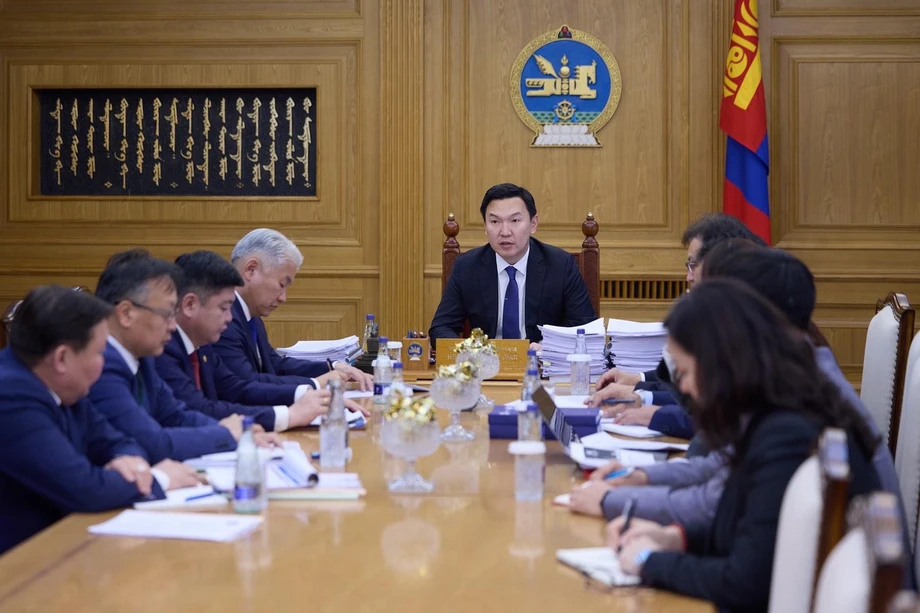
S. Demberel, president of the Mongolian Academy of Sciences, presented the findings to Prime Minister N. Uchral. The prime minister instructed ministers to complete discussions with Russia, formalize agreed documents and prepare the policy decisions needed for the project to advance.
The joint scientific working group is scheduled to present its preliminary conclusion and hand over documents to the Russian government on the 19th. The announcement leaves the month and year unspecified, along with the construction timetable and detailed operating conditions behind the finding.
The conclusion is an agreement in principle. Mongolia's next steps include presenting the research to the intergovernmental commission and bringing proposed decisions before the cabinet.
The scientific picture also has an important qualification. While the government announcement describes the possibility of proceeding without adverse ecosystem effects, a September 2025 paper by Russian Academy of Sciences researchers describes landscape effects as local within the Selenga basin and minimal at Lake Baikal. Those descriptions concern related but different subjects: the wider ecosystem assessment and a study focused on landscapes and vegetation.
Why the river connects both countries
The Egiin Gol project is planned on the Eg River in Mongolia, a tributary of the Selenga. Water from the proposed dam site would continue downstream through the Selenga system toward Russia's Lake Baikal. A reservoir would therefore become part of a river network shared by both countries.
The Selenga supplies about half of the water entering Lake Baikal, according to figures cited during the October 2024 ministerial discussions. That connection explains why the research follows water beyond the immediate construction area and why Mongolia and Russia established a joint scientific process.
Hydropower produces electricity by passing water through turbines. A reservoir stores water and allows operators to control when some of it is released. For communities and ecosystems downstream, the research must examine the amount and timing of water moving through the river, including during the reservoir's initial filling.
Uchral described Mongolia's objective as bringing electricity production, responsible water use and environmental protection together. His instructions put scientific agreement alongside government decision making, with ministries responsible for turning the research into documents and proposals that both countries can discuss.
How the joint assessment developed
Mongolia and Russia signed a memorandum on protecting Lake Baikal and the Selenga River on September 3, 2024, during the Russian president's official visit to Mongolia. The agreement provided the framework for the joint working group assessing the project's possible effects.
Mongolia's Ministry of Environment and Climate Change subsequently documented how that framework developed. Its November 2024 meeting statement says the scientists were tasked with reviewing research on biodiversity effects, consulting each other and reaching mutual acceptance of the results. Biodiversity means the variety of living things and the habitats that support them.
The main dated steps show how the process moved from a diplomatic agreement to scientific work and assessment procurement:
- September 3, 2024: The two countries signed the memorandum on cooperation to protect Lake Baikal and the Selenga.
- October 9, 2024: Environment ministers met in Moscow and agreed to specify research procedures, responsibilities, a work plan and deadlines.
- November 15, 2024: Mongolian ministries and scientific institutions met at the Mongolian Academy of Sciences to develop the project's roadmap.
- February 10, 2025: The joint expert working group held its first meeting in Moscow.
- May 13, 2025: An extraordinary joint working group meeting took place in Irkutsk.
- June 6, 2025: Mongolia approved tender documents for an environmental and social impact assessment and announced the tender.
The October meeting involved Mongolia's environment minister S. Odontuya, Russian Natural Resources and Environment Minister A. A. Kozlov and Russian Academy of Sciences President G. Ya. Krasnikov. The discussions connected government responsibility for shared water resources with the academies' scientific work.
What Mongolia's official records show
The November 15 meeting brought together representatives of Mongolia's economy and development ministry, finance ministry, environment ministry, Academy of Sciences, Water Agency and National Commission for UNESCO. Participants agreed to accelerate the expert group's work and organize seminars involving the government bodies responsible for the project.
Mongolia's government implementation monitoring report records a further set of administrative steps under its 2024-2028 action programme. The relevant programme item received a 70% implementation rating for the reporting period. That figure measures progress against the government programme, including research arrangements and procurement preparations.
The report cites Government Resolution No. 172 of 2025 on accelerating the project. It also records a cooperation memorandum involving the environment ministry and Academy of Sciences approved on May 2, 2025, and terms of reference for the first research phase approved on May 8.
The June 6 tender documents covered the selection of a contractor for an environmental and social impact assessment using UNESCO World Heritage Committee methodology. Such an assessment examines effects on nature and people, while the World Heritage guidance directs attention to the qualities for which a protected place is valued.
The report also says the May 13 meeting in Irkutsk took place at the V. M. Matrosov Institute for System Dynamics and Control Theory, part of the Russian Academy of Sciences' Siberian Branch. Participants agreed to hold the next regular meeting in Mongolia in July 2025.
How scientists trace water to Lake Baikal
A paper published on December 29, 2025, in Energy Systems Research describes a set of computer models designed to examine how proposed Mongolian hydropower plants could affect water flows in the Russian part of the Selenga basin. Egiin Gol is its primary study subject.
The authors, V. M. Nikitin, N. V. Abasov, E. N. Osipchuk, V. M. Berdnikov and V. S. Gasan, work at the Melentiev Energy Systems Institute of the Russian Academy of Sciences' Siberian Branch. Their hydrological modelling paper describes tools covering dam location, reservoir shape, incoming water and operating choices.
One component can help select a dam site when precise coordinates are unavailable. Another calculates how the reservoir's water level relates to its surface area and stored volume. Those relationships matter because a rising water level can cover a wider area and store a different amount of water depending on the shape of the valley.
The models also estimate water inflow by relating meteorological indicators to river flow. They then simulate reservoir filling and operation under different water conditions, following potential changes from the dam downstream to the Selenga's entry into Lake Baikal.
The authors describe the modelling results as a basis for further ecosystem research. Their approach connects an engineering decision at the dam, such as how water is stored and released, with the water conditions that plants, animals and habitats would experience farther downstream.
What satellite observations add
A second academic study examines landscapes and vegetation rather than concentrating on river flow. Published on September 15, 2025, it draws on the first meeting of the joint Russian-Mongolian expert group and considers possible environmental consequences of building Egiin Gol.
A. A. Tishkov and S. V. Titova of the Russian Academy of Sciences' Institute of Geography use observations covering 2000-2024 in their landscape assessment paper. Their analysis examines trends in two vegetation indices, NDVI and EVI, alongside net primary production, or NPP.
NDVI and EVI use reflected light to help scientists track vegetation condition. NPP describes the plant material produced after plants use some of the energy they capture to sustain themselves. Together, these measures help researchers examine how vegetation and its productivity change across a large area.
The authors report a generally positive pattern of landscape change in the main project areas, including steppe, dry steppe and desert, after a wetter cycle began in 2015. They describe the project's landscape effects within the Selenga basin as local.
Tishkov and Titova, writing as researchers at the Institute of Geography, describe the expected effect on Lake Baikal in these words:
on Lake Baikal it is minimal.
The study adds a record of changing environmental conditions to the assessment. Its observations allow the project to be considered against a landscape already responding to changes in moisture and climate.
Why the energy alternatives also matter
Tishkov and Titova also consider alternative ways to supply Mongolia with energy. They argue that abandoning the hydropower project could produce more serious environmental consequences because other ways of meeting the country's growing energy needs would have greater effects.
Their argument makes the choice broader than construction versus leaving the river unchanged. Mongolia must also consider how electricity would otherwise be generated and what environmental costs would come with those options. The paper presents that comparison as part of judging the project.
Uchral's stated objective follows a similar line: electricity production, water management and environmental protection should be coordinated. For government decisions, that means considering the proposed dam's operating arrangements together with the energy supply it is intended to provide.
What happens before the next decision
Mongolia's immediate task is to finish discussing the joint findings with Russia and formalize the agreed documents. Uchral has directed the relevant ministers to present the results to the intergovernmental commission and consolidate the policies and draft decisions needed for cabinet consideration.
The planned presentation to the Russian government on the 19th is the next announced step. It places the scientific group's preliminary conclusion before Russian authorities while Mongolia prepares its own decisions.
The research programme brings together two practical questions: how the reservoir would change water movement, and how those changes would affect landscapes and ecosystems. The official assessment process also includes social effects and World Heritage guidance. Those strands will shape the documents ministers use as the project moves through government discussions.
Key Points
- Joint Mongolian and Russian research has reached a preliminary agreement in principle that Egiin Gol could be built and operated without adverse ecosystem effects.
- The prime minister has ordered final discussions with Russia, formal documentation and preparation of cabinet proposals.
- Official records trace the assessment process from a September 2024 memorandum through scientific meetings and an assessment tender in 2025.
- Russian academic studies examine downstream water flows and landscape changes, with one describing effects on Lake Baikal as minimal.
- The working group plans to present its findings to Russia's government on the 19th; the announcement leaves the month and year unspecified.