Two weekly pens bring a new treatment option
Japan has launched a weekly injection of the Alzheimer's drug Leqembi at a government insurance price of ¥54,282, about $339, compared with a US list price of $770 for the same 500 mg weekly regimen. The Japanese price listing took effect on November 13, 2026, giving patients with early Alzheimer's disease another option alongside infusions at medical facilities.
Contents
- Two weekly pens bring a new treatment option
- What the Japanese price means
- How the pen compares with infusion costs
- Why injections use more medicine
- What regulators used to assess benefit
- Brain swelling data need the study context
- Training and scans remain essential
- Approval, insurance listing and launch
- The benefit debate follows the pen home
- Key Points
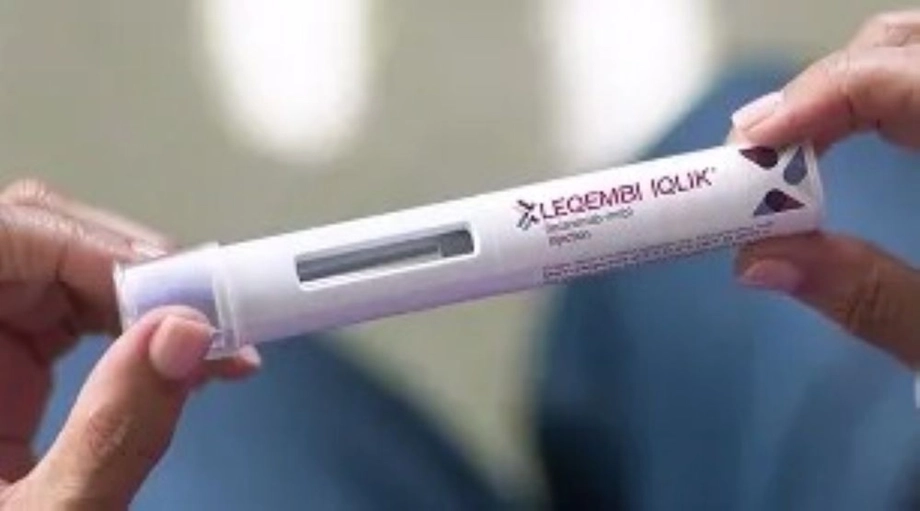
The treatment uses two pens containing 250 mg each. Eisai and Biogen say each injection takes about 15 seconds, allowing trained patients, relatives or caregivers to administer the medicine at home under a physician's guidance. Treatment must begin at a medical facility, and brain scans remain part of care.
The approval rests on evidence that weekly injections produce similar exposure to lecanemab, the drug's generic name, as infusions every two weeks. Regulators used that comparison, clinical findings from the existing infusion trial and studies during its extension to assess the new route.
Japan's regulatory record also provides a fuller picture of safety and practical use than the price announcement alone. It includes results from 244 people receiving the 500 mg pen regimen, separate findings from patients starting a different injectable formulation, and evidence that 180 participants administered at least one dose at home.
For families, the change combines a shorter administration process with continuing responsibilities: two injections every week, training, medical supervision and scheduled MRI scans. The financial comparison also depends on which prices are being compared. Japan sets a reimbursement price under National Health Insurance, while the US figure is a list price before rebates and discounts.
What the Japanese price means
Japan's Central Social Insurance Medical Council, known as Chuikyo, agreed to the price listing on November 6. Each 250 mg pen, containing 1.25 mL, was priced at ¥27,141. Two pens bring the weekly drug cost to ¥54,282.
Multiplying that amount by 52 gives an annual drug price of ¥2,822,664, approximately $17,650 at the exchange rate used for the quoted dollar comparison. In the United States, two pens at $385 each cost $770 a week, or $40,040 over 52 weeks. Japan's converted price is therefore about 44% of the US list price.
Patients pay according to their insurance arrangements and applicable cost sharing. The annual totals here cover the medicine alone; scans, consultations and other services are separate parts of treatment.
Japan calculated the pen's price using the existing Leqembi infusion as its comparator. The market forecast attached to the listing projects 22,000 patients and ¥55.5 billion in annual sales at the peak in the tenth year. Those figures are forecasts of future use and revenue.
How the pen compares with infusion costs
Leqembi infusions entered the Japanese market in December 2023 at an annual drug price of about ¥2.98 million. The pen's annual price of approximately ¥2.82 million is around 5% below that original level.
Japan has since set a 15% reduction in the infusion price following its cost effectiveness review. Applying the full reduction to ¥2.98 million gives approximately ¥2.53 million a year. Against that calculated amount, the pen would cost about 11% more.
The US comparison is larger. Leqembi infusions launched there in January 2023 at an annual list price of $26,500. The weekly 500 mg pen regimen totals $40,040 over a year, about 51% above that original infusion price.
Families and health services therefore face two separate calculations: the price of the medicine and the time and resources needed to administer it. Home injections can reduce travel and infusion appointments, while the weekly dosing schedule shifts more of the administration work to patients and caregivers.
Why injections use more medicine
Lecanemab is an antibody, a protein designed to attach to particular forms of amyloid beta associated with Alzheimer's disease. The pen delivers it under the skin, a route called subcutaneous administration. Infusions deliver it directly into the bloodstream.
The Japanese regimen is a fixed 500 mg once a week. The infusion regimen uses 10 mg per kilogram of body weight every two weeks. For someone weighing 70 kg, that means 700 mg by infusion over 14 days, compared with 1,000 mg injected under the skin during the same period.
The injected amount is about 43% larger in that example because absorption differs between the routes. The US prescribing information estimates that about 77.5% of a 500 mg dose injected under the skin reaches the bloodstream. The pen formulation is also more concentrated, at 200 mg/mL compared with 100 mg/mL for the infusion product.
Japan's Pharmaceuticals and Medical Devices Agency, or PMDA, examined total drug exposure over time, measured as the area under the concentration curve. Its regulatory review report gives an injection to infusion exposure ratio of 1.04, or 104%, with a 90% confidence interval of 99.1% to 109%.
The entire interval fell within the prespecified acceptance range of 80% to 125%. That exposure comparison was central to the decision to accept the weekly dose.
What regulators used to assess benefit
Eisai and Biogen's Japanese approval announcement, dated September 16, 2026, describes an assessment combining the 18 month Clarity AD trial, several subcutaneous studies during its long term extension, and modeling and simulation. The companies expect the pen to have efficacy similar to the infusion.
The regulatory review also includes clinical measurements from 69 patients who began treatment with a different formulation, a vial delivering 720 mg under the skin each week. After 12 months, the estimated change on CDR-SB, a scale combining cognitive and everyday functioning assessments, was 0.272 points. The reported confidence interval ranged from minus 0.148 to 0.692.
Other measurements in that group recorded worsening in cognition and daily functioning. The approval assessment combined those observations with amyloid measurements and the exposure comparison for the marketed 500 mg pen. The route comparison relied on that combined assessment rather than a new trial directly comparing the pen and infusion on clinical decline.
PMDA concluded that efficacy for slowing progression in mild cognitive impairment and mild dementia caused by Alzheimer's disease had been shown, and that safety was acceptable in light of the benefits. Approval requires a risk management plan, with a regulatory reexamination period of six years.
Brain swelling data need the study context
Leqembi can cause amyloid related imaging abnormalities, known as ARIA. ARIA-E refers to swelling or fluid accumulation in the brain. ARIA-H includes small areas of bleeding or deposits of blood breakdown products detected on scans.
PMDA recorded no ARIA-E cases among 244 participants in the 500 mg pen group, and ARIA-H in seven, or 2.9%. In the separate group of 72 patients newly starting weekly 720 mg injections from vials, ARIA-E occurred in 14, or 19.4%, and ARIA-H in 18, or 25%.
The infusion comparison group had ARIA-E in 113 of 898 participants, or 12.6%, and ARIA-H in 155, or 17.3%. The US label rounds the infusion ARIA-E rate to 13%, compared with 2% among placebo recipients.
Patients, formulations and treatment circumstances varied across these groups. For someone starting the 500 mg pen, the assessment draws on the pen study, experience in patients newly receiving lecanemab, infusion findings and modeling. Twelve of the 14 ARIA-E cases in the group newly receiving 720 mg injections first occurred within six months of treatment starting.
Company modeling predicted ARIA-E in 12.4% of patients receiving the initiation injection regimen, rising to 30.9% among people with two copies of the ApoE ε4 gene variant. Those percentages are predictions. PMDA judged the injection's safety manageable with precautions similar to those used for infusions.
Training and scans remain essential
Japanese approval requires the first administration at a medical facility by a physician or under direct physician supervision. Home administration follows training and confirmation that the patient or caregiver understands the risks, knows how to respond and can deliver the dose reliably.
The extension study provides practical evidence for that process. At least one home dose was administered for 180 of 244 participants in the full pen study population and 41 of 47 Japanese participants. Recorded adherence during home administration was 98.5% and 98.0%, respectively.
No events related to overdose, misuse, abuse or medication errors were identified in that home use experience. No serious health harm attributable to an autoinjector malfunction was reported. These results came from participants who had completed the study's training.
MRI monitoring continues before treatment and at specified points afterward. In the United States, an August 28, 2025 safety communication added an earlier scan before the third infusion; the injection label places the scan around one month before the fifth subcutaneous dose.
Keeping appointments may require substantial caregiver involvement. A study presented at ISPOR found that 90 of 150 Medicare beneficiaries, or 60%, had a scan before their fifth infusion. Home dosing reduces visits for administration while leaving scheduled brain monitoring in place.
Approval, insurance listing and launch
Japan was the third country to approve the subcutaneous formulation and the second to launch it. The United States launched its injection product first, initially for maintenance after an extended period of infusion treatment.
The main regulatory and pricing milestones were:
- August 2025: The United States approved a 360 mg weekly injection for maintenance after 18 months of infusion treatment.
- October 6, 2025: The US injection product, Leqembi Iqlik, launched.
- July 2026: The United States approved starting treatment with 500 mg weekly injections.
- August 26, 2026: Japan's First Drug Committee judged the application acceptable for approval; the deliberation report was dated August 27.
- September 2026: China approved subcutaneous initiation, followed by Japanese approval on September 16.
- November 6 and 13, 2026: Chuikyo agreed to Japan's price listing, which took effect a week later.
Home prescribing also involves a separate administrative step. The September company announcement said it would become possible after inclusion on the health ministry's eligible injectable drug list. Chuikyo subsequently supported adding the pen to coverage under the home self injection management fee on November 6. Completion of the separate injectable drug listing was not specified in the launch information.
Eisai leads clinical development, regulatory applications and commercialization, working with Biogen on commercialization. BioArctic, which helped develop the antibody, receives royalties. Lecanemab has approvals across 53 countries and regions, with formulations and permitted uses varying by jurisdiction.
The benefit debate follows the pen home
Clarity AD found that infusion lecanemab slowed clinical decline by about 27% relative to placebo over 18 months. Patients receiving the medicine still experienced deterioration, but at a slower average rate on the trial's principal clinical measure.
A Cochrane review published in April 2026 pooled 17 trials involving 20,342 participants and judged the effects of antiamyloid antibodies on cognition and dementia severity to be trivial, alongside increased brain swelling and bleeding. Researchers at the UK Dementia Research Institute challenged that approach in a July perspective, arguing that it combined antibodies with different abilities to clear amyloid and included older trials conducted before modern biomarkers were available.
Japan's regulators accepted lecanemab's benefit and risk balance for early Alzheimer's disease and approved the additional route. Patients choosing between injections and infusions face the same underlying decision about treatment benefit, brain safety and the demands of continuing care.
The pen changes the weekly routine and the delivery cost. Specialist assessment, reliable administration and MRI access remain central to whether treatment fits a household.
Key Points
- Japan's weekly 500 mg Leqembi pen regimen costs ¥54,282 at the National Health Insurance price, about $339 versus a US list price of $770.
- Two 250 mg pens are used each week. Treatment begins under medical supervision before trained home administration.
- Approval relied on similar drug exposure to infusions, existing clinical evidence and studies during the trial extension.
- PMDA recorded no brain swelling cases in the 244 participant pen group; separate patients starting a different injectable formulation experienced swelling.
- Brain MRI monitoring remains required, and ApoE ε4 status affects the assessment of ARIA risk.
- Japan's insurance price listing took effect on November 13, 2026. Infusion treatment remains available.