Three Women Could Join a Study Starting in Fiscal 2027
Fujita Health University in Toyoake, Aichi Prefecture, has applied for approval to transplant donated uteruses into about three women in their 20s or 30s who were born without the organ. The proposal, submitted on October 26 and announced on October 28, 2026, could lead to the first uterus transplant performed in Japan.
Contents
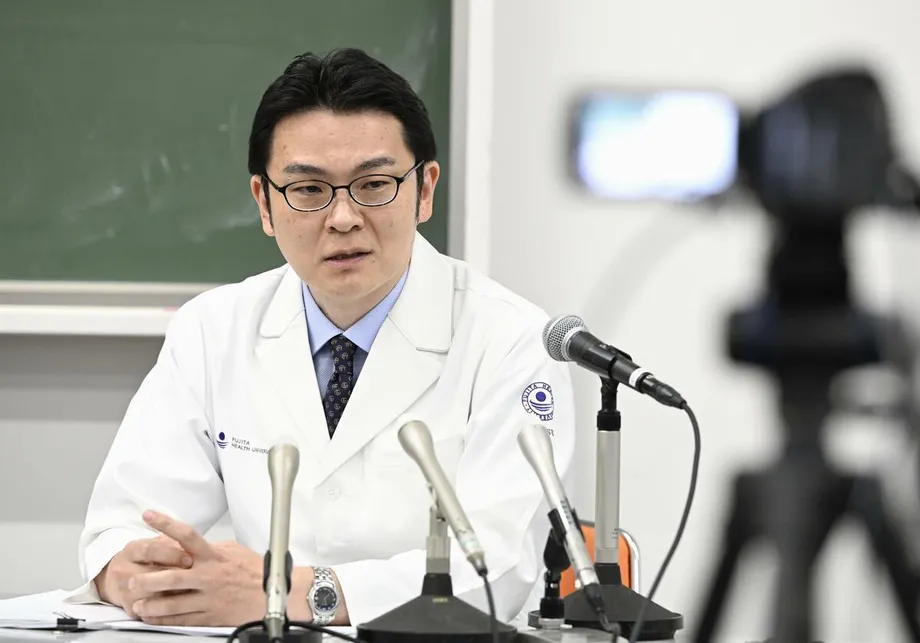
Professor Iori Kisu, the principal investigator and a specialist in obstetrics and gynecology, said the first operation could take place as early as fiscal 2027. Japan's fiscal 2027 runs from April 2027 through March 2028. The team hopes the procedure will allow women who cannot carry a pregnancy because they lack a uterus to give birth using their own bodies.
The plan calls for healthy female relatives, including participants' mothers, to donate a uterus. Researchers would use in vitro fertilization, or IVF, to create embryos from each participant's eggs and her partner's sperm, then transfer an embryo into the transplanted uterus after checking for rejection.
The university estimates a cost of 20 million to 25 million yen per participant. How much participants would pay is still under consideration. Recruitment is planned after the review committee approves the proposal, and the hospital director must also authorize the research before it proceeds.
Who Would Be Eligible?
The proposed study focuses on women with uterine factor infertility, meaning that a missing or nonfunctioning uterus prevents them from carrying a pregnancy. Fujita's planned group includes women born without a uterus because of conditions such as Mayer-Rokitansky-Kuster-Hauser syndrome, also called Rokitansky syndrome.
The syndrome can cause the uterus and vagina to be absent or underdeveloped. A woman may still have ovaries that produce eggs. That is why the proposed treatment combines a donated uterus with embryos made using the participant's own eggs.
The uterus is the organ where an embryo develops during pregnancy. The ovaries have a different role: they produce eggs. Transplanting a uterus would give a participant a place to carry a pregnancy, while IVF would provide the embryo to transfer into it.
Although uterus transplantation may also be relevant to women who have lost the organ, Fujita's proposal is a small study centered on about three women in their 20s or 30s with congenital conditions. It is not a general treatment program open to everyone with infertility.
How the Treatment Would Work
Fujita's plan involves several stages, beginning with egg collection and IVF. In that process, eggs are fertilized outside the body using a partner's sperm. An embryo would later be placed inside the transplanted uterus in an attempt to establish a pregnancy.
A healthy relative would undergo surgery to donate her uterus, and the participant would undergo surgery to receive it. After transplantation, doctors would use medicines called immunosuppressants to reduce the risk that the recipient's immune system attacks the donated organ.
Rejection happens when the body's defenses recognize a transplanted organ as foreign and attack it. The research team would check that the uterus was not being rejected before proceeding with an embryo transfer. The operation and the attempt to achieve pregnancy are therefore separate steps.
Under the proposed treatment, delivery would be by cesarean section, an operation in which the baby is delivered through incisions in the abdomen and uterus. The transplanted uterus would be removed after childbirth. The planned course consequently involves several major medical procedures, extending beyond the transplant itself.
Approval Comes Before Recruitment
The university submitted its proposal to an internal review committee certified by the national government. The committee must assess the clinical research plan before the team can move ahead. Approval would then be followed by authorization from the hospital director.
Fujita announced its intention to pursue uterus transplantation in June 2026 and formed a working group involving 20 clinical departments and units. That group has been developing the plan and discussing the practical issues involved in carrying it out.
Kisu described the team's intended schedule at the announcement. As the professor leading the proposed study, he said:
We want to start the research sometime next year,
The stated target is to begin research during fiscal 2027, with a first transplant possible within that period. No exact operation date has been announced. The schedule still depends on approval and the steps required to prepare participants and donors.
How Japan Reached This Point
The Japanese Association of Medical Sciences released a report in July 2021 permitting uterus transplantation in clinical trials involving a small number of cases. Fujita's proposed group of about three participants fits that limited research approach.
Keio University in Tokyo received approval for uterus transplantation research in 2025, but had not performed a transplant at the time of Fujita's announcement. Fujita is therefore seeking to carry out Japan's first procedure, while another university has already obtained approval to pursue the work.
The main milestones show how the proposal developed:
- 2014: The first successful birth following a uterus transplant was reported in Sweden.
- July 2021: The Japanese Association of Medical Sciences permitted clinical trials involving a small number of cases.
- 2025: Keio University received approval for uterus transplantation research.
- June 2026: Fujita announced its research policy and formed a working group spanning 20 departments and units.
- October 26, 2026: Fujita submitted its clinical research plan for review.
- October 28, 2026: The university publicly announced the application.
- Fiscal 2027: Fujita aims to begin the research, with the first transplant possible during that period.
What Overseas Experience Adds
More than 150 uterus transplants have been performed in over 20 countries, resulting in more than 80 births, according to figures described by Kisu and the university's working group. Japan had recorded no such procedures when Fujita announced its application.
Sweden's first successful birth in 2014 showed that a transplanted uterus could support pregnancy through childbirth. The subsequent procedures and births give Japanese researchers experience to draw on as they prepare their own clinical work.
The figures describe procedures and babies born across different programs. A useful success rate for prospective participants would require more detailed information, including how many recipients attempted pregnancy, how long they were followed and how many births each recipient had.
Fujita's proposed study would add experience from a small Japanese group. With about three participants, the immediate task is to assess the treatment carefully in those women and their donors, including the transplant, pregnancy and delivery stages.
Research Priorities Extend Beyond Surgery
A 2025 academic letter listed in Fujita Health University's research database, published in Reproductive Medicine and Biology, describes the animal experiments that helped uterus transplantation reach clinical practice. The uterus transplantation letter highlights Japan's contribution through research involving nonhuman primates and progress toward clinical implementation.
The publication, appearing in volume 24, issue 1 as article e12656, identifies three priorities for uterus transplant programs: refining surgical techniques, improving the use of immunosuppressive medicines and establishing clear eligibility criteria for patients.
Those priorities connect directly to the proposed treatment. Surgery must provide a functioning uterus, medicines must help protect the organ from rejection, and selection criteria must guide which women can enter a program. The letter also acknowledges the Swedish team's foundational work and describes the expansion of uterus transplantation in the Asia and Oceania region.
The Donor Faces Surgery Too
Fujita's proposal raises an ethical issue that differs from transplantation performed to keep a patient alive: a healthy person would undergo an operation so that another person could attempt pregnancy and childbirth. Both the recipient's hopes and the donor's welfare are central to the decision.
A mother or another female relative could provide the organ under the proposed plan. The donor would receive no direct medical benefit from having her uterus removed, while the recipient would face transplantation, medicines to prevent rejection and further procedures associated with pregnancy and childbirth.
The family relationship also makes voluntary consent a central concern. A donor needs to be able to decide freely whether to participate, while the recipient needs a clear understanding of the treatment's demands and possible outcomes. These are concrete issues for the review process alongside the surgical and medical plan.
Cost is another practical concern for potential participants. An estimated 20 million to 25 million yen per person makes the pending decision on patient payments especially consequential. Approval would open a route into research, while the eventual payment arrangements would help determine who could afford to take part.
Key Points
- Fujita Health University applied on October 26, 2026, for approval to conduct uterus transplantation research.
- The proposed study involves about three women in their 20s or 30s who were born without a uterus.
- Healthy female relatives, including mothers, would be potential donors.
- Treatment would combine transplantation with IVF, delivery by cesarean section and removal of the uterus after childbirth.
- The first transplant could take place in fiscal 2027, subject to review and hospital authorization.
- Estimated costs are 20 million to 25 million yen per participant; patient payment arrangements are undecided.
- More than 150 procedures and more than 80 births have been recorded overseas, while Japan had performed none at the time of the announcement.