A dawn gathering sets a new record
Researchers counted 451 blacktip reef sharks at Thailand's Maya Bay on the morning of November 3, 2026, the largest gathering recorded since the monitoring project began in 2023. The sighting came during a survey that also found small young sharks in shallow water and larger animals gathering near the beach, cliffs and coral.
Contents
The Department of National Parks, Wildlife and Plant Conservation released the findings on November 12 after seven days of fieldwork, from November 3 to 9. Maya Bay lies within Hat Noppharat Thara–Mu Ko Phi Phi National Park in Krabi province, on Thailand's Andaman coast.
The November peak surpassed a count of 278 adult sharks recorded on September 2, which had been described as the highest count in the 2026 fiscal year. It also exceeded the 158 sharks seen together on July 3, 2025, then a record for a single survey.
The most useful detail for understanding the November result is when the sharks appeared. Drone counts averaged 328.83 at dawn, compared with 277.40 around midday. Researchers could not complete evening aerial observations because visibility was unsuitable.
Officials linked the findings to habitat recovery following closures and controls on tourism. The survey also gives park managers a more detailed picture of how sharks of different sizes use the bay, and when they gather there.
How the team counted the sharks
The Marine National Park Education and Research Centre 3 in Trang carried out the survey with students from the Faculty of Natural Resources at Prince of Songkla University. Centre head Kitipong Songnui led the work, under the department's programme to use scientific evidence in park management.
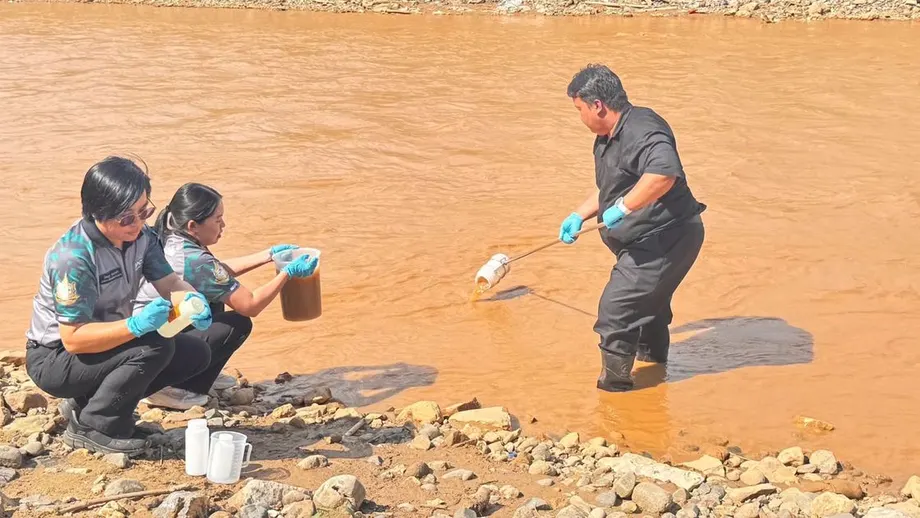
Researchers completed 15 drone surveys, 22 deployments of underwater cameras with bait and 22 checks of seawater quality. Each method answered a different question: how many sharks were visible from above, how they behaved underwater and what conditions they occupied.
Drones gave the team an overhead view of sharks swimming in the bay. The underwater equipment, known as baited remote underwater video systems, or BRUVS, recorded animals approaching bait placed near a camera. Water measurements added information about temperature, salt content and acidity.
Using these methods together allowed researchers to observe more than a large gathering. They could also locate young sharks near the shore, watch feeding responses and describe the water around them. The November results therefore provide practical information about where and when the animals use the protected area.
Why dawn mattered
November's dawn average of 328.83 sharks was about 51 higher than the midday average of 277.40, a difference of roughly 19%. Both figures came from the same survey period, making them a useful comparison of the team's observations at different times of day.
The survey listed the dawn result as 328.83 ± 68.46 and the midday result as 277.40 ± 60.54. The figures after the plus or minus sign describe the spread or uncertainty around each average, although the published account did not identify the statistical measure used.
Earlier monitoring also found the largest gatherings in the morning. During September 2026, drone observations averaged 251.67 sharks in the early morning and 57.25 in the evening. A survey running from January 13 to February 6 recorded averages of about 69 in the morning, 53 in the evening and 46 at midday; the year of that survey was not specified.
For park staff, this repeated morning pattern makes survey timing particularly useful. A count taken around dawn and a count taken later in the day describe different moments in the bay's daily activity. Keeping track of those times helps researchers compare future observations more meaningfully.
Large sharks and young animals used different areas
Sharks longer than one metre, classified by the team as approaching adulthood or fully adult, gathered on the right side of the bay. They swam near the beach, beneath the cliffs and along the coral.
Researchers suggested that this gathering might be connected with reproduction. Further observations are needed to confirm that explanation. The finding gives the monitoring team a specific area and behaviour to examine during future surveys.
Three to five smaller sharks, each less than one metre long, were observed in shallow water on the opposite, left side of the beach. The team placed them in categories ranging from newborn to juvenile, meaning young sharks that have yet to reach adulthood.
Earlier observations add detail to the bay's role as a nursery. During the January to February survey, researchers saw pale newborn sharks about 30 centimetres long swimming close to the shoreline. Larger adults patrolled nearby waters, while juveniles were more likely to approach the underwater cameras.
These observations help explain why officials describe Maya Bay as both a habitat and a nursery for blacktip reef sharks, whose scientific name is Carcharhinus melanopterus. The shallow shoreline provides space used by very small animals, while larger sharks occupy other parts of the same bay.
Underwater cameras revealed a different rhythm
The November camera deployments mostly attracted juvenile sharks. Researchers observed clear approaches, strikes and bites directed at the bait, with stronger responses during the evening and after dark.
Up to nine sharks appeared together in a single camera frame. During the September survey, which used 23 camera deployments, the largest number recorded together around the bait was four juveniles.
The aerial and underwater observations describe different aspects of shark activity. Drones showed the largest visible gatherings at dawn, while cameras recorded a stronger response to bait later in the day. One method mapped animals across the bay; the other watched behaviour at a particular underwater location.
Park managers can use both patterns when planning research. Morning flights offer opportunities to count large gatherings, while observations later in the day can help document how young sharks approach food. Recording the time, location and method alongside each result keeps those findings useful for future comparisons.
What the water measurements showed
November's 22 water checks recorded an average temperature of 30.87°C, salinity of 31.16 parts per thousand and pH of 8.62. The survey described the conditions as suitable for marine life.
Salinity measures how much dissolved salt is in the water. A value of 31.16 parts per thousand means roughly 31 parts salt for every 1,000 parts water by mass. The pH scale describes acidity and alkalinity, with a value above seven indicating alkaline water.
The November results included accompanying figures of ± 1.32°C for temperature, ± 0.46 parts per thousand for salinity and ± 0.23 for pH. Reporting these alongside the averages preserves information about how the measurements varied or how precisely they were estimated.
September measurements averaged 30.25°C, salinity of 33.10 parts per thousand and pH of 8.86. Compared with those values, November's water was 0.62°C warmer and its salinity was 1.94 parts per thousand lower.
The January to February survey recorded another set of conditions: 28.4°C, salinity near 39.9 parts per thousand, pH of 8.08 and dissolved oxygen of 5.69 milligrams per litre. Dissolved oxygen is the oxygen available in water for animals to breathe. Together, these records give researchers environmental measurements to examine alongside shark locations and behaviour over time.
How the record developed
Maya Bay's monitoring programme has documented several large gatherings since it began in 2023. The November result extends that record, while the accompanying observations show how much the visible number can vary with the survey period and time of day.
- 2023: The shark monitoring project began.
- July 2–8, 2025: Researchers conducted a Shark Watch Project survey, counting 158 sharks together on the morning of July 3, then the highest single survey count.
- August 1–September 30, 2026: Maya Bay's annual closure period provided a break from visitor disturbance during the southwest monsoon season.
- September 2, 2026: Researchers recorded 278 adult blacktip reef sharks, the reported peak for the 2026 fiscal year.
- November 3–9, 2026: The latest field survey took place, with 451 sharks counted on its first morning.
- November 12, 2026: Officials released the November findings.
The November peak was 173 sharks higher than September's peak of 278, a difference of about 62%. September's figure referred specifically to adults, while November's survey described sharks across several stages of life. The strongest comparison is the sequence of recorded gatherings, supported by the details of each survey.
The longer record also contains observations of young sharks in shallow water and adults nearby. Tracking those patterns gives the department a broader basis for conservation planning than a peak count alone.
What the findings mean for tourism management
Jinda Srisuppatpong, director of the Marine National Park Management Division, attributed the bay's recovery to closures and the regulation of tourism. He said the survey would help guide decisions about conservation and visitor activity.
Jinda described the role of the research in future policy decisions. In translation, he said:
These data will be an important basis for policy decisions to maintain a balance between biodiversity conservation and sustainable ecotourism in the long term.
The annual closure runs from August 1 to September 30. Officials describe it as a period for coral and beach areas to recover with less human disturbance, as well as a measure to protect visitors during the southwest monsoon.
Natural Resources and Environment Minister Suchart Chomklin also credited closures and tourism controls with helping nature recover. He asked visitors and the public to avoid disturbing marine animals or damaging the ecosystem. Department director general Yongyuth Nakviroj said the research formed part of the agency's approach to managing national parks with scientific information.
The department plans to continue monitoring and use the results in visitor management, population tracking and preparations for tourism after the monsoon. November's observations identify concrete features for that work: morning gatherings, shallow areas occupied by young sharks and locations used by larger animals near the beach and coral.
For Maya Bay, the immediate task is to keep those habitats usable while managing access to a major visitor destination. Continued surveys will give park staff a way to follow changes in shark numbers, distribution and behaviour as tourism and environmental conditions change.
Key Points
- Researchers counted 451 blacktip reef sharks at Maya Bay on November 3, 2026, the highest recorded count since monitoring began in 2023.
- The November 3–9 survey used 15 drone flights, 22 underwater camera deployments and 22 seawater checks.
- Dawn counts averaged 328.83 sharks, compared with 277.40 around midday.
- Larger sharks gathered near the beach, cliffs and coral; three to five young sharks occupied shallow water on the opposite side.
- Underwater cameras recorded up to nine sharks together, with stronger responses to bait during the evening and after dark.
- Officials plan to use continued monitoring to guide habitat protection and visitor management.